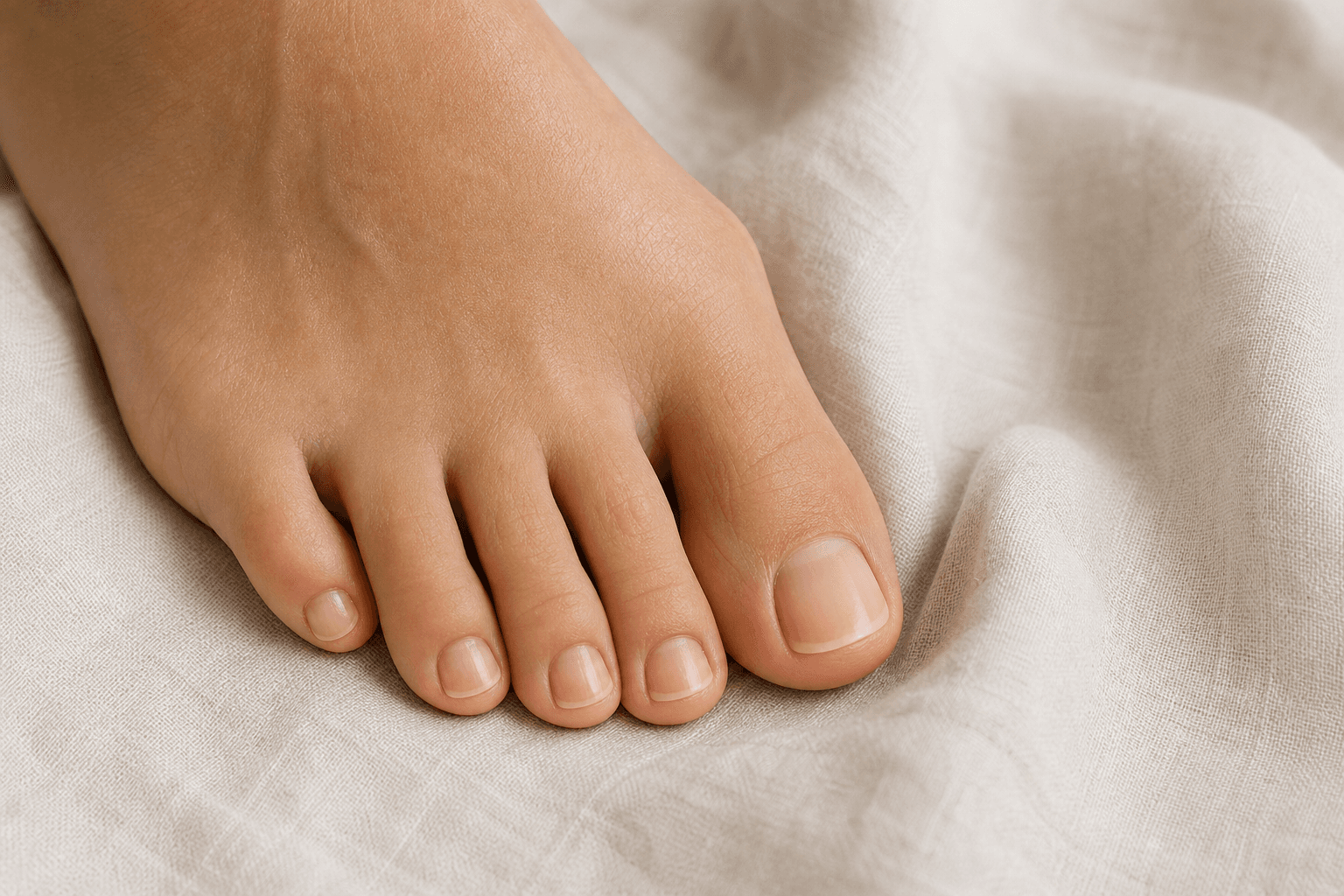
FOOT PAIN MAP
Foot Pain Chart: Where It Hurts and What It Could Be
A text-based map of the foot, from heel to toes, top to sole. Find the spot that hurts, see the usual suspects and jump to the page that goes deeper.
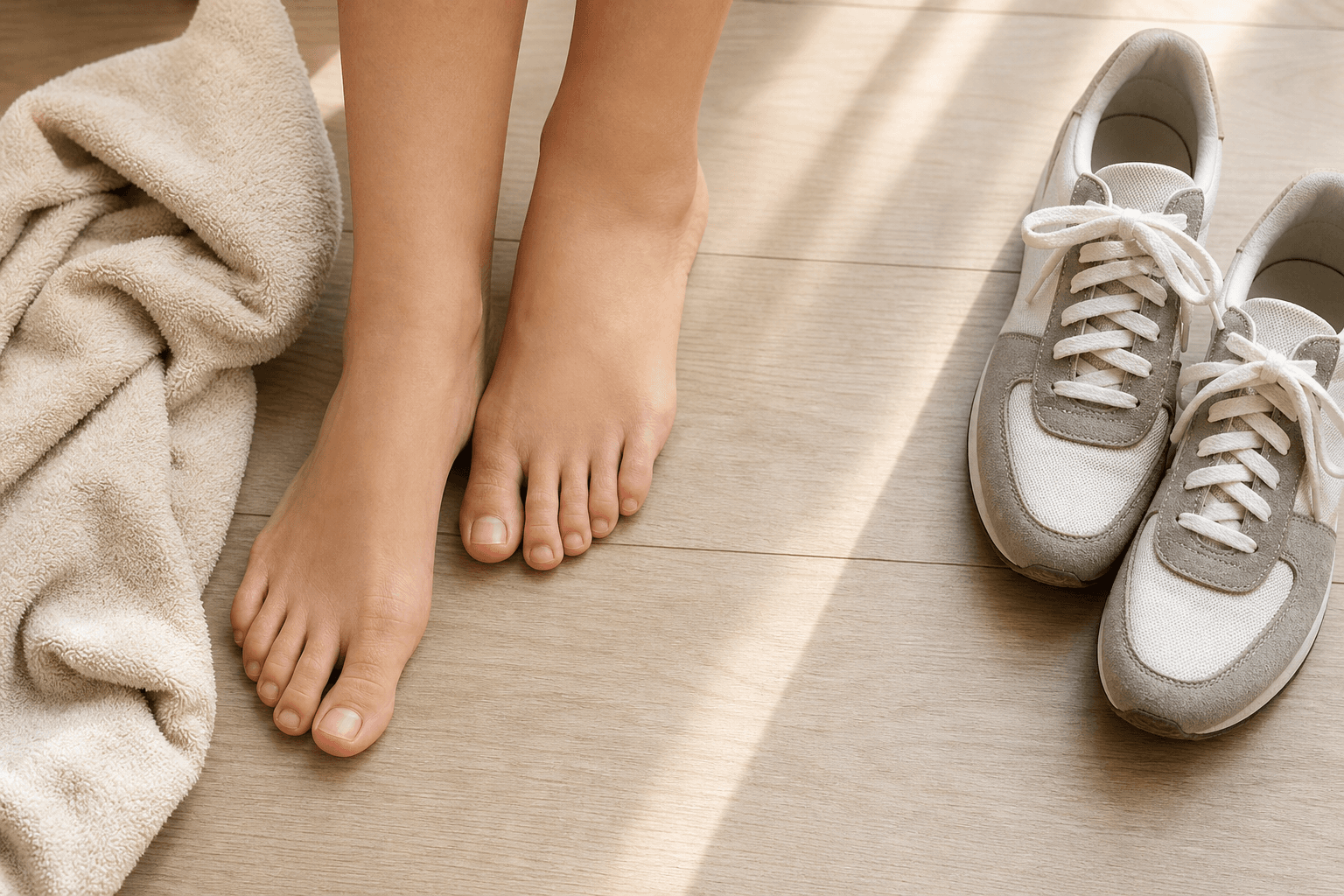
Location is the best first clue when your foot hurts. Pain under the heel points to a different set of causes than pain on the top of the foot or at the base of the big toe, and the timing (first steps in the morning, after a run, at night) narrows the list further. This page is a map: pick the zone that matches your pain, read the usual suspects, then follow the link to the full guide.
Treat it as a starting point rather than a diagnosis. Healthgrades and several sports-medicine clinics that publish their own foot pain charts make the same caveat: many conditions overlap, pain in one spot can have more than one cause, and an in-person exam is often what separates them. If the pain followed an injury, came on suddenly with swelling or redness, or you cannot put weight on the foot, skip the chart and see a clinician.
Everything below is general information written for comfort, support and relief. It is not medical advice, and none of it replaces an exam by a doctor or podiatrist.
Heel pain: under, behind, inside and outside
Pain on the underside of the heel, worst with the first steps after sitting or getting out of bed, is the classic pattern of plantar fasciitis. Our plantar fasciitis symptoms page walks through how to recognise it, and bottom of heel pain covers the look-alikes, including a bruised or thin heel pad (see fat pad syndrome) and a heel spur, which often turns up on an X-ray without being the cause of the pain.
Pain at the back of the heel, where the Achilles tendon attaches, points toward Achilles tendonitis, insertional Achilles tendonitis, heel bursitis or a bony bump called Haglund's deformity. Our back of heel pain page helps you sort them. A sudden pop and weakness at the back of the leg is a different matter; read signs your Achilles may rupture and get seen promptly, and see torn Achilles recovery time for what rehab looks like.
Inner heel pain with burning or tingling can involve a nerve squeezed in the ankle (tarsal tunnel) or the tendon that holds up the arch (posterior tibial tendonitis); see inside of heel pain. Pain on the outer edge of the heel is covered in outer heel pain. For children and teens who are active, heel pain is often Sever's disease, a growth-plate irritation. If you are still unsure, why does my heel hurt is the broad overview.
Arch pain and midfoot pain
Arch pain is frequently an extension of the same overload that causes heel pain: the plantar fascia, a tired posterior tibial tendon, or a foot that flattens more than it should. Arch pain lists the common causes, and our flat feet insoles guide and high arches guide explain how support differs by foot type. A firm, slow-growing lump in the arch is worth knowing about too: it can be a plantar fibroma, which a clinician should look at.
Pain on the outer midfoot, often after a twist or a jump in training, is covered in outside of foot pain.
Ball-of-foot pain
A bruised, burning or "pebble in the shoe" feeling under the forefoot is most often metatarsalgia or the wider ball of foot pain picture. Sharp or burning pain between two toes, sometimes with numbness, fits a Morton's neuroma. Pain directly beneath the big toe joint that worsens when you push off may be sesamoiditis, and a jammed, sore big toe joint after sport may be turf toe.
Pain in the second or third metatarsal that builds with running or marching and does not ease with a day off deserves a particular mention: it can be a metatarsal stress fracture, which needs a clinician.
Big toe and toe pain
A stiff, aching big toe joint that is worse in the morning or with walking is covered in big toe joint pain. A bony bump on the inside of the joint is a bunion; on the outside of the little toe it is a tailor's bunion. Bent, rigid middle toe joints are hammer toes. A hot, red, swollen big toe that appears overnight is the textbook picture of gout in the foot, and a first attack should be seen by a doctor, because infection can look the same.
Toenail trouble has its own pages: ingrown toenail, black toenail and toenail fungus. A nail that curls in from both sides is covered in pincer toenail, and sore toes in general in toe pain causes.
Top-of-foot pain
Aching across the top of the foot is most often irritation of the extensor tendons that lift the toes, often from laces that are too tight or a sudden jump in activity. Our top of foot pain page covers that along with other possibilities such as arthritis in the midfoot and stress injuries. If pain arrived with no obvious injury, sudden foot pain without injury is the guide to read first.
Skin, nerve and whole-foot symptoms
Some complaints are not about one spot. Numbness or tingling is covered in numb feet and, for nerve-related causes, peripheral neuropathy in the feet, burning in burning feet, swelling in swollen feet, night cramps in foot cramps, and general end-of-day soreness in tired feet. Skin problems that can cause surface pain include corns and calluses, plantar warts, athlete's foot, heel blisters and cracked heels.
Pain that affects several joints, or comes with morning stiffness lasting more than half an hour, may relate to inflammatory arthritis, which is a reason to see a doctor rather than self-manage.
What to do while you work it out
For most overuse pain, the sensible first steps are the same wherever it hurts: reduce the activity that provokes it rather than stopping everything, switch to shoes with a firm heel counter, some cushioning and room in the toe box, and add support if your arch collapses or the heel pad feels thin. A well-fitted heel cup or insole is one comfortable option for heel and arch discomfort, though it is not a diagnosis tool and will not suit every kind of pain.
Keep a short note of where the pain sits, what time of day it is worst, what makes it better and when it began. That record is far more useful to a clinician than a general description.
When to stop mapping and get seen
See a doctor or podiatrist promptly for pain after an injury, a foot that looks deformed, an inability to bear weight, a hot, red, swollen joint, fever, numbness that is spreading, a wound that is not healing (especially with diabetes), or a calf that is swollen and painful on one side. Pain that has lasted more than a few weeks despite sensible home care also deserves a proper exam. A chart can point you in a direction; only an examination can confirm where you are.
Browse the foot care hub
Every foot problem guide we publish, grouped in one place.
Browse the foot care hubFrequently asked questions
Can I diagnose my foot pain from a chart?
A chart can narrow the likely causes by location, but it cannot confirm a diagnosis. Overlapping conditions are common, so a persistent or worsening problem needs an exam by a doctor or podiatrist.
Why does my foot hurt for no reason?
Pain with no injury is often an overuse or footwear problem that built up gradually, such as a new pair of shoes or a jump in standing or walking time. Our guide to sudden foot pain without injury lists the usual causes and the warning signs that need prompt care.
What is the most common cause of foot pain?
Heel pain from plantar fasciitis is among the most common problems seen in foot clinics, followed by forefoot overload, bunions and tendon irritation. The right answer for you depends on where and when it hurts.
Which foot pain needs urgent care?
Pain after an injury, a deformed-looking foot, inability to put weight on it, a hot red swollen joint, fever, or a non-healing wound are reasons to be seen promptly.
Should I rest or keep walking on a sore foot?
Most overuse pain does better with reduced load rather than complete rest, but pain that is sharp, worsening or linked to a possible fracture should be assessed before you keep loading it.
HeelCups is reader-supported. When you buy through links on our site we may earn an affiliate commission, at no extra cost to you. This article is general information about foot comfort and is not medical advice — see our medical disclaimer.