Plantar Fasciitis: Symptoms, Causes and What Actually Helps
The most common cause of heel pain, explained without the jargon — and the stretches, insoles and habits that give most people relief.
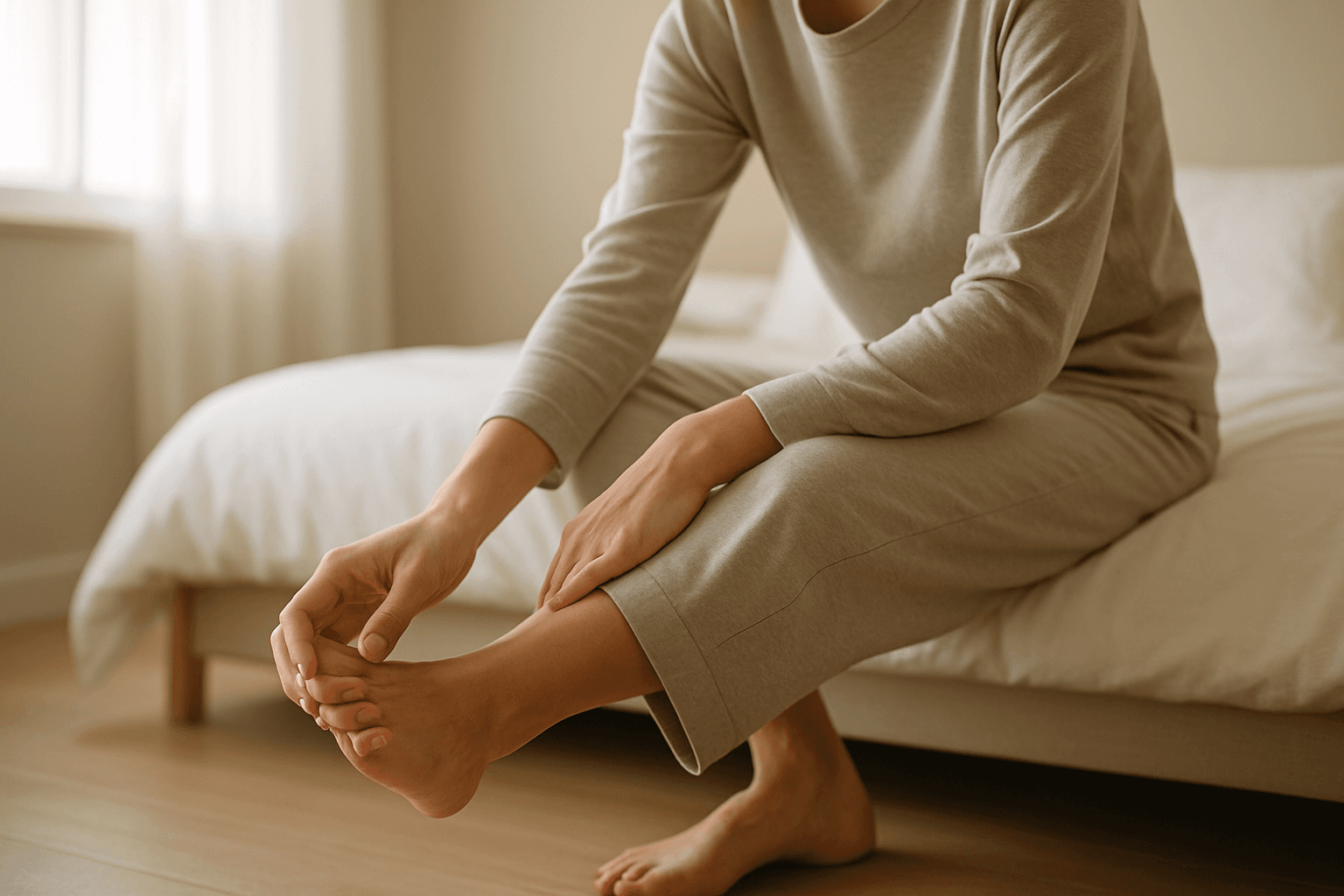
Plantar fasciitis is irritation of the plantar fascia, the thick band of tissue that runs from your heel bone to the base of your toes and supports the arch. The classic sign is a stabbing pain under the heel with the first steps in the morning, or after you've been sitting a while, that eases as you move and then creeps back after long hours on your feet. Because the fascia shortens overnight, that first stretch when your body weight lands on it can feel like standing on a bruise or a shard of glass. Give it a few minutes of gentle walking and it usually calms; the frustrating part is that it comes right back at the end of a long day, or the next morning.
It is one of the most common causes of adult heel pain, and it does not care how fit or how sedentary you are. Runners get it from ramping up mileage too fast. Nurses, teachers, retail staff and warehouse workers get it from twelve-hour shifts on concrete. It shows up during weight gain, pregnancy, and the first month of a new job that has you on your feet. High-arched and flat-footed people both get it, for different reasons. Tight calves are almost always part of the picture — a stiff Achilles pulls the whole system tighter and hands more of the shock absorption to the fascia.
The good news is that the vast majority of cases settle with conservative care over a few weeks to a few months. That care is unglamorous but consistent: calf and arch stretching morning and night, [shoes with real arch support](/plantar-fasciitis/doctor-recommended-shoes) rather than flat canvas, an insole that raises the arch and cradles the heel so the fascia is not pulled taut with every step, and cutting back on barefoot time on hard floors between shifts. Icing after long days helps. So does dialing back a spike in mileage or standing time until the tissue calms down, rather than pushing through it. The stretches, exercises, self-massage and footwear choices we cover in this hub are the same ones physical therapists teach on day one.
What you want to avoid is the trap of trying every gadget at once and giving nothing time to work. Two weeks of a decent insole and a daily stretching routine will tell you more than a drawer full of half-tried night splints, [plantar fasciitis socks](/plantar-fasciitis/socks) and taping strips. Summer in particular has its own trap — the drugstore [flip-flop and plantar fasciitis](/plantar-fasciitis/flip-flops) combination is one of the single most reliable triggers for a flare, and runners asking whether to keep training should read our [running with plantar fasciitis](/plantar-fasciitis/running) walk-through before changing their mileage. It is also worth telling apart plantar fasciitis from the conditions that mimic it — a heel spur on X-ray, a stone bruise from a bad landing, Achilles tendinopathy at the back of the heel, a firm lump in the arch that turns out to be a [plantar fibroma](/heel-pain/plantar-fibroma), or the neuropathy that can come with diabetes and other conditions. Each responds to different care, so a correct read of what you actually have is the first move.
Nothing on this hub replaces a clinician, and it is not medical advice. Pain that lasts more than a few weeks despite honest home care, pain that follows a specific injury, pain that comes with swelling, numbness, tingling, discoloration, or that wakes you at night, deserves an in-person exam by a doctor or podiatrist. So does heel pain in children and teenagers, which is often something else entirely. Insurance-covered physical therapy, a night splint, a short course of anti-inflammatories, a two-to-four-week course in a [walking boot](/plantar-fasciitis/walking-boot) when a flare will not calm down, or a corticosteroid injection all have their place when self-care has plateaued — a clinician is the right person to help you pick. In the small minority of cases that resist six to twelve months of honest care, [plantar fasciitis surgery](/plantar-fasciitis/surgery) is the last rung on the ladder.
Indoor footwear counts too — see our guide to [slippers for plantar fasciitis](/plantar-fasciitis/slippers), and for how body weight and load fit into the picture, read [weight and plantar fasciitis](/plantar-fasciitis/weight). Use this section as a map: start with the [plantar fasciitis symptoms](/plantar-fasciitis/symptoms) and causes pages if you are still figuring out what you have, move to the stretches and self-massage pages for the daily routine, use the full [plantar fasciitis treatment](/plantar-fasciitis/treatment) walk-through for the honest ladder from home care to injections, and use the insoles hub when you are ready to add support to the shoes you already own. Every recommendation is written for comfort, support and relief — nothing here promises a cure.
In this guide
- PRP Injection for Plantar Fasciitis: What the Research Shows, What It Costs and Who Might Consider It
- Cycling With Plantar Fasciitis: Cleats, Shoes and Setup Changes Worth Trying
- Plantar Fascia Rupture: How a Tear Differs From Plantar Fasciitis, and What Happens Next
- Sandals for Plantar Fasciitis: What to Look For (and What to Skip) Before Summer Travel
- Barefoot Shoes and Plantar Fasciitis: What the Evidence Says and How to Try Them Without Flaring Your Heel
- Heel Pain From Pickleball: Why It Happens and How to Keep Playing Comfortably
- Hiking With Plantar Fasciitis: Boots, Insoles and Trail Habits That Keep Heels Comfortable
- Slippers for Plantar Fasciitis: Why Barefoot at Home Hurts and What to Look For Instead
- Weight and Plantar Fasciitis: What the Research Says and What Actually Helps the Heel
- Walking Boot for Plantar Fasciitis: When a CAM Boot Helps and When It Backfires
- Walking With Plantar Fasciitis: How Much Is Too Much, and When Does It Actually Help?
- Plantar Fasciitis in Both Feet: What Bilateral Heel Pain Means and How to Manage It
- Running With Plantar Fasciitis: When to Keep Running, When to Pull Back, and How to Return Without a Relapse
- Flip-Flops and Plantar Fasciitis: Why Summer Is a Heel Pain Trap and the Supportive Alternatives That Still Feel Like Summer
- Cortisone Shots for Plantar Fasciitis: How They Work, How Long They Last, and the Honest Risks
- Ice or Heat for Plantar Fasciitis? What Each One Actually Does — and When to Use It
- Shockwave Therapy for Plantar Fasciitis: What It Is, Who It Helps, and Where It Sits on the Ladder
- How to Prevent Plantar Fasciitis: The Habits That Keep the Fascia Out of the Danger Zone
- Plantar Fasciitis Taping: The DIY Arch Support That Fits in a Roll of Athletic Tape
- How Long Does Plantar Fasciitis Last? The Honest Timeline From Flare to Recovery
- Night Splints for Plantar Fasciitis: Do They Help, Which Kind to Pick, and How to Actually Sleep in One
- Plantar Fasciitis Symptoms: How to Tell It From Every Other Kind of Heel Pain
- Plantar Fasciitis Treatment: The Full Ladder From Home Care to Injections
- Doctor-Recommended Shoes for Plantar Fasciitis: What Actually Earns the Label
- Plantar Fasciitis Socks: What Compression, Arch Straps and Night Sleeves Actually Do
- Plantar Fasciitis Surgery: When It Comes Up and What to Actually Expect
- Can You Cure Plantar Fasciitis in One Week? What Realistically Helps in Seven Days
- Plantar Fasciitis Exercises: The Short Daily Routine That Builds Real Support
- What Causes Plantar Fasciitis? The Everyday Triggers Behind Most Heel Pain
- Plantar Fasciitis Stretches That Actually Help: A Daily Routine You Can Stick With
- Plantar Fasciitis Massage at Home: What Works, What Feels Good, and What to Skip
- Plantar fasciitis symptoms: how to tell it from other heel pain coming soon
- What causes plantar fasciitis coming soon
- Plantar fasciitis treatment options, from home care to injections coming soon
- Plantar fasciitis stretches that help coming soon
- Plantar fasciitis exercises coming soon
- Plantar fasciitis massage at home coming soon
- Plantar fasciitis surgery: when it comes up and what to expect coming soon
- Can you fix plantar fasciitis in one week? coming soon
Written and reviewed by the Heelcups.com Team. General information, not medical advice — see our medical disclaimer. Reader-supported: we may earn a commission when you buy through our links.