ACHILLES
Signs Your Achilles Tendon May Be About to Rupture, and What the Thompson Test Shows
A pop, a sudden weak push-off, a gap you can feel: how a complete tear differs from ordinary Achilles tendonitis, what clinicians check, and why same-day care matters.
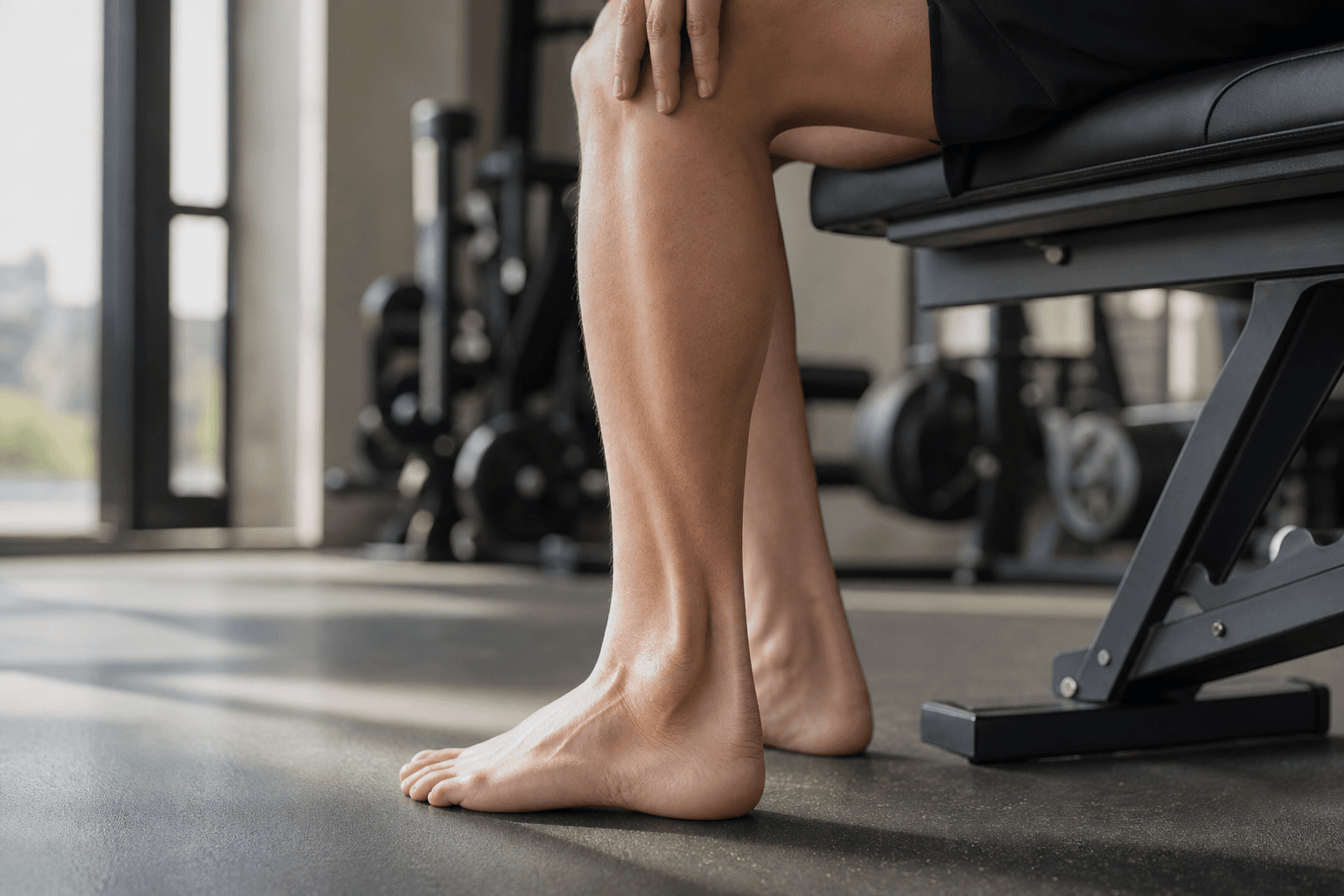
Most Achilles pain is tendonitis, a sore, stiff tendon that builds over days or weeks. A rupture is different: it is usually sudden, often feels like a kick or a snap at the back of the ankle, and leaves you unable to push off normally. If that sounds like what just happened, stop reading and get medical care today.
There is no reliable way to predict a rupture in advance, and orthopaedic sources note that many ruptures happen in tendons that had no earlier pain at all. What you can do is know the warning pattern: worsening tendon pain, stiffness, a thickened or lumpy area, and weakness in push-off. Those signs deserve attention before a tear, not after.
Below we describe what a rupture feels like, the clinical Thompson test, who is more at risk, and what to do next. For milder tendon pain, our guide to Achilles tendonitis is the better starting point.
What a complete rupture typically feels like
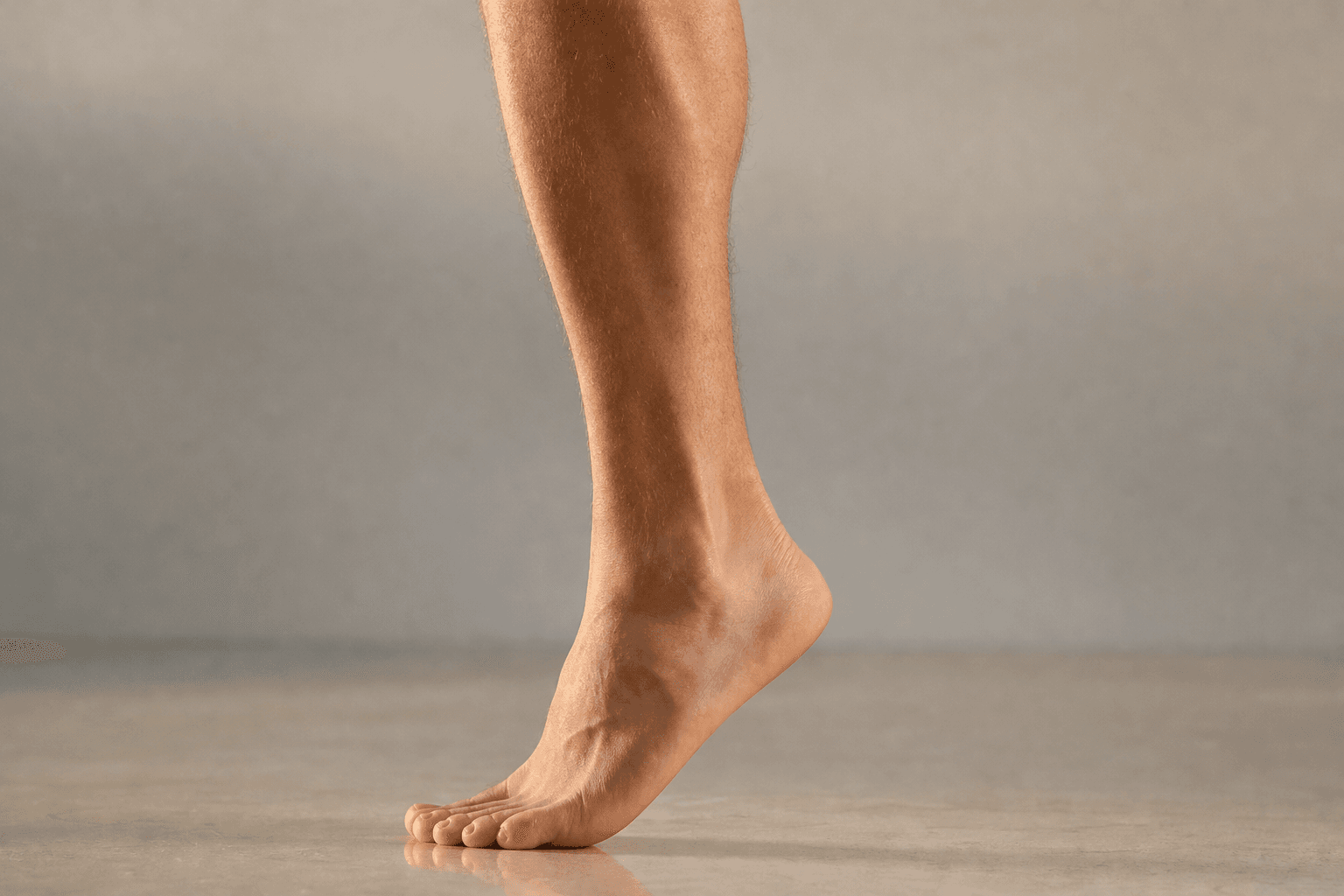
People often describe a sudden pop or snap, sometimes with a sense of being struck on the back of the leg when nobody is there. Sharp pain may fade quickly, which misleads some into thinking it was a strain. Typical findings include swelling and bruising behind the ankle, difficulty rising onto your toes on that side, a limp with weak push-off, and sometimes a gap or dent you can feel above the heel.
Because some people can still point the foot downward using other muscles, a rupture can be mistaken for a calf strain or sprain. A clinic exam matters for exactly that reason.
Warning signs before a tear
Pain and stiffness in the first steps of the day, tenderness a few centimetres above the heel bone, a thickened or nodular spot on the tendon, and pain that flares after speeding up or adding hills are all signs of an irritated tendon. They are not a promise of rupture, but they are the stage to reduce load and seek advice. Our Achilles tendonitis exercises show a gradual loading approach clinicians commonly use.
Sudden jumps in activity, such as weekend sport after weeks of inactivity, are a recognised setting for tears, especially in adults in mid-life. Certain antibiotics (fluoroquinolones) and corticosteroid exposure have also been linked to tendon problems; if you take them and develop tendon pain, tell your prescriber promptly.
The Thompson (calf squeeze) test
In the Thompson test the person lies face down with the feet hanging off the end of the bed. The examiner squeezes the calf. With an intact tendon the foot flexes downward; with a complete rupture, there is little or no movement. Clinical sources describe it as a useful bedside test, usually combined with checking for a palpable gap and comparing how the two feet rest.
It is a test for a clinician. Doing it on yourself can give a false reassurance or false alarm, and a partial tear can behave differently. If you suspect a rupture, a normal result at home should not stop you seeking care. Imaging such as ultrasound or MRI is used when the picture is unclear.
What to do right away
Stop weight-bearing activity, rest the leg, and get assessed the same day through urgent care or an emergency department, especially if you heard a pop or cannot rise onto your toes. Early diagnosis matters because treatment choices, whether surgical or non-surgical with a boot and structured rehabilitation, depend on the situation and are decided with an orthopaedic clinician.
Avoid massage, stretching or firm taping of a suspected tear. If swelling is marked, resting with the leg raised is reasonable while you travel to be seen.
Who is more likely to rupture a tendon
Ruptures are most often reported in active adults in their thirties to fifties who play stop-start sports such as basketball, tennis or pickleball, though they can happen with a simple misstep on stairs. Men are affected more often than women in published series. Poor flexibility, abrupt jumps in training, previous Achilles trouble and the medication links above all feature in clinical discussions of risk.
If you recognise yourself, build activity gradually, warm up the calf before sprint-style moves, and do not play through a tendon that has been getting worse for weeks.
Tendonitis, partial tear or rupture?
Tendonitis hurts with use and eases with warm-up. A partial tear brings sharper pain and swelling but you can usually still rise on your toes, weakly. A full rupture generally means you cannot push off properly. Heel-bump and bursa problems sit nearby: see pain in the back of the heel for the look-alikes.
Supportive footwear does not prevent a tear, but a modest heel lift can reduce strain on a sore tendon; ask a clinician before using one, and see our Akusoli insoles review for how a cushioned, supportive insole handles the heel.
When to see a doctor
Any suspected rupture, any sudden loss of push-off strength, new swelling with a gap in the tendon, or calf pain with warmth and redness (which can point to a clot) needs same-day medical care. Tendon pain that lingers beyond a few weeks of reduced load should be seen by a podiatrist or sports medicine doctor. This article is general information, not personal medical advice.
Explore the heel pain hub
Compare Achilles problems with the other causes of a sore heel.
Explore the heel pain hub →Frequently asked questions
What does an Achilles tendon rupture feel like?
Commonly a sudden pop or snap with sharp pain at the back of the ankle, followed by swelling, weakness and difficulty pushing off. Pain can fade quickly, so weakness is the key clue.
Can you tell an Achilles tendon is about to rupture?
Not reliably. Many ruptures occur without earlier pain. Persistent stiffness, thickening and tenderness in the tendon are reasons to reduce load and get it examined.
What is the Thompson test?
A clinical test where the calf is squeezed while the person lies face down. An intact tendon makes the foot point downward; little or no movement suggests a complete rupture. It should be done and interpreted by a clinician.
Can you walk with a ruptured Achilles?
Some people can walk with a limp, which is why ruptures are sometimes missed. Inability to rise onto the toes on that side is a warning sign.
Should I stretch if I think I tore my Achilles?
No. Rest the leg and seek same-day assessment rather than stretching or massaging a suspected tear.
HeelCups is reader-supported. When you buy through links on our site we may earn an affiliate commission, at no extra cost to you. This article is general information about foot comfort and is not medical advice — see our medical disclaimer.