ATHLETE'S FOOT
Athlete's Foot: How to Recognise It, What Usually Clears It and How to Stop It Coming Back
Itchy, peeling skin between the toes is usually a fungal rash. Here is how to tell it from dry skin or eczema, what over-the-counter antifungals involve, and the sock and shoe habits that keep it from returning.
Athlete's foot, known medically as tinea pedis, is a fungal skin infection that most often starts between the toes. The usual picture is itching, burning, and skin that turns white, soft and flaky, sometimes with small cracks. Some people get a dry, scaly pattern across the sole and the sides of the foot instead, which is easy to mistake for ordinary dry skin. The short answer on what helps: an over-the-counter antifungal cream used for the full length of time on the label, feet that are properly dried, and socks and shoes that do not stay damp.
This page is about the skin of the foot, not the heel pain we cover elsewhere on the site. It sits next to our guide on toenail fungus because the same fungi can be involved in both, and an untreated rash on the skin is one way nail infections get a foothold.
More on the wider topic is on our foot care hub. Nothing here is medical advice. If a foot problem lasts more than a few weeks, keeps coming back, or comes with fever, spreading redness, numbness or discoloration, see a doctor or podiatrist rather than relying on a web page.
How to recognise it
The most common form is the interdigital type: scaling, redness, itch and soft, white, peeling skin in the space between the fourth and fifth toes, which is the tightest and dampest gap. The moccasin type is drier, with fine scale and mild redness spreading across the sole, heel and sides of the foot, and it often itches less. A third, blistering type produces small fluid-filled bumps, usually on the arch.
Look-alikes matter. Contact dermatitis from a shoe material or a new sock, eczema, psoriasis and plain dry skin can all look similar. Clues pointing toward a fungus include one foot being worse than the other, a rash that began between the toes, and an itch that is worse after taking shoes off. If creams do not change anything after the time on the label, or the pattern looks different from the descriptions above, have a clinician look, since a skin scraping can confirm what it is.
What over-the-counter antifungals involve
Guidance summarised from the American Academy of Dermatology's recommendations points to topical antifungal creams as the usual first step for athlete's foot. Common over-the-counter ingredients include terbinafine, which is typically used for one to two weeks, and clotrimazole, miconazole or tolnaftate, which generally run two to four weeks. Check the label of the specific product, because the length of use differs.
Two habits make the difference. First, apply the cream to the whole affected area plus a margin of healthy-looking skin around it, not only to the itchy spot. Second, keep going for the full course even after the itch fades, because stopping early is a common reason the rash returns.
The Centers for Disease Control and Prevention's guidance on ringworm-type infections also warns against steroid-only creams for a fungal rash, since they can make a fungal infection look better briefly while it continues. Combination products and prescriptions are a clinician decision.
Keep the foot dry, and the shoes too
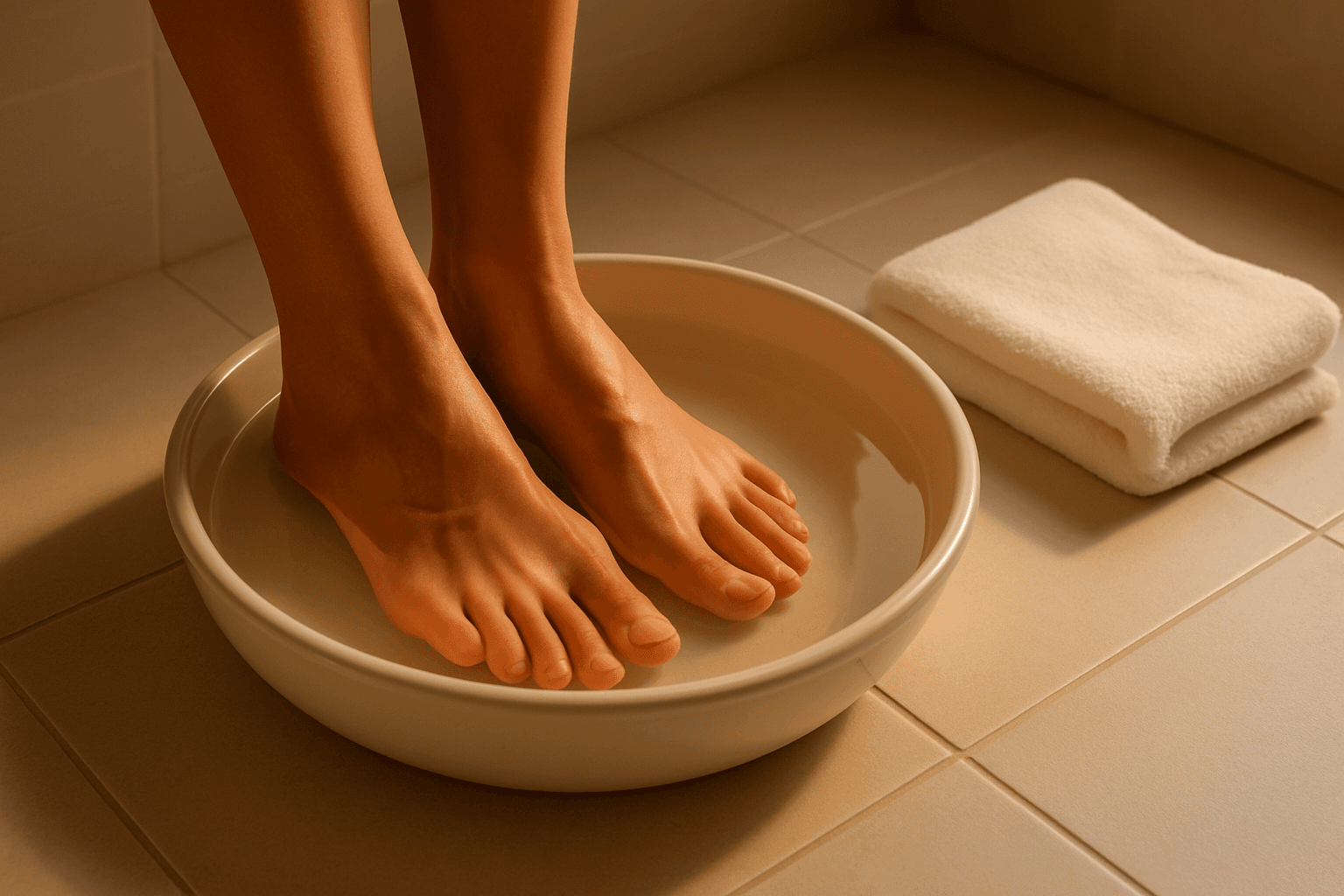
Fungi thrive in warm, damp places, so the environment matters as much as the cream. After washing, dry between the toes properly, using a clean towel and patting rather than rubbing. Some people find a hairdryer on a cool setting convenient on stubborn damp days.
Rotate shoes so that each pair has a full day to dry out, and avoid wearing the same pair two days running while you have a rash. Choose socks made of moisture-wicking fabric, which tend to hold less sweat than thick cotton, and change them when they become damp, which for some people means midday.
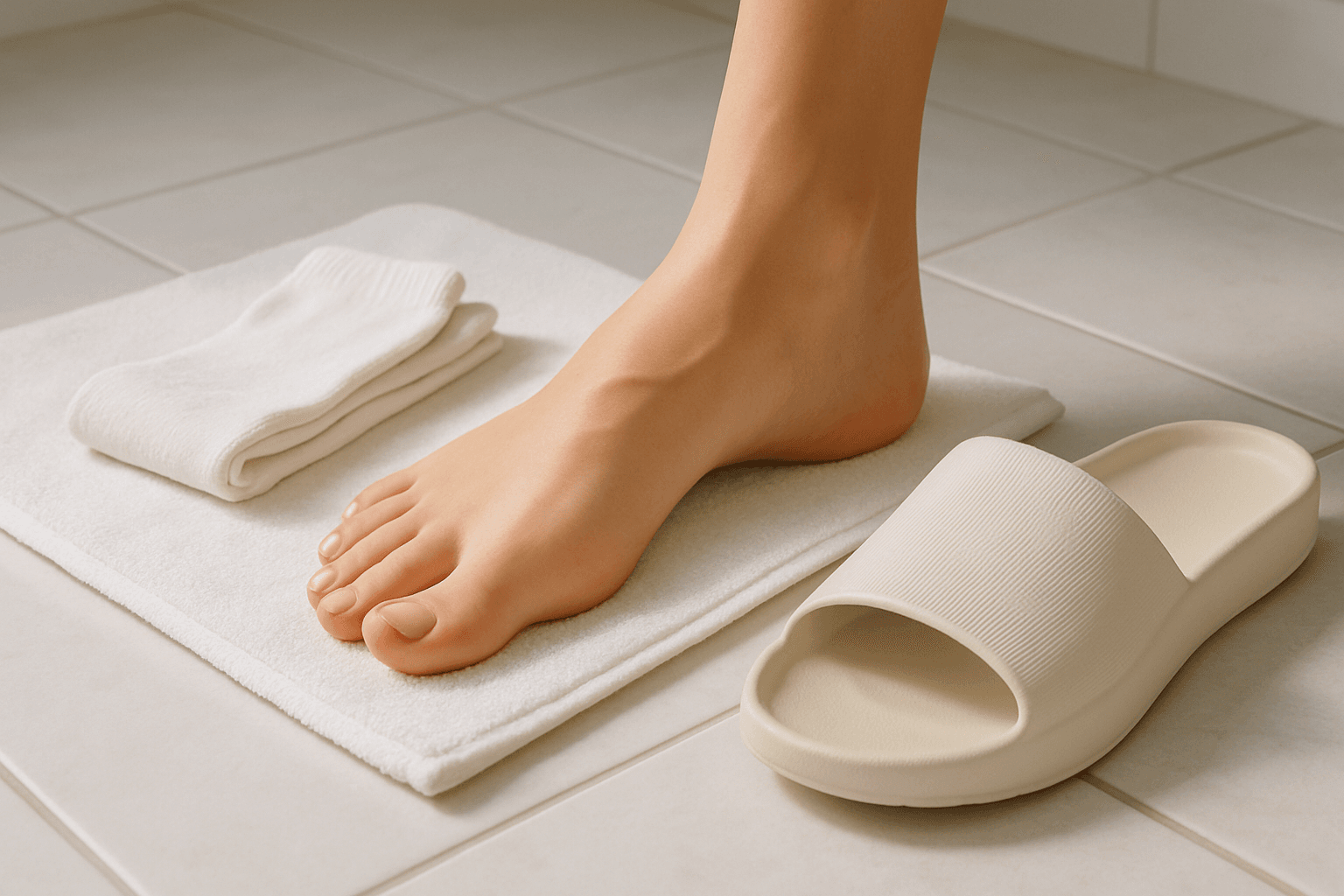
In shared wet spaces such as gym showers, pools and hotel bathrooms, wear flip-flops or shower sandals. This lowers the chance of picking fungus up from the floor.
Stopping the cycle of recurrence
Athlete's foot has a reputation for coming back, and the reasons are usually practical. The infection may be sitting in a thickened toenail, a pair of shoes may be carrying spores, or the course of cream may have been too short. Wash socks and towels in hot water, and treat the footwear: let shoes air out, and consider an antifungal powder or spray in them if the label allows.
If the toenails look thick, yellow or crumbly, the nail may be a reservoir that keeps reseeding the skin, and topical skin creams do not reach it. That is a conversation for a clinician, and our toenail fungus page explains the options in plain terms.
Fungal skin can also crack, and cracks are an entry point for bacteria. Spreading redness, warmth, swelling, pus or a fever mean the skin may be infected, which needs medical attention promptly.
Who should see a clinician sooner
People with diabetes, poor circulation or a weakened immune system should not wait out a foot rash at home, because small breaks in the skin can lead to larger problems. The same goes for anyone whose rash is spreading up the foot, blistering heavily or hurting more than it itches.
Most healthy adults with a mild rash can reasonably try an over-the-counter cream for the time on the label. If there is no clear change after that period, a clinician can confirm the diagnosis and consider prescription options. Comfort and support are the goals at home: dry feet, breathable shoes and a consistent routine. Our cracked heels guide covers dry, split skin, and our foot soaks page explains when a soak is worth it.
More foot care guides
Socks, skin, nails and everything below the ankle that is not heel pain, on the foot care hub.
More foot care guides →Frequently asked questions
How do I know if it's athlete's foot or just dry skin?
Fungal rashes often begin between the toes, itch or burn, and may be worse on one foot. Plain dry skin is usually symmetrical and improves with moisturiser. If you are unsure or a cream has made no difference after the label's time frame, ask a clinician, who can confirm with a skin scraping.
How long should I use an antifungal cream?
It depends on the ingredient. Terbinafine products are typically used for about one to two weeks and other common ingredients for two to four weeks. Follow the label on your product and continue for the full course.
Can I get athlete's foot from a gym or pool?
Fungi spread on damp floors and shared towels, so wearing sandals in locker rooms and showers is a sensible precaution. It is not the only route; sharing shoes and wearing damp socks also contribute.
Does athlete's foot affect heel pain?
Not directly, but the moccasin type can scale across the heel and make the skin dry and cracked. For heel splits, see our cracked heels guide; for deep heel pain, the cause is usually something else.
Is athlete's foot contagious?
Yes, it can spread from person to person through shared surfaces, towels and footwear, and to other parts of your own body, such as the groin or nails. Wash hands after touching the rash.
When should I see a doctor?
See a doctor or podiatrist if the rash does not improve after the labelled course, keeps returning, spreads, blisters heavily, or shows signs of infection such as warmth, pus or fever. People with diabetes or circulation problems should be seen early.
HeelCups is reader-supported. When you buy through links on our site we may earn an affiliate commission, at no extra cost to you. This article is general information about foot comfort and is not medical advice — see our medical disclaimer.