CORNS & CALLUSES
Corns and Calluses: Why They Build Up, How to Smooth Them Safely, and How to Stop the Rub
Hard skin is the foot's response to pressure and friction — the lasting answer is removing the pressure, not just filing the surface.
Calluses are broad patches of thickened skin that form where the foot takes repeated pressure or friction, typically under the ball of the foot, along the big toe or around the heel. Corns are smaller and more concentrated, with a dense core that can feel like a pebble under the skin, and they form on toes or between them where bones press against a shoe.
Both are protective: the skin thickens because something keeps rubbing it. That means smoothing them down gives temporary relief, but they come back unless the cause changes, usually the shoe, a bony prominence, or how weight lands on the foot.
This guide covers how to tell the types apart, a safe softening routine, how to take pressure off, and the situations where you should leave it to a clinician, especially with diabetes or poor circulation. It is not medical advice.
Corn, callus or something else?
A callus is usually wide, flat and yellowish, with a fairly even surface. It tends to be firm but not very painful, and it may lose some sensation. A hard corn is smaller, with a clear center, and often hurts when pressed. A soft corn, which forms between toes where skin stays damp, looks whitish and rubbery. A seed corn is a cluster of tiny spots, often on the sole.
A plantar wart can look similar but typically has small black dots (clotted capillaries), interrupts the normal skin lines, and is painful when pinched from the sides, whereas a corn is painful when pressed straight down. If you cannot tell, a clinician can pare the skin and look. Do not try to cut out something you cannot identify.
Cracked heels often start as a thick callus ring at the edge of the heel; our guide to cracked heels covers that variation specifically.
Find the source of the pressure
Where the hard skin sits points to the cause. Under the ball of the foot, it suggests that area is taking more load; that overlaps with ball of foot pain. On the top of a toe, shoes with a shallow toe box press the knuckle of a bent or hammer-shaped toe. Between the toes, a tight toe box squeezes them together. On the side of the big toe or the inside of the foot, narrow shoes or a bunion may be rubbing.
Walk through your daily shoes. If the toe box pinches, the heel slips, or the seams land on the spot, that shoe is part of the problem. Socks matter too: seams, bunched fabric and cotton that stays damp all raise friction.
Foot mechanics also play a part. A stiff high arch concentrates load under the heel and forefoot, and a flexible flat foot can overload the inside; see insoles for high arches for how cushioning changes that picture.
A gentle softening routine
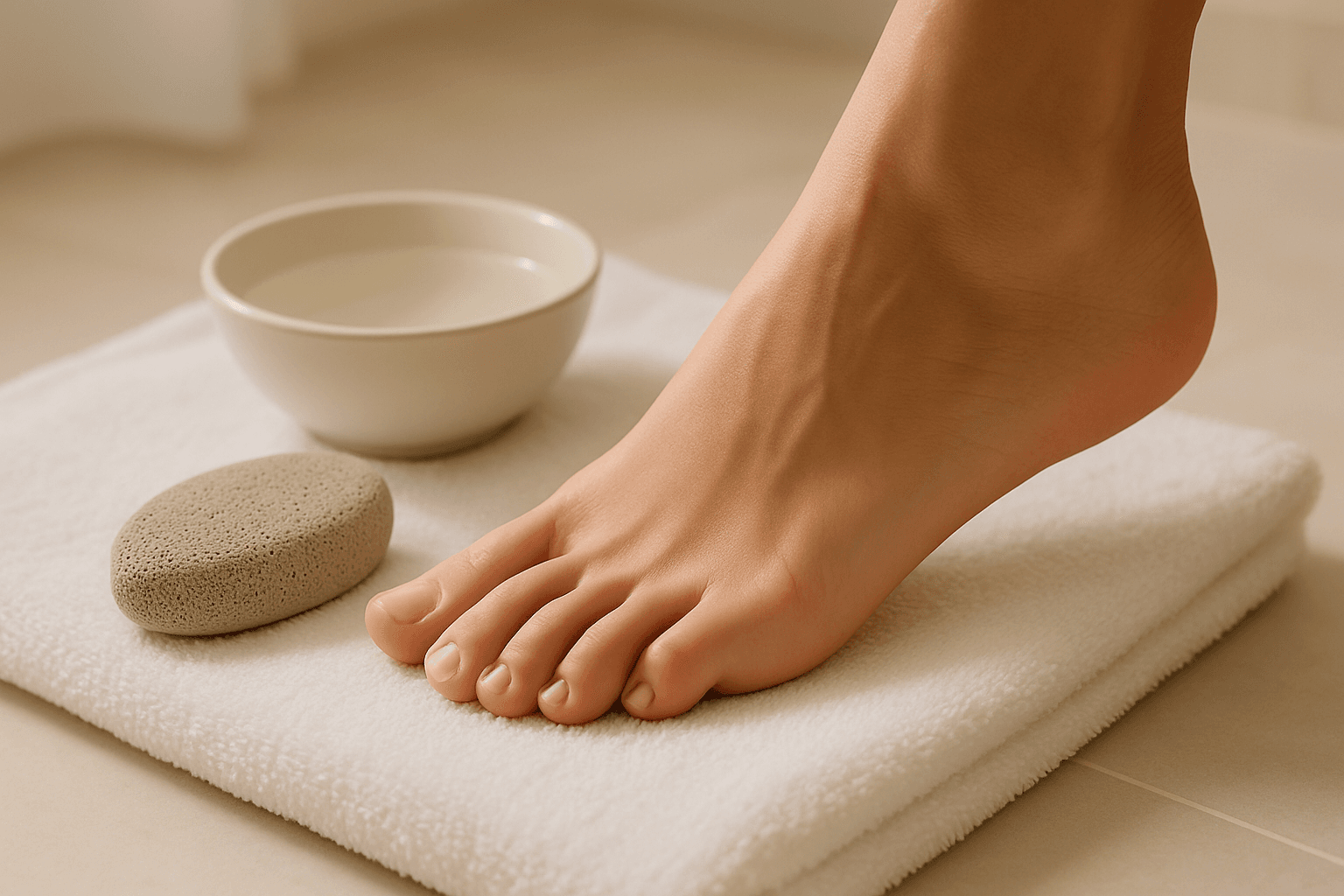
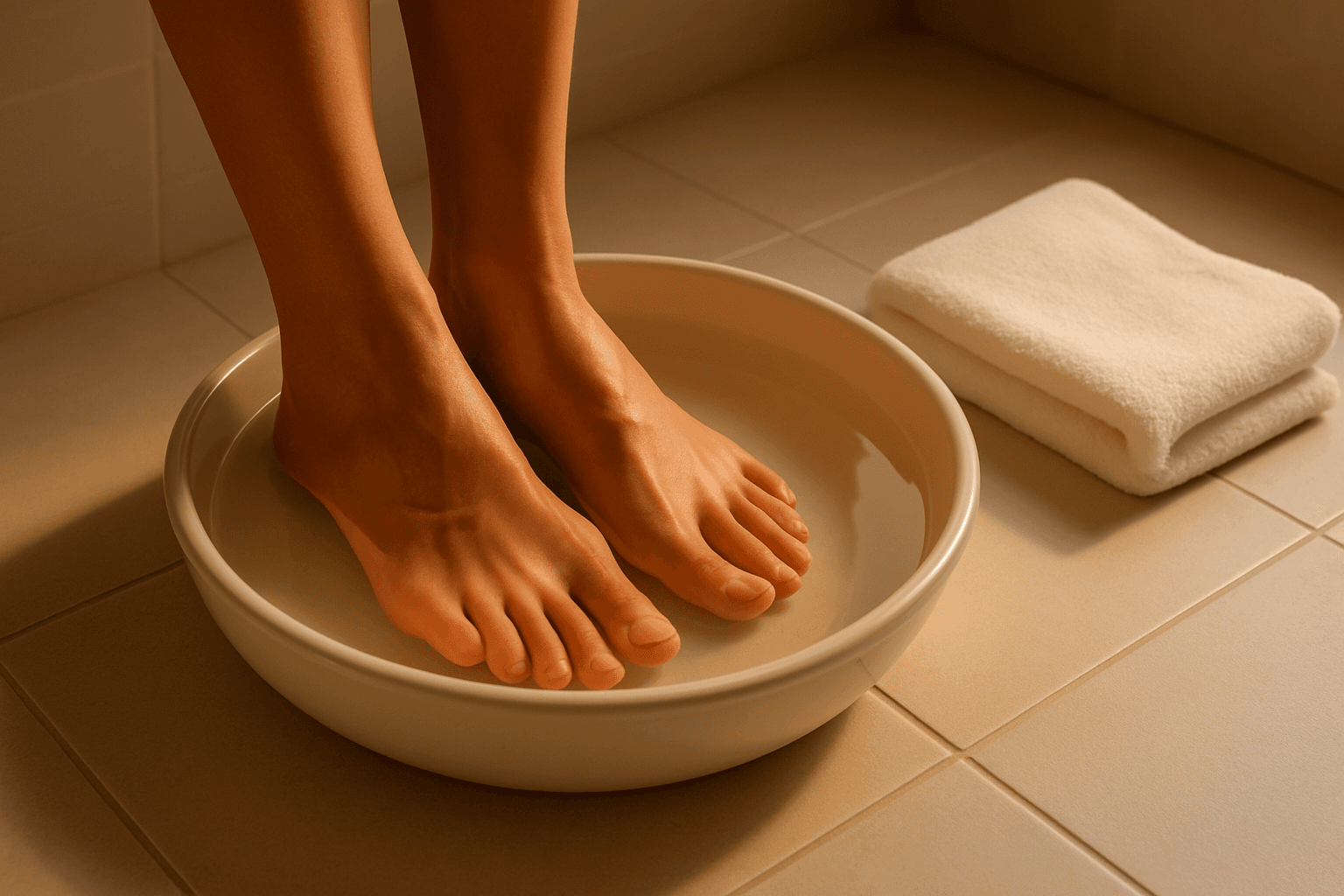
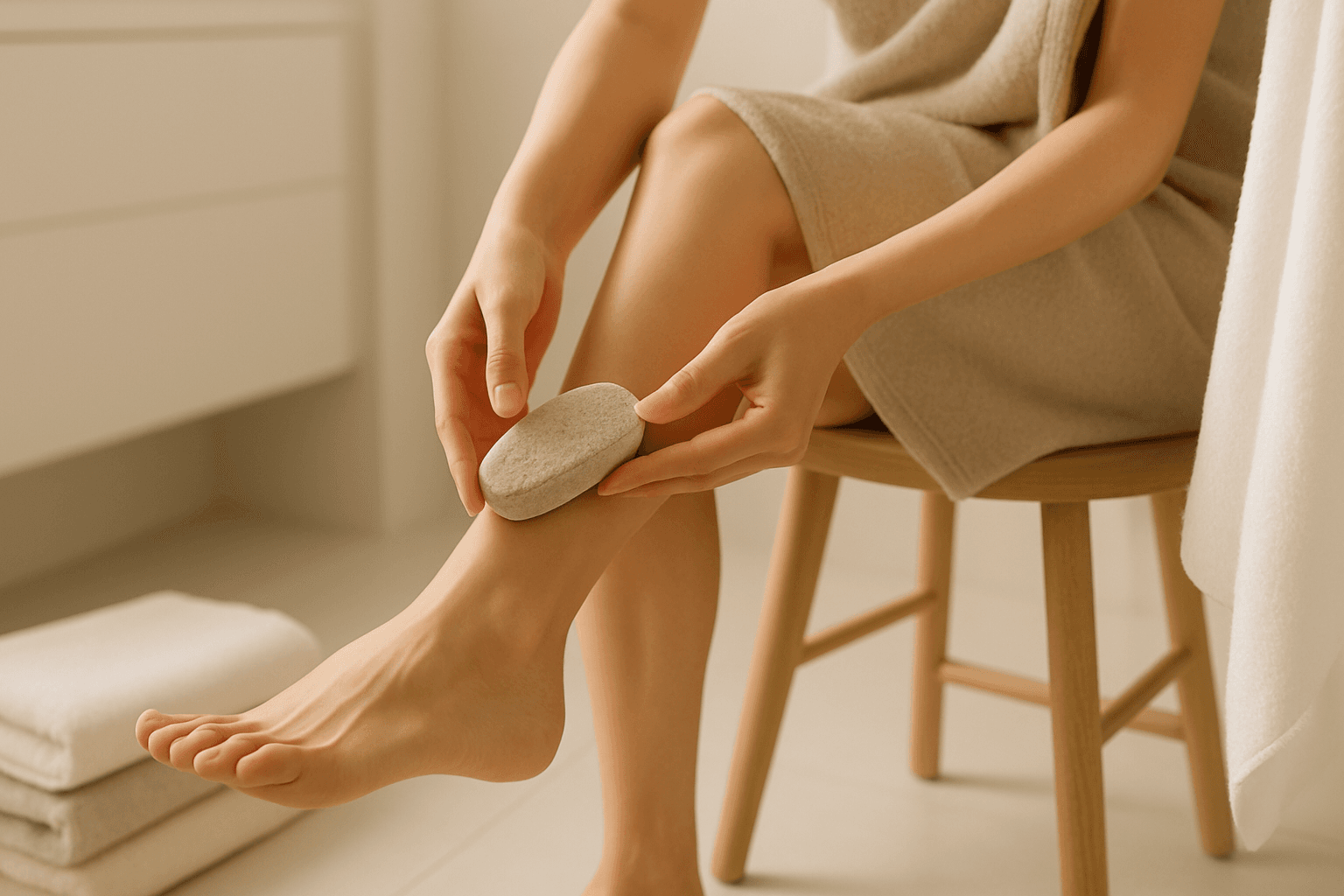
Soak the foot in lukewarm water for about ten minutes to soften the skin, then use a pumice stone or a foot file with light, sideways strokes on the thickened patch. Stop before the skin feels tender or looks pink. The aim is to reduce bulk, not to remove it all in one session, so a few minutes two or three times a week is plenty.
After drying, apply a moisturizer containing urea or lactic acid, which are commonly used to soften thick skin. Rub it in on the hard patch each evening and pull on cotton socks if you like. Salicylic acid pads and liquids are sold for corns, but they are an acid that can burn healthy skin around the patch, so follow the label closely and avoid them if you have diabetes or poor circulation.
Never use a razor, scissors or a blade on a corn or callus at home. It is easy to cut too deep, and an infection in a foot is far more serious than the hard skin it started with.
Take the rub away: padding, shoes and insoles
Softening only helps while the pressure is gone. Doughnut-shaped corn pads sit around a corn so the center is not pressed; silicone toe sleeves cushion a toe knuckle; and gel pads shield the skin where a seam rubs. Check that adding a pad does not make the shoe tighter, which would just move the pressure elsewhere.
Choose shoes with a roomy, rounded toe box, a soft upper and a firm sole. If you have a bunion or a hammer toe, the shoe needs more height and width over the joint too. Our bunions guide describes what to look for.
A cushioned insole spreads load across more of the sole and can ease pressure under the forefoot and heel. A deep heel cup and arch support such as the one in our insole review are built for comfort on hard floors, though no insole replaces a shoe that fits. For more on blisters from friction, see heel blisters.
When to see a podiatrist
Get a foot clinician to look at it if a corn or callus is very painful, bleeding, red, warm, draining or has a dark center, if it keeps returning despite better shoes, or if you cannot tell it from a wart. A podiatrist can safely pare the thickened skin in a few minutes, which often gives immediate comfort, and can check whether a bony shape or a gait pattern is behind it.
If you have diabetes, nerve damage or poor circulation, do not self-treat hard skin. Reduced sensation means you may not feel damage, and small wounds can become serious. Routine care from a podiatrist is the safer path, and any break in the skin should be checked promptly.
More on skin and nail health lives in our foot care hub. Persistent foot pain or skin problems that have not eased with honest home care deserve a doctor or podiatrist.
Browse foot care guides
Skin, nail and sock guidance for the whole foot — comfort, support and relief, honestly written.
Browse foot care guides →Frequently asked questions
What is the difference between a corn and a callus?
A callus is a broad, fairly even patch of thickened skin from friction or pressure. A corn is smaller with a dense center and tends to hurt when pressed, often on or between the toes.
Is it safe to cut off a corn at home?
No. Cutting with a blade or scissors risks going too deep and causing a wound or infection. Soften with soaks and light filing, or have a podiatrist pare it.
Will corns and calluses go away on their own?
They usually ease if the pressure that caused them is removed, as the skin gradually thins. If the shoe or foot shape keeps rubbing the spot, they tend to come back.
Do corn pads and salicylic acid work?
Doughnut pads can spare the corn from pressure, and salicylic acid products are sold to soften hard skin. The acid can irritate healthy skin, so follow the label and avoid it entirely if you have diabetes or poor circulation.
How do I tell a corn from a plantar wart?
A wart often shows tiny dark dots, interrupts the skin lines and hurts when squeezed from the sides. A corn hurts most when pressed straight down. A clinician can tell for sure.
Can insoles help with calluses?
A cushioned, supportive insole can spread pressure over more of the sole, which may ease hot spots under the heel and forefoot. It works best together with shoes that fit properly.
HeelCups is reader-supported. When you buy through links on our site we may earn an affiliate commission, at no extra cost to you. This article is general information about foot comfort and is not medical advice — see our medical disclaimer.