Heel Pain: Why Your Heel Hurts and How to Narrow It Down
Bottom of the heel, back of the heel, or the side — where it hurts says a lot about what's going on and what to try first.
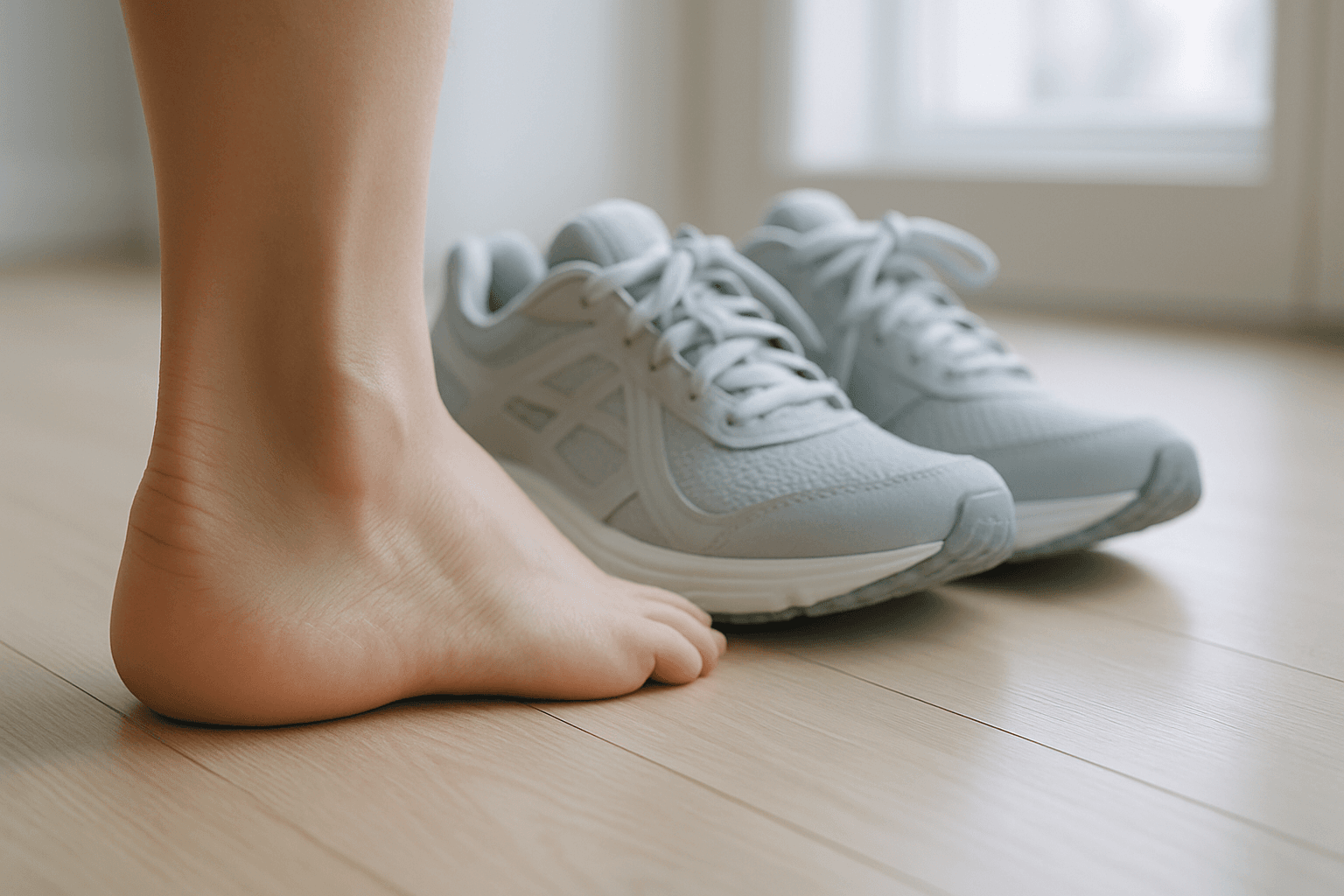
Heel pain is a symptom, not a diagnosis. Where it hurts, when it hurts, and what makes it worse tell you far more than any single label. Pain right under the heel that stabs with the first steps in the morning almost always points to plantar fasciitis, the irritation of the thick band of tissue that runs from your heel bone to your toes. Pain at the back of the heel, where the Achilles tendon attaches, is a different story — usually Achilles tendinopathy, retrocalcaneal bursitis, or a bony bump called a [Haglund's deformity](/heel-pain/haglunds-deformity) that rubs the tendon. Pain that feels like a fresh bruise on the pad of the heel, without a clear morning pattern, often comes from [heel fat pad syndrome](/heel-pain/fat-pad-syndrome) or too many hours on concrete in flat shoes. And pain on the outside or inside edge of the heel, especially after a twist, is worth having looked at because a stress fracture of the calcaneus can hide in those symptoms.
The reason mapping the pain helps is that the useful next steps are different. Plantar fasciitis calms down with calf and arch stretching, a firm arch support and a deep heel cup that cradles the heel. Achilles pain wants a small heel lift, eccentric calf loading and time — never aggressive stretching in the acute phase. A bruised fat pad wants cushioning and a break from hard floors, not more support. Load a plantar fasciitis routine onto an Achilles problem and you can make it worse; put a soft gel pad under everything and you miss the arch support the fascia actually needs.
Timing matters as much as location. Pain that is at its worst in the first steps of the morning and [after long sits](/heel-pain/after-sitting), then eases as you walk, is the plantar fasciitis pattern — our [morning heel pain](/heel-pain/morning-heel-pain) walk-through covers the ten-minute routine that changes how the day starts. Pain that starts fine and builds through the day, especially after standing or walking, is more consistent with fat pad irritation or a stress reaction. Pain that flares during and just after a run, then quiets down, points at Achilles or the fascia depending on where along the heel it lives — our [heel pain when walking or running](/heel-pain/walking-or-running) walk-through goes through both patterns. Pain that wakes you at night, or that comes with swelling, warmth, numbness, tingling or a color change, is out of the self-care lane — see a clinician sooner rather than later. In children and teenagers, persistent heel pain is almost never plantar fasciitis; a growth-plate problem called Sever's disease is far more common, and it needs a different plan.
The habits and life events that trigger heel pain are ordinary and predictable. Ramping up mileage too quickly, a new job that puts you on your feet all day, a weight gain of even ten to fifteen pounds, a switch to flat canvas shoes for a summer, pregnancy, and the first weeks back from an injury are all common lead-ins. Pain along the inside of the ankle and under the arch, especially when the arch itself looks flatter than the other foot, is often a different tendon problem — [posterior tibial tendonitis](/heel-pain/posterior-tibial-tendonitis) — and it responds to a different plan than the fascia under the heel. Our [what causes heel pain](/heel-pain/what-causes-heel-pain) walk-through goes through the everyday triggers and risk factors in detail. Tight calves are the single most consistent finding across most heel pain patterns, which is why calf stretching shows up in almost every recommendation on this site. Foot shape plays a role too — high arches shift more shock to the heel and forefoot, flat arches over-lengthen the fascia — but shape is not destiny; supportive footwear and a real routine matter more.
If the ache is deep, diffuse and gets worse with impact, rule out bone with our [heel stress fracture](/heel-pain/calcaneal-stress-fracture) page. This hub is a map, not medical advice. Use the sub-pages to narrow down which pattern matches yours, learn what tends to help each one, and understand when heel cups (which cushion and cradle the heel) make more sense than insoles (which support the arch and change how your foot loads). For runners and walkers whose heel pain traces to shoe friction rather than tissue overload, [heel-lock lacing](/heel-pain/heel-lock-lacing) is the five-second fix worth trying before any new gear. Persistent heel pain in an active eight-to-fourteen-year-old is a different animal — [Sever's disease](/heel-pain/severs-disease) is far more common than adult-style plantar fasciitis in that age band and needs its own plan. Anyone whose heel pain has lasted more than a few weeks despite honest home care, or who has any of the red flags above, deserves an in-person exam by a doctor or podiatrist. Nothing on this site cures a foot condition; the goal is comfort, support and relief while your body heals, and knowing when a professional needs to step in.
In this guide
- Heel Pain and Diabetes: Why It Deserves Extra Attention and a Daily Foot Check
- Tight Calves and Heel Pain: How Calf Tightness Pulls on the Heel and What Eases It
- Heel Pain That Isn't Mechanical: When Arthritis or Inflammation Is Behind a Sore Heel
- Pain in the Arch of Your Foot: Causes, Look-Alikes and What Brings Relief
- Pain on the Inside of the Heel: What It Usually Means and What to Try First
- Heel Pain at Night: Why It Throbs in Bed and What Eases It Before Sleep
- Heel Stress Fracture: When Heel Pain Is the Bone, Not the Fascia
- Posterior Tibial Tendonitis: The Heel-and-Arch Pain That Isn't Plantar Fasciitis
- Heel Pain After Sitting: Why the First Steps Hurt After a Long Sit, and How to Reset in Thirty Seconds
- Plantar Fibroma: The Lump in the Arch That Isn't Plantar Fasciitis, Isn't a Cyst, and Usually Isn't an Emergency
- Tarsal Tunnel Syndrome: The Nerve Pain That Looks Like Plantar Fasciitis — And How to Tell Them Apart
- Heel Pain During Pregnancy: Why It Flares, What Helps, and When to Call a Clinician
- Heel Bursitis: The Fluid-Filled Sacs at the Back of Your Heel and What Actually Calms Them Down
- Pain on the Outside of the Heel: Peroneal Tendon Trouble and the Look-alikes to Sort From It
- Sever's Disease: The Real Reason Your Active Kid's Heel Hurts
- Haglund's Deformity ('Pump Bump'): The Bony Bump at the Back of the Heel and What to Do About It
- Heel Fat Pad Syndrome: When Your Heel Feels Like a Bruise That Won't Fade
- Achilles Tendonitis: Why the Back of Your Heel Hurts and What Actually Calms It Down
- Heel-Lock Lacing: How the Runner's Loop Stops Heel Slip, Blisters and Achilles Rub
- Heel Pain When Walking or Running: What Is Actually Happening and What Helps First
- Morning Heel Pain: Why First Steps Hurt Most and the Short Routine That Changes That
- What Causes Heel Pain? The Everyday Triggers Behind Most Sore Heels
- Pain in the Back of the Heel: Achilles, Bursa, Haglund's — and What to Try First
- Pain in the Bottom of the Heel: What It Usually Is and What Helps First
- Why Does My Heel Hurt? A Simple Map to What's Going On
- Why does my heel hurt? coming soon
- Pain in the bottom of the heel coming soon
- Pain in the back of the heel coming soon
- Heel pain causes coming soon
- Morning heel pain coming soon
- Heel pain when walking or running coming soon
- Heel-lock lacing coming soon
Written and reviewed by the Heelcups.com Team. General information, not medical advice — see our medical disclaimer. Reader-supported: we may earn a commission when you buy through our links.