BURNING FEET AT NIGHT
Burning Feet at Night: What's Behind It, What Soothes It, and When It's a Clinic Visit
A burning or tingling sensation across the soles — often at night, often in bed — is one of the most common foot complaints that is not heel pain. Here is how to tell what is driving it, what helps tonight, and when it belongs in a doctor's office rather than the foot-care aisle.

A burning sensation in the feet, especially after you lie down, is one of the oldest and most common foot complaints and one of the hardest to self-diagnose from the aisle. Sometimes it is the simple end of a long day — tired feet, hot shoes, residual heat the body is still shedding — and the burning fades within half an hour of socks coming off. Sometimes it is a mild case of athlete's foot that reads like a nerve problem. Sometimes it is a medication side effect, a vitamin issue, a thyroid signal, or an early sign of a nerve problem that deserves a clinician's eye. The useful move is to tell those apart before buying anything, because the comfort routine that helps a tired foot is different from the follow-up that a nerve-flavored burning deserves.
This page is a walk-through of what burning feet usually turns out to be, which patterns respond well to simple home comfort moves, which ones should prompt a same-week clinic visit, and the sock, shoe and nighttime habits that help most of the ordinary cases settle. We stay on the comfort side of the line everywhere — nothing on this site is a treatment for neuropathy, vascular disease or any medical condition that burning feet can point to, and we do not pretend otherwise.
Nothing here replaces a clinician. Burning feet that come with numbness, pins and needles that linger, color change, swelling in one leg only, pain at rest, or a history of diabetes, thyroid disease or chemotherapy are not foot-care aisle problems — they are reasons to call a primary care doctor or a podiatrist in the same week. Every recommendation on this hub is written for comfort, support and relief while the underlying picture gets the right eyes on it.
What burning feet is actually signaling
The sensation we call burning in the feet is the body translating three different kinds of signal into the same word. The first is simple thermal signal — the feet really are warmer than you want them to be, usually because they have been in closed shoes all day and the body is unloading heat the way it does. The second is a skin signal — mild inflammation from athlete's foot, contact irritation from a new detergent or a cheap insole, or a histamine release that reads as heat because the skin is actually warm. The third is a nerve signal — small-fiber nerves in the soles sending a sensation the brain interprets as burning because that is how irritated nerves tend to speak. Each of these needs a different response, and the first job is to tell which family you are in.
The quickest honest filter is what makes the burning better. If the sensation calms down within fifteen or twenty minutes of cool air, bare feet on a cool floor, or a cool washcloth across the soles — and if it does not return once you are back in bed — it is almost always thermal and will not need medical attention. If the sensation is paired with visible redness, scaling, or itching between the toes, it is almost always a skin issue and responds to an over-the-counter antifungal plus dry socks. If the sensation comes with any tingling, pins and needles, numbness, or a feeling that the feet are not fully there, and especially if it is worse in the hours after lying down and only slightly affected by cooling, it is in the nerve family and belongs with a clinician.
The nerve family is where diabetes, prediabetes, B12 deficiency, hypothyroidism, chemotherapy, long-term heavy alcohol use, and certain antibiotics and HIV medications show up on the foot. None of them are things an aisle product resolves, and the honest move is the same for all of them: comfort while you make the appointment that gets the underlying picture read.
The everyday causes most burning feet turn out to be
By volume, the most common cause of burning feet is a long day in closed shoes with warm socks and limited air. The feet have one of the highest densities of sweat glands in the body, and a workday in synthetic socks inside leather or vinyl work shoes traps heat and moisture that the body would normally shed. The sensation that lands in bed is the body still unloading. The comfort fix is simple and reliable: cotton or merino wool socks that breathe, a shoe with real ventilation (or at least a mesh upper for part of the week), and a cool rinse of the feet before bed.
The next most common cause is a mild case of athlete's foot that is not visible enough to be obvious. The fungal irritation reads as burning rather than itch, especially in the hours after socks come off, and it tends to live between the fourth and fifth toes where readers do not look. A two-week course of a drugstore clotrimazole or terbinafine cream, applied to clean dry feet morning and night, resolves most mild cases; our walk-through on toenail fungus and foot fungus covers the specific choice and the honest limits of over-the-counter products.
Three more everyday causes round out the honest list: a change of shoe (new insole, new pair, a cheaper material against the sole) that is irritating the skin; dehydration after a long or hot day, which can produce diffuse foot and leg discomfort that reads as warmth; and tired-and-overused feet after a sudden ramp in walking or standing time (a new job, a travel day, a trade show). None of these need a clinician on their own, and all of them respond to the comfort moves below in a few days to a week.
The medical causes that deserve a clinic visit
Burning feet that come with numbness, pins and needles, or the feeling that the feet are not quite there are in the small-fiber neuropathy family. The most common driver by a wide margin is diabetes and prediabetes, often undiagnosed; the hemoglobin A1c blood test ordered by a primary care doctor is the first move. B12 deficiency is a close second and is easy to miss because it hides in older adults, vegetarians, and people on long-term acid-reducing medication; a serum B12 level is the test. Hypothyroidism, chronic kidney disease, chemotherapy-induced neuropathy, long-term heavy alcohol use, and certain medications (metronidazole, isoniazid, some HIV drugs, some statins at the margins) all show up as burning feet before they show up anywhere else obvious.
A smaller but important category is nerve entrapment. Tarsal tunnel syndrome, the foot equivalent of carpal tunnel, pinches the posterior tibial nerve as it crosses the inner ankle and produces burning or electric sensations along the sole and sometimes into the toes. It responds to a different plan than diffuse neuropathy — a supportive insole, activity modification, often a referral to physical therapy or a nerve-specific specialist. If the burning follows the inside of the ankle down into the arch and worsens with activity, that pattern deserves a specific look.
Peripheral vascular disease is a rarer but serious cause of foot complaints that can read as burning, especially at rest and at night, often with cool pale feet, slow-healing skin cracks, or a leg that aches with walking and settles with rest. This is a vascular surgery conversation, not a foot-care aisle one. Red flags that move burning feet into the same-week clinic lane: pain at rest that wakes you, swelling in one leg only, visible color change, open sores that are slow to heal, numbness that is spreading, a history of diabetes or heart disease, or a recent course of chemotherapy. Any of these is a reason to call the doctor's office rather than buy another sock.
Comfort moves at home tonight
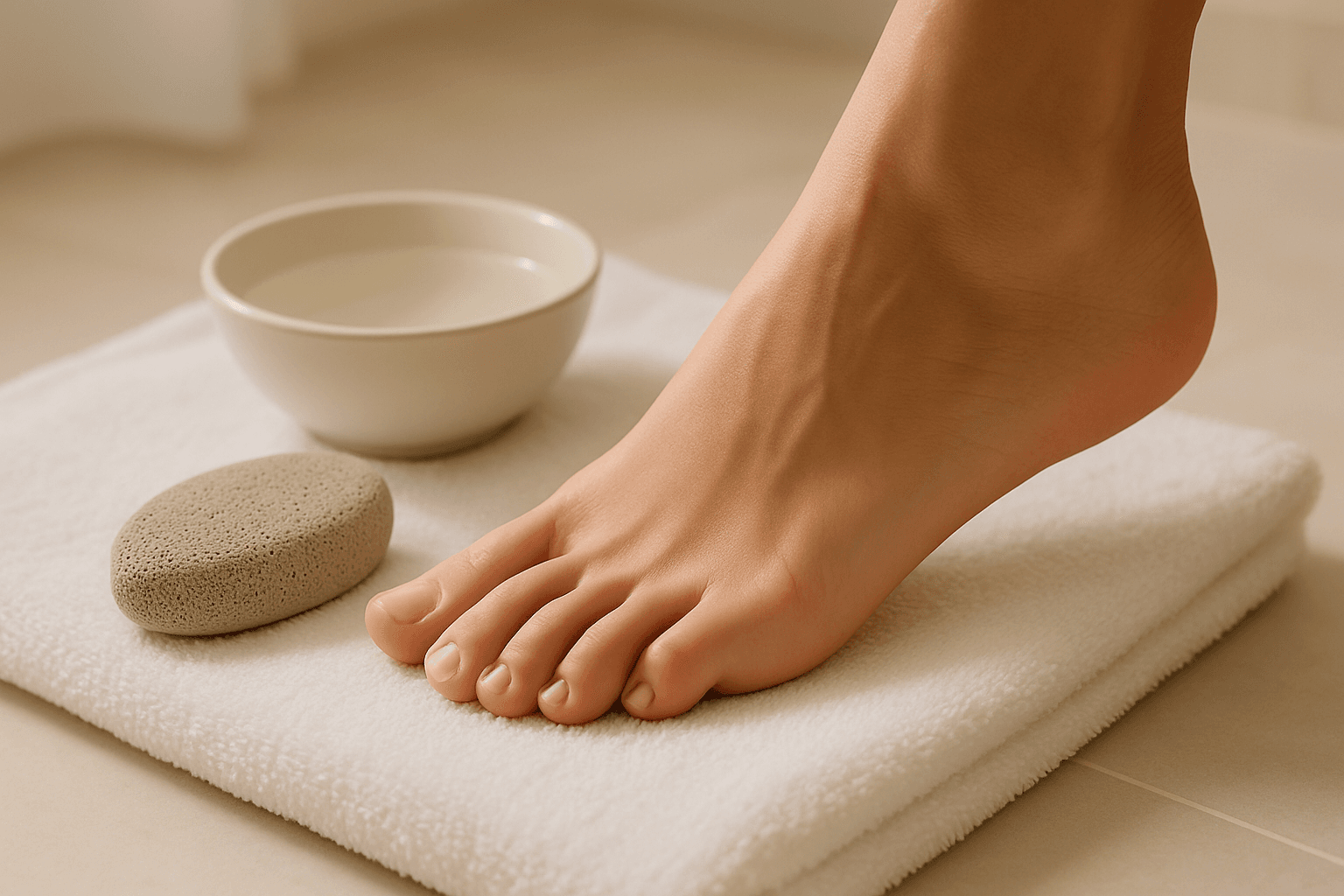
For the everyday thermal and tired-feet cases, a short bedtime routine moves the needle more than any product. Start with socks off and a cool-water rinse — thirty seconds under the shower head is enough, and genuinely cold water is not necessary. Pat the feet dry fully, including between the toes. Spend ninety seconds doing a seated calf and arch stretch; even non-heel-pain foot complaints respond to the circulation that stretching brings into the lower leg. If the burning is still noticeable, a cool damp washcloth laid across the soles for five minutes is almost always enough; a bag of frozen peas wrapped in a dish towel is the fallback when nothing else is handy.
An ice bottle under the arch is the specific move for feet that are both burning and sore from a long day of standing. Rolling a frozen water bottle slowly from heel to ball under each foot, three to five minutes a side, is a comfort routine with the extra benefit of giving the arch a light massage. Readers who end up here from a plantar fasciitis flare will recognize the move; it is just as useful for diffuse foot heat after a shift.
Elevation is the under-used lever. Fifteen to twenty minutes with the feet above heart level — propped on two or three pillows at the end of the couch — settles both heat and the puffy heavy feeling that long standing produces. For readers who find burning feet worst in the first thirty minutes of lying down, a bedtime wind-down with the feet elevated often shortens that window to five minutes or avoids it entirely.
Shoes, socks and the daytime habits that help
The daytime side of burning feet is almost entirely about air and material. A shoe with a mesh upper, worn at least two or three days a week, cuts the amount of trapped heat and moisture the body has to unload at night. Natural fiber socks — cotton, merino wool, or a cotton-wool blend — breathe better than straight synthetics, and the merino wool category is quietly excellent at managing both heat and sweat across a full day. Our walk-through on heated socks for cold feet covers the opposite problem; for burning feet, the move is lighter, airier, and sometimes a second pair of socks halfway through the day to reset.
Insoles can make feet hotter if they are the wrong kind. Thick dense foam insoles with no perforation trap heat; the clean fix is a thinner, perforated insole that still supports the arch. The between-walks insole we recommend most often is covered in our Akusoli insoles review — a trim-to-fit pair with a firm medial arch and a deep heel cup that supports the foot without turning the shoe into a sauna.
Three small habits make an outsized difference across the week: changing socks midway through a long day, airing shoes out overnight (never wearing the same pair two days in a row), and showering the feet separately at the end of a hot day rather than counting on the general shower to reach them. For readers whose burning feet are stubbornly in the mild athlete's foot family, drying thoroughly between the toes after any wash — not a quick pat but a deliberate press with the towel — is often the step that was missing.
When burning feet is a same-week clinic visit
The threshold for calling a doctor's office is lower than most readers assume. If the burning has been consistent for more than two to three weeks, if it is paired with any numbness or pins and needles that linger between episodes, if it wakes you from sleep, if one foot or one leg is involved and the other is not, if there is any color change, swelling that lasts into the morning, slow-healing skin cracks, or a sore that will not close — the honest next step is a primary care appointment with a request for an A1c and a B12 level, not another product.
Readers with diabetes or prediabetes deserve a lower threshold still. Daily foot checks (looking at the top, bottom and between the toes for any sore, blister, cut or color change), a well-fitting supportive shoe worn whenever the feet are on the floor, and a once-a-year podiatry exam are the baseline. New or worsening burning in that population is a same-week call, not a monthly observation. The same is true for anyone on chemotherapy or recovering from it; the oncology team should know about any new sensory change in the feet or hands within a week.
Nothing on this hub replaces medical care, and no sock, cream or insole is a treatment for neuropathy, vascular disease, thyroid disease, or a vitamin deficiency. The goal here is comfort while the medical picture gets the right eyes on it. Burning feet that have resisted two or three weeks of honest home comfort moves deserves an in-person exam by a doctor or podiatrist.
The rest of the foot-care hub
Compression socks, heated socks, cracked heels and the honest take on toenail solutions — the full set of comfort moves for everything below the ankle that is not heel pain.
The rest of the foot-care hub →Frequently asked questions
Why do my feet burn at night?
The three most common reasons are thermal (a long day in closed shoes with warm socks, and the body is still shedding heat), mild athlete's foot (fungal irritation that reads as burning rather than itch, often hiding between the fourth and fifth toes), and small-fiber nerve irritation (which can trace to diabetes, B12 deficiency, hypothyroidism, chemotherapy, certain medications, or nerve entrapment at the ankle). Thermal and skin causes usually settle in a few days with the comfort moves on this page. Nerve-flavored burning that comes with tingling, numbness, or a feeling that the feet are not quite there belongs with a clinician in the same week, not with another product.
Is burning feet a sign of diabetes?
It can be, and diabetes-related and prediabetes-related small-fiber neuropathy is the single most common medical cause of persistent burning feet. The useful signal is pairing: burning that comes with tingling, pins and needles, numbness, or the feeling of walking on something that is not there, especially at night, is a reason to ask a primary care doctor for a hemoglobin A1c blood test. The test is inexpensive, often ordered the same week, and either rules diabetes in as a cause worth taking seriously or rules it out and shifts the search to B12, thyroid, nerve entrapment, or medication side effects.
What home remedies help burning feet?
A short bedtime routine helps most of the everyday cases: a thirty-second cool-water rinse, careful drying including between the toes, ninety seconds of a seated calf and arch stretch, and a cool damp washcloth across the soles for five minutes. An ice bottle rolled slowly under each arch, three to five minutes a side, is excellent when the feet are both burning and sore. Fifteen to twenty minutes with the feet elevated above heart level before bed shortens the burning window for most readers. Natural fiber socks (cotton or merino wool), a shoe with real ventilation, and never wearing the same shoes two days in a row are the daytime side.
Can tight shoes cause burning feet?
They can, and it is one of the most common causes that readers do not consider. A shoe with a narrow toebox, a shoe half a size too small, or a shoe laced too tightly across the top of the foot compresses nerves and reduces circulation enough to produce burning or tingling across the sole or the top of the foot. The signal is burning that improves within fifteen minutes of taking the shoes off and does not come back without them. The fix is a shoe sized to the longer foot (feet are often not identical in length), measured at the end of the day when they are at their largest, with half a thumb's width of room past the longest toe.
Will a cold foot bath help burning feet?
A cool — not cold — foot bath for five to ten minutes is one of the most reliable comfort moves for everyday thermal burning. Water in the sixty-five to seventy-five degree Fahrenheit range (about eighteen to twenty-four Celsius) is cool enough to help and warm enough that it is not uncomfortable, and the comfort tends to outlast the bath by a half hour or so. Ice-cold baths are not necessary and can be counterproductive for readers whose burning has any vascular component; cool is the honest word, not cold. Dry the feet thoroughly afterward, especially between the toes.
When should I see a doctor for burning feet?
Call a primary care doctor or a podiatrist in the same week if the burning has been consistent for more than two to three weeks, if it comes with any lingering numbness, pins and needles, or the feeling that the feet are not fully there, if it wakes you from sleep, if one foot or leg is involved and the other is not, if there is any color change or swelling, if you have any slow-healing skin cracks or sores on the feet, or if you have diabetes, prediabetes, kidney disease, thyroid disease, or a history of chemotherapy. The appointment often starts with an A1c, a B12 level and a basic nerve exam, and either reassures or points to the next step.
HeelCups is reader-supported. When you buy through links on our site we may earn an affiliate commission, at no extra cost to you. This article is general information about foot comfort and is not medical advice — see our medical disclaimer.