FLAT FEET
Insoles for Flat Feet: What Actually Supports a Fallen Arch Through a Long Day
Flat feet aren't a flaw to fix — they're a shape to support. The right insole holds the arch's position under body weight, cradles the heel, and stops the plantar fascia from being over-stretched with every step.
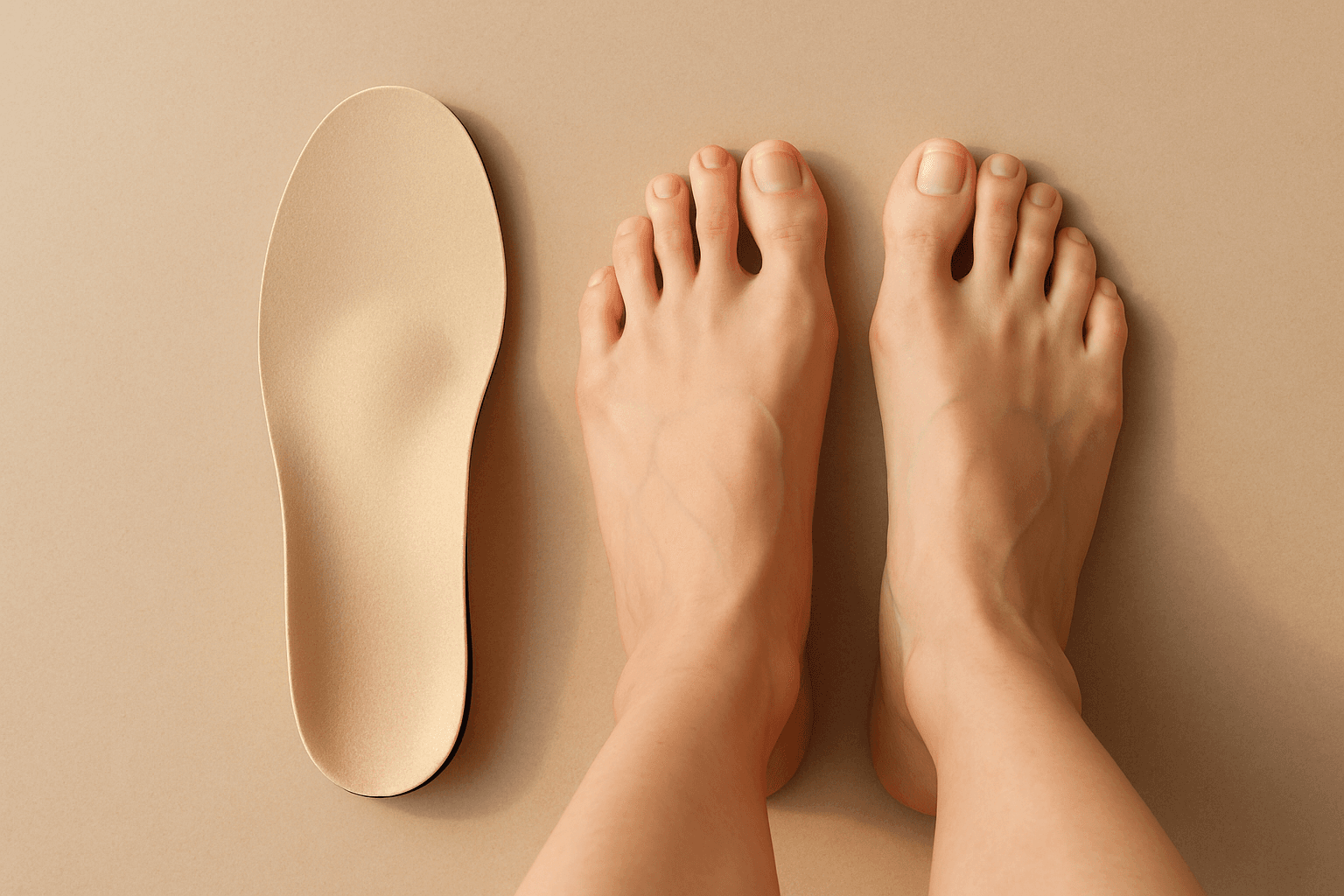
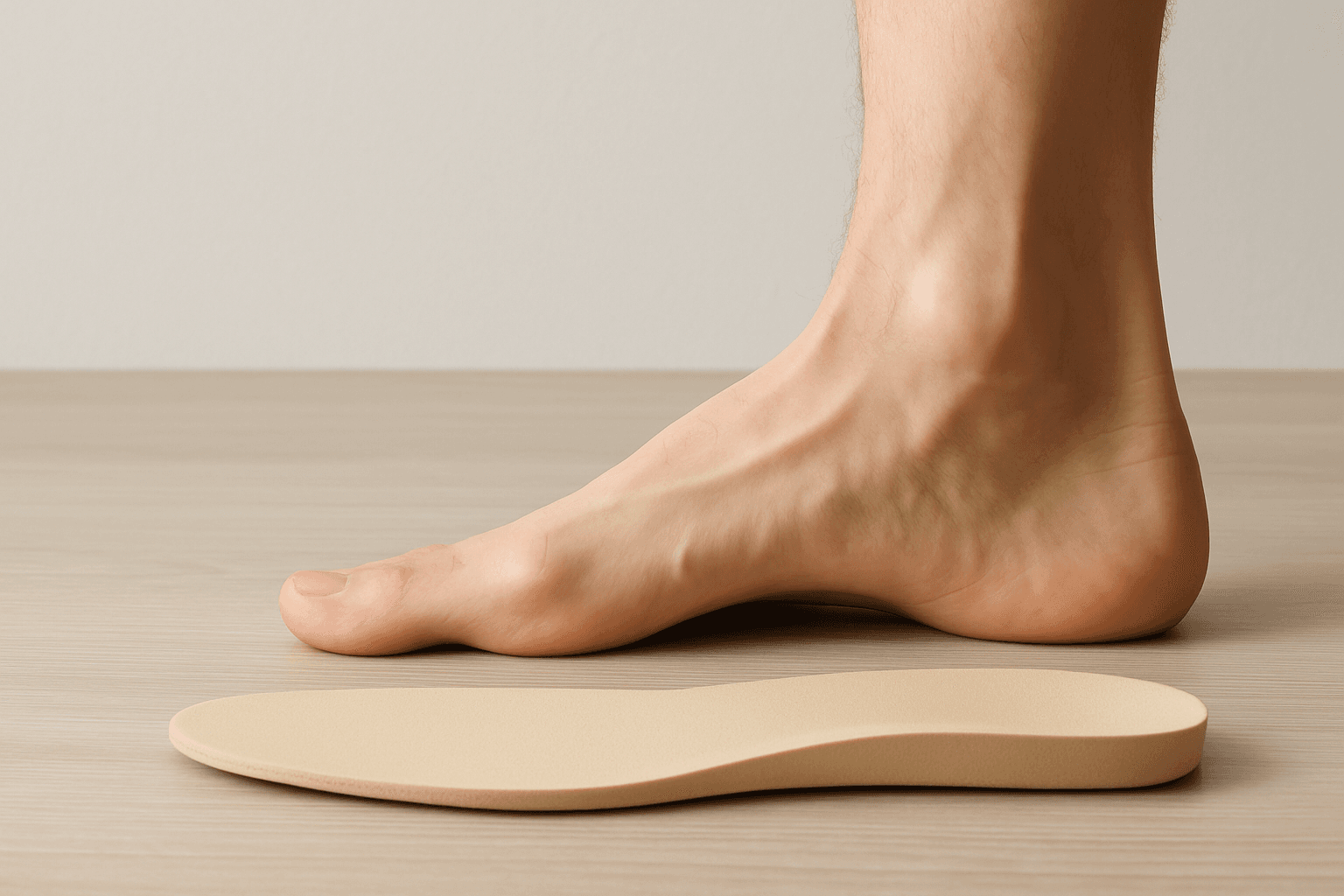
Flat feet — feet whose medial arch sits low or flattens to the ground under body weight — are one of the most common foot shapes in adults. Roughly one in four people has some degree of it. On its own, a flat foot is not a problem; plenty of people with flat feet walk, run and stand all day without any pain at all. What tips flat feet into an insole question is a specific complaint on top of the shape: arch fatigue by mid-afternoon, morning heel pain that points at plantar fasciitis, tired calves at the end of a shift, or a sense that the whole foot is rolling inward with every step. When any of those shows up, a good insole is often the single highest-leverage change you can make to the shoes you already own.
The right insole for a flat foot has one main job: hold the arch's position under body weight so the plantar fascia is not being over-stretched with every step, and so the small muscles of the foot are not fighting against the collapse for eight to twelve hours a day. A cushioned heel cup and a dense base add the shock absorption a soft, packed-down factory insole never had. What it does not do is 'correct' the arch back into a high-arched foot — the shape is what the shape is — and it does not need to. The support is a floor the arch rests on, not a mold the foot is forced into.
This page walks through what actually separates a useful flat-foot insole from an expensive placebo, how to match one to the shoe you already wear, and the break-in habits that keep you from quitting a pair on day two. Nothing here is medical advice. Persistent heel or arch pain that has not eased after four to six weeks of honest home care deserves an in-person exam by a doctor or podiatrist. Every recommendation on this hub is written for comfort, support and relief.
Flat feet, fallen arches and over-pronation: sorting the terms
The terminology in this corner of the foot-care aisle is sloppy, which does not help. "Flat feet" is the everyday description of a foot whose medial arch is low or absent when standing. "Fallen arches" is the same picture in someone whose arch was higher earlier in life and has dropped over years, usually with age, weight change or a specific tendon problem. "Over-pronation" is not a foot shape at all; it is a motion — the ankle rolling inward more than average during the stance phase of a step — and it can happen in a foot of any shape, though a flat foot pronates more than a high-arched one on average. Most people who use any of these terms about themselves mean the same practical thing: my arches are low, they get tired, and I roll inward when I walk.
This matters for insoles because the target is the same across all three descriptions: a firm arch that holds its shape under body weight and cradles the medial side of the foot. Whether you say your foot is flat, your arch has fallen or you over-pronate, the tool is the same. What differs is the intensity of support you want, and that comes down to whether the flatness is bothering you and how much of the day is on your feet on a hard surface. A twenty-something with genetically flat feet who walks to a desk job needs less aggressive support than a fifty-year-old with fallen arches who nurses twelve-hour shifts on concrete.
The features an insole for flat feet actually needs
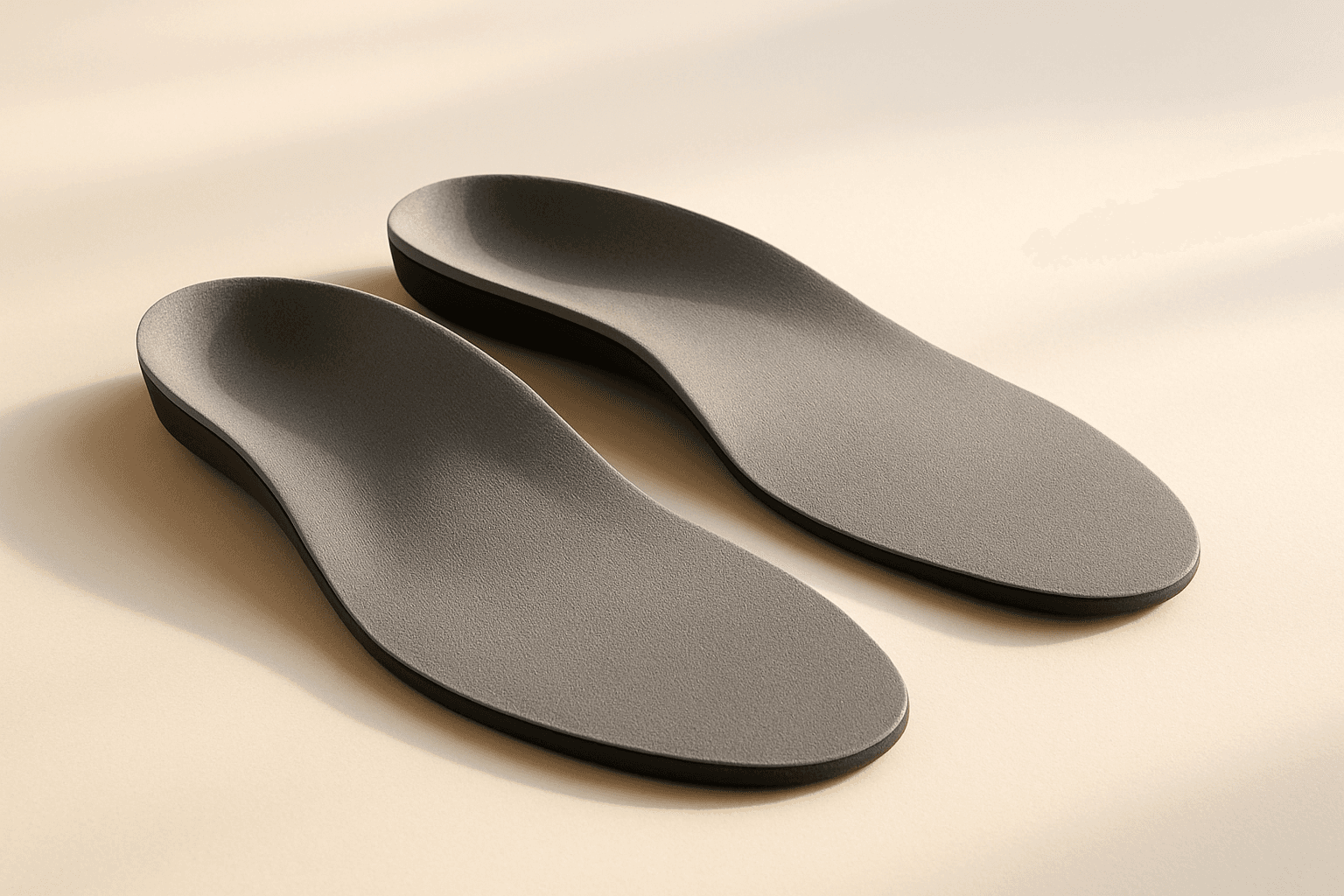
A firm medial arch is the whole ballgame. Press your thumb into the arch of a candidate insole hard enough that it deforms. If the arch collapses easily to the base plate, that insole will do essentially nothing for a flat foot under body weight — the same collapse will happen with every step. The good insoles push back. The recipe is usually a dense EVA or foam-over-plastic support with a shape that sits under the medial (inside) edge of the foot rather than in the middle of the foot. Look at the insole from the side: the peak of the arch should be closer to the heel end than the toe end, matching where the anatomical arch actually sits.
A deep heel cup is the second feature, and it does two jobs at once on a flat foot. It cradles the fat pad under the heel bone so it absorbs shock the way it was built to, and it keeps the heel from rolling inward at heel-strike, which is where most of the over-pronation motion starts on a flat foot. A bowl-shaped cup is what you want, not a shallow disc. The third feature is a dense but not brick-like base — a foam that stays firm under repeated static load rather than packing down within weeks. Every extra feature (gel dots, cooling top layers, cushioning nodes) is comfort or bonus; the arch, the heel cup and the base are what earn the recommendation.
Rigid, semi-rigid or soft: the honest trade-offs
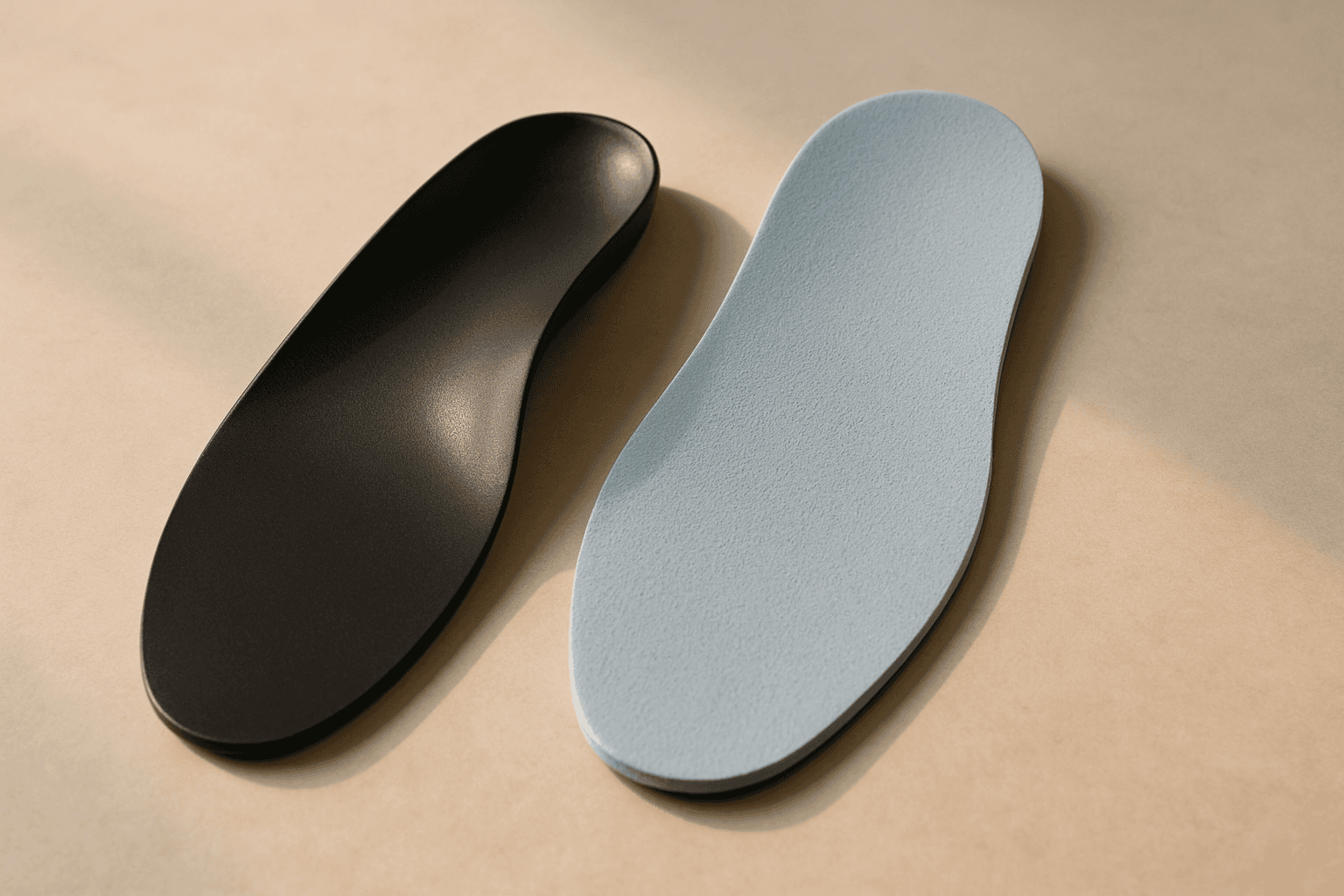
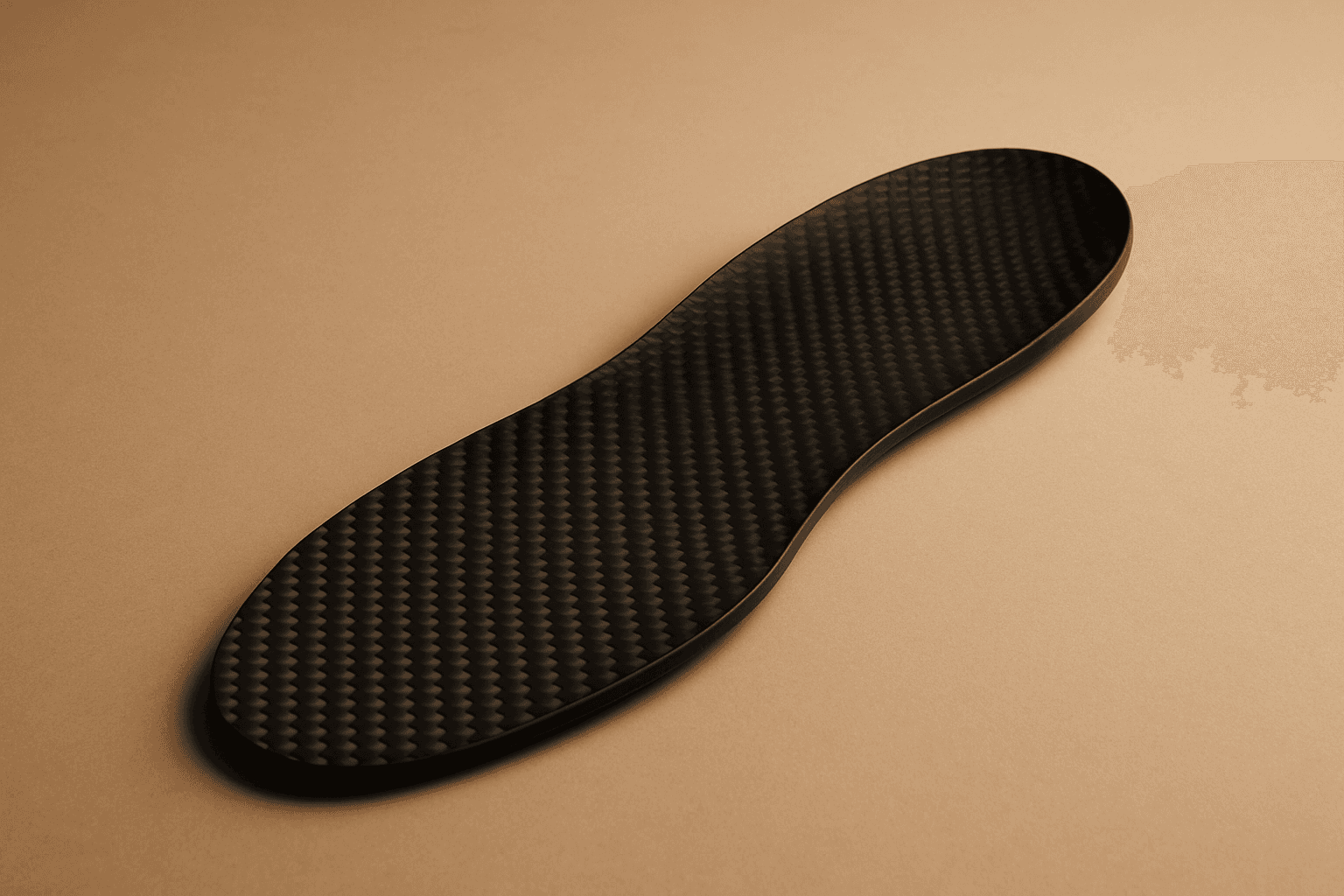
Insoles for flat feet come in three broad flavors. Fully rigid orthotic-style insoles use a hard plastic shell under the arch and heel and give the strongest support; they are what a podiatrist's custom pair typically is, and they are excellent at holding a flat foot's shape through a whole day. The trade-off is a longer break-in — feet coming from flat drugstore insoles often feel every muscle around the arch working overtime for the first week — and less shock absorption because the plastic is stiff. Rigid insoles suit heavier feet, long days on hard floors and people whose flat feet actively hurt.
Semi-rigid insoles pair a firm foam-over-plastic arch with a dense EVA base and are the sweet spot for most people. They hold the arch's shape well, cushion enough for daily wear, and the break-in is manageable in a week rather than a month. This is the profile of most well-regarded over-the-counter insoles for flat feet, and it is what we would try first for a reader who does not already know they need a rigid pair. Soft, all-foam insoles feel great in the store, cushion nicely, and do very little for a truly flat arch under body weight — the arch bottoms out within a couple of miles of walking. Skip them for a flat foot; they are marketed for cushioning, not support.
Match the insole to the shoe you actually wear
The best insole in the world is useless in the wrong shoe. Trim-to-fit full-length insoles fit most walking shoes, running shoes, work boots and casual sneakers; pull the factory insole (usually a flat pad of foam) and use it as a template, cutting a little outside the line for a snug fit. Low-volume shoes — narrow dress flats, minimalist runners, some slim work shoes — often will not accept a full-length aftermarket insole cleanly, and a three-quarter-length insole that supports the arch and heel without a forefoot section is the right pick there.
The single move that changes flat-foot fatigue the most is putting the supportive insole in the shoe you actually wear the most hours in — the work shoe, the daily walking sneaker, the house slipper — not the running shoe you only wear for an hour. If your best-fitting supportive insole lives in a runner while you spend twelve hours in a flat clog, you are missing the point. For a shift-day fit, our insoles for standing all day walk-through covers the same problem through a work-hours lens. And if what you really want is arch support in a slim shoe that will not take a full insole, a heel cup does part of the job in the shallowest shoes — see heel cups vs insoles for the honest comparison.
Break-in: knowing when it is working and when it is not
Ease a new flat-foot insole in over a week rather than dropping it into a Monday twelve-hour day. A few hours the first two days, then a half day, then full days. The first-week feeling is often described as "working muscles I didn't know I had" — small muscles in the arch and along the medial side of the foot that had been coasting under a flat drugstore insole are now doing their share of the work. Mild soreness in those muscles is normal and fades in three to seven days. Sharp pain, a new pain that was not there before, or the same old pain worse than baseline is a sign to drop back down a step and re-ramp more slowly.
Give any honest routine three to four weeks before deciding whether it is working. The signs a pair is helping: the mid-afternoon arch fatigue that used to be reliable is fainter, the first steps in the morning are less sharp, the calves are less tight at the end of a shift. The signs a pair is the wrong pair: after a week of ease-in, walking still feels worse than in your old shoes, or a new pain has shown up that follows the insole rather than the day. Return or exchange them; a comfort product that hurts you is not the right pair. Replace foam-based insoles every six to twelve months of daily wear; when the arch has packed down or the heel cup no longer feels distinct, the pair has done its life's work.
When flat feet are not the problem
Flat feet get blamed for a lot of foot pain that is not actually about the arch. Sharp under-heel pain worst with the first steps of the morning is plantar fasciitis — the same insole helps, but the routine (stretching, activity cuts) is what settles the case. Pain at the back of the heel is usually Achilles or bursa related and wants a small heel lift more than an aggressive arch. Numbness, tingling or burning into the sole points at a nerve issue and belongs with a clinician. Adult-onset flat foot from a specific tendon problem — posterior tibial tendon dysfunction — often causes a foot that is visibly rolling inward and a pain along the inside of the ankle; that combination is a podiatrist visit, not a drugstore insole. And persistent flat feet with pain in a child is a different problem entirely, evaluated by a pediatric provider.
Nothing on this hub replaces a clinician. Persistent heel or arch pain that has not eased after four to six weeks of honest home care, pain that came with a specific injury, or pain with swelling, numbness, tingling or a color change deserves an in-person exam by a doctor or podiatrist. The insoles are a comfort and support tool; the medical picture, when there is one, is a separate lane.
The trim-to-fit insole we would try first for flat feet
A firm medial arch, a deep heel cup and a dense EVA base — the three features that hold a flat foot's shape through a full day on your feet.
The trim-to-fit insole we would try first for flat feet →Frequently asked questions
Do flat feet always need arch support?
No. Flat feet without pain do not need any treatment or insole; the shape is not a problem on its own, and plenty of people with flat feet walk, run and stand all day without a single complaint. What flat feet plus a specific complaint (arch fatigue, morning heel pain, tired calves, a sense of rolling inward) responds to is a supportive insole with a firm arch and a deep heel cup. Match the tool to the complaint, not to the shape alone.
Are insoles for flat feet the same as insoles for plantar fasciitis?
The features overlap almost completely — a firm medial arch and a deep, cushioned heel cup are the two that matter for both — and a good flat-foot insole is usually a very good plantar fasciitis insole. The main differences are in how firm the arch is (plantar fasciitis wants firm; a flat foot with no fascia pain can go slightly softer for comfort) and in whether cushioning under the whole forefoot matters (more for a flat foot on a long shift, less for a runner with plantar fasciitis).
Should I get rigid or soft insoles for my flat feet?
For most readers, a semi-rigid pair — a firm foam-over-plastic arch on a dense EVA base — is the sweet spot. It holds the arch's shape well, cushions enough for daily wear, and the break-in is manageable in a week. Fully rigid orthotic-style insoles are worth the longer break-in for heavier feet, long shifts on concrete, or flat feet that actively hurt. Soft all-foam insoles feel great in the store but bottom out under a flat arch within a mile or two of walking; skip them for a flat foot.
Can insoles make flat feet worse?
A well-designed supportive insole does not weaken the foot or make flat feet worse; the small muscles of the foot are strengthened by loading them within a comfortable range, which is exactly what a supportive insole allows over a full day. A poorly fitting insole (too high an arch for a genuinely flat foot, or an arch that hits the wrong spot) can be uncomfortable, and forcing yourself through weeks of pain is the wrong approach. Return or exchange a pair that keeps hurting; ease-in soreness in the small foot muscles that lasts a few days is different.
How long until I feel a difference from insoles for flat feet?
Most people feel the arch support immediately in the store; the meaningful comfort change usually shows up in the first week of daily wear, once the small foot muscles have adapted. Give the pair three to four weeks of honest daily use in the shoe you actually wear the most hours in before deciding whether it is working. If the mid-afternoon arch fatigue and the tired-calves-at-shift-end are noticeably milder by week three, the pair is doing its job.
Do children with flat feet need insoles?
Usually not. Flat feet in young children are normal — the arch develops through age six to eight for most kids — and even children whose arches stay low usually do not need any intervention if they are running around without pain. A child who consistently avoids activity because their feet hurt, or who is limping, deserves a visit with a pediatric provider or podiatrist rather than a drugstore insole. Nothing on this hub is written for children under twelve.
HeelCups is reader-supported. When you buy through links on our site we may earn an affiliate commission, at no extra cost to you. This article is general information about foot comfort and is not medical advice — see our medical disclaimer.