TOENAILS
Pincer Toenail: Why the Nail Curls Inward and What Helps With the Pain
A pincer nail curves in from both sides until it grips the skin. Here is what causes it, how it differs from an ordinary ingrown nail, and what a podiatrist can offer.
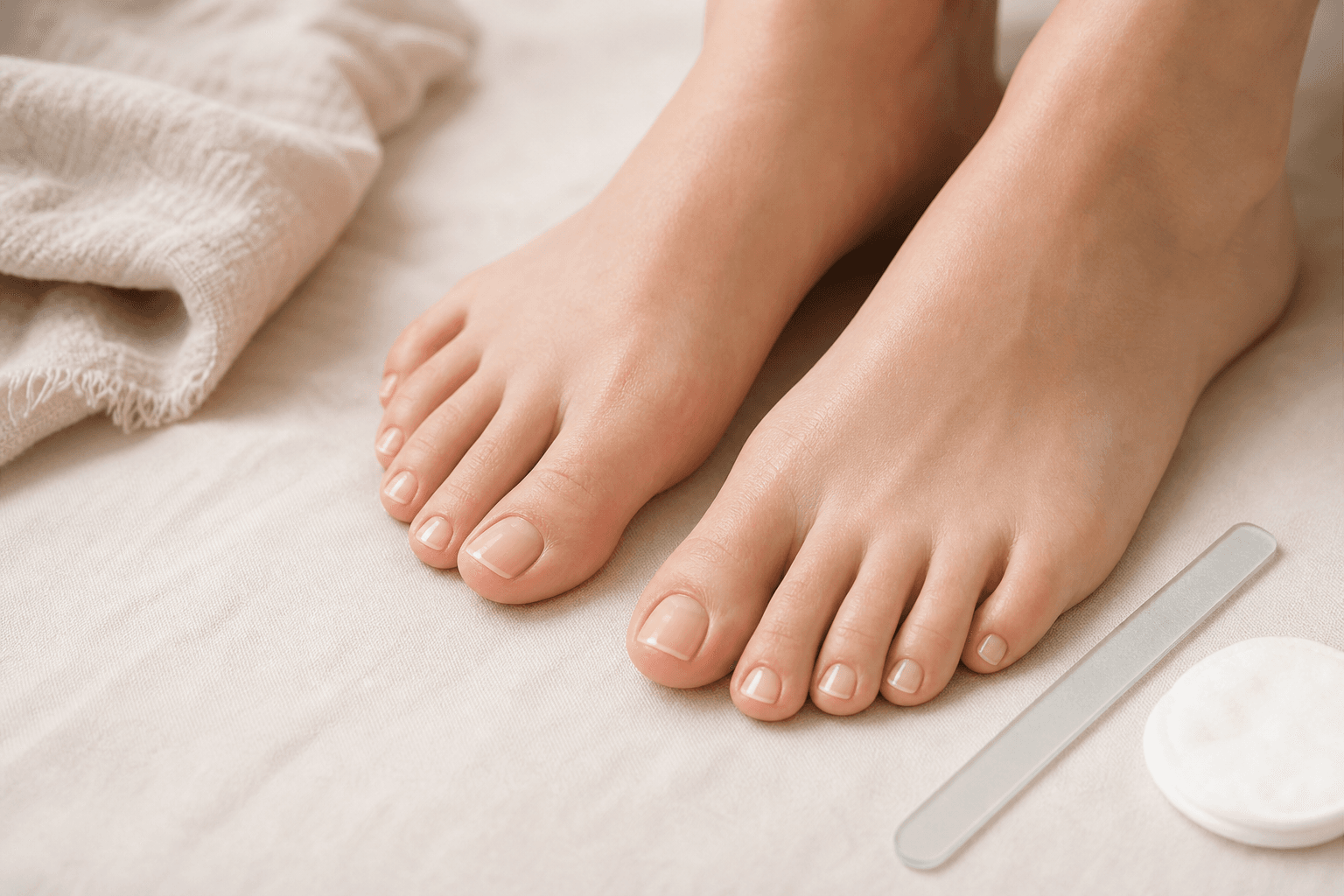
A pincer toenail, sometimes called a trumpet or omega nail, is a nail whose side edges curve inward as it grows, so the nail narrows and pinches the skin of the toe. It is most often seen on the big toe. The nail may look like a tube or a letter C when viewed from the tip, and the pinching can be tender or painful in shoes.
Unlike a typical ingrown toenail, where one edge digs into the skin, a pincer nail squeezes from both sides along its length. It tends to develop slowly, and the curve usually gets more pronounced over months or years. Comfort measures can ease pressure, but changing the shape of the nail itself generally needs a podiatrist.
This guide covers the likely causes, how to recognise a pincer nail, what you can safely do at home, and the options a clinician may discuss. For the more common single-edge problem, see our ingrown toenail guide. If the nail has already come off, toenail removal healing stages explains what recovery looks like.
What a pincer nail looks like
Look at the toe from the front. A normal nail is gently curved. A pincer nail is more strongly curved, with the edges rolling toward each other and sometimes nearly meeting. The nail may look narrow at the tip, thickened, or raised in the middle. The skin along the sides can be sore, red or calloused, and pain often worsens in tight shoes or when something presses on the nail.
Because thick, curled nails are also a common sign of fungus, the two are sometimes confused; see our toenail fungus page for the differences. They can also occur together.
Why toenails curl
Podiatry sources describe several contributors rather than a single cause. Inherited nail shape often plays a part, which is why pincer nails can run in families. Long-term pressure from narrow or short shoes can encourage the curve, and so can repeated toe injury. Fungal infection, some forms of arthritis, certain medications and other health conditions are also listed among possible contributors.
Because the reasons differ, a clinician may ask about family history, footwear, injuries and medicines before recommending anything.
Pincer nail vs ingrown nail
An ingrown nail usually involves one edge growing into the skin, with redness, swelling and sometimes pus at that corner. A pincer nail is a shape problem along the whole nail; the skin is pinched rather than punctured, although the two can occur together and a pincer nail can become ingrown.
If there is warmth, spreading redness, pus or a throbbing toe, treat it as a possible infection and see a clinician promptly, particularly if you have diabetes or poor circulation.
What you can do at home for comfort
Choose shoes with a roomy, rounded toe box so the nail is not squeezed from above or the sides. Soft toe sleeves or a small amount of padding at the sore edge can reduce rubbing. Soaking the foot in warm water for ten to fifteen minutes can soften the nail and skin and make the toe feel more comfortable.
Trim straight across with clean clippers, and do not cut deep into the corners or dig at the edges with a sharp tool. Digging can leave a spike of nail that makes things worse and opens the skin to infection. Do not try to bend or prise the nail upward yourself. A cushioned, supportive insole, such as the one in our Akusoli insoles review, can help distribute pressure through the whole foot, but it will not change the shape of the nail.
What a podiatrist can offer
Clinicians describe a range of approaches, chosen by how severe the curve and pain are. Gentle options include professional nail trimming and thinning, and a small brace or spring-like device bonded to the nail to ease the sides outward over time. These devices are fitted in clinic.
For persistent pain or repeated infection, procedures may include removing part of the nail edge or the nail root in the problem area so the narrow portion does not regrow. Surgery for the nail is done under local anaesthetic, and the choice depends on your health and goals. Ask what to expect for healing and how the regrown nail is likely to look.
Prevention and routine care
There is no guaranteed way to stop an inherited curve, but you can reduce pressure. Choose properly sized shoes, check them when your feet are at their largest at the end of the day, and avoid cutting the nails too short. Look at your toenails regularly and mention changes at a routine appointment.
If you notice a darkening line or a new dark patch in the nail rather than a simple curve, have it looked at by a doctor rather than assuming it is bruising; our black toenail article explains what bruising typically looks like.
When to see a doctor or podiatrist
Make an appointment if the nail is painful, keeps catching the skin, is changing shape, or you cannot find comfortable shoes. See someone promptly for signs of infection, and early if you have diabetes, circulation problems or loss of feeling in the feet. This article is general information, not personal medical advice.
Explore the foot care hub
More guides on toenails, skin, socks and everyday foot comfort.
Explore the foot care hub →Frequently asked questions
What causes a pincer toenail?
Several things can contribute: inherited nail shape, long-term pressure from narrow shoes, repeated injury, fungus, arthritis and some medicines. Often there is more than one factor.
Is a pincer nail the same as an ingrown toenail?
No. An ingrown nail has an edge growing into the skin, while a pincer nail curves inward along its length and pinches the skin from both sides. They can occur together.
Can I fix a pincer nail at home?
You can ease discomfort with roomy shoes, padding and careful straight-across trimming, but reshaping the nail generally needs a podiatrist, who may fit a brace or perform a nail procedure.
Does a pincer nail go away on its own?
Usually not. The curve tends to persist or increase slowly, which is why people often seek help once shoes become uncomfortable.
Is a pincer nail dangerous?
Usually it is a comfort problem rather than a danger, but it can lead to ingrown edges or infection, and people with diabetes or poor circulation should have it checked early.
HeelCups is reader-supported. When you buy through links on our site we may earn an affiliate commission, at no extra cost to you. This article is general information about foot comfort and is not medical advice — see our medical disclaimer.