CRACKED HEELS
Cracked Heels: Why They Split and the Two-Week Routine That Softens Them
Heel fissures come from a mix of dry skin, thickened callus and shoes with an open back — here is what actually softens the callus and stops the splits from coming back.
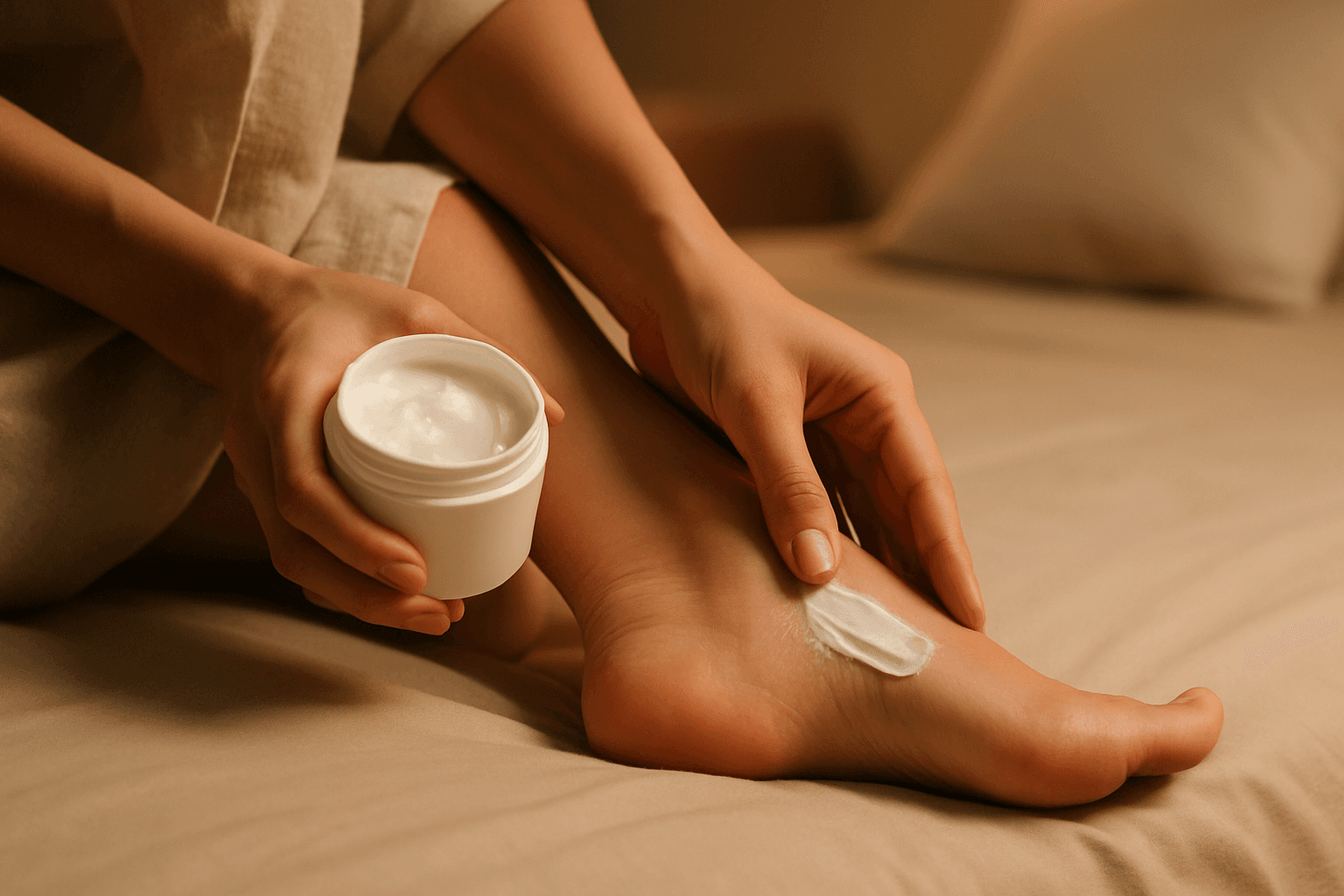
Cracked heels — clinically called heel fissures — are one of the most common complaints in the foot-care aisle, and one of the most solvable. The skin around the rim of the heel thickens into a hard yellow or grey callus, dries out over a season, and eventually splits along the line where the callus meets softer skin. The fissures range from cosmetic annoyance (a rough edge that catches on socks) to painful splits that bleed when you stand up on a cold morning. The frustrating part, for people who have tried the aisle, is that a random tub of foot cream applied for a week does almost nothing on its own. The routine that works is unglamorous and specific, and it takes two weeks.
This page walks through why heels crack in the first place, the two-week softening routine that actually gets the callus down to smooth skin, the shoe and floor habits that stop the splits from coming back, and the smaller category of cracks that need a clinician rather than the drugstore. Nothing on this page is medical advice. Cracks that bleed persistently, cracks that come with redness, warmth or pus, and any foot complaint in someone with diabetes or a circulation problem belong with a doctor or podiatrist regardless of what the callus looks like.
The routine below is written for comfort, support and relief. It does not promise a cure, and it does not promise the callus will never come back — for many people it is a seasonal problem tied to summer sandals, dry indoor air or a job on hard floors, and the routine is one to revisit every few months rather than run once and forget. If rubbing shoes are the problem rather than dry skin, see our guide to heel blisters.
Why heels crack: the three-part cause
Cracked heels are always the same three ingredients in different proportions: dry skin, thickened callus, and a shoe environment that lets the callus grow and the skin dry out. Take away any one of them and the cracks fade. Leave all three in place and the best cream in the world will not keep up with them.
Dry skin is the seasonal driver. Indoor heat in winter, air conditioning in summer, low humidity in a car for a long commute, hot showers that strip the natural oils — any of these dries the skin around the heel until it loses elasticity. Skin that stretches with each step is fine; skin that has lost its elasticity splits at the weakest point, which is nearly always the ring around the heel where the callus meets softer skin.
Callus buildup is the mechanical driver. When body weight lands on the rim of the heel repeatedly — the way it does when you walk in backless shoes, slides or bare feet — the skin at that spot lays down extra layers as a protective response. That is the callus. It thickens over weeks and months, loses moisture faster than the softer surrounding skin, and eventually becomes rigid enough that a small stretch causes it to split rather than flex. Once the callus is thick enough, the split forms whether the skin is dry or not.
The shoe environment locks the pattern in. Backless mules, slides, flip-flops and clogs let the heel pad splay outward with every step, which encourages the callus to spread along the rim. Open-heeled shoes also expose the heel to more air, which speeds drying. Hard floors barefoot at home have the same effect on the callus without the airflow. Summer is the classic season for cracked heels for exactly this reason: sandals plus barefoot patio time plus dry air is the trifecta.
The two-week softening routine
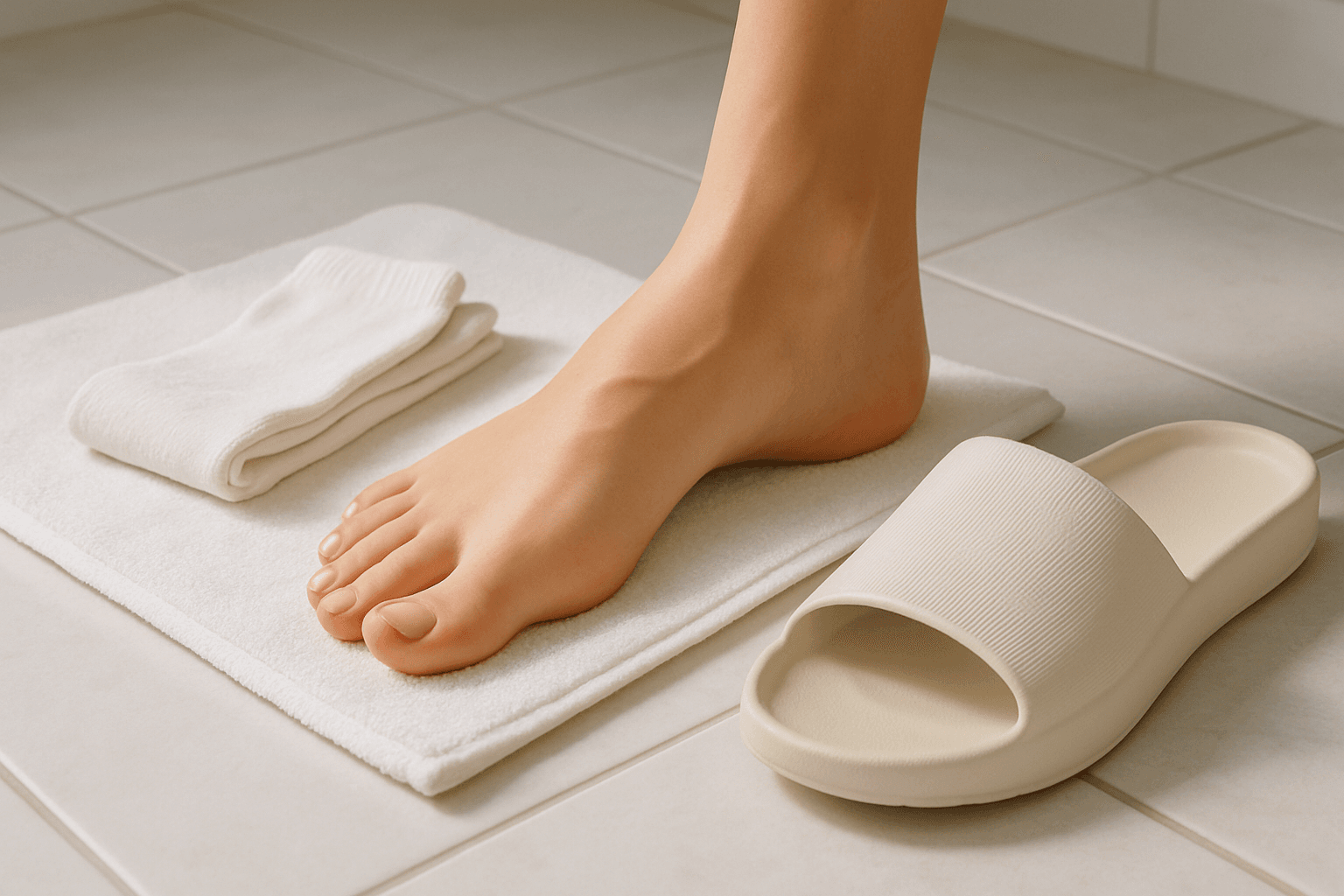
Nights one through fourteen: after your evening shower, dry the feet, then rub a foot cream containing 10 to 25 percent urea or 6 percent salicylic acid into the heel and the surrounding callus. A liberal layer, not a thin smear. Immediately pull on a pair of cotton or bamboo socks and sleep in them. The socks trap the cream against the skin under body heat, which is what lets the active ingredient soften the callus. This is the single most important step, and it is the one people skip because the socks feel unglamorous. Do it anyway.
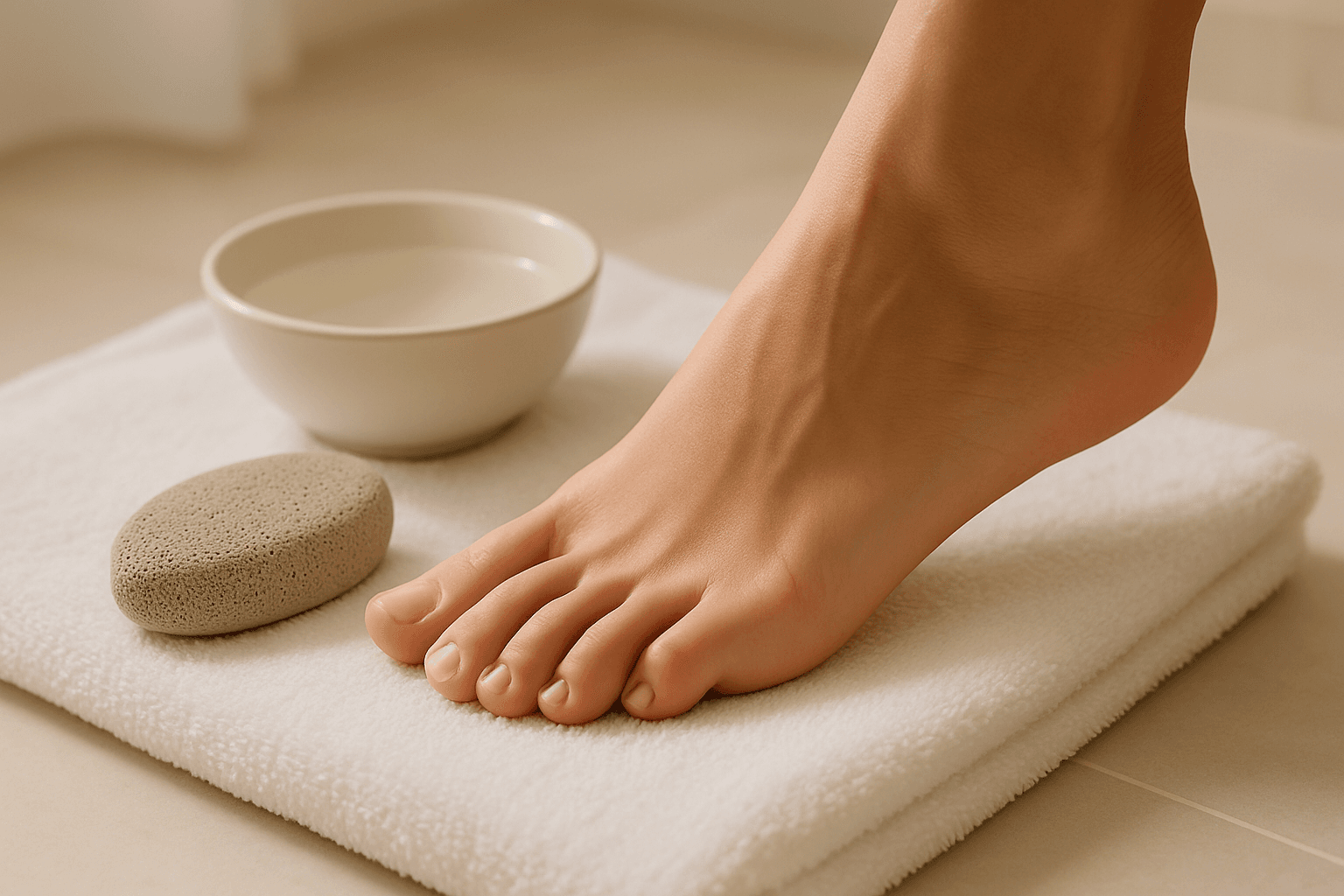
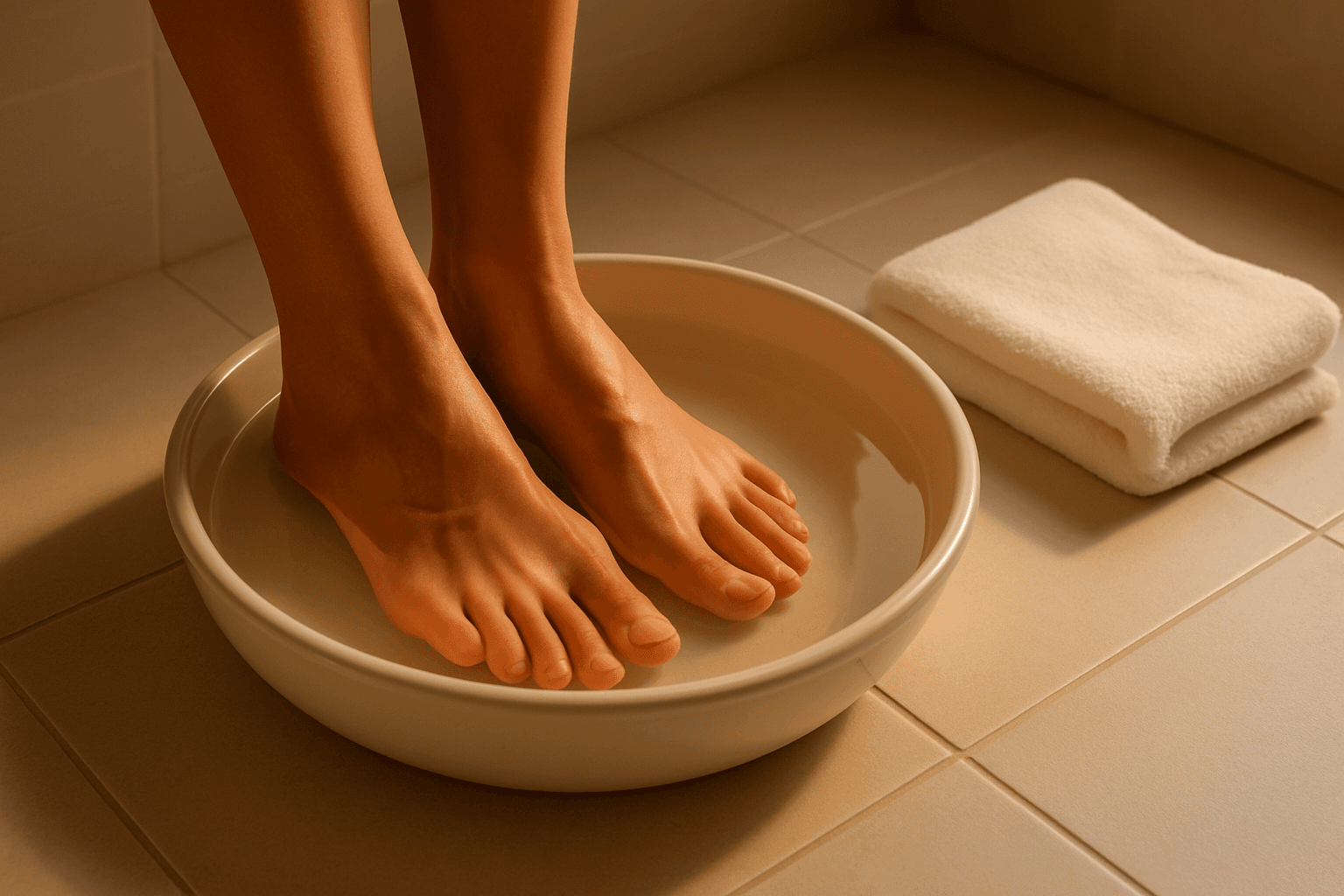
Mornings, days three through fourteen: while the callus is softening, remove the outer dead layers gently. In a warm shower, use a pumice stone or a foot file on the softened callus for one to two minutes, working with the grain rather than against it. Do not try to grind the callus down to smooth skin in one session — the fresh, thin skin underneath will split faster than the callus did. Aim for a small, visible reduction each morning. By day ten to twelve most people have taken enough of the callus down that the skin is no longer at the splitting threshold.
Do not use a razor blade, cheese-grater tool or credit-card scraper on cracked heels. They remove too much at once, they can slip, and they can turn a soft-tissue callus problem into a wound problem overnight. Pumice or a diamond-grit file is slower and safer.
Days one through fourteen, morning and evening: a plain moisturizer (petrolatum, shea butter, ceramide-based lotions) after any water exposure. This is the ordinary hydration part of the routine, not the callus-softening part. Skin that is well-hydrated at the surface splits less no matter what the callus underneath is doing.
What to look for in a foot cream
The two ingredients that actually soften a thick heel callus are urea (a natural humectant that draws water into the skin and, at higher concentrations, gently breaks down thickened keratin) and salicylic acid (a beta-hydroxy acid that helps the outermost layers of dead skin shed). A cream with 10 to 25 percent urea is what most dermatologists reach for first; 6 percent salicylic acid is the common alternative and pairs well with urea in the same product. Anything under 10 percent urea is a hydration cream, not a callus cream, and will not touch a thick fissure.
Below that, the marketing gets loud and the ingredient science gets quieter. Coconut oil, shea butter, tea tree oil and manuka honey are fine hydrators and additives; they are not, on their own, softeners for a real callus. Alpha-hydroxy acids (glycolic, lactic) do something similar to salicylic at slower speed and are gentler for very dry, sensitive skin. Petrolatum-based ointments (a plain thick petroleum jelly) applied under socks overnight are cheap, effective hydrators and are the fallback if the active-ingredient cream irritates.
Do the patch test the first two nights of the routine. Urea and salicylic acid are usually well-tolerated but can sting on already-open cracks, and salicylic acid in higher concentrations can irritate broken skin. If a crack is actively bleeding, hold off the active cream until it closes and use a plain occlusive ointment plus a bandage in the meantime.
Shoes and floors: keeping the callus from coming back
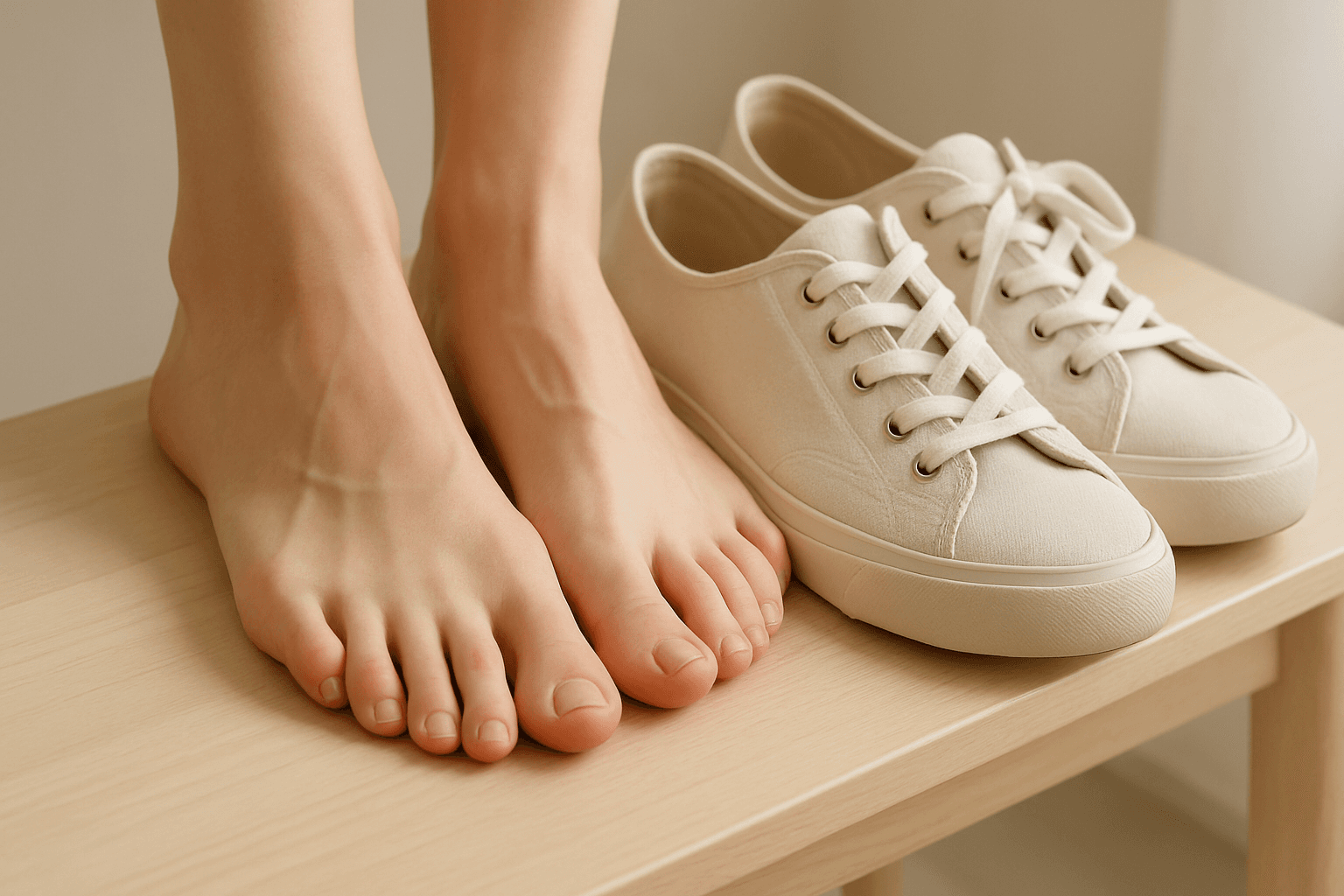
The routine gets the callus down; the shoe environment is what stops it from rebuilding. The single largest change most people can make is swapping backless shoes for closed-back ones for the season. A supportive backed shoe or slipper at home keeps the heel pad contained and stops the rim from being loaded the way it is in slides. In summer, a sandal with a real ankle or back strap does the same job as a mule in more style. Save the backless slides for short trips to the car.
Barefoot on hard floors at home is the other environment worth changing. A soft house shoe or a supportive slipper for two or three months while the routine works is enough for most people; feet on wooden or tiled floors for hours a day rebuild the callus much faster than feet in a soft shoe do. Bathroom floors after a hot shower are another quiet contributor — the callus dries fastest right after moisture exposure.
Socks matter more than most people think. Cotton or bamboo socks under closed shoes hold moisture better than synthetic athletic socks; wool socks in winter are worth the swap for the same reason. Change socks midday if you are on your feet all day in a job that leaves them damp — sustained moisture followed by drying is one of the fastest ways to build callus.
When cracks stop being a self-care problem
Cracks that bleed persistently, cracks with visible depth (past the surface layer into pink or bleeding tissue underneath), cracks that come with redness spreading around the site, warmth, pus or a fever, and cracks that have not closed after two weeks of the routine belong with a clinician. Deep fissures can become infected quickly, especially in people who spend all day in closed damp shoes.
Anyone with diabetes, poor circulation or peripheral neuropathy should treat cracked heels as an early clinic visit rather than a foot-care aisle problem. Sensation and circulation are altered in these conditions, small skin breaks heal slowly, and an infection that would be a minor annoyance elsewhere can be serious. If you are seeing a doctor for diabetes management, ask about a routine podiatrist referral; that visit and its recommended cream and routine will look nothing like the standard aisle answer.
For a routine problem that is not responding, a podiatrist can debride a thick callus in a single visit — literally shaving it down in-office to a level a pumice stone would take weeks to reach — and prescribe a stronger urea (40 percent) or urea-plus-salicylic combination that is not sold over the counter. If home care has not moved the needle after two full weeks of the routine above, that is the ceiling reached and the next move.
The three habits that keep heels smooth long-term
Once the callus is down and the fissures have closed, three small habits keep them from coming back. First, a plain moisturizer after every shower, not just when the heels look bad — the callus rebuilds when the skin is chronically under-hydrated, not just when it visibly cracks. Second, a closed-back shoe as the default at home, with the backless slides reserved for short trips. Third, a pumice or file once a week rather than once a season — thirty seconds on each heel in a warm shower is enough to keep the callus below the splitting threshold indefinitely.
For seasonal cases (summer sandals plus dry indoor air is the most common pattern), running the full two-week routine at the start of each season resets the callus before it becomes a problem. Set a reminder for early June and early December and most people never see a real crack again. If you are on your feet all day for work, or you live somewhere with year-round low humidity, the routine is worth revisiting quarterly rather than seasonally. Hard skin elsewhere on the foot is covered in our guide to corns and calluses.
Explore the foot-care hub for the routines the rest of your feet want
Sock choices, warmth strategies, nail care and the routines that keep the rest of your feet as comfortable as your heels — the honest read on what actually helps.
Explore the foot-care hub for the routines the rest of your feet want →Frequently asked questions
How long does it take to fix cracked heels at home?
Most cases soften noticeably within one week and close within two weeks of the routine — a urea or salicylic acid foot cream nightly under cotton socks, a pumice stone in the morning after a warm shower, and a plain moisturizer twice a day. Deeper cracks or long-neglected calluses take three to four weeks. If nothing has changed after two full weeks of the routine, that is the ceiling of home care and the next move is a podiatrist or dermatologist visit.
What is the best cream for cracked heels?
A cream with 10 to 25 percent urea or 6 percent salicylic acid does the actual softening. Anything under 10 percent urea is a hydration cream, not a callus cream, and will not touch a thick fissure. Coconut oil, shea butter and manuka honey are fine plain hydrators as an add-on but are not softeners on their own. Plain petroleum jelly under socks overnight is a cheap effective fallback when active ingredients irritate.
Should I use a pumice stone or a foot file on cracked heels?
Yes, but only on softened callus and only after the two-week softening has started to work. A pumice stone or a diamond-grit file used in a warm shower for one to two minutes at a time takes the outer dead layers down gradually. Skip razor blades, cheese-grater tools and credit-card scrapers — they remove too much at once and can turn a soft-tissue callus problem into a wound problem.
Do cracked heels mean I have a vitamin deficiency?
Almost never. Cracked heels are overwhelmingly a mechanical and environmental problem — dry skin, thickened callus, backless shoes, hard floors barefoot. Vitamin and mineral deficiencies (zinc, omega-3, vitamin C) can worsen skin quality but are not the primary driver of heel fissures in an otherwise healthy adult. Persistent unexplained skin problems alongside other symptoms are worth a doctor's exam, but a random tub of foot-specific vitamins is not the answer to cracked heels.
Can walking barefoot at home cause cracked heels?
Yes, and it is one of the most common contributors. Bare feet on hardwood, tile or laminate floors for hours a day thicken the heel callus faster than shod feet do, and dry air at home dries the skin over top of it. A supportive slipper or house shoe with a closed back for two or three months while the softening routine works is the single change many people find fixes their heels.
When should I see a doctor about cracked heels?
See a clinician if cracks bleed persistently, if they come with redness spreading around the site, warmth, pus or a fever, or if they have not closed after two weeks of the routine above. Anyone with diabetes, poor circulation or peripheral neuropathy should treat cracked heels as an early clinic visit rather than a foot-care aisle problem — sensation and circulation are altered in these conditions and small skin breaks can become serious quickly.
HeelCups is reader-supported. When you buy through links on our site we may earn an affiliate commission, at no extra cost to you. This article is general information about foot comfort and is not medical advice — see our medical disclaimer.