OUTER HEEL
Pain on the Outside of the Heel: Peroneal Tendon Trouble and the Look-alikes to Sort From It
A dull ache or catch on the outer edge of the heel and ankle is often the peroneal tendons complaining after a twist, a spike in miles, or years of a supinated gait. Here is how to tell peroneal trouble from a lateral fat pad bruise, from a stress fracture, and from a pinched sural nerve — and what actually calms it down.
Most of the heel-pain material on the internet lives at two extremes. The vast majority is about pain underneath the heel — plantar fasciitis, heel fat pad — and a much smaller sliver is about pain at the back of the heel where the Achilles tendon inserts. Pain on the outside of the heel and the outside of the ankle sits between the two, gets confidently misdiagnosed as either, and comes with its own list of specific causes. This page is the map for the outer-side pain that most walking-and-running readers eventually hit at least once.
Two anatomies do most of the work on the outer side of the heel. The peroneal tendons — the peroneus longus and the peroneus brevis — run down the back-outside of the ankle, hook forward around the outer ankle bone, and insert on the outer edge of the midfoot and the base of the fifth toe. They stabilize the ankle against inversion sprains, they hold the arch from collapsing inward, and they are the tissue most often responsible for outer-heel and outer-ankle pain in walkers, runners, hikers and anyone who has had a few ankle sprains over the years. Sitting under them on the outside of the heel bone is a stretch of fat pad and the sural nerve; both can also complain in ways that show up as outer-heel pain.
This page walks how the outer-heel picture reads, why the peroneal tendons are the usual culprits, what the honest plan looks like, and the neighboring conditions worth ruling in or out before you decide it is tendon trouble. Nothing here is medical advice, and outer-heel pain that follows a specific injury, or that comes with swelling, warmth or a bony point of tenderness, is a clinic visit rather than a shoe-store visit. Our pain in the back of the heel walk-through covers the closely-neighboring Achilles pattern, and our pain in the bottom of the heel walk-through covers what most people arrive here thinking they have.
The pain map for the outer side of the heel
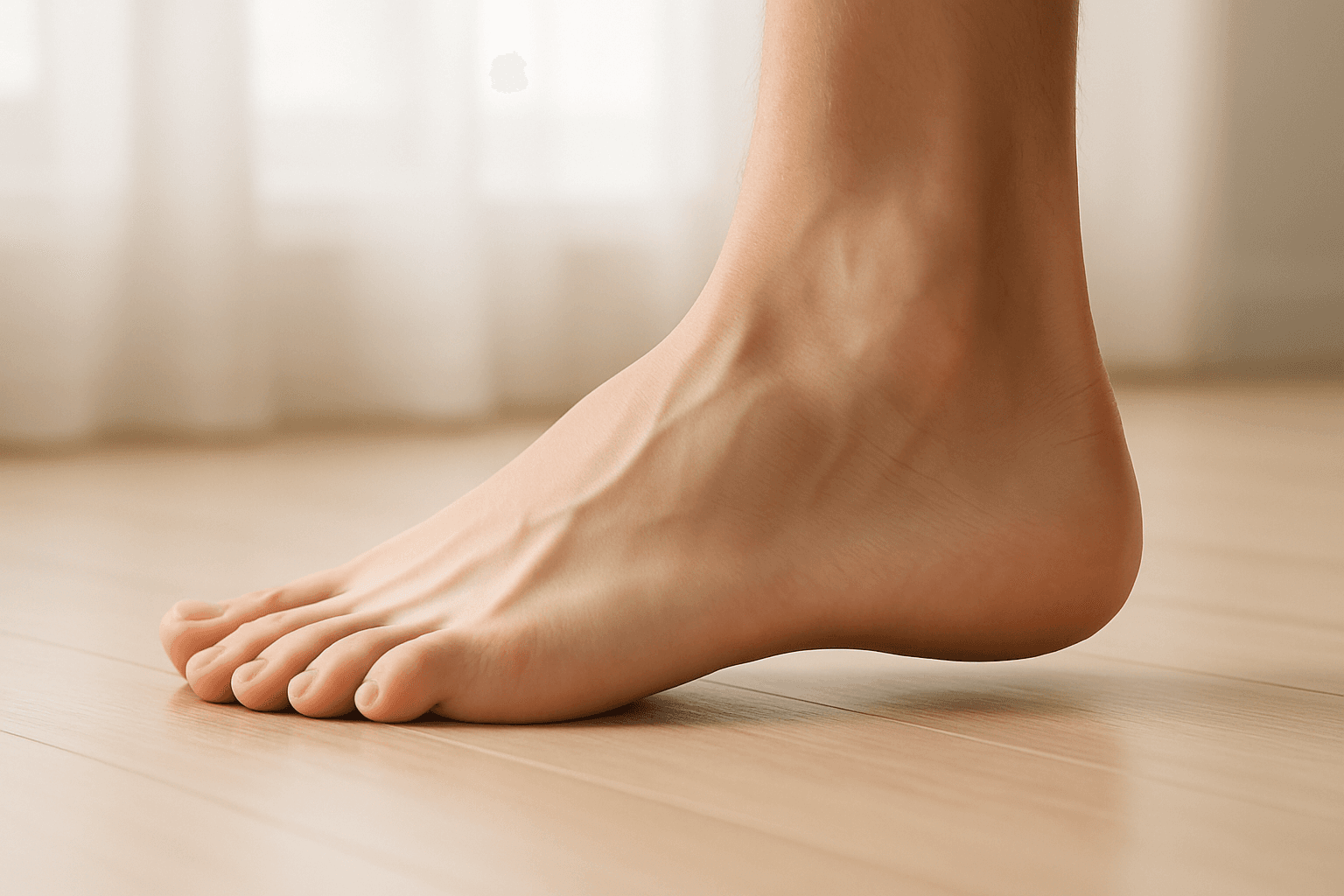
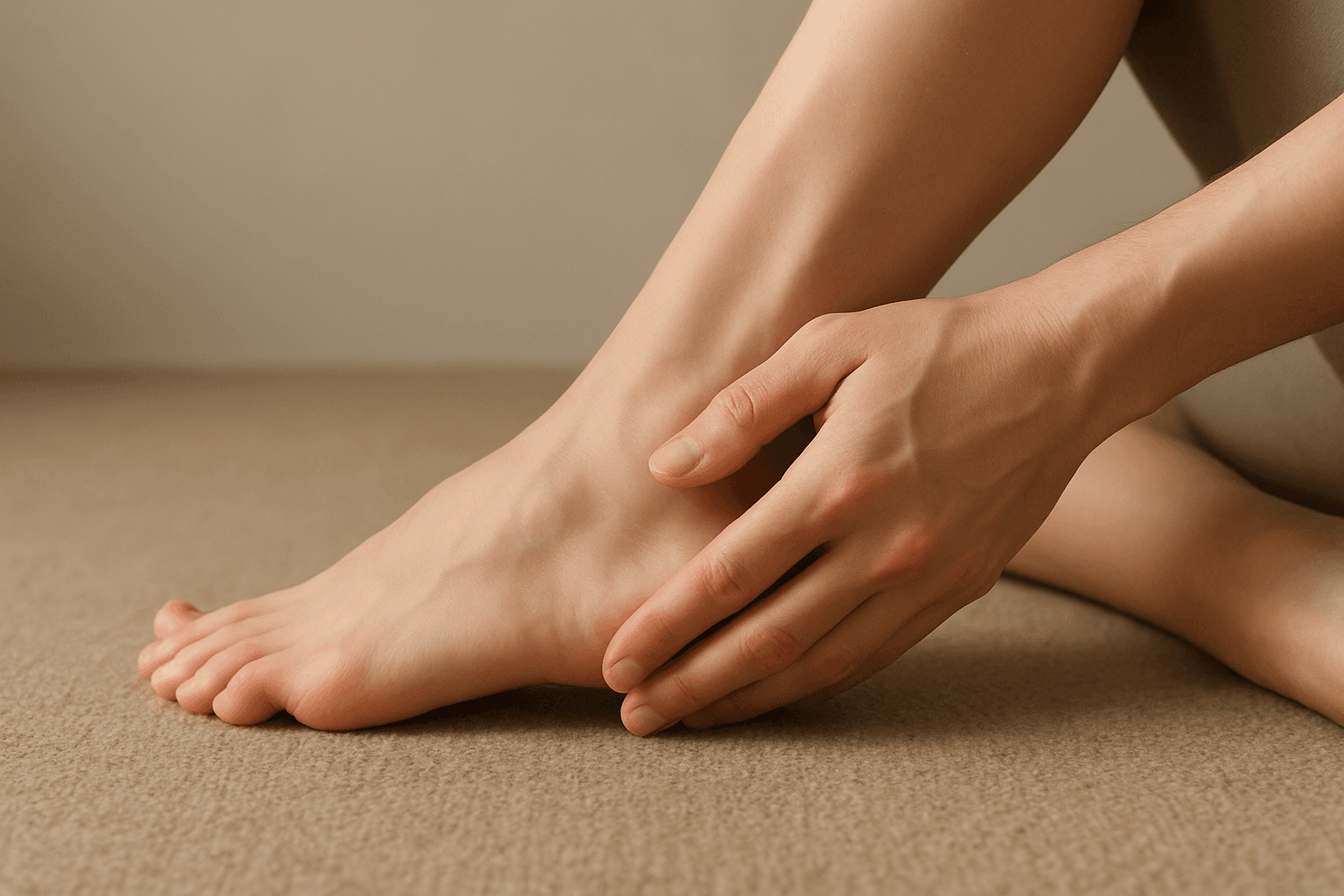
The outer edge of the heel is not a single structure. Run a finger along it from the sole up toward the ankle bone. At the level of the sole, you feel the outer edge of the fat pad that cushions the underside of the heel. Just above that, on the side wall of the heel bone, is a stretch of skin over bone with the sural nerve running along it. Continuing up toward the ankle, you feel the tendons of the peroneus longus and peroneus brevis, wrapping around the outer ankle bone (the lateral malleolus) toward the front of the foot. Above the tendons, the ankle joint itself. Each of these can complain, and the useful diagnostic is where the finger presses and reproduces your pain.
If the finger reproduces the pain along the tendons that wrap around the back of the outer ankle bone and down into the outside of the heel and midfoot, and the pain is worse when you push the foot down and out against resistance, the pattern points at the peroneal tendons. If the finger reproduces the pain at a specific bony point on the outside of the midfoot — usually at the tuberosity where the fifth metatarsal bone starts — and there is a recent history of a twisting ankle event, that point deserves imaging for a possible fifth-metatarsal base fracture. A Jones fracture, a specific version in the narrow proximal shaft, has a slow blood supply and often needs urgent care.
Timing helps as much as location. Peroneal tendon pain builds through activity, is often sore the morning after a long walk or a hilly run, and is worse when the foot is loaded on uneven ground where the ankle has to work hard to stay stable. Fat pad pain builds through the day of standing on hard floors and eases with cushioning. Sural nerve pain has a burning or tingly character, may come with numbness of a small patch on the outer heel, and is often reproduced by tapping along the nerve's path. A stress fracture in the heel bone or the fifth metatarsal is deep, focal, worse with any weight-bearing step, and does not respond meaningfully to shoe changes.
Why the peroneal tendons complain in the first place
The peroneal tendons do a lot of quiet work every step. They stabilize the ankle against rolling outward, they hold the arch up against collapse, and they take the extra load whenever a walker's foot lands on an uneven surface. That load adds up. Runners who ramp mileage quickly, hikers who carry a heavy pack on uneven trails, walkers who log long distances on sloped sidewalks or beach sand, and dancers who spend hours in demi-pointe all give the peroneal tendons more work than the tissue was gradually conditioned for. Micro-tears accumulate, the tendon sheath inflames, and the outer-heel-and-ankle picture starts.
Ankle history matters. A single significant inversion sprain (rolling the foot inward) stretches the peroneal tendons and their sheath, and the healing sometimes leaves the tendons more prone to sub-luxation — a snapping or catching sensation as the tendon moves out of its groove behind the ankle bone and snaps back. People with a history of multiple sprains, or with hypermobile ankles, are the most common patients. The fifth-metatarsal-base area is also more vulnerable because the peroneus brevis inserts there and can pull hard on the bone during a lateral load.
Foot shape plays a role too. A supinated foot — one that loads the outside edge of the foot more than the inside edge with each step — asks the peroneal tendons to work harder to keep the arch from collapsing outward. Our supination insoles walk-through covers the shape and the insole choice; a supportive insole that pushes the foot slightly toward a neutral load pattern is one of the highest-leverage changes for a peroneal-prone foot. High-arched feet supinate more often than flat feet, and outer-side heel and ankle pain shows up in that population more.
What actually helps peroneal tendon pain
Cut the specific activity that spiked it, for two to four weeks. Not to the couch — total rest is usually counterproductive — but enough to let the tendon calm down. A runner drops mileage by half and adds a swim day. A hiker skips the heavy pack for a month and does day-hikes on flat ground. A dancer moves to floor barre and cross-training. The pattern is the same as for other tendon complaints: unload the specific stress that spiked it, keep the surrounding tissue moving, and reintroduce the load on a graded ramp.
Add a supportive insole with a firm arch and a deep heel cup. The arch support keeps the foot from collapsing outward through the arch on each step, which reduces the pull the peroneal tendons are fighting against. The deep heel cup holds the fat pad in place under the heel bone, which spreads the impact of each heel strike across a broader area. For readers with a supinated gait, a slightly cushioned lateral edge is worth looking for; our supination insoles walk-through covers the specifics. Our Akusoli insoles review covers the pair we would buy first for the everyday case.
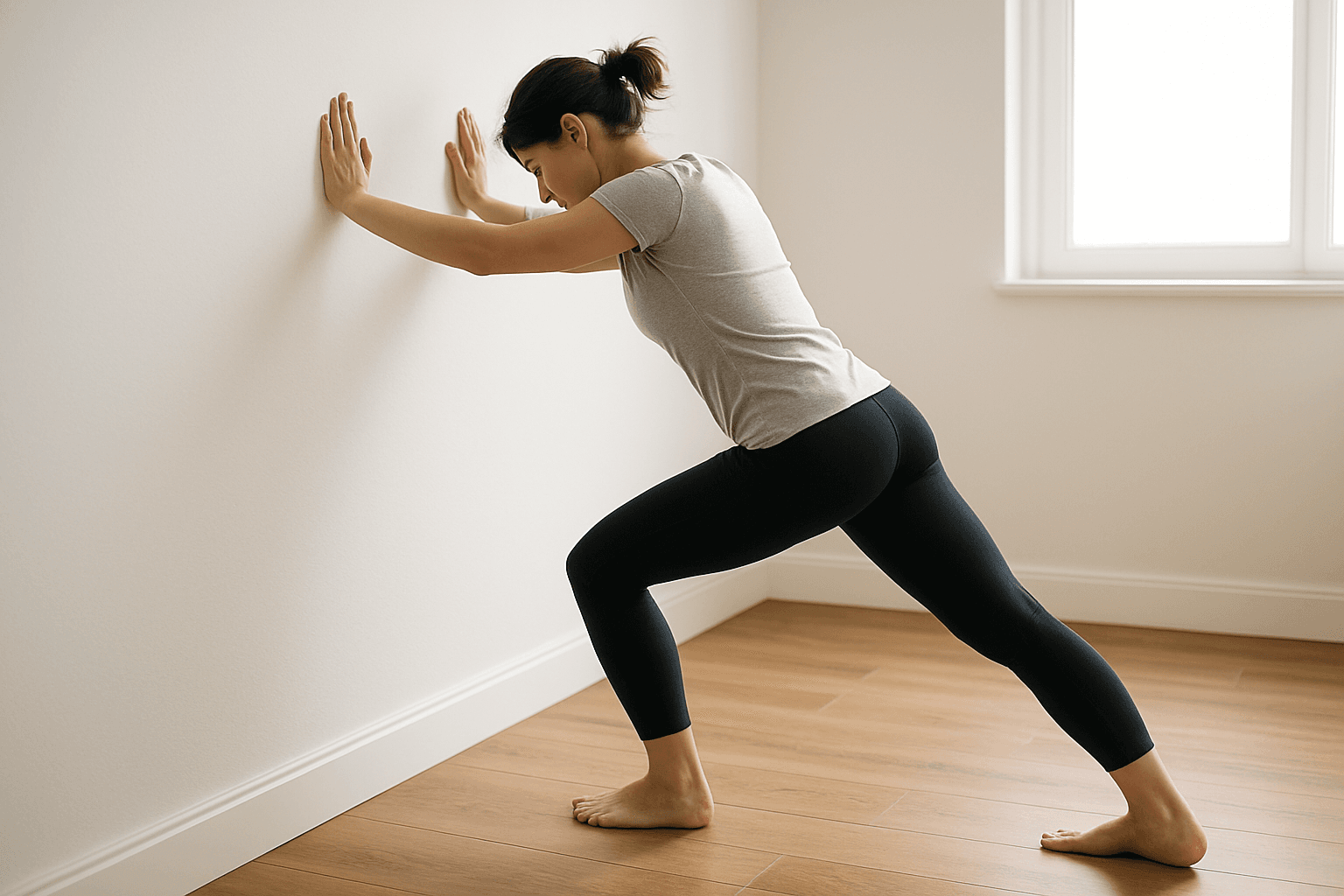
Do a short daily ankle strengthening routine, once the acute pain has settled. The peroneal tendons respond well to eccentric loading — controlled slow lowering of the foot from an everted (turned outward) position against a resistance band. Two sets of ten reps twice a day is enough. Combine with calf stretching (the calves and the peroneals share a neighborhood at the ankle) and single-leg balance work (thirty seconds per foot, twice a day) to rebuild the ankle stability that the tendon complaints often signal was slipping.
Look at shoes. Zero-drop and minimalist shoes ask the peroneal tendons to do more stabilizing work than a shoe with a moderate heel-toe drop and a supportive midsole. Runners with peroneal complaints often do better in a stability shoe than in a neutral one, and hikers often do better in a mid-cut boot than in a low-cut trail runner. If a specific shoe rotation triggered the flare, that pair deserves a break.
Cold packs on the outer ankle for ten minutes after long days take real edge off the tendon sheath in the first week or two. Anti-inflammatories at label doses with a doctor's okay can help acute soreness. Neither is the plan; both are comfort tools alongside the load management that does the work.
When outer-heel pain is not tendon at all
A twisting ankle event a few days or weeks before the pain started, with a specific tender point at the base of the fifth metatarsal (the bony bump on the outside of the midfoot, about a third of the way back from the little toe toward the heel), deserves urgent imaging for a fifth-metatarsal base fracture. A Jones fracture in the narrow proximal shaft has a slow blood supply and often needs immobilization or surgical fixation; missing one and walking on it for weeks turns a manageable problem into a much longer one.
Deep focal pain on the heel bone that hurts with any weight-bearing step and started after a jump, a fall, or a fast mileage ramp deserves a clinician's read for a possible calcaneal stress fracture. Stress fractures do not usually swell, do not usually bruise on the outside, and can look deceptively mild on the first days — but the pain does not calm with shoe changes and it does not respond to insoles. Imaging is the answer; the plan from there is a walking boot and a supervised return.
Burning, tingling or numbness on the outer heel and the side of the foot, with or without a shoe-strap history, suggests sural nerve irritation. The sural nerve runs down the back-outside of the calf and along the outer edge of the heel; it can be pinched by tight boot tops, by scar tissue from an old sprain, or by pressure from a specific shoe. The pain pattern is different from tendon (electric, tingly, sometimes numb) and the useful clinician is a physical therapist or podiatrist rather than a shoe change alone.
Pain that comes with visible swelling, warmth or redness across the outer ankle, especially without a specific injury event, is a same-week clinic visit for possible infection or inflammatory arthritis. Gout can strike the outer edge of the foot, though the classic presentation is the base of the big toe; pseudogout and reactive arthritis are neighbors on the same list. None of these are a shoe or insole problem.
Everyday habits that make life with peroneal irritation easier
Rotate shoes. A single pair worn every day gives the peroneal tendons the same specific challenge each step; rotating two or three pairs lets the tendons work in slightly different geometries and spreads the load.
Watch the sidewalks. Sloped sidewalks, off-camber trails, beach sand and grocery-store parking lots that drain to one side all give the peroneal tendons more stabilizing work than flat ground. During a flare, favor flat and even surfaces for walking, and avoid running on beaches or ski-resort access roads until the tendon has calmed.
Warm up before longer efforts. Ten minutes of easy walking before a run, five minutes of light bounce-and-shift before a hike, and a few slow ankle circles at the trailhead take real edge off the first-mile stiffness that peroneal tendons produce in a flare.
Track the case. A short daily note — 'left outer ankle a 3 out of 10 today after 4 miles' — makes it much easier to see whether the honest plan is working across two to four weeks, rather than relying on gut feel on any given day. Most peroneal cases that follow a real training cut and add a supportive insole are noticeably better inside three to four weeks; a case that is not moving after six weeks of an honest plan is worth a clinician's read.
Every recommendation on this hub is written for comfort, support and relief. See our heel pain hub for the broader map of where outer-heel pain sits alongside the more common under-heel and back-of-heel patterns. Persistent outer-heel or outer-ankle pain that has not eased after four to six weeks of honest home care, or any of the red flags above, deserves an in-person exam by a doctor or podiatrist.
The insole we would put in every shoe for a peroneal-prone foot
A firm arch keeps the foot from collapsing outward, a deep heel cup steadies the heel strike, and both take pressure off the peroneal tendons through each step.
The insole we would put in every shoe for a peroneal-prone foot →Frequently asked questions
Is outer-heel pain always the peroneal tendons?
No, and it is worth mapping the pain before assuming. Peroneal tendon pain sits along the tendons as they wrap around the outer ankle bone and down into the outside of the midfoot, and it is worse when you push the foot down and out against resistance. Fat pad pain on the outer heel is a bruised, diffuse ache from a specific hard heel strike. Sural nerve pain is burning or tingly, sometimes with a patch of numbness. A bony point of tenderness with a recent twisting event is a fracture worry. Where the finger presses tells you what to try first.
Can I keep running with peroneal tendon pain?
For most mild cases, yes — at half the mileage for two to four weeks, on flat and even surfaces, in a supportive stability shoe rather than a minimalist one. Pain that stays at a three-out-of-ten and does not build across the run is workable; pain that climbs to a five-plus during the run, or that is worse the morning after, is asking for a bigger cut. Hills, trails and off-camber surfaces are worth skipping during a flare because they ask the peroneal tendons to work harder than flat pavement.
What is the difference between peroneal tendonitis and an ankle sprain?
An ankle sprain is an acute event — you rolled the ankle, felt a pop or a stretch, and there is often swelling and bruising in the first 24 to 48 hours. Peroneal tendonitis is a slower burn — a dull ache and stiffness that build over weeks after a specific spike in activity or in someone with a history of previous sprains. The two are related: a sprain that never fully rehabbed often leaves the peroneal tendons in a chronically overworked state, and peroneal tendonitis is a common late chapter after a few sprained ankles.
Do heel cups help outer-heel pain?
For the fat pad or nerve component on the outside of the heel pad, a soft gel heel cup or a cushioned insole with a deep heel cup can help. For the tendon side, a supportive insole with a firm arch does more of the useful work because it changes how the foot loads across each step. Our how to use heel cups walk-through covers the heel-cup side; our Akusoli insoles review covers the pair we would buy first for the arch-support side.
When should I get imaging for outer-heel pain?
Any twisting event followed by a specific tender bony point at the base of the fifth metatarsal deserves urgent imaging for a fifth-metatarsal fracture. Deep focal pain on the heel bone that hurts with any weight-bearing step and started after a jump, a fall or a mileage ramp deserves imaging for a calcaneal stress fracture. Otherwise, a case that has not responded to four to six weeks of honest conservative care is worth a clinician's read, and they will decide whether an X-ray, ultrasound or MRI is the useful next step.
How long does peroneal tendon pain take to settle?
A mild case that honestly cuts the trigger activity, adds a supportive insole and does a short daily ankle-strengthening routine is often noticeably better inside three to four weeks and largely settled by six to eight weeks. A stubborn case that keeps loading the tendon through the flare can drag on for several months. The single biggest predictor of a quick settle is how honest the two-to-four-week training cut is; the single biggest predictor of a slow one is a runner who keeps chasing weekly mileage while the tendon is flared.
HeelCups is reader-supported. When you buy through links on our site we may earn an affiliate commission, at no extra cost to you. This article is general information about foot comfort and is not medical advice — see our medical disclaimer.