FAT PAD
Heel Fat Pad Syndrome: When Your Heel Feels Like a Bruise That Won't Fade
A diffuse, bruised feeling across the whole heel pad that builds through the day, not a stab in the morning, is often not plantar fasciitis at all. It is fat pad irritation — and cushioning, not more arch support, is what calms it down.
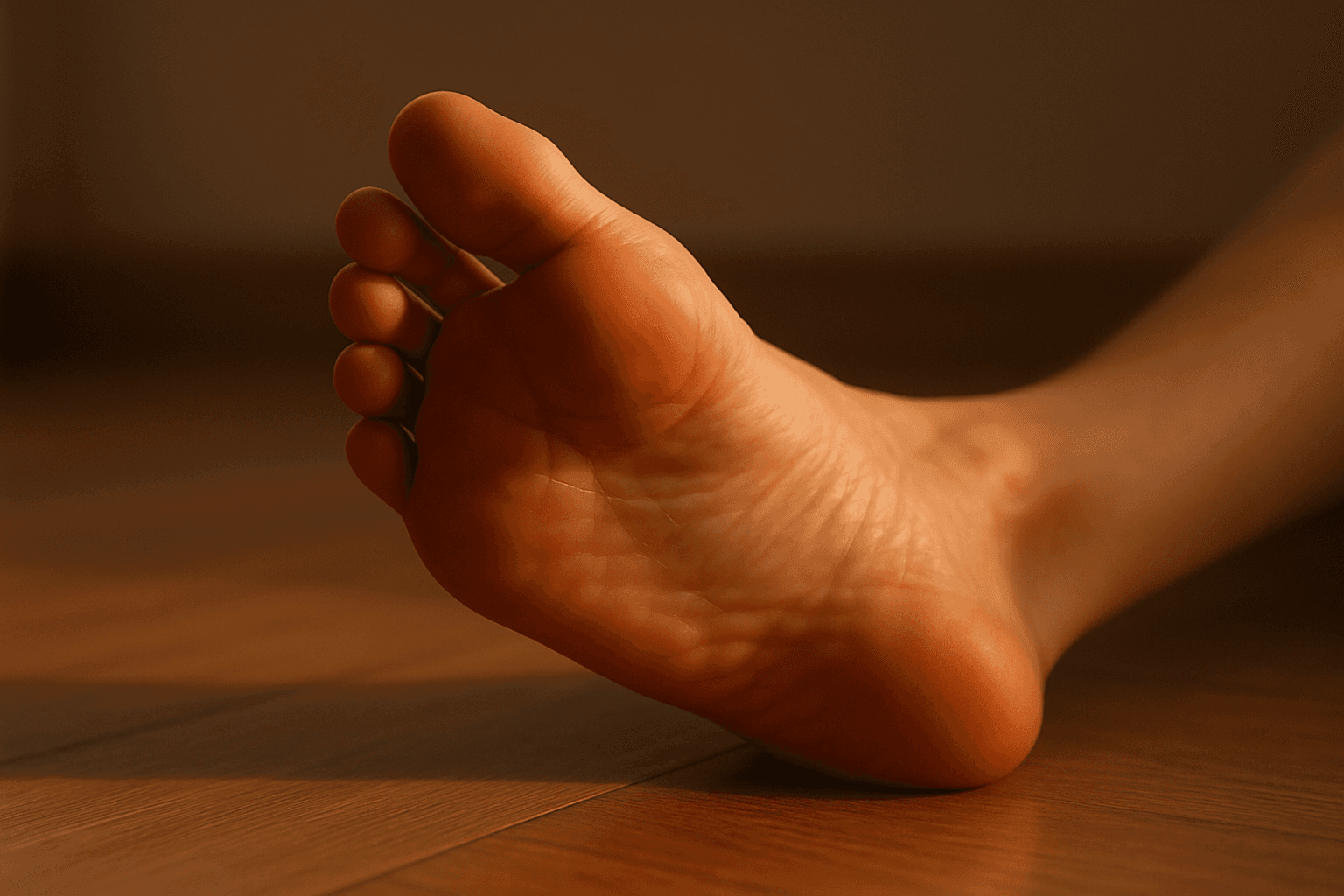
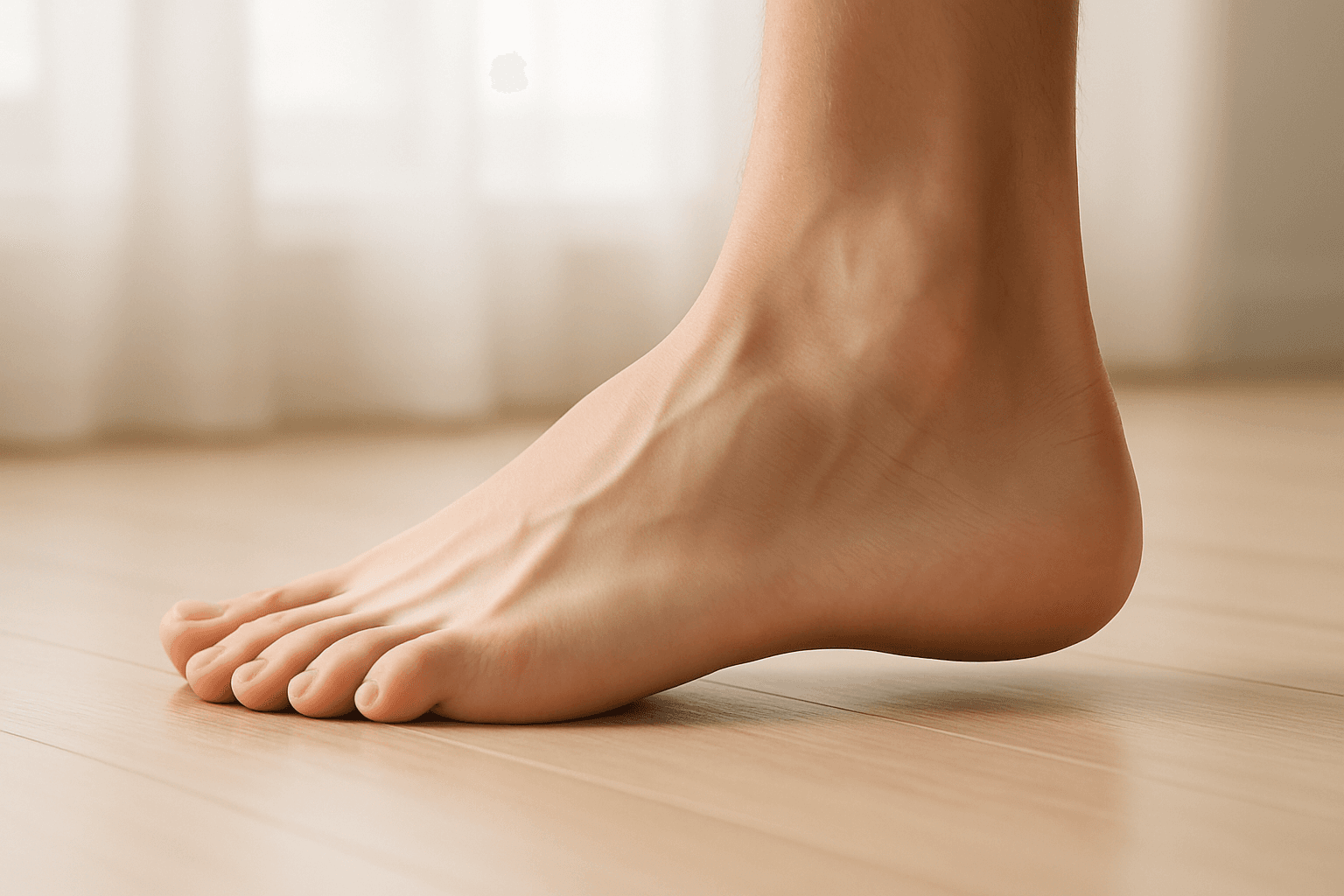
The heel fat pad is a specialized structure of dense fat compartments, held in place by tough fibrous walls, that sits between the underside of the heel bone and the skin of the sole. It is your body's built-in shock absorber, and it is remarkably good at its job — a healthy fat pad absorbs roughly a quarter of the impact of each heel strike before the load ever reaches the heel bone. When the pad thins with age, packs down from too many hours on hard floors, or bruises from a hard heel strike, it stops absorbing shock the way it was built to. The result is a diffuse, bruised feeling across the whole heel pad that builds through the day and does not follow the morning-worst pattern of plantar fasciitis.
Heel fat pad syndrome is one of the most commonly misread heel-pain patterns on the internet, because it shares a shoe aisle and an insole aisle with plantar fasciitis. The fixes are close cousins but not identical. Plantar fasciitis wants a firm arch that unloads the fascia; fat pad pain wants cushioning and a cradling heel cup that keeps the pad from splaying out sideways under load, and it usually gets worse with a hard rigid orthotic. Load a fascia routine onto a fat pad problem and the pad stays angry all day; put a soft gel pad under a fascia problem and the fascia stays overstretched. Getting the map right is half the work.
This page walks the honest picture of heel fat pad syndrome: how to recognize it against its neighbors, why the pad thins and inflames in the first place, what actually calms it down, and the small number of cases that need a clinician rather than a shoe change. Nothing here is medical advice, and no product on this site is a treatment for a thinning fat pad. Persistent heel pain that has not eased after four to six weeks of honest home care deserves an in-person exam by a doctor or podiatrist.
The fat pad syndrome pattern
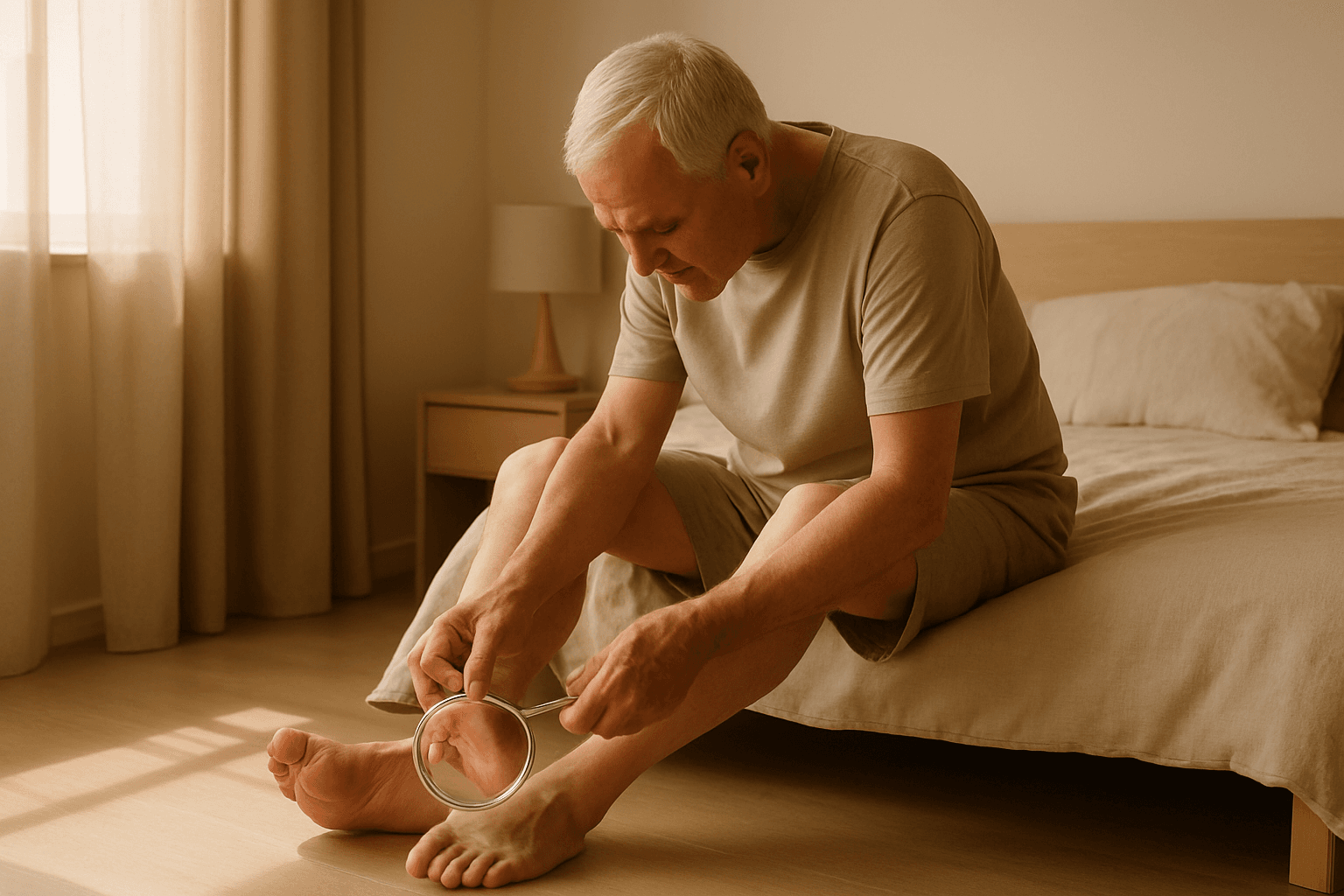
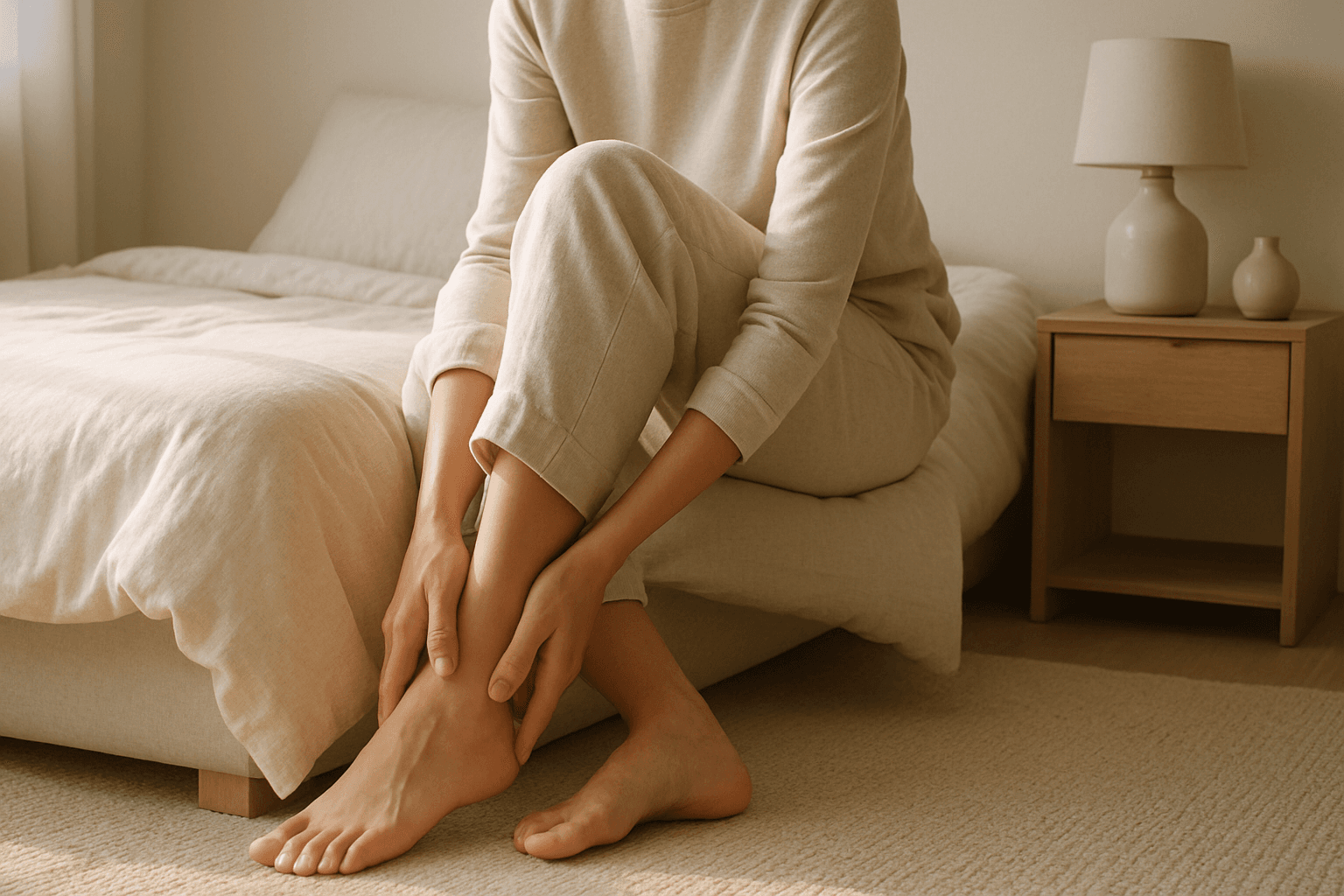
The tell is diffuse tenderness that feels like a fresh bruise on the pad of the heel and does not narrow to a single sharp spot. Take off your shoes, sit down, and press slowly with a thumb across the whole heel pad. In plantar fasciitis you will find a focal tender spot at the front-inside corner of the heel bone; in a fat pad problem the whole pad is uniformly sore, and it feels the same whether you press near the front, the back, the inside or the outside. A useful home tricks that podiatrists use: pinch the heel pad between your thumb and index finger and lift it slightly. A healthy pad feels springy and thick; a thinned pad feels flatter and more compressible, and pinching it may reproduce your usual pain.
Timing tells the rest. Fat pad pain is worst at end of day, not first thing in the morning. It builds across the hours of a long shift on your feet, gets worse on hard floors and in flat shoes, and improves overnight only to build again the next day. That is essentially the opposite rhythm of plantar fasciitis, which is worst on the first steps of the morning and eases as the fascia warms up. A pain that stabs on the first step and settles after a block is fascia; a pain that builds through the day and feels like a bruise by 5 p.m. is more consistent with the fat pad.
Character matters too. Fat pad pain feels dull, deep and bruise-like; plantar fasciitis feels sharp and stabbing on transitions. Fat pad pain rarely radiates; it stays under the heel. And it often shows up after a specific event that damaged the pad — a hard landing from a jump or a fall, a long shift on concrete in flat canvas sneakers, a marathon walked in unsupportive shoes, or (slowly, over years) simply age. The fat pad thins measurably from about age fifty onward, and thinner pads absorb less impact.
Why the pad thins or inflames in the first place
Fat pads follow a use-them-well-and-they-last pattern. Repeated peak loads that exceed what the pad can absorb — long shifts on hard floors in flat shoes, high-impact running on concrete without cushioning, a hard heel strike from a jump or a fall, walking with a very long stride and a heel-first landing — bruise and eventually pack down the compartments. Over years the pad loses some of its springiness. The fibrous walls that hold the fat in its compartments break down microscopically, the compartments spread out sideways under load rather than holding the fat under the heel bone, and each step lands with less cushioning than it used to.
Age is the background factor most people underestimate. The heel fat pad thins measurably from about age fifty onward, and by age seventy the average pad has lost twenty to thirty percent of its thickness compared to a healthy thirty-year-old's. Imaging studies (ultrasound and MRI) show this clearly. That does not mean everyone in their sixties has heel pain — plenty of older adults have healthy, comfortable feet — but it does mean that a pad problem that would have been a minor annoyance at thirty can be a daily complaint at sixty. Systemic conditions that alter connective tissue (rheumatoid arthritis, long-term diabetes, some inflammatory disorders) can accelerate the thinning.
Some cases follow a specific event. A hard fall onto the heel, a jump landing that felt bruising, a hike in unsupportive boots with a heavy pack — these can bruise the pad acutely and start a longer complaint. Repeated corticosteroid injections into the heel for plantar fasciitis have been documented to accelerate pad atrophy in some patients, which is one of the reasons injections are used sparingly rather than repeatedly. Runners who transitioned quickly from cushioned shoes to minimalist ones and returned to a heel strike sometimes flare a fat pad, because the shoe change did not come with a gait change.
Foot shape plays a smaller role than for plantar fasciitis. High arches transmit more shock to the heel pad because the midfoot flexes less under load, which is why high-arched feet get pad problems slightly more often. But shape is not destiny; a supportive shoe environment matters more than the arch you were born with.
What actually calms a fat pad down
Reach for cushioning, not aggressive arch support. This is the piece most readers get wrong when they self-diagnose plantar fasciitis and buy a rigid firm-arch insole. That insole may be right for the fascia; it is often wrong for the pad. A softer, thicker cushioning insole with a deep heel cup that cradles the fat pad into its natural position — rather than letting it splay out sideways under load — is what the pad wants. The heel cup piece matters more than the arch piece for fat pad syndrome. See our heel cups vs insoles walk-through for the difference in shape between the two categories.
Cut time barefoot on hard floors. This is the everyday change most readers underestimate. A working-from-home routine that has you barefoot on hardwood or tile for ten hours a day gives the pad none of the support it was getting from your shoes at the office. A supportive backed slipper with a cushioned heel — not a flat drugstore slide — makes a real dent inside a week for many people. If a slipper is not your thing, a pair of sneakers with the laces loosened, worn indoors, does the same job. The goal is simply to spend fewer hours a day with the pad taking direct floor impact.
Cushion the shoes you spend the most hours in. A supportive shoe with a well-cushioned midsole beats a firm supportive shoe for fat pad pain, and a running shoe with a moderate stack height (measured heel-to-toe thickness) is friendlier than a low-stack shoe. Flat canvas sneakers, thin-soled dress shoes and totally flat sandals are the everyday offenders. In work shoes and boots with hard midsoles, the insole choice is doing most of the cushioning — pick a cushioned insole with a deep heel cup, not a firm rigid one.
Ice at end of day for ten minutes on the sore pad. A frozen water bottle rolled slowly under the arch and heel works; a bag of frozen peas draped across the underside of the foot works better because it wraps the whole pad. Heat is not the friend of an acutely angry pad; leave it for once the pain has settled to a background hum. Anti-inflammatories at label doses can take the edge off in the first week or two if your primary care physician has cleared them; they are a comfort tool alongside the plan, not the plan itself.
Cut the specific activity that tipped it over. Long training runs on concrete, twelve-hour shifts in unsupportive shoes on hard floors, a summer of hiking with a heavy pack — pull back for two to four weeks and reintroduce on a ramp. The pad does not care about your calendar; it cares about how many peak loads a day you put through it and how much recovery it gets between them.
What to buy first for fat pad syndrome
The single most useful over-the-counter purchase for a fat pad problem is a heel cup with cushioning built in — either a silicone or gel heel cup worn inside your everyday shoes, or a full-length insole with a deep, well-cushioned heel section. The deep cup piece is what keeps the fat pad from splaying out sideways under each step, which is how a healthy pad is supposed to absorb impact. Cushioning material sits under and around the cup and takes the edge off hard floors.
Full-length insoles win over standalone heel cups for most readers, because they cushion the whole foot rather than just the heel and they combine a heel cup with a moderate arch. That mix — cushion, cradle and modest support — is friendly to a fat pad problem and does not aggravate a fascia problem, which is why we recommend the same pair for most mixed heel-pain pictures. The Akusoli insoles we would install first for morning heel pain have this shape: a deep heel cup, dense cushioning across the whole footbed, and a firm-but-not-brick-like arch that is comfortable even in cases where the pad is doing more of the complaining.
Standalone silicone heel cups are a fine option if you already have a supportive insole in your shoe and want extra cushioning specifically under the heel, or in shoes too shallow to fit a full-length insole. Silicone lasts longer than gel and does not pack down as fast; gel feels softer initially but flattens quickly. Our gel vs silicone heel cups walk-through has the head-to-head. For shoes with a removable factory insole, we would remove it and use a full-length pair; for shoes without room, a heel cup on top of the factory insole is the right move.
What not to buy first: rigid custom orthotics (they are more useful for fascia and biomechanical problems than for a bruised pad, and they can make a raw pad worse), thin flat drugstore insoles (they do not have a deep cup or real cushioning), and 'magnetic therapy' pads or acupressure inserts (we recommend the Akusoli pair for its support geometry, not its magnets, and for a fat pad problem you are buying the cup and the cushioning specifically). Ease any new insole in over a week — a few hours the first two days, then a half day, then full days — so the pad and the arch adjust together.
How long fat pad problems take to settle, and when to escalate
A recent flare in an otherwise healthy pad — a bad shift on concrete, a specific bruising event — usually settles inside two to four weeks with cushioning, less barefoot time on hard floors, and a real cut in the trigger activity. Cases where the pad has been thinning for years and the current flare is a straw-on-the-camel's-back moment take longer, often two to three months of consistent daily changes before the daily bruise fades. The pad itself does not usually regenerate to its youth thickness; what changes is that the daily peak loads come down enough that the pad, at whatever thickness it is at, is no longer being overloaded.
Cases worth a clinician's read: pain that has not moved after four to six weeks of an honest plan; a hard localized deep spot that hurts on every weight-bearing step rather than a diffuse bruise (raises the possibility of a calcaneal stress fracture and needs imaging); a hot swollen red heel with fever (same-week clinic visit for infection); any pain at rest or at night, or that comes with numbness, tingling or a color change (needs a nerve or vascular work-up); and any heel pain in a diabetic reader with altered sensation. Persistent pad pain in an older adult who has had repeated cortisone injections for another heel condition is also worth flagging, because pad atrophy is a documented consequence.
The specialist toolkit for stubborn cases includes ultrasound to measure pad thickness, MRI to look for other structural causes, custom padded orthotics that offload the specific tender area, and — rarely — injections of fat-derived material to augment a very thinned pad. Surgery is not a mainstream option for fat pad syndrome the way it is for chronic plantar fasciitis; there is no bump to shave and no fascia to release, and the goal is offloading rather than restructuring. That is why the everyday plan on this page is doing most of the work for most readers.
Living well with a thinner fat pad long term
If age is the underlying factor, the plan is a maintenance plan rather than a treatment plan. Pick supportive shoes for the hours you spend on your feet; keep a cushioned insole with a deep heel cup in your everyday shoes and in your work shoes; avoid long stretches barefoot on hardwood or tile; and change shoes when the cushioning has packed down (foam insoles usually last six to twelve months of daily wear, longer if you rotate two pairs). Two to three months of the plan usually calms the daily bruise, and staying on the plan long term keeps it calm.
For runners over fifty, a moderate-cushioning shoe with a deep heel cup insole beats a firm minimalist shoe for the pad, and cutting mileage on hard concrete in favor of dirt or a track spares the pad meaningful load. That does not mean giving up minimalist shoes if you love them; it means being honest about the mix of surfaces and paces you can run in them without flaring the pad. Runners who flared their pad on a transition to zero-drop shoes often do well with a moderate-drop, moderately-cushioned shoe for daily miles and the zero-drop pair for shorter, softer runs.
Every recommendation on this hub is written for comfort, support and relief, not for a cure. Fat pad thinning is a natural part of how feet age, and the goal is to keep the daily load on the pad low enough that it does not complain, not to reverse the aging. See our heel pain hub for the broader map of neighboring conditions, and our pain in the bottom of the heel walk-through for the way fat pad syndrome fits alongside the other under-heel patterns. The forefoot version of the same complaint — a thinning forefoot pad plus overloaded metatarsal heads — lives on our ball of foot pain walk-through, and the two often ride together in an older foot.
The insole most fat pad pictures benefit from
A full-length insole with a deep heel cup and dense cushioning cradles the fat pad into its natural position and takes the edge off hard floors — the shape a bruised pad wants.
The insole most fat pad pictures benefit from →Frequently asked questions
How do I know if my heel pain is fat pad syndrome and not plantar fasciitis?
Two features do most of the sorting. Location: fat pad pain is diffuse across the whole heel pad and feels like a bruise no matter where you press; plantar fasciitis is a single sharp spot at the front-inside of the heel bone. Timing: fat pad pain is worst at end of day and builds across the hours on your feet; plantar fasciitis is worst on the first steps in the morning and eases as you walk. If your heel pain gets worse in a shoe with more arch support and better in a shoe with a squishy heel, you may be dealing with the fat pad rather than the fascia.
Can a thinned heel fat pad heal?
The pad does not usually regenerate to its youth thickness once it has thinned with age or from repeated trauma — that is anatomical. What can change is the daily load: a supportive shoe environment, a cushioned insole with a deep heel cup, less barefoot time on hard floors and a cut in the trigger activity bring the peak loads down enough that the pad, at whatever thickness it is at, is no longer being overloaded. Most readers with an honest plan feel meaningfully better inside two to four weeks and settle to a comfortable baseline over two to three months.
Do heel cups actually help fat pad syndrome?
Yes — this is the diagnosis where heel cups earn their keep more clearly than for any other under-heel pattern. A silicone or gel heel cup with a deep contour cradles the fat pad into its natural position under the heel bone, so it absorbs impact the way it was built to instead of splaying out sideways under load. Combined with cushioning above and below, the cup is doing the mechanical work. Our gel vs silicone heel cups walk-through covers the head-to-head between the two materials.
Should I use a firm insole or a soft cushioned one for fat pad pain?
Reach for cushioned, with a deep heel cup, rather than firm and rigid. A rigid orthotic that unloads the fascia is often the wrong shape for a bruised pad — it can concentrate load on the sore area rather than spreading it. A full-length insole with a moderate arch, a deep well-cushioned heel cup and dense (but not brick-like) foam is the friendly compromise, and it happens to be the shape that also helps plantar fasciitis.
Can walking barefoot at home make fat pad pain worse?
Yes, if the floors are hard and you are on your feet for hours. Bare feet on hardwood or tile give the pad none of the support it was getting from your shoes. Many readers who work from home are surprised by how much a supportive backed slipper or a pair of laced-loose sneakers indoors moves the needle inside a week. If a slipper is not your thing, a small area rug at the kitchen sink and a cushioned mat where you stand to cook are worth the effort.
Does age itself cause heel fat pad problems?
It is the biggest background factor. Imaging studies show the heel fat pad thinning measurably from about age fifty onward, and by age seventy the average pad has lost twenty to thirty percent of its thickness compared to a healthy thirty-year-old's. That does not mean everyone in their sixties has heel pain — plenty of older adults have comfortable feet — but a pad problem that would have been a minor annoyance at thirty can be a daily complaint at sixty. Long-term shoe and insole habits matter more at sixty than they did at thirty.
HeelCups is reader-supported. When you buy through links on our site we may earn an affiliate commission, at no extra cost to you. This article is general information about foot comfort and is not medical advice — see our medical disclaimer.