FOREFOOT NERVE PAIN
Morton's Neuroma: The Burning, Pebble-in-Your-Shoe Pain in the Ball of the Foot
A burning or tingling pain between the toes that feels like a bunched-up sock. Here is how it differs from other forefoot pain and what usually brings relief first.
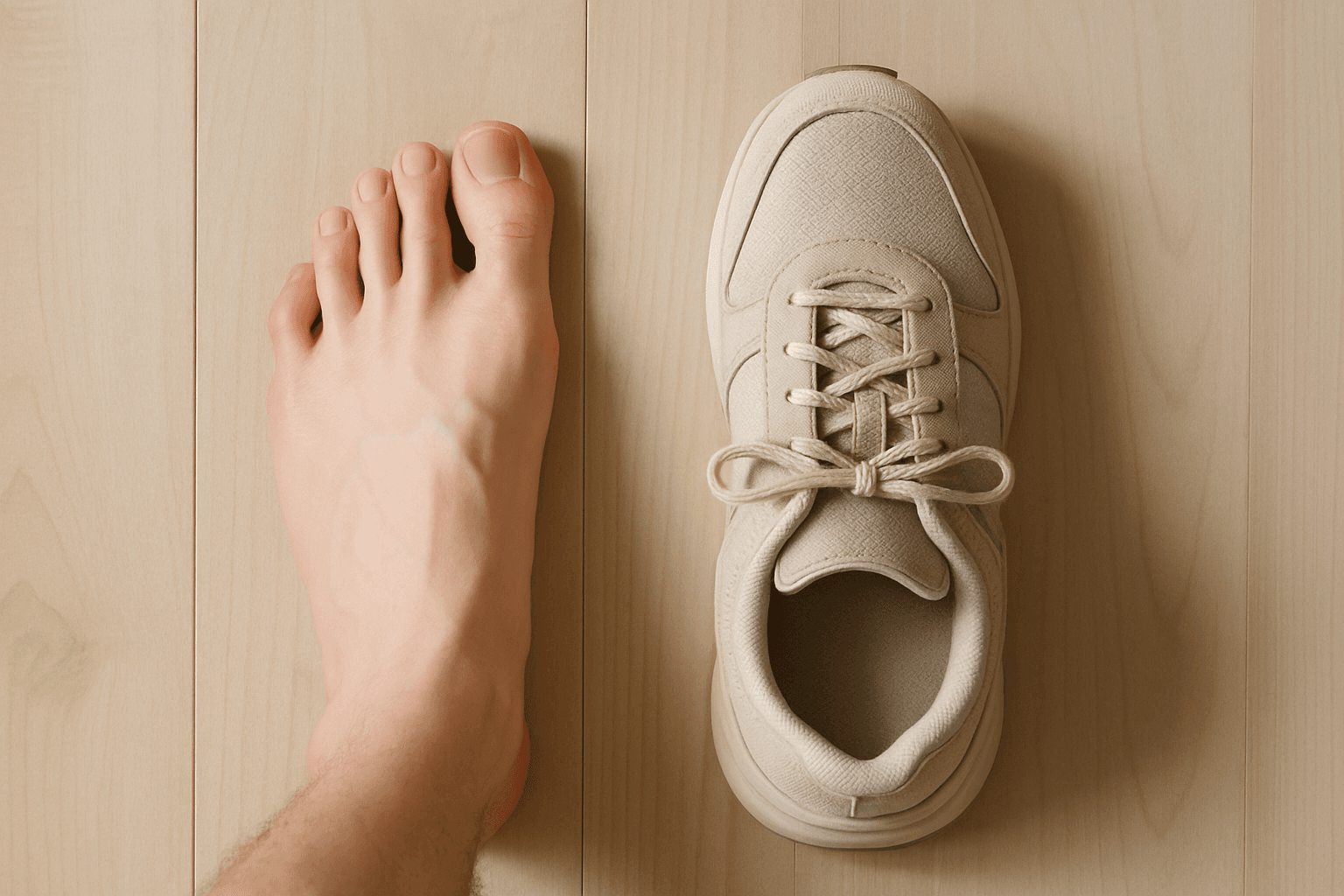
Morton's neuroma is a thickening of the tissue around a nerve that runs between the long bones of the forefoot, most often between the third and fourth toes. The typical story is a burning or sharp pain in the ball of the foot, a feeling of standing on a pebble or a folded sock, and tingling or numbness in the toes on either side. It tends to flare in narrow or high-heeled shoes and often eases when you take the shoe off and rub the foot.
The first moves are about taking pressure off that nerve: shoes with a wide toe box and a low heel, a little cushioning under the forefoot, and fewer hours in anything that squeezes the toes together. Many people notice a difference within a few weeks of changing footwear alone. Those steps are about comfort and support while the area settles, not a promise that anything is cleared up.
This pain is easy to confuse with the more common ball of foot pain that comes from an overloaded forefoot, so the sections below show how to tell them apart. Because numbness and burning can have several causes, persistent symptoms deserve a proper exam by a doctor or podiatrist.
What Morton's neuroma feels like
The classic description is a burning, stabbing or electric pain in the ball of the foot that spreads into two neighboring toes. Many people describe a pebble under the foot or a wrinkled sock that is not there. Tingling and numbness in those toes are common, and symptoms usually build during walking or standing and ease when you stop.
Sources such as the NHS and university health systems consistently note that it most often affects the space between the third and fourth toes, and that it is more often reported by women, which is commonly linked to tight or high-heeled footwear. Pain that is felt as a broad ache across the whole ball of the foot, rather than a burning pain between two toes, is more typical of general forefoot overload.
How it differs from other forefoot pain
A few clues help sort the common look-alikes. Pain that sits under one of the bony knuckles at the ball of the foot and feels like bruising is usually a load problem rather than a nerve one; our page on ball of foot pain covers that pattern. Burning that radiates into the toes, and numbness there, points more toward a nerve being squeezed.
Heel symptoms are a different region altogether. If your main pain is under or behind the heel, start with the heel pain hub instead. Constant numbness, pain at night that wakes you, or symptoms in both feet that spread upward can have other causes, including nerve or circulation problems, and need a clinician rather than a shoe change.
Shoes: the biggest lever you control
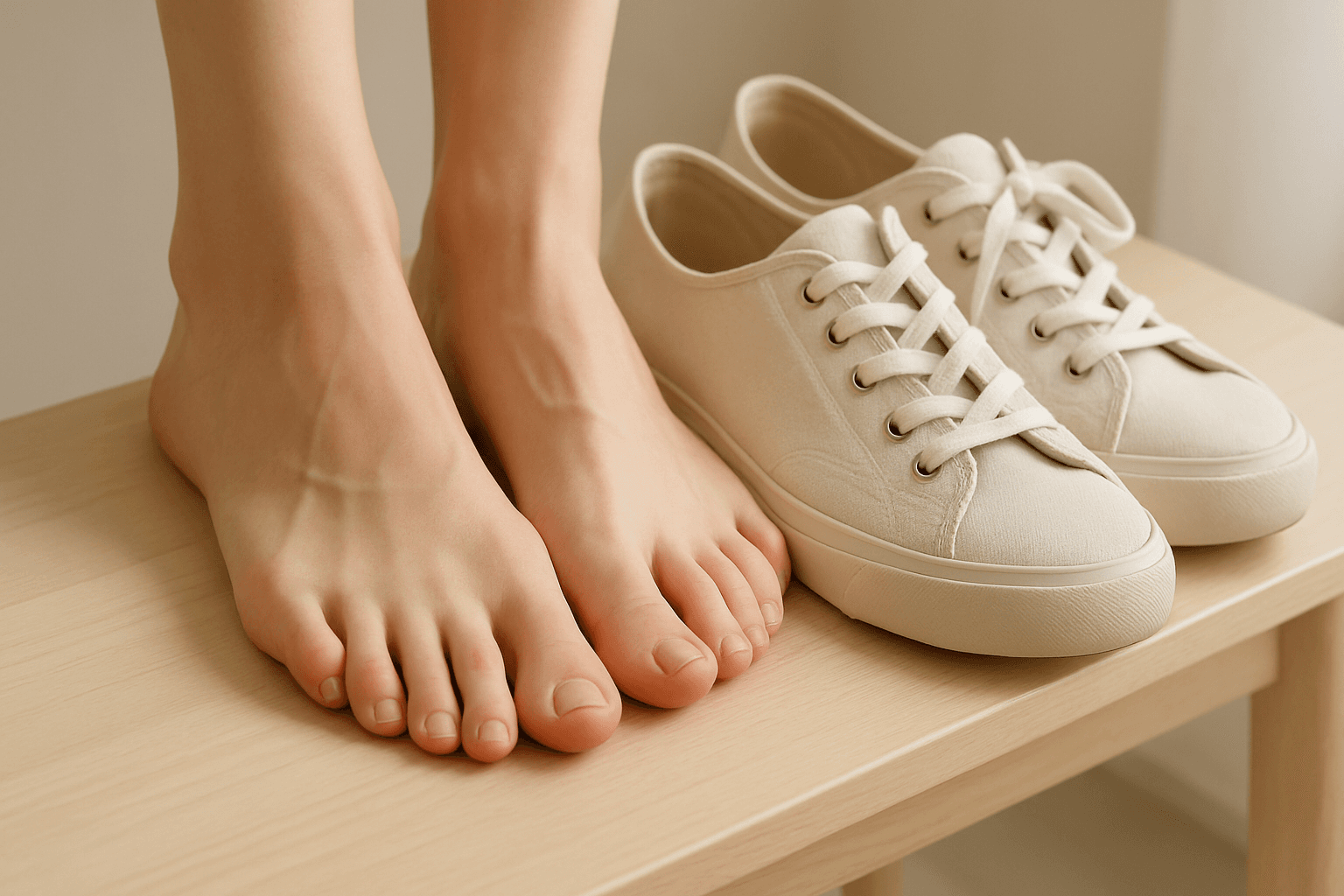
Footwear advice from podiatry and health-system sources is remarkably consistent: choose shoes with a wide toe box that lets the toes spread, a low or flat heel, and a sole thick enough to cushion the forefoot. A pointed or tapered toe squeezes the bones together, which is exactly what irritates the nerve; a high heel shifts body weight onto the ball of the foot.
A practical test in the shop: stand on the insole you plan to wear and check that your toes can wiggle freely and that the widest part of your foot is not pinched. Try shoes in the afternoon, when feet are at their largest. If the shoe is fine but still feels tight, lace it loosely across the forefoot rather than cranking it down.
Pads and insoles that take pressure off
A metatarsal pad is a small dome that sits just behind the painful spot on the insole. Its job is to spread the long bones of the forefoot slightly and reduce squeezing on the nerve. Placement matters: the dome goes behind the ball of the foot, not directly under the sore spot. If it feels worse, it is probably too far forward.
A cushioned insole with a supportive arch can also help by sharing load across the whole foot instead of dumping it on the forefoot. Our insoles guide explains arch support and cushioning. An insole is a comfort and support aid; it does not remove a neuroma, so give any change a few weeks and track whether the burning eases.
Everyday habits that ease flare-ups
Take shoes off at breaks and gently massage the ball of the foot and spread the toes. Rotate between two pairs of shoes so the same pressure points are not loaded daily. Cut back on high-impact activity for a spell if running or jumping sets it off, and swap in lower-impact exercise such as cycling or swimming while it calms down.
Many people find that a short break from tight cycling or climbing shoes helps too. If you stand all day, standing mats and a cushioned insole take some of the sting out; see insoles for standing all day.
When to see a doctor or podiatrist
See a clinician if the pain has lasted more than a few weeks despite wider shoes, if numbness is constant, if it wakes you at night, or if you cannot confirm what it is. A doctor or podiatrist can examine the foot, press on the space to reproduce the click or pain, and sometimes use ultrasound or MRI to confirm. Options beyond home care, including injections and surgery, are decisions to make with them.
Sudden swelling, redness, warmth, a recent injury, or any foot pain with diabetes or poor circulation should be checked promptly rather than managed at home.
Compare cushioned, supportive insoles
Read our insoles guide to pick support and cushioning that share load across the foot instead of the ball.
Compare cushioned, supportive insoles →Frequently asked questions
What does Morton's neuroma feel like?
Most people describe burning or sharp pain in the ball of the foot, often with tingling or numbness in two neighboring toes, and a feeling of a pebble or folded sock under the foot. It is usually worse in tight shoes.
Which shoes are best for Morton's neuroma?
Shoes with a wide toe box, a low heel and a cushioned sole are the common recommendation. Avoid pointed toes and high heels, and lace loosely across the forefoot.
Do metatarsal pads help?
Many clinicians suggest them because they spread the forefoot bones and ease pressure on the nerve. They are a comfort measure and need correct placement just behind the sore spot.
Is Morton's neuroma the same as plantar fasciitis?
No. Plantar fasciitis causes pain under the heel, especially with the first steps of the day. A neuroma causes burning or tingling in the ball of the foot and toes.
Will it go away by itself?
Some people find symptoms settle with better footwear and less pressure, but it varies. If it persists, a podiatrist can discuss further options.
Should I see a doctor?
Yes if pain lasts beyond a few weeks, numbness is constant, or symptoms wake you at night.
HeelCups is reader-supported. When you buy through links on our site we may earn an affiliate commission, at no extra cost to you. This article is general information about foot comfort and is not medical advice — see our medical disclaimer.