FOOT RASHES
Rash on the Top of the Foot: Likely Causes and When to Get It Looked At
Itchy, red or scaly skin on the top of the foot is rarely athlete's foot. Here are the common causes, what to try for comfort, and the signs that mean see a clinician.

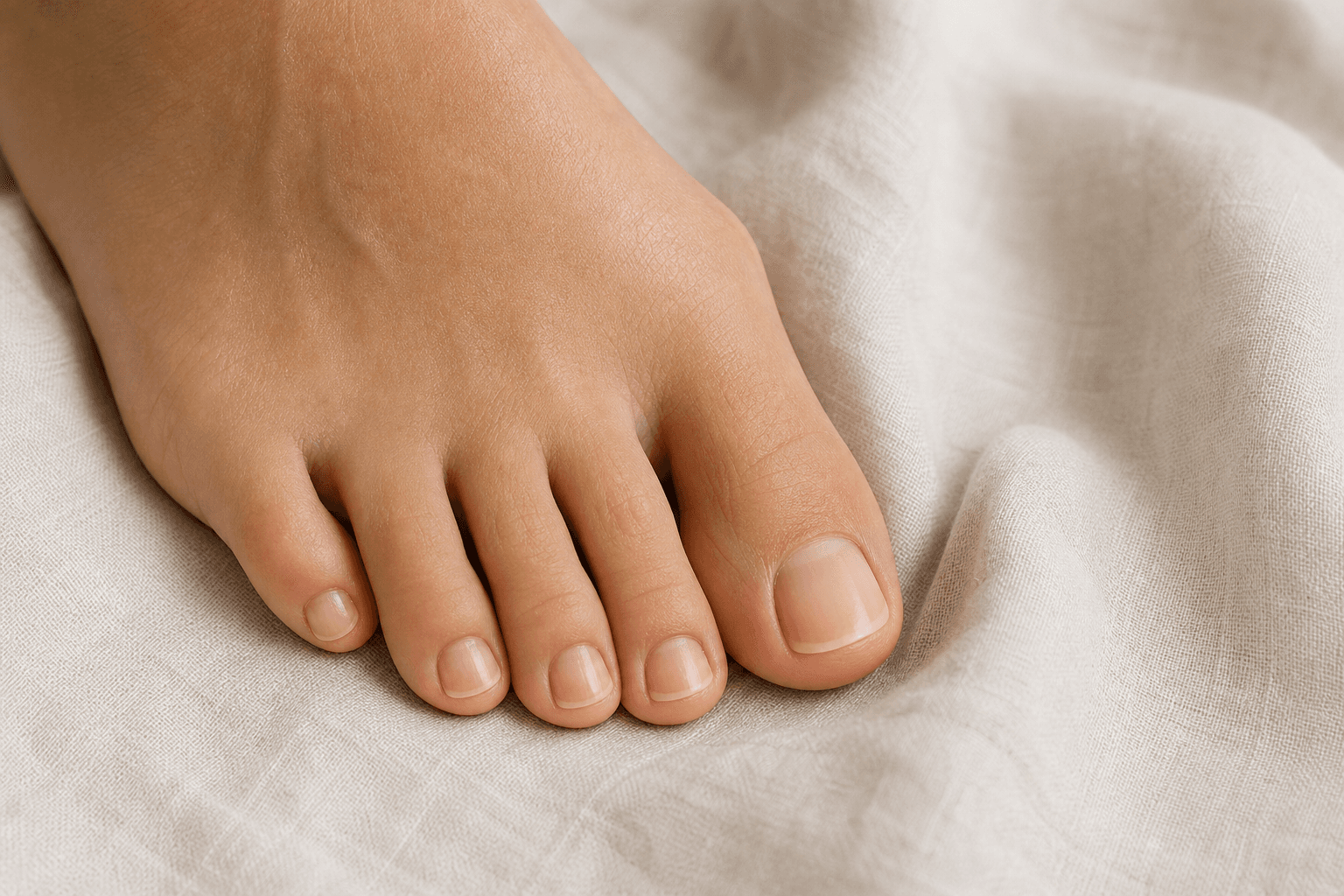
A rash on the top of the foot is most often contact dermatitis, eczema or irritation from shoes and socks rather than a fungal infection. Athlete's foot usually starts between the toes or on the soles, so a rash confined to the top of the foot points elsewhere. A clinical case write-up on MDedge describes exactly this: an itchy top-of-foot rash that did not respond to antifungal creams turned out to be contact dermatitis, in that case suspected from allergens in leather shoes.
That makes the top of the foot a useful clue, not a diagnosis. Dermatitis, eczema, psoriasis, sunburn and fungal infection can all appear there, and they need different care. Using the wrong cream wastes weeks and can irritate skin further, so the goal on this page is to narrow the options and help you decide when to see someone.
This is general information, not medical advice. If you also have diabetes, a fever, pus or spreading redness, skip home care and contact a clinician. Our guide to what athlete's foot looks like is the place to compare if you suspect a fungal cause.
Contact dermatitis: the shoe and sock suspect
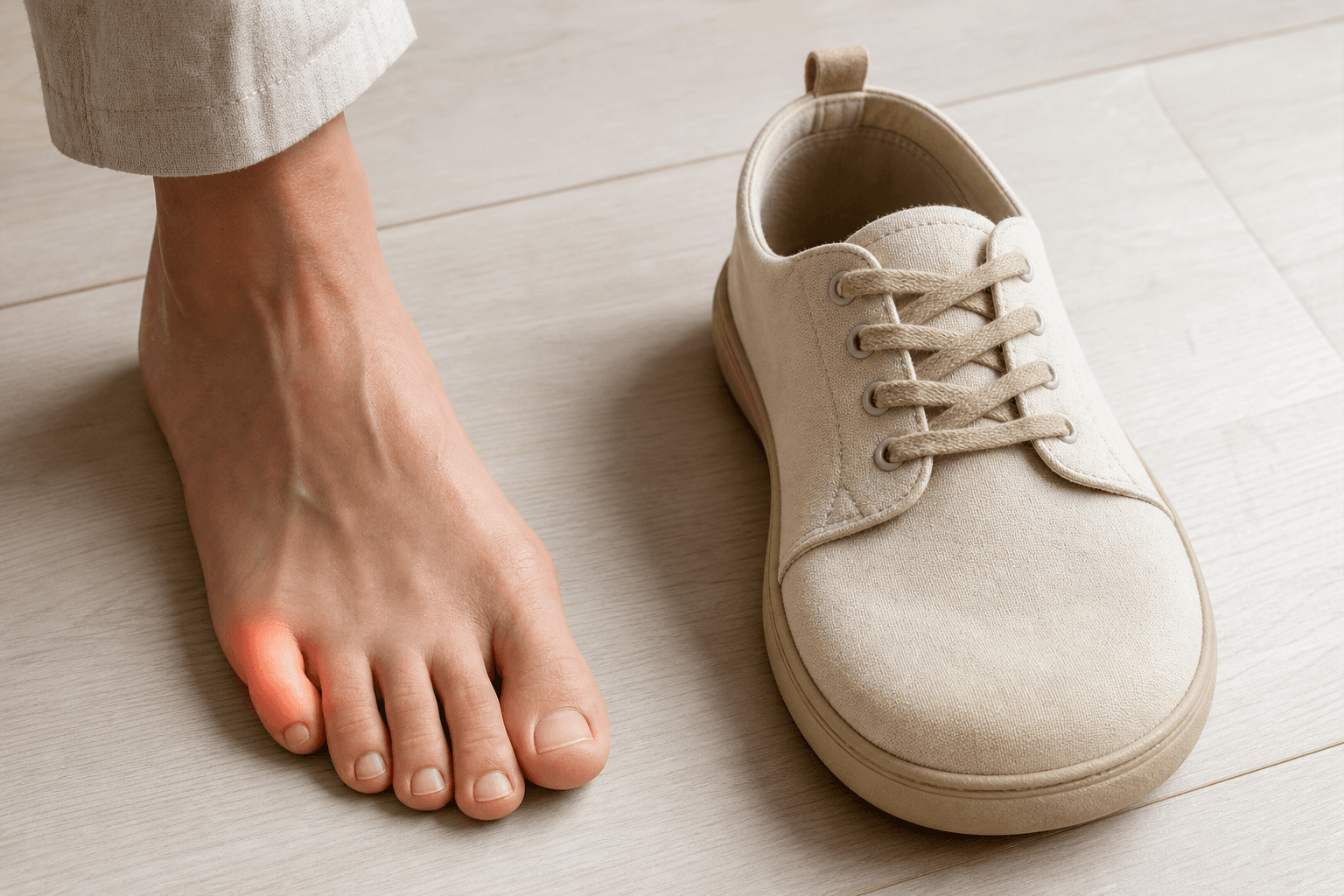
Contact dermatitis is a skin reaction to something that touches the skin, either an irritant or an allergen. On the top of the foot the usual suspects are the tongue or upper of a shoe, dyes, rubber or adhesives in footwear, and chemicals such as chromates used in leather tanning. Fabric softeners, laundry detergent and new socks are also common triggers.
The shape of the rash often follows the shoe: a patch under the laces, a band where a strap rubs, or skin that is red and itchy where the footwear sits. It tends to improve when you stop wearing the trigger and flare again when you restart. Swapping to a different shoe or plain cotton socks for a week or two is a reasonable test, as long as the skin is not broken.
Eczema and other dry, itchy patches
Eczema (atopic dermatitis) can cause dry, scaly, itchy patches on the top of the foot and ankle, and people who have eczema elsewhere are more prone to it. Sweat trapped in closed shoes can irritate it, and scratching tends to make it worse.
Psoriasis can also show on the feet, usually as well-defined, thicker, scaly plaques. Sources such as emedihealth list eczema, contact dermatitis, fungal infection and psoriasis together as causes of a chronic top-of-foot rash, which is why a clinician's look matters if it keeps returning.
Fungal infection and sunburn
Ringworm of the foot (tinea) can occur on the top of the foot even though it is less typical than the toe-web pattern. It often forms a ring with a clearer centre and a raised, scaly edge and responds to an antifungal rather than a steroid cream. Mayo Clinic advises seeing a doctor if an over-the-counter antifungal has not improved athlete's foot in two weeks. For choosing a product, see our athlete's foot creams and sprays guide.
Sunburn is an easily forgotten cause in sandal season. The tops of the feet get strong sun and little sunscreen, and the result is a red, tender, sometimes blistering patch that matches the straps. Cool compresses, shade and a gentle moisturiser help comfort; blistering or fever means it is time to get advice.
Comfort measures while you work out the cause
Keep the skin clean and dry, wash with a mild fragrance-free cleanser, and pat dry rather than rubbing. Wear breathable, roomy shoes and cotton or moisture-wicking socks, and change socks if they get damp. Avoid scratching, which can break the skin and let bacteria in.
Give the skin a break from the likely trigger. A plain moisturiser helps dry patches feel more comfortable. Be cautious about layering creams: a steroid cream will not help a fungal rash, and an antifungal will not help dermatitis, so guessing wrong can delay the right care. A pharmacist can advise on safe over-the-counter options for your situation.
Rashes that need more attention
Some patterns suggest more than irritation. Red streaks, warmth, swelling, pus or a fever can mean infection. A rash that is painful rather than itchy, blistering, or spreading fast also needs prompt review. Swelling of the foot with a rash, particularly in one leg, can be a circulation or clot problem and should be assessed urgently.
If you have diabetes, reduced sensation or poor circulation, do not wait on any new foot rash. Our diabetic socks guide covers daily foot checks for that situation, and the foot care hub links to related skin pages.
When to see a doctor
Book an appointment if the rash lasts more than about two weeks despite simple measures, keeps coming back, interferes with sleep, or you cannot identify the trigger. A doctor or dermatologist can examine it, take a skin scraping to check for fungus, or arrange patch testing for a shoe allergy.
Persistent rashes, especially on one foot only, deserve a proper look rather than months of trial and error with creams.
Browse the foot care hub
Skin, toenail and everyday foot guides, each with notes on when to see a clinician.
Browse the foot care hubFrequently asked questions
Why is the rash only on the top of my foot?
The top of the foot is exposed to shoe tongues, straps, laces and sun. Contact dermatitis, eczema and sunburn commonly show there, while athlete's foot more often starts between the toes or on the sole.
Is a rash on top of the foot athlete's foot?
It can be, but it is less typical. If an antifungal has not improved it after two weeks, Mayo Clinic advises seeing a doctor, since another cause such as dermatitis is likely.
Can my shoes cause a rash?
Yes. Dyes, rubber, adhesives and leather-tanning chemicals can trigger contact dermatitis, and friction from tight shoes can irritate skin even without an allergy.
Should I use hydrocortisone or an antifungal cream?
It depends on the cause, and the wrong one can delay improvement. A pharmacist or doctor can help you choose, particularly if the rash has not improved quickly.
When is a foot rash an emergency?
Seek urgent care for rapidly spreading redness, red streaks, fever, severe pain or swelling, and tell a clinician promptly if you have diabetes.
HeelCups is reader-supported. When you buy through links on our site we may earn an affiliate commission, at no extra cost to you. This article is general information about foot comfort and is not medical advice — see our medical disclaimer.