BONE SPUR
Bone Spur on the Heel: What It Is, Why It Rarely Hurts on Its Own, and What Helps
A calcaneal spur is a bony change that shows up on X-ray. Most people who have one have no pain at all. Here is what a spur actually is at the tissue level, and how the pain that does come with one gets calmed down.
A bone spur on the heel — clinically a calcaneal spur — is a small bony outgrowth at the underside or the back of the heel bone. It shows up on X-ray as a hook or a short peak, and it grows slowly over years wherever the body senses persistent tension: the front of the heel where the plantar fascia anchors, sometimes the back of the heel where the Achilles tendon attaches. The name sounds worse than it is, and the picture on X-ray tends to make people think the spur is the villain when it usually is not.
The single most important fact about heel spurs is that they are common in people with no heel pain at all. Population imaging studies find spurs in roughly one in five to one in ten adults, and the great majority of them never notice. On the flip side, most people with a clean plantar fasciitis presentation — sharp under-heel pain that is worst with the first steps in the morning — do not have a spur on X-ray, and their pain resolves without one ever forming. If the bump on the bone were the pain generator, neither of those groups would exist.
This page is the tissue-level explanation of what a spur actually is, why the pain that comes with a painful spur is almost always the soft tissue around it rather than the bone itself, and what tends to help. For the bigger picture on the hub, see heel spurs; for the specific overlap with plantar fasciitis, our heel spur vs plantar fasciitis walk-through is the map. For the honest ladder of what actually helps a painful heel with a spur, our heel spur treatment walk-through steps through home care to injections and surgery. Nothing on this page is medical advice.
What a bone spur actually is
A calcaneal spur is new bone laid down slowly by the body in response to persistent tension on a specific point of the heel bone. The mechanism is essentially the same one that thickens a callus on skin exposed to repeated pressure, but happening in bone instead of skin, and over years rather than weeks. Where a tendon or ligament anchors on bone, small forces at that anchor point over long stretches of time trigger osteoblasts (the cells that build bone) to add material at that spot. Given enough time, that added material is visible on X-ray as a hook or a peak.
There are two common locations. A plantar calcaneal spur sits on the underside of the front of the heel bone, where the plantar fascia anchors. Older textbooks talked about the spur as growing "into" the fascia, but that turned out to be inaccurate; the spur grows within a different layer of tissue, and the fascia's own attachment sits just beside or above it rather than being pierced by it. An insertional or Achilles-side spur sits at the back of the heel bone, at the Achilles tendon's attachment, and often coexists with insertional Achilles tendinopathy or Haglund's deformity — a related bony prominence on the upper-outer heel.
The spur itself is bone, not soft tissue, and once it has formed it does not shrink meaningfully with any conservative treatment. Insoles, stretching, injections and shockwave therapy all work on the soft tissue around the spur, not the spur itself.
Why a spur rarely hurts on its own
The pain in a painful heel with a spur almost always comes from the inflamed soft tissue at the same anchor point, not the bump of bone. At the front of the heel, that means the plantar fascia's insertion and the surrounding fatty tissue; at the back of the heel, the Achilles tendon and the retrocalcaneal bursa (a small fluid sac between the tendon and the bone). These soft tissues have plenty of pain receptors; the interior of a slowly grown bony change has very few.
This is why so many people are surprised to learn they have a spur on X-ray when they had no idea until an imaging study was ordered for another reason. It is also why a heel with a spur can go from very painful to essentially pain-free over three to six months of the right conservative care without the spur itself changing at all. The load pattern on the surrounding soft tissue changed; the bump stayed exactly where it was and stopped being the story.
The rare exception is a spur that has grown big enough or in a position that it mechanically presses on something — a shoe collar, a nerve, or an inflamed bursa — in a way that is not really about the surrounding soft tissue's own load. Those cases are the minority and are also the ones that occasionally end up with surgery to remove the spur, usually as part of a larger operation on the fascia or the Achilles.
How the spur forms: the years-of-tension story
The specific tension that drives a plantar spur is the years of pull the plantar fascia has been putting on the heel bone with every step. Anyone whose fascia has been chronically pretensioned by tight calves, unsupportive shoes over many years, a job that keeps them on their feet on hard floors, or the ordinary aging of the calf-Achilles-fascia complex is a candidate. That is why plantar spurs are more common with age (accumulated years of load) and in populations with the ordinary risk factors for plantar fasciitis (though many of those people never actually develop the condition itself).
For an Achilles-side spur, the driver is years of tension where the Achilles tendon meets the heel bone, and the risk factors mirror those for insertional Achilles tendinopathy: runners, jumpers, people whose gait style keeps them on their toes, and older adults with reduced ankle mobility. Same mechanism, different tendon, different location on the bone.
Understanding this timeline is why the honest answer to "can I make my spur go away" is no — the added bone was years in the making and will not un-make itself. But the follow-up honest answer is that most people with painful spurs stop hurting once the soft tissue around the spur has calmed down, and the plan for that soft tissue is the plan for the underlying condition (plantar fasciitis or insertional Achilles), regardless of the imaging picture.
Imaging: why a spur on X-ray is not a diagnosis
An X-ray of a painful heel that shows a spur is a description of a bony finding, not an explanation of the pain. The pain still needs to fit a pattern that lines up with a soft-tissue problem — sharp under-heel pain worst in the morning for the fascia, tender bump at the back of the heel worst in stiff shoes for insertional Achilles, deep focal pain with any weight that started after a spike in activity for stress fracture — and it is that pattern that steers treatment. Two people with identical X-rays can have very different pain generators, and the imaging alone cannot tell them apart.
This is why a good foot-and-ankle clinician takes a history and does a hands-on exam before ordering imaging, and why some clinicians skip an X-ray entirely on a first visit for classic plantar fasciitis (they can already tell what is happening at the soft-tissue level from the exam). Ultrasound of the fascia, which shows thickening and inflammation directly, is often more informative for a chronic case than an X-ray of the underlying bone; MRI adds even more soft-tissue detail and is worth ordering when the picture is unclear or when a stress fracture needs to be ruled out.
What tends to help: the same routine as the underlying problem
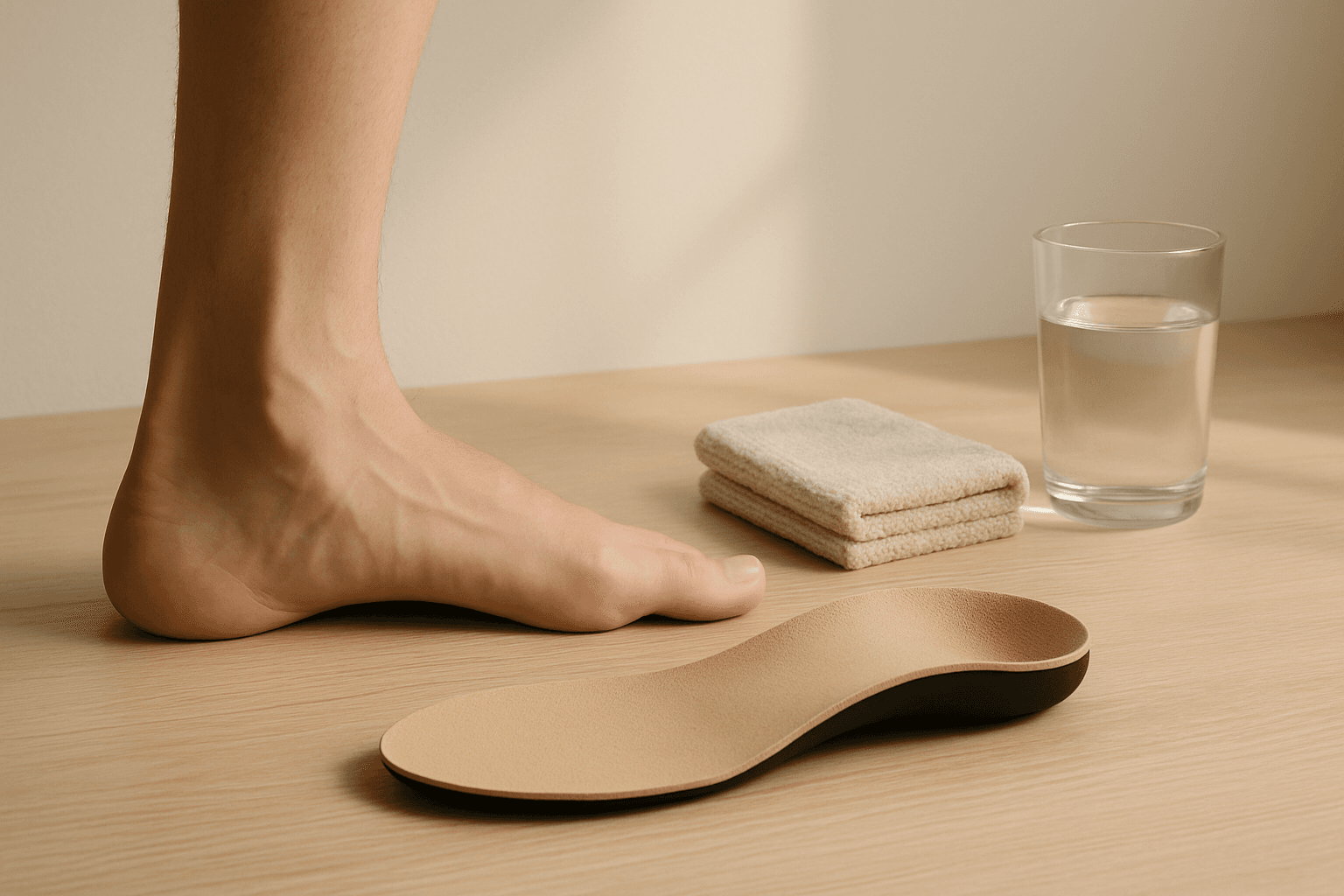
A painful spur at the underside of the heel calls for the plantar fasciitis routine, because the target — the inflamed fascia at its heel attachment — is the same regardless of the bony picture. The daily plan: a supportive insole with a firm medial arch and a deep, cushioned heel cup in every shoe worn all day; a short daily calf and fascia stretch, morning and evening; less time barefoot on hard floors at home; a temporary cut in whatever activity spiked the load; and three to four weeks of honest daily practice before deciding whether it is working. Our full stretching routine lives on the plantar fasciitis stretches page, and the pair we recommend first is in the Akusoli insoles review.
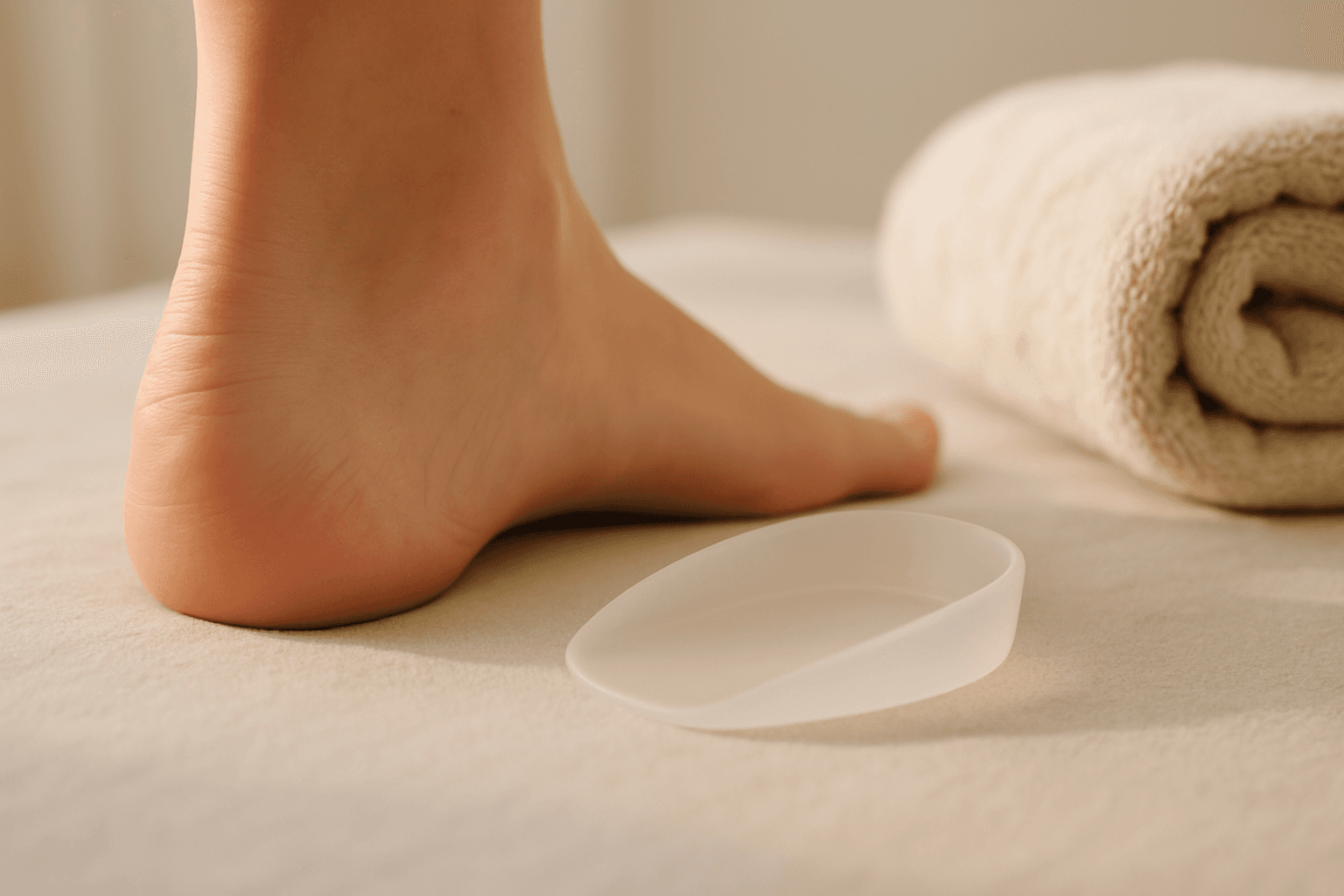
A painful spur at the back of the heel calls for the insertional Achilles routine instead. A small heel lift (six to twelve millimeters) in every shoe unloads the tendon from above; cut hills, stairs and speed work for two to four weeks; retire any shoe whose stiff back edge presses on the sore area; and skip aggressive calf stretching in the acute phase in favor of slow controlled heel raises once the pain has calmed. Our back of the heel walk-through covers the whole plan.
For either pattern, the point is worth repeating: none of this shrinks the spur. What it changes is the daily load on the soft tissue around the spur, which is what people experience as "the spur getting better." Most spurs stop hurting without ever going away.
What we would ignore
The internet's popular non-treatments for heel spurs — apple cider vinegar soaks, magnetic insoles, essential oil rubs, "detox" foot pads — do nothing to either the bone or the soft tissue around it, and burn time and attention that a real routine deserves. Anything marketed specifically "for heel spurs" that is really just a flat gel pad with the phrase on the packaging is the same story; the useful features are the ones any good insole or heel cup provides, and the label on the box does not add anything.
Anti-inflammatory pills taken for a bad day are comfort medicine, not a plan. A single corticosteroid injection can settle a stubborn soft-tissue flare and is a reasonable rung on the ladder; repeated injections carry a real risk of fat pad atrophy at that spot and are used sparingly. Extracorporeal shockwave therapy has decent evidence for chronic plantar fasciopathy and is worth asking a podiatrist about when honest home care has not moved the pain after two to three months.
When to see a clinician
Persistent heel pain that has not eased after four to six weeks of honest home care deserves an in-person exam by a doctor or podiatrist, whether or not a spur is present. Same-week reasons to be seen include pain that followed a specific fall or injury, pain severe enough that you cannot bear weight without limping, pain with swelling, warmth, redness or a fever, numbness or tingling in the sole, and pain that wakes you at night or is present at rest. None of these fit the everyday home-care lane.
Persistent heel pain in a child or teenager is a different problem entirely — Sever's disease, an irritation of the growth plate at the back of the heel, is far more likely than either plantar fasciitis or a spur — and always deserves an in-person exam. Heel pain on both sides at once in a younger adult is worth flagging as well; inflammatory conditions can present that way. A clinician is the right person to sort the ordinary causes from the less common ones.
Surgery on a spur is uncommon and late-ladder. It comes up when six to twelve months of honest conservative care and the standard injections have not settled a case, and the operation usually targets the surrounding soft tissue (a plantar fascia release, an Achilles debridement) as much as it targets the bone. A podiatrist or foot-and-ankle surgeon is the right person to sort that decision.
The insole that quiets the soft tissue around a spur
A trim-to-fit insole with a firm arch and deep heel cup — supports the fascia through the whole day so the soft tissue around a spur can settle.
The insole that quiets the soft tissue around a spur →Frequently asked questions
What does a heel bone spur feel like?
By itself, usually nothing — most heel spurs discovered on X-ray were unknown to the patient before the imaging. When a heel with a spur hurts, it feels like whatever soft-tissue problem is going on at that spot: sharp under-heel pain worst in the morning for a plantar spur with fasciitis, a tender bump at the back of the heel that hurts in stiff shoes for an insertional Achilles spur, sometimes a diffuse bruised feeling across the pad if the fat pad is involved. The spur itself is not producing the pain signal — the surrounding soft tissue is.
Can a heel bone spur go away on its own?
No. Once the extra bone has formed, it does not shrink meaningfully with any conservative treatment, and it usually does not shrink over time either. What can change dramatically is the pain, because the pain comes from the inflamed soft tissue around the spur rather than the bump itself. Most people with painful spurs stop hurting over three to six months of the right routine without the spur ever going away.
Do I need surgery for a heel bone spur?
Rarely. Surgery on a spur is late-ladder and comes up only after six to twelve months of honest conservative care and standard injections have not settled the case. Even then, the operation usually targets the surrounding soft tissue (a plantar fascia release, an Achilles debridement) at least as much as the bony bump. Most people with heel spurs, painful or not, never need any operation. A podiatrist or foot-and-ankle surgeon can walk you through where you sit on that ladder.
Can I still walk with a heel bone spur?
Yes, and for most people walking is part of what helps — a few minutes of walking often loosens the classic morning pain of plantar fasciitis, and gentle daily activity is better than complete rest for keeping the fascia and Achilles healthy. The specific activity that spiked the load (a mileage jump, long shifts on concrete, hills and stairs) usually needs a temporary cut for two to four weeks, but ordinary walking with a supportive insole and a stretching routine is not something to avoid.
Is a bone spur the same thing as plantar fasciitis?
No. A bone spur is a bony change on X-ray; plantar fasciitis is inflammation of the plantar fascia at the front of the heel. They often coexist because the spur forms slowly at the same point where the fascia pulls, but many people have plantar fasciitis without a spur, and many people have a spur without any heel pain. When a heel with both is painful, treatment aims at the fascia — the soft tissue is what is hurting. See our heel spur vs plantar fasciitis walk-through for the full comparison.
What insole should I use for a heel bone spur?
The same one that helps plantar fasciitis or insertional Achilles pain, depending on where the spur sits, because you are treating the same soft tissue: a supportive insole with a firm medial arch and a deep, cushioned heel cup. Cheap flat pads marketed specifically "for heel spurs" without any real arch or cup rarely help. Our first-pick pair is in the Akusoli insoles review, and the insoles hub covers the broader buyer's guide.
HeelCups is reader-supported. When you buy through links on our site we may earn an affiliate commission, at no extra cost to you. This article is general information about foot comfort and is not medical advice — see our medical disclaimer.