FOOT CRAMPS
Foot Cramps at Night: Why They Happen, What Helps in the Moment, and How to Have Fewer
A sudden, locked arch or clenched toes at two in the morning is one of the most common sleep-disrupting foot complaints. Here is the honest read on why it happens, how to break a cramp fast, and the daily habits that lower the base rate.
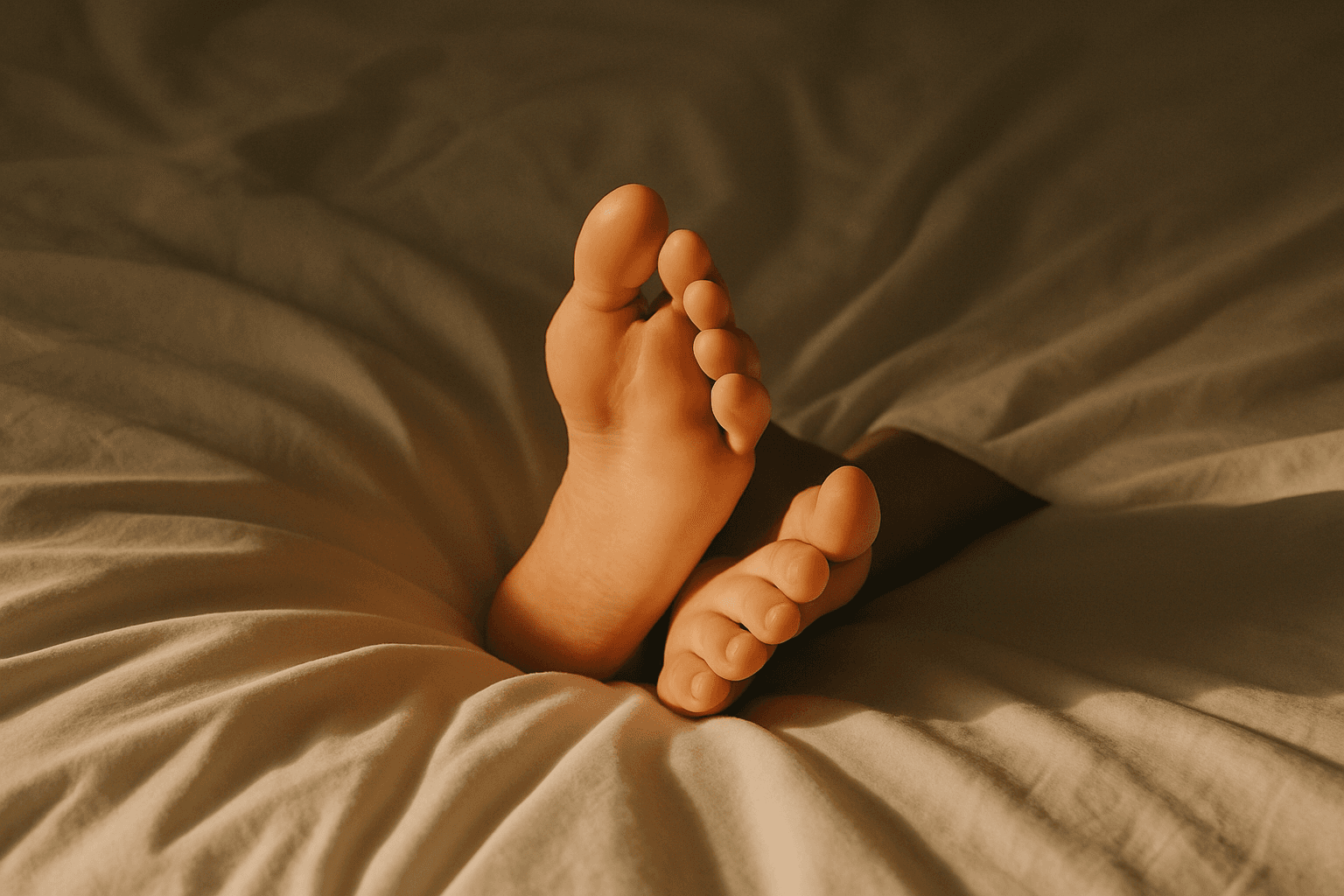
A nocturnal foot cramp is a sudden, involuntary contraction of the small muscles of the arch or the long muscles of the calf that run into the foot — usually a locked arch with the toes curling under or a hard knot through the back of the lower leg — that wakes the sleeper, holds for anywhere from a few seconds to a few minutes, and leaves a bruised ache that can linger into the next day. In surveys of adults over fifty, somewhere between a third and half report at least one episode a month, and the frequency climbs with age. The complaint is common enough that most emergency room visits for a cramped foot are from people who have had one before and were caught off guard by a worse version of the same thing.
The good news is that most foot cramps are benign, follow understandable mechanical and hydration patterns, and respond to a short list of boring daily habits. The less good news is that there is no single supplement or single stretch that reliably fixes them for everyone, and the internet is full of confident advice (magnesium, pickle juice, bar soap under the sheet) that is far more popular than it is evidence-based. This page walks through what is actually going on in a foot cramp, the moves that reliably shorten one once it has started, the daily habits that make them less frequent, and the specific red flags that mean a cramp pattern deserves a clinician's read rather than another jar of magnesium.
Nothing on this page is medical advice. Nocturnal cramps that are frequent, severe, bilateral, come with other neurologic symptoms, or arrive alongside new medications are a legitimate reason to talk to your primary care physician — a few of the causes worth ruling out are not something a daily stretch is going to fix. Every recommendation on this hub is written for comfort, support and relief; nothing on this site is a treatment or a cure for a medical condition.
What is actually happening in a foot cramp
A cramp is a sudden, strong, involuntary and sustained contraction of a muscle or a group of muscles — in the foot usually the intrinsic muscles of the arch (the small muscles that cup the arch under the sole), the long flexors of the toes, or the gastrocnemius-soleus-tibialis complex of the calf that puts tension across the arch. The contraction is driven by motor neurons that are firing when they should be quiet; the muscle itself is doing exactly what the signal is telling it to do. The soreness that lingers after the cramp is the result of mild microscopic muscle damage from the sustained contraction, and it responds to the same things a hard workout would: gentle stretching, hydration, and a day of lighter use.
Why the motor neurons misfire is the honest part of this picture. For most adults, the triggers overlap and are not infectious or dangerous: dehydration (a hot summer day, a long run, a lot of alcohol the evening before), a long day in a shoe that put the foot in an unusual position (narrow toe box, heeled shoes, a long bike ride with the foot on a pedal), a muscle that was overused earlier in the day, poor circulation in a leg that stayed in one position too long in bed, electrolyte shifts particularly around magnesium, calcium and potassium, and the age-related lengthening of resting muscle at rest that makes older muscles more prone to spontaneous contraction. Pregnancy is a reliable trigger for the same reasons it is a trigger for heel pain — fluid shifts, mineral demands, and new mechanical loads.
What a cramp is not is a cue of damage or injury in the muscle itself. The muscle fibers are intact before the cramp, during the cramp, and after it; the problem is the signal rather than the structure. That is why a short, firm stretch of the cramped muscle — not more contraction — is the fastest way to end one. It is also why cramps tend to come back if the daily triggers do not change: there is nothing to heal, only a pattern to interrupt.
What to do in the moment
The single most reliable move for breaking a foot cramp is a passive stretch of the muscle that is cramping. For a cramp in the arch where the toes curl under, sit up, grab the toes with one hand and pull them firmly back toward the shin while using the other hand to gently press down on the ball of the foot. Hold the stretch for ten to twenty seconds; most arch cramps release in that window. For a cramp through the calf that is pulling the foot into a pointed position (plantar flexion), straighten the knee and pull the top of the foot back toward the shin — the same stretch you would do standing against a wall, done sitting up in bed. Loop a towel or a belt over the ball of the foot if the reach is uncomfortable.
Walk a few steps on the cramped foot once the hardest part has released. Weight-bearing stretches the muscle more completely than a hand pull alone, and the brief activity helps the local circulation flush the metabolic byproducts of the sustained contraction. A warm shower or a warm washcloth over the sore muscle for a few minutes afterward speeds the recovery and is more useful than cold at this stage. The dull ache that lingers for a few hours (sometimes into the next day) responds to gentle stretching the next morning and a reduced-load day on the foot.
If the cramp is severe or recurs multiple times in one night, drink a glass of water and consider a small salted snack. Most mid-night foot cramps are not a true electrolyte emergency, but a mild dehydration and a long gap since the last meal often sit under the pattern. A banana or a pinch of salted peanuts is the folk version of the same idea; the mechanism is more about restoring a mild fluid-and-mineral deficit than about any specific nutrient being miraculous. The thing to not do is massage aggressively into a muscle that is still cramping — pressure on a knotted muscle sometimes prolongs the contraction. Firm stretch first, massage after.
The daily habits that lower the base rate
Hydration and electrolytes are the first lever, and the evidence base is clearest in people who sweat a lot. If the cramps follow long training days, hot weather, or heavy manual work, a routine of water through the day and an electrolyte drink or a salted snack with meals makes a meaningful difference. For sedentary adults with cramps at night, the hydration lever is smaller but still worth running: a glass of water before bed, especially after a day with coffee, alcohol or air travel.
Stretching the specific muscles that cramp is the second lever and the one with the most consistent evidence. A thirty-second calf stretch twice a day (hands on a wall, back heel pressed to the floor) and a thirty-second plantar fascia stretch (pull the toes back toward the shin) reliably reduce cramp frequency over three to four weeks in trial populations. Do them in the evening if nighttime cramps are the pattern. A short bedside routine of calf and arch stretch while the kettle boils in the morning or while brushing teeth at night is more effective than a long occasional session on the weekend. Our plantar fasciitis stretches walk-through covers the full daily set — most of the moves there also lower cramp frequency.
Shoe choice through the day matters more than it gets credit for. A long day in a shoe that holds the foot in an unusual position — a tight toe box, a stiff rocker sole, a high heel, or a flat shoe with no arch support — primes the small foot muscles for a mid-night contraction. A supportive sneaker through most of the day and a supportive slipper or house shoe for barefoot time at home reduces the overall load on the small intrinsic muscles of the foot. Our Akusoli insoles review is the pair we would install in the shoe you wear most hours in; the firm arch and deep heel cup take load off the small arch muscles that produce most night cramps.
Compression socks for parts of the day are a quiet third lever. A graduated compression sock through a long standing shift, a long sitting day at a desk, or a long flight supports circulation and reduces the end-of-day heaviness that often sits under the cramp pattern. Our compression socks for tired feet walk-through covers the fit. For readers whose cramps show up most reliably after a long travel day or an eight-hour sit at a conference, compression socks pay for themselves in better sleep.
Magnesium, quinine, pickle juice and the honest read on supplements
Magnesium is the most popular over-the-counter remedy for foot and leg cramps and has the longest history of clinical trial attention. The honest read is that in general adult populations without a magnesium deficiency, magnesium supplementation has not shown a reliable effect on cramp frequency in several randomized trials and meta-analyses. In pregnant readers with cramps, the evidence is slightly better and some obstetricians recommend a daily magnesium supplement during pregnancy for cramp-prone patients. For general adults with cramps, a short trial of magnesium (two to four weeks of a standard dose) is reasonable but unlikely to be dramatic; the daily stretches and the shoe-and-insole picture are higher leverage.
Quinine has a long history as a cramp remedy and used to be prescribed widely for nocturnal cramps. The FDA has issued multiple warnings against the use of quinine (branded Qualaquin and others) for leg cramps because of a small but real risk of serious blood disorders and heart rhythm problems, and both the FDA and major physician organizations now recommend against using it outside the one indication for which it is approved (malaria). Tonic water contains a small amount of quinine, nowhere near a therapeutic dose, and is harmless as a social beverage but not useful as a cramp remedy.
Pickle juice, mustard, bananas and bar soap under the sheet are the folk remedies with the most word-of-mouth popularity. Pickle juice has one small sports-medicine study suggesting it may interrupt cramps faster than water, possibly through a reflex triggered by the sour taste rather than through any electrolyte effect; the trial was in dehydrated athletes rather than adults with nocturnal cramps, and the evidence base is thin. Bar soap under the fitted sheet has no known mechanism and no evidence base; it is harmless and if a reader finds it works for them, placebo is a legitimate therapy for a problem driven partly by anticipation. The useful rule is not to confuse popular with proven.
When a cramp pattern deserves a clinician
Most adults with occasional nocturnal foot cramps do not need a workup. A few patterns do. Cramps that start suddenly in middle age and are frequent (multiple times a week), severe (minutes-long rather than seconds), unilateral (one leg consistently rather than either), or come with weakness, numbness, tingling, muscle wasting or other new neurologic symptoms deserve a visit to a primary care clinician. The differential includes peripheral artery disease, peripheral neuropathy (especially diabetic neuropathy), lumbar spine nerve root irritation, thyroid problems, chronic kidney disease, electrolyte abnormalities and a handful of neuromuscular conditions. A basic blood panel and a physical exam will cover the common causes.
Medications are the single most overlooked cause of a new or worsening cramp pattern in adults. Diuretics (thiazides and loop diuretics for blood pressure and heart failure), statins, bronchodilators used for asthma or COPD, long-acting beta-agonists, and some blood pressure medications can all push the signal threshold for motor neurons in a direction that produces more cramps. A new cramp pattern that started within a few months of a new prescription is a legitimate reason to bring the issue up at the next medication review. The answer is almost never 'stop the medicine' on your own; it is to have the conversation.
Pregnancy adds its own layer. Leg and foot cramps are common from the second trimester onward, driven by fluid shifts, mineral demands, pressure from the growing uterus on venous return, and the hormonal changes covered elsewhere on this site. For pregnant readers with new foot pain alongside the cramps, our heel pain during pregnancy walk-through covers the overlap — the two often arrive together, and the daily plan overlaps.
Finally, a cramp pattern that comes with a new fallen arch, chronic foot swelling, or persistent numbness is not a foot-care-aisle problem and does not belong with another jar of magnesium. Cracked heels and compression socks for tired feet are good neighbors in the quality-of-life side of foot care; a changing cramp pattern alongside neurologic symptoms belongs with a clinician.
Everyday foot care that quiets night cramps
Hydration, a supportive shoe, a firm-arched insole, a two-minute stretch and a warm cloth after a flare — the boring stack that works.
Everyday foot care that quiets night cramps →Frequently asked questions
Why do foot cramps happen more at night?
Three overlapping reasons. First, muscles rest at a slightly shortened length when you are lying still in bed, which raises the odds of a sustained involuntary contraction. Second, hydration and electrolyte status is often at its lowest point of the day in the second half of the night, especially after a day with alcohol, caffeine or heavy sweating. Third, blood flow slows during sleep, which can let metabolic byproducts linger around the small foot muscles. The combination makes two to four in the morning a common cramp window, especially in older adults and in pregnancy.
Does magnesium actually help foot cramps?
In general adults without a documented magnesium deficiency, randomized trials have not shown a reliable effect of magnesium supplementation on cramp frequency. In pregnancy the evidence is slightly better and some obstetricians recommend daily magnesium for cramp-prone pregnant patients. For an adult without pregnancy, a short two-to-four-week trial of a standard dose of magnesium is reasonable but unlikely to be dramatic — the daily calf and arch stretches, the hydration habit, and the supportive-shoe picture are higher-leverage levers for most people.
What is the fastest way to stop a foot cramp in the moment?
A firm passive stretch of the cramping muscle in the opposite direction. For a cramp in the arch where the toes are curling under, sit up and pull the toes firmly back toward the shin with one hand while gently pressing down on the ball of the foot with the other. Hold for ten to twenty seconds. For a calf cramp that is pulling the foot into a pointed position, straighten the knee and pull the top of the foot back toward the shin — looping a towel over the ball of the foot makes the reach easier. Walk a few steps on the foot once the hardest part has released; a warm washcloth over the sore area afterward helps the soreness.
Are foot cramps a sign of something serious?
Usually no. Occasional nocturnal foot cramps are extremely common and benign. The patterns that deserve a clinician's read are cramps that are frequent (multiple times a week), severe (minutes long), unilateral (one leg consistently rather than either), new in middle age, or accompanied by weakness, numbness, tingling, muscle wasting or other new neurologic symptoms. New medications — especially diuretics, statins, bronchodilators and some blood pressure medications — are a frequently overlooked trigger. A basic blood panel and a primary-care visit cover the common underlying causes.
Can shoes or insoles help with foot cramps?
They can lower the base rate meaningfully for cramps that cluster at night after long days on the feet. A long day in a flat, unsupportive shoe loads the small intrinsic muscles of the arch far more than a supportive shoe does, and primed muscles are more likely to cramp a few hours later. A supportive shoe through most of the day, a firm-arched insole in the shoe you wear most hours in, and a supportive slipper for barefoot time at home together take meaningful load off the small foot muscles. The effect is strongest for readers whose cramps correlate with the end of standing or walking days.
Will stretching before bed stop foot cramps?
For many readers, yes — a thirty-second calf stretch and a thirty-second plantar fascia stretch done in the evening, every evening for three to four weeks, reduce cramp frequency in trial populations. The effect is modest but reliable, and the time cost is small enough that it is worth running as a trial. Keep the routine going for at least a month before deciding whether it works; cramp frequency is noisy week to week, and a single good week after a stretch session does not confirm the effect any more than a bad week disconfirms it.
HeelCups is reader-supported. When you buy through links on our site we may earn an affiliate commission, at no extra cost to you. This article is general information about foot comfort and is not medical advice — see our medical disclaimer.