FOOT TENDONITIS
Tendonitis in the Foot: Where It Hurts, What Eases It and When to Get It Checked
Foot tendonitis is irritation of a tendon, usually from overuse or pressure. Here is how to tell top-of-foot, inner-ankle, outer-foot and heel versions apart, and the comfort steps that usually come first.

Tendonitis in the foot is irritation of one of the tendons that move the foot and toes. It tends to cause an ache or tenderness along the tendon that builds with activity and eases with rest. Where it hurts tells you which tendon is involved: the top of the foot (extensor tendons), the inner ankle and arch (posterior tibial), the outer ankle and foot (peroneal) or the back of the heel (Achilles).
Most cases come from doing too much too soon, tight shoes or laces, or a change in footwear. Easing off the aggravating activity, loosening the pressure and wearing supportive, roomy shoes are the usual first steps. NHS Lanarkshire's physiotherapy service and Cleveland Clinic both describe extensor tendinopathy in this way, with ill-fitting footwear and overuse as common triggers.
This guide is general information, not medical advice. Sharp pain over one bone spot, a pop, swelling after an injury or pain that does not improve in a few weeks should be examined. Our foot pain chart can help you narrow down what else could be going on.
Top of the foot: extensor tendonitis
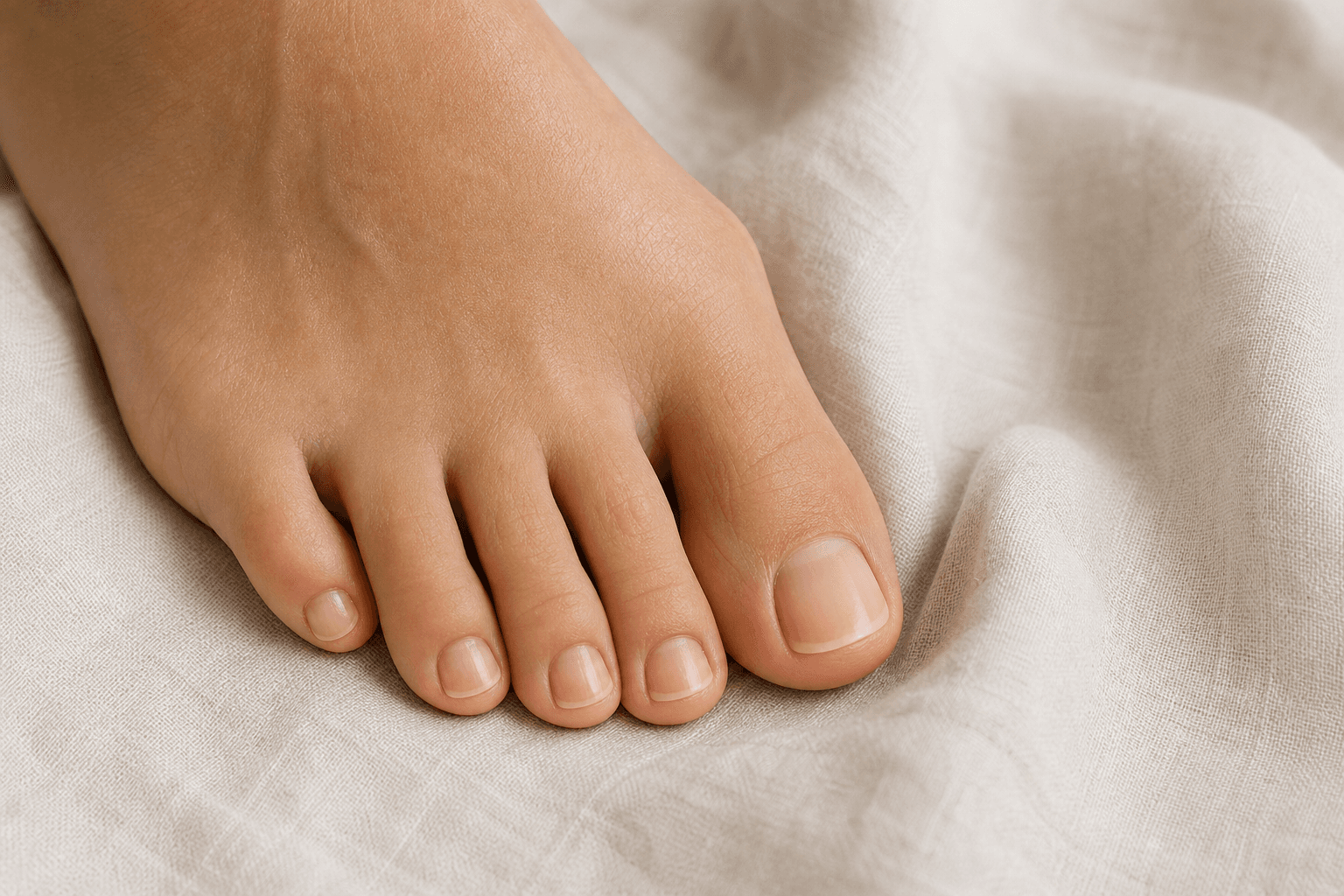
The extensor tendons run across the top of the foot to lift your toes. Irritation shows up as an ache or tenderness across the instep, sometimes with mild swelling or a visible ridge along the tendon, and it is often worse when you flex the toes upward or pull the foot up. Lacing that is tight across the top of the foot is a classic cause, as are running uphill and new shoes with a stiff tongue.
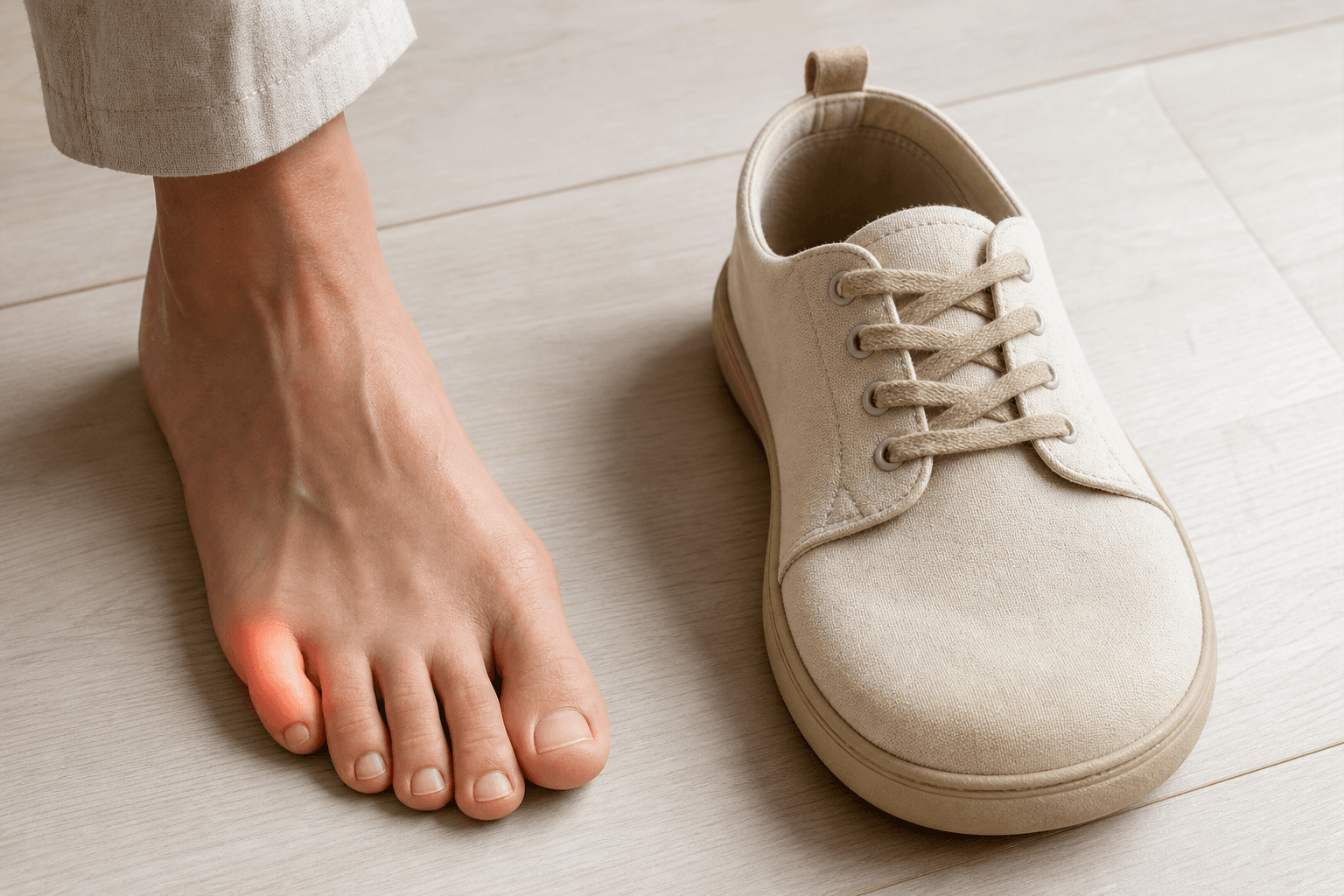
Podiatry and physiotherapy sources suggest loosening the laces, trying parallel or skip lacing over the sore spot, and using a tongue pad or softer shoe. Our top of foot pain page goes deeper on that area and its look-alikes, including a bone spur on top of the foot; for itchy or red skin there instead, see rash on the top of the foot.
Inner ankle and arch: posterior tibial tendonitis
The posterior tibial tendon runs behind the inner ankle bone and helps hold up the arch. Pain and swelling along the inner ankle, often worse with walking or standing, can mean it is irritated. In adults this tendon can gradually weaken and the arch may flatten, which is why persistent inner-ankle pain deserves an in-person exam rather than a long wait. Read more in posterior tibial tendonitis.
Outer ankle and foot: peroneal tendonitis
The peroneal tendons run down the outer side of the lower leg, behind the outer ankle bone and along the outside of the foot. Irritation causes pain and sometimes swelling behind or below the outer ankle bone, and it is common in runners, people on uneven ground and those with high arches or repeated ankle sprains.
Pain on the outside of the foot also has other causes, including stress fractures and a bump at the base of the little toe; our page on outside of foot pain walks through those. Pain from a sudden twist with swelling and bruising needs assessment for a sprain or tear.
Back of the heel: Achilles tendonitis
The Achilles is the largest tendon in the foot and ankle region. Pain and stiffness along the cord or at its heel attachment, worst in the morning and at the start of exercise, point to Achilles tendonitis. It responds to a gradual, guided loading plan, and a sudden sharp pain or a pop with weakness needs urgent medical attention.
What usually eases foot tendonitis
Relative rest comes first: cut back the activity that provokes pain rather than stopping everything. Swap in lower-impact exercise such as cycling or swimming if they are comfortable. Check footwear for pressure points, loosen laces, and choose a shoe with a firm heel counter, a stable midsole and a roomy toe box.
Ice for ten to fifteen minutes with a cloth barrier is a common comfort measure, and short courses of over-the-counter pain relievers are sometimes used if they are safe for you; ask a pharmacist or doctor. Gentle calf stretching often helps because tight calves load the foot tendons. An insole with a contoured arch may add comfort for arch-side tendons, and our insoles hub explains how to choose one. None of these promises to resolve the condition on its own.
A note on shoes and load
Many foot tendon problems trace back to a change: a new pair of shoes, a jump in weekly mileage, a switch to hills or trails, or a new job that keeps you on hard floors. Ask yourself what changed in the three or four weeks before the pain started. Reversing or scaling back that one change is often the most effective step, because it lowers the daily load on the tendon while it settles. Rotating between two supportive pairs of shoes also varies where pressure lands.
When to see a clinician
Get checked if pain follows an injury, if you heard or felt a pop, if you cannot bear weight, if there is marked swelling, redness or warmth, or if pain is sharp over one spot on a bone, which can signal a stress fracture. Also see a doctor or podiatrist if home care has not eased things within a few weeks. A clinician may suggest physiotherapy, a brace or boot, imaging or, rarely, injections or surgery.
Read our Akusoli insoles review
If a flat footbed is part of the problem, see how a contoured insole compares.
Read our Akusoli insoles review →Frequently asked questions
How do I know if foot pain is tendonitis?
Tendonitis typically causes an ache along a tendon that worsens with movement and eases with rest, sometimes with mild swelling. Pinpoint pain on a bone, numbness or pain at rest suggest other causes and deserve an exam.
How long does tendonitis in the foot last?
Mild cases often settle over several weeks once the trigger is removed, but it varies. Pain lasting more than a few weeks should be assessed.
Should I keep walking on it?
Gentle walking within comfort is usually fine, but stop activities that sharpen the pain. If you cannot walk normally, see a clinician.
Can tight laces really cause pain on top of the foot?
Yes. Pressure over the top of the foot can irritate the extensor tendons, and podiatry sources often list lacing as a first thing to adjust.
Is heat or ice better?
Ice is commonly used for sore, irritated tendons; some people prefer gentle warmth for stiffness. Use whichever feels better and protect the skin.
HeelCups is reader-supported. When you buy through links on our site we may earn an affiliate commission, at no extra cost to you. This article is general information about foot comfort and is not medical advice — see our medical disclaimer.