SWOLLEN FEET
Swollen Feet: Everyday Causes, What Eases It and the Signs That Mean See a Doctor
Puffy feet at the end of the day are common and often harmless. Here is what usually causes them, what gives comfort, and the one-sided or sudden swelling that should not wait.
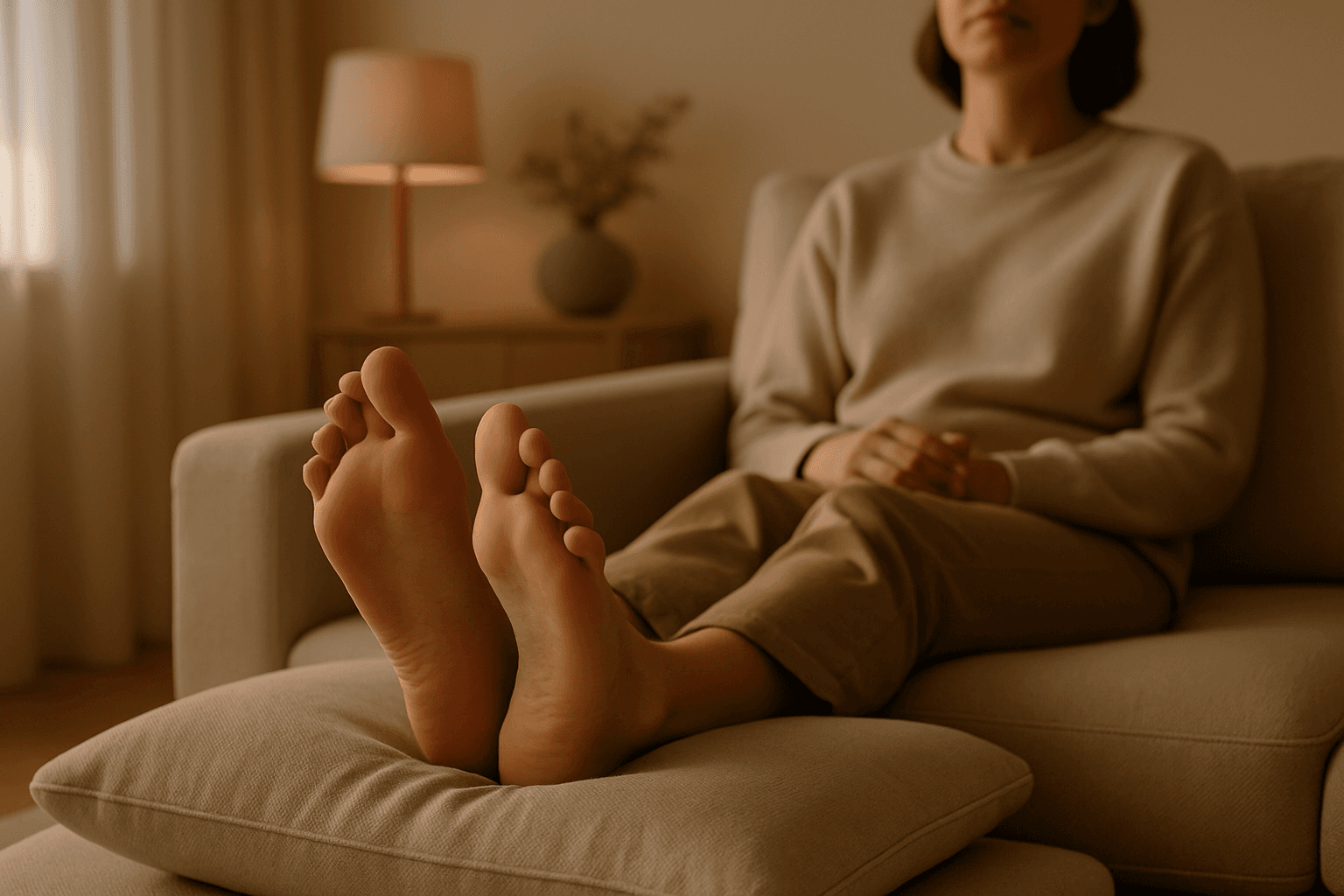
Swollen feet happen when extra fluid collects in the tissues of the foot and ankle. Standing or sitting for long stretches, hot weather, a salty meal, pregnancy and minor sprains are common and usually harmless reasons. Raising the feet, moving around regularly and wearing roomy, supportive shoes tend to give comfort. Swelling that comes on suddenly, affects only one leg, or comes with pain, redness or breathlessness is different, and needs prompt medical attention.
This guide sorts the everyday causes from the ones that deserve a call to a doctor, and covers comfort measures. It sits alongside our page on compression socks, which explains what graduated compression does at the end of a long day.
Nothing here is medical advice. If a foot problem lasts more than a few weeks, keeps coming back, or comes with fever, spreading redness, numbness or discoloration, see a doctor or podiatrist rather than relying on a web page.
Why feet swell in ordinary situations
Harvard Health notes that when you are on your feet a lot, gravity pulls blood into the veins of the legs, and that can cause swelling. The same thing happens in reverse on long flights and car rides, when the calf muscles are not pumping fluid back up toward the heart.
Other common triggers are hot climates, a salty diet, a period of inactivity, pregnancy and minor injuries such as a sprain. In these cases the swelling is typically on both sides, soft enough to leave a dent when pressed, and worse by evening and better after a night with the feet up.
Footwear matters too. Tight shoes leave marks around the ankle and make swelling feel worse, so many people do better with a slightly roomier fit at the end of the day, which is also when feet are at their largest.
What gives comfort at home
Elevating the feet above heart level for fifteen to twenty minutes is the simplest option: lie down and rest the legs on a stack of pillows. Short walks, ankle circles and calf raises help the muscles move fluid along, so build movement breaks into a desk or standing day.
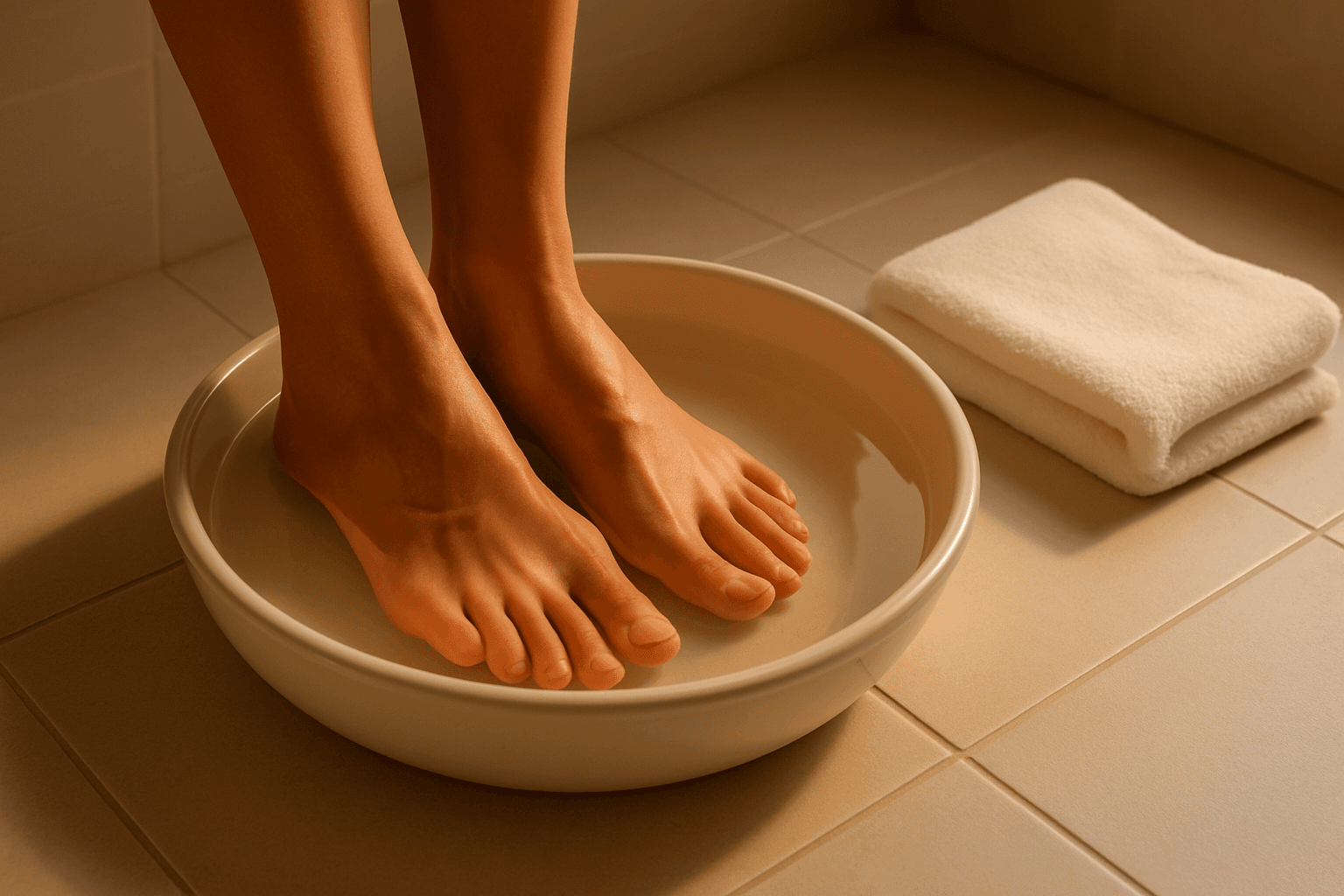
Cutting back on salty processed food can help for some people, and drinking enough water is generally sensible. Some people find a cool footbath comforting after a hot day.
Compression socks are a common choice for people who sit or stand a lot, and they work best when put on in the morning before swelling builds. They are not suitable for everyone, particularly people with poor arterial circulation, so check with a clinician if you are unsure.
Footwear and the day's routine
Choose shoes with a wide toe box, adjustable straps or laces, and cushioning that does not compress flat by afternoon. A supportive insole may add comfort for a long shift, and our guide to standing all day covers what survives a twelve-hour shift.
Avoid sitting with the legs crossed for long periods, and if your job keeps you seated, stand up and walk for a couple of minutes every hour. If you are on your feet, shift your weight and sit when you can.
Keep notes for a week: when the swelling appears, how it changes by morning, and whether it affects one or both feet. That record helps a clinician if you do book a visit.
Signs that need a doctor
Harvard Health advises reporting swelling that develops suddenly, lasts more than a few days, affects just one foot, or comes with pain or discoloration of the skin. Persistent swelling can point to heart, kidney, liver or vein problems, or to a blood clot in a leg vein, so it is worth a check rather than a guess.
Seek urgent care for sudden swelling in one leg with pain, warmth or redness, or for swelling with shortness of breath or chest pain. During pregnancy, sudden swelling of the face and hands, a severe headache or vision changes should be reported to the care team the same day.
Some medicines, including certain blood pressure drugs, can cause swelling as a side effect. Do not stop a prescribed medicine on your own; ask the prescriber.
Swelling after injury or with heel pain
A swollen, tender heel after a fall or a sudden increase in activity may be more than overuse, and our page on heel stress fracture explains why bone pain needs checking. Swelling near the back of the heel is covered on the heel bursitis page.
Swelling that comes with a hot, red, very painful joint, particularly the big toe, should be seen promptly, as some inflammatory conditions flare that way. For ordinary plantar fasciitis, mild puffiness after a long day can occur, but significant swelling is a reason to look wider.
More foot care guides
Socks, skin, nails and circulation comfort on the foot care hub.
More foot care guides →Frequently asked questions
Is it normal for feet to swell at the end of the day?
Mild swelling on both sides after long periods of standing, sitting or hot weather is common and often harmless. It tends to ease overnight with the feet raised.
How can I reduce swollen feet quickly?
Raise the feet above heart level for fifteen to twenty minutes, move your ankles and calves, and loosen tight shoes. These bring comfort but do not replace a medical check if the swelling is persistent.
Do compression socks help swollen feet?
Many people find graduated compression socks comfortable for long days on their feet, especially when put on before swelling starts. People with arterial disease should ask a clinician first.
Why is only one foot swollen?
One-sided swelling, particularly with pain, warmth or redness, can signal a clot, infection or injury and should be assessed promptly.
Can swollen feet be a sign of a serious condition?
Persistent or unexplained swelling can be linked to heart, kidney, liver or vein conditions. That is why swelling that lasts more than a few days should be reported to a doctor.
When should I see a doctor?
See a doctor if swelling is sudden, lasts more than a few days, affects one foot, or comes with pain, discoloration or breathlessness. Seek urgent care for chest pain or sudden shortness of breath.
HeelCups is reader-supported. When you buy through links on our site we may earn an affiliate commission, at no extra cost to you. This article is general information about foot comfort and is not medical advice — see our medical disclaimer.