SYMPTOMS
Why Does My Heel Hurt? A Simple Map to What's Going On
Where it hurts, when it hurts, and what makes it worse — a plain-English guide to the most common heel pain patterns and what usually helps each one.
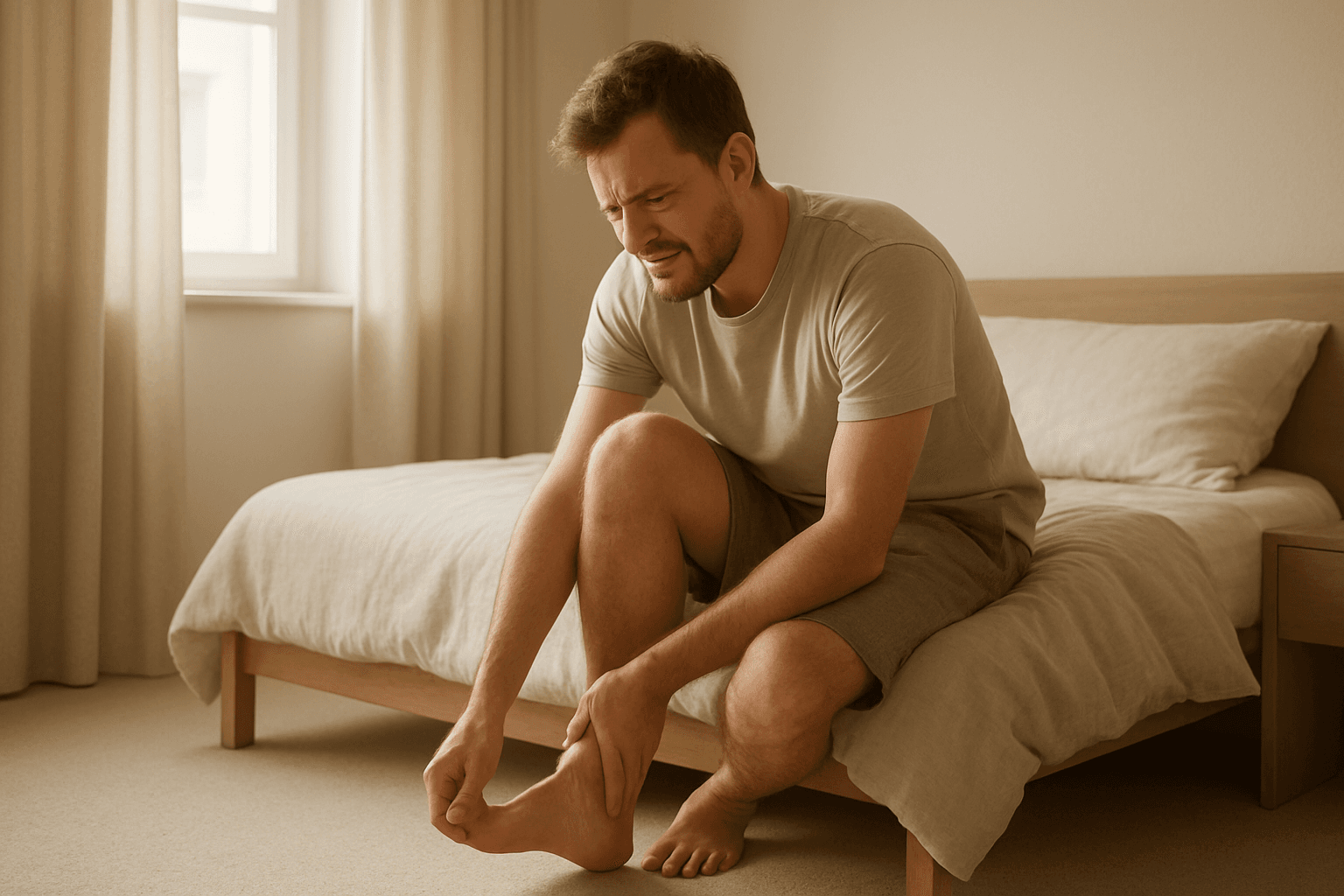
The best diagnostic tool for heel pain is not an X-ray — it is a few honest minutes asking yourself where it hurts, when it hurts, and what makes it better or worse. Heel pain is a symptom, not a diagnosis, and the same word covers half a dozen very different problems. Sort out which pattern matches yours and the useful next steps become obvious.
This page walks through the four most common heel pain patterns, the red-flag versions that do not belong in the self-care lane, and the first-line changes that tend to help each one. It also shows why the popular assumption — 'it must be plantar fasciitis' — is right most of the time but wrong often enough to be worth checking.
Nothing here replaces a doctor or podiatrist. Anyone whose heel pain has lasted more than a few weeks despite honest home care, or who has any of the red flags below, should book an in-person exam. Our goal on this page is to help you speak that visit's language.
Step one: locate the pain precisely
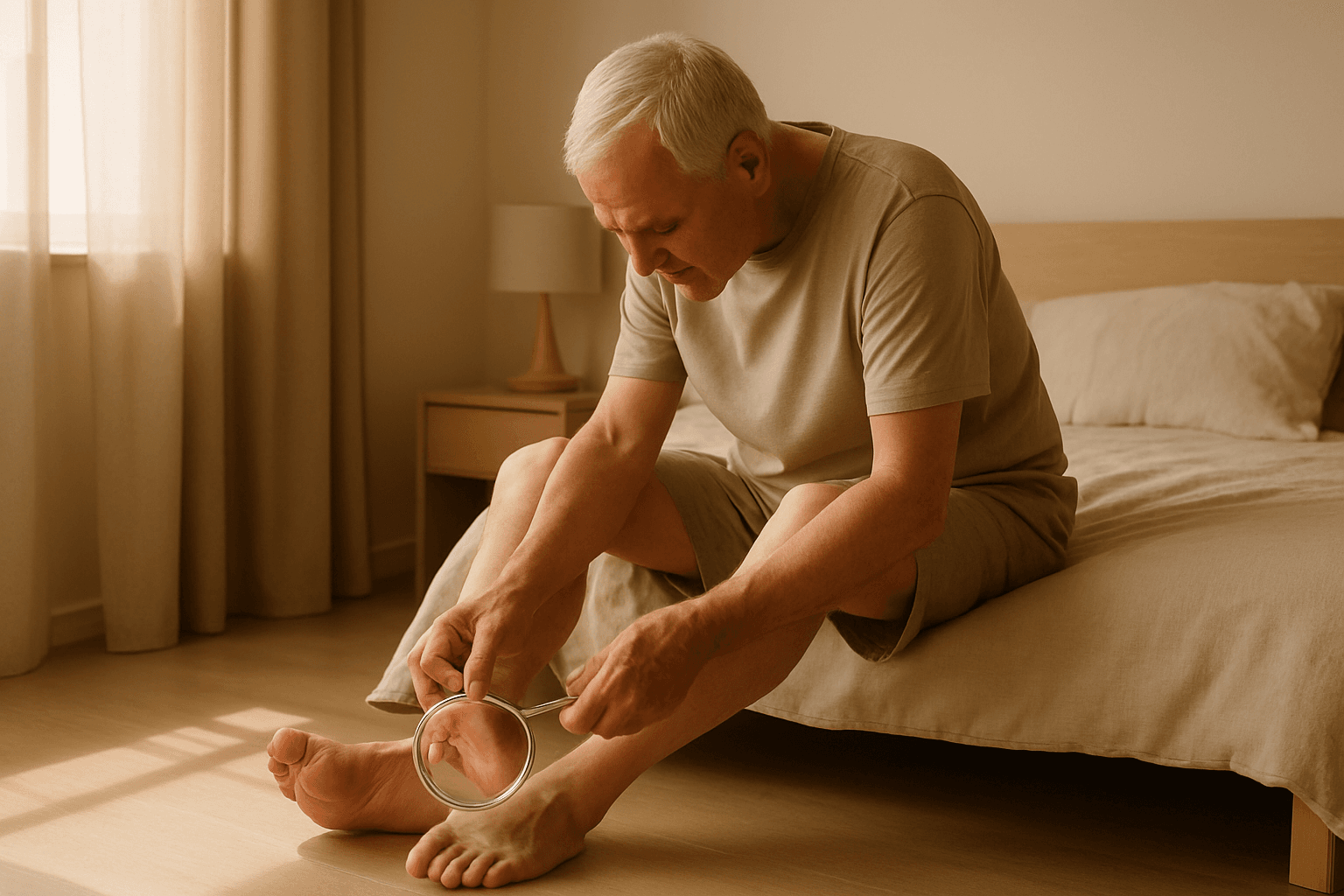
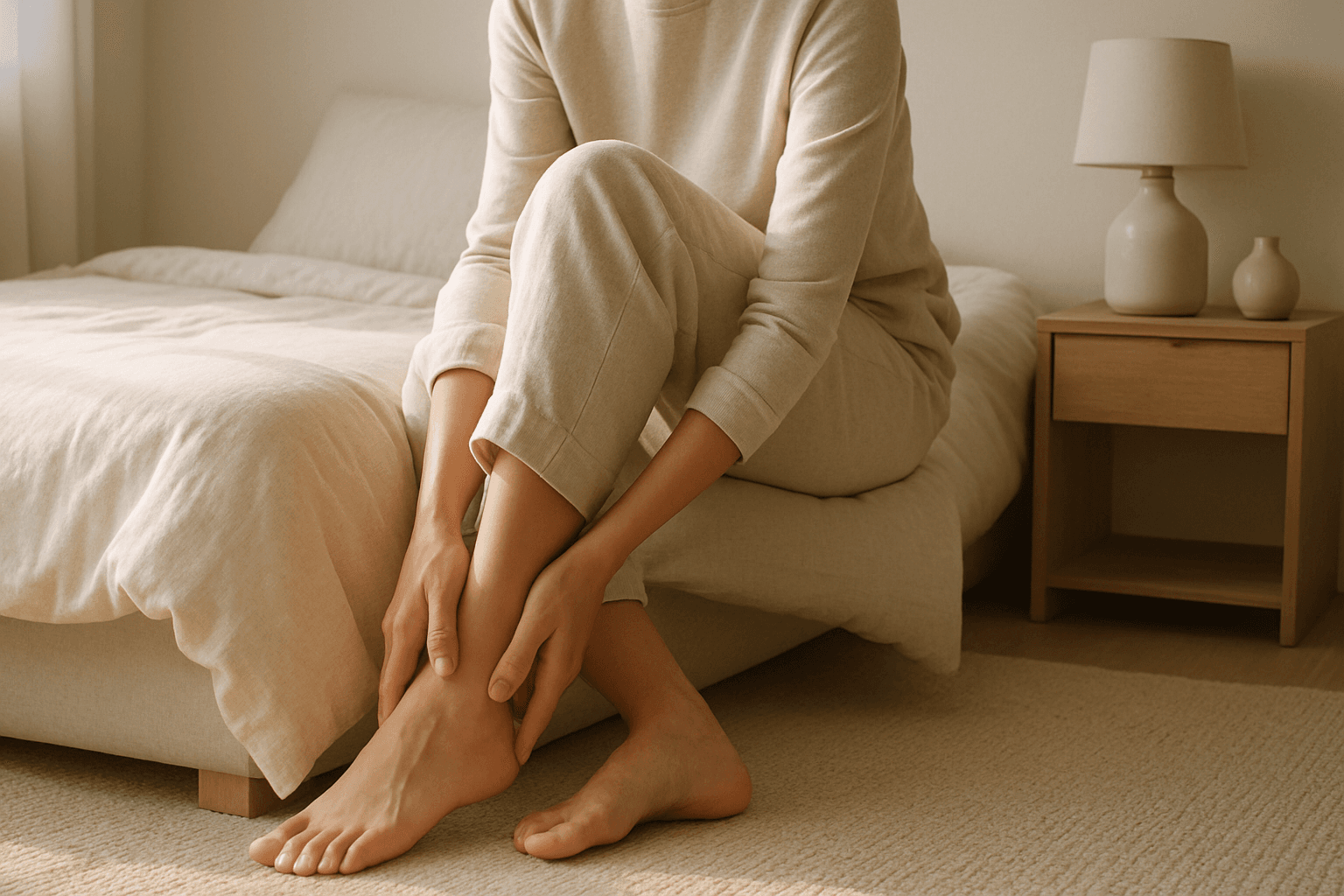
Take off your shoes and press with a thumb around the heel, moving slowly. Most heel problems have a favorite spot, and finding it narrows the field fast. Pain directly under the heel, slightly toward the inside of the foot, usually points at the plantar fascia's attachment on the heel bone — the classic plantar fasciitis tender point. Pain a little further forward, along the arch, is the fascia itself. Pain across the whole pad of the heel, like a bruise, without a single sharp spot, is more consistent with fat pad irritation. Pain at the back of the heel, at or just above where the Achilles attaches, is Achilles tendon or bursa territory.
Deep, focal pain on the side of the heel bone that hurts with any impact and does not follow the morning-worst pattern is worth flagging as possible bone bruise or stress fracture — especially if it started after a big jump in activity or after a fall or twist. That belongs in a clinician's hands, not on a foam roller. Pain along the outer edge of the heel and ankle, especially in a runner or hiker with a history of a few sprained ankles, more often points at the peroneal tendons; our outer heel pain walk-through covers that map in detail.
Step two: notice the timing pattern
When the pain shows up says as much as where it lives. First-step pain in the morning, or after a long sit, that eases within minutes of walking and then creeps back after hours on your feet, is the fingerprint of plantar fasciitis. Pain that is mild in the morning and builds through the day the more you stand or walk fits fat pad irritation or a stress reaction better. Pain that is bad during and just after activity but fine at rest is more Achilles-like at the back of the heel and more fasciitis-like under it.
Pain that wakes you at night, or that is present at rest and does not track a mechanical pattern, is unusual for the everyday causes and deserves a clinician's read. So does pain that comes with swelling, warmth, redness, numbness, tingling, or a fever. Heel pain in a child or teenager is almost always something different — a growth-plate problem called Sever's disease — and needs its own plan.
Pattern 1: sharp pain under the heel that is worst in the morning
This is plantar fasciitis in about ninety percent of cases. The plantar fascia is the thick band that runs from the heel bone to the base of the toes; it holds up the arch and gets pretensioned by a tight calf. Overnight it shortens and cools; the first steps in the morning stretch it under your full body weight, and the tissue protests. It calms with a few minutes of walking, then builds again over the day. Our full walk-through of this pattern lives on the pain in the bottom of the heel page.
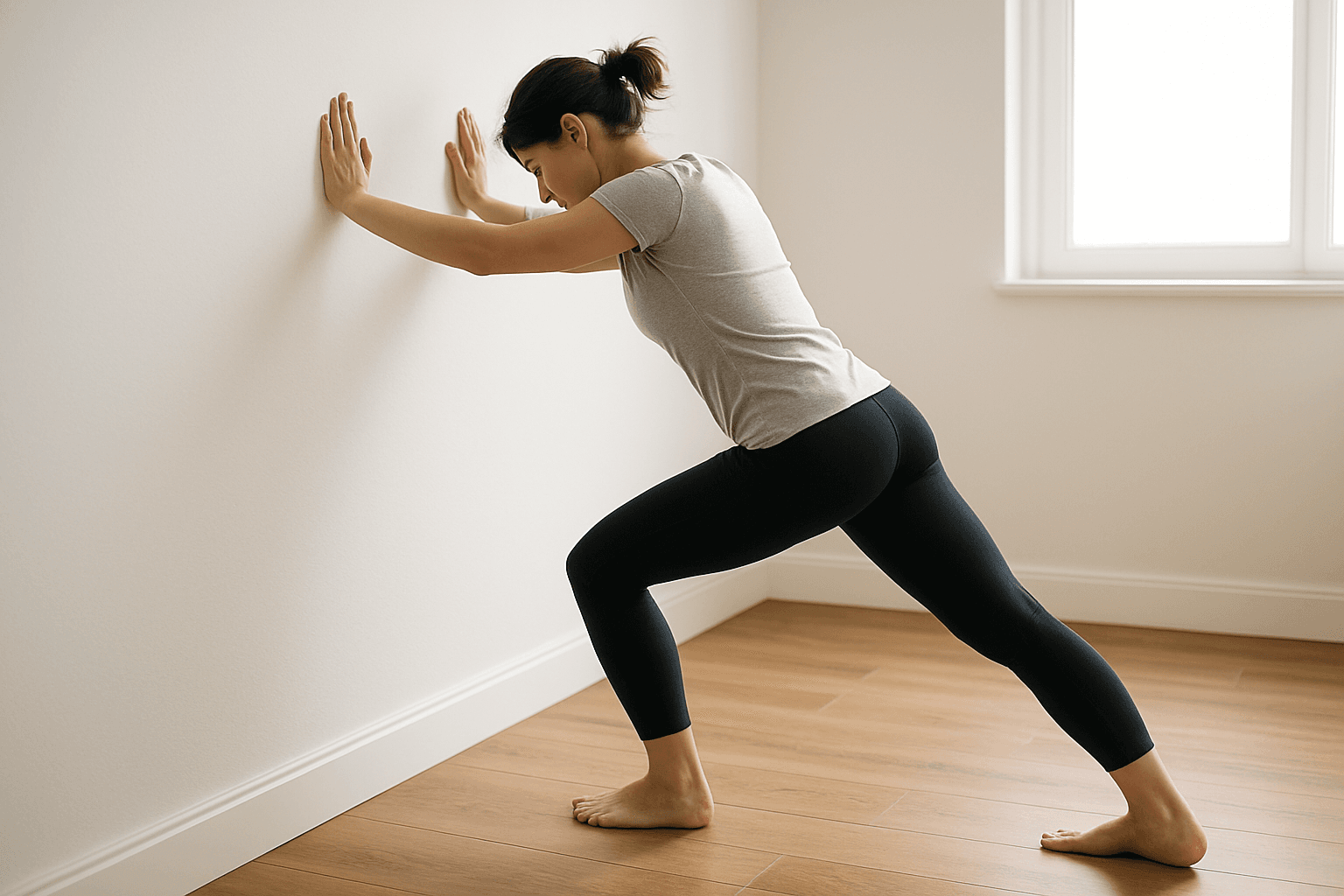
First moves that help: a towel stretch before your feet hit the floor (in bed, sitting up, loop a towel around the ball of the foot and pull the toes back toward you), calf stretching morning and night, a firm supportive insole in every shoe you wear all day, and a cut in the specific activity that tipped it over — the mileage spike, the barefoot floors, the new twelve-hour shifts — for two to four weeks. Our plantar fasciitis stretches page is where most people should start.
Pattern 2: bruised-feeling pain across the pad of the heel
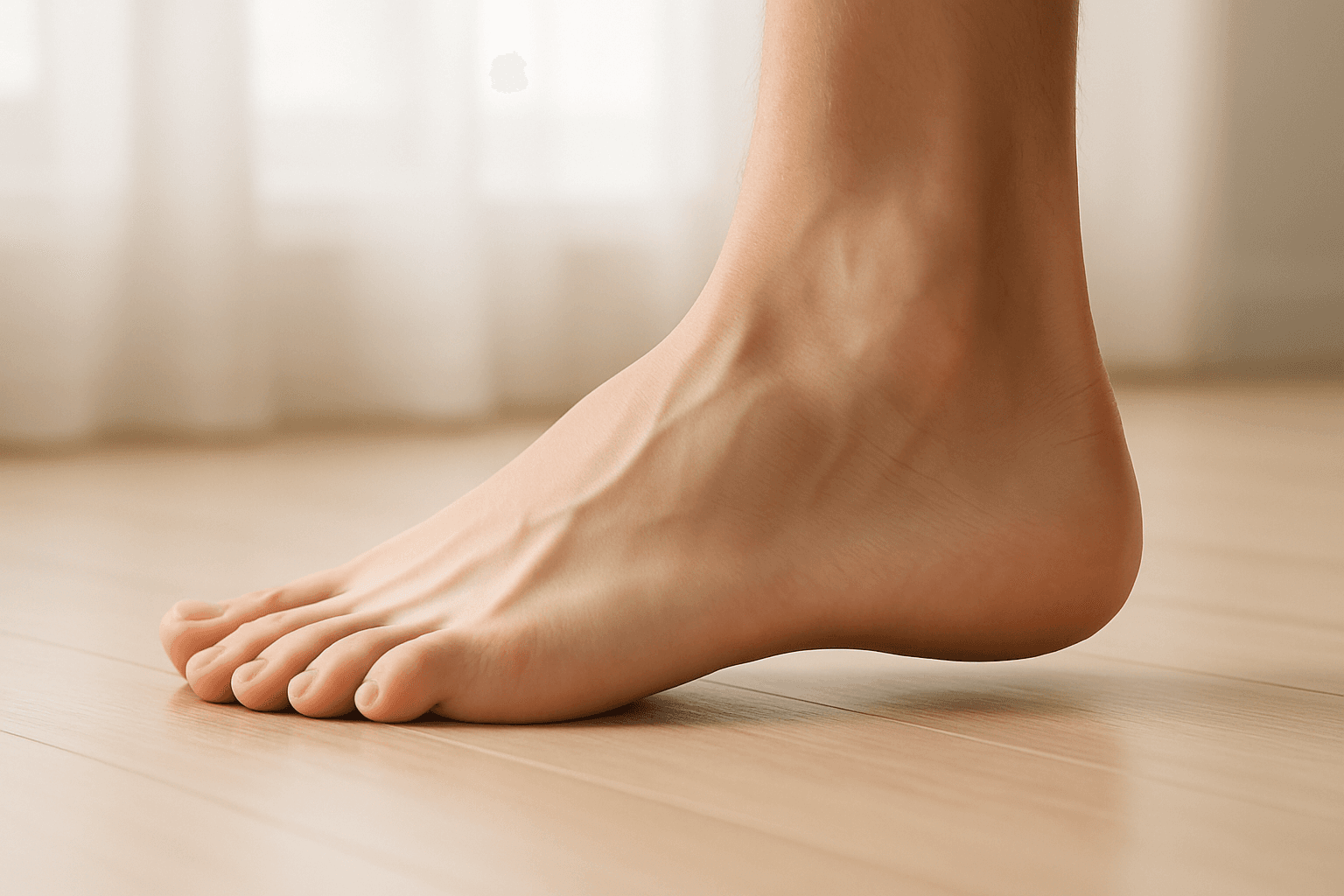
The fat pad under the heel is a shock absorber built out of dense compartments of fat. It thins with age (typical from about 50 on), takes damage from a hard heel strike or a fall, and can inflame from too many hours on concrete in flat shoes. The pain is diffuse — you cannot point to one spot — and feels like a fresh bruise that gets worse with each hour on your feet, not first thing in the morning.
First moves that help: cushioning rather than aggressive arch support, a soft heel cup or gel pad in the shoes you already own, less time barefoot on hard floors, and shoes with a well-cushioned heel. Ice at the end of the day. A supportive insole with a deep heel cup that cradles and cushions the fat pad can help; a rigid orthotic tends not to. If the pain follows a specific fall or impact, or does not settle in two to four weeks of gentle care, get it imaged.
Pattern 3: pain at the back of the heel, near the Achilles
This is not plantar fasciitis. Pain at the back of the heel, where the Achilles tendon attaches to the heel bone, or just above, is usually Achilles tendinopathy (insertional or non-insertional), retrocalcaneal bursitis, or a Haglund's deformity — a bony bump that rubs the tendon and the back of the shoe. It flares with hills, stairs, sprints and sudden mileage jumps. It also flares with the exact stretches that help plantar fasciitis, which is why getting the diagnosis right matters. We walk through the three patterns and the daily plan for each on our back of the heel page.
First moves that help: a small heel lift in both shoes to take some tension off the tendon, less hill and stair work for a few weeks, and eccentric calf exercises (slow lowering off a step) after the acute pain calms. Avoid aggressive stretching in the acute phase — it makes insertional Achilles pain worse. If a shoe's back edge is rubbing a lump on your heel, switch to a backless shoe or one with a soft heel counter until you can see a clinician.
Pattern 4: burning, tingling or numbness into the sole
If the pain radiates as burning, tingling, pins-and-needles or numbness — into the heel, the arch or the toes — the source is nerve, not tendon or fascia. Tarsal tunnel syndrome is the most common: the tibial nerve gets pinched behind the inside ankle bone. Symptoms often get worse at night or after long standing, and stretching does not touch them.
This pattern belongs with a clinician. Home changes that sometimes reduce symptoms in the meantime include a supportive insole, a shoe with a wider toe box, and reducing time on very hard floors. Diabetes is worth ruling out because peripheral neuropathy shares this feel and is common in people who have not been diagnosed yet.
When to skip self-care and see a professional
See a doctor or podiatrist sooner rather than later if: the pain followed a specific injury or fall; it is severe enough to change how you walk; it comes with swelling, warmth, redness or a fever; there is numbness, tingling or a color change; it wakes you at night or is present at rest; or it has been present for more than four to six weeks despite honest home care. Persistent heel pain in a child or teenager always deserves an in-person exam.
A clinician can rule out the less common causes — stress fracture, systemic inflammatory conditions, nerve entrapment — and prescribe things that home care cannot, from formal physical therapy to a night splint, orthotic, corticosteroid injection or short course of anti-inflammatories. None of this replaces the daily basics, but for a stubborn case it is what gets the tissue over the line.
The one insole that helps most of these patterns
For the two most common heel pain patterns — plantar fasciitis under the heel and fat pad irritation across the pad — a trim-to-fit insole with a firm medial arch and a deep, cushioned heel cup does the same two useful jobs: it supports the arch so the fascia is not overstretched, and it cradles and cushions the heel so the fat pad absorbs less impact. For Achilles pain, a small heel lift is the more specific fix, but a supportive insole underneath it does not hurt.
Our first-pick for most people is in the Akusoli insoles review. It is not a treatment; it is what makes the daily basics — stretching, sensible activity, less time barefoot on concrete — actually stick. For the bigger picture of what supports what, see the insoles hub.
The insole most heel-pain patterns benefit from
A trim-to-fit insole with a firm arch and a deep, cushioned heel cup — supports the fascia, cradles the fat pad, and fits in the shoes you already own.
The insole most heel-pain patterns benefit from →Frequently asked questions
Is heel pain always plantar fasciitis?
No. Plantar fasciitis is the single most common cause, but it is not the only one. Fat pad irritation, Achilles tendinopathy, retrocalcaneal bursitis, tarsal tunnel syndrome, stress fractures and Sever's disease in adolescents all cause heel pain and each needs a different plan. Where it hurts, when it hurts, and what makes it worse are your best clues — see the four patterns above.
How long should I wait before seeing a doctor?
Most simple mechanical heel pain settles within four to six weeks of consistent home care — calf and fascia stretching, a supportive insole, less time on hard floors, and cutting back the activity that tipped it over. If honest care over that window has not moved the needle, or if any red flags are present, book an exam sooner. Severe pain, swelling, numbness, injury, or heel pain in a child are same-week reasons to be seen.
Why is my heel pain worse in the morning?
During sleep the plantar fascia shortens with the foot relaxed and pointed down. Standing up stretches the cold, shortened tissue under your full body weight, and the sore fibers protest. It warms and lengthens with a few minutes of movement, then re-loads over the day. A towel stretch in bed before your feet hit the floor is what most people notice first when they start a routine.
Does the location of the pain really tell me the cause?
Yes, more than most people expect. A slow thumb-press around the heel usually finds a single tender spot, and that spot's location — under the heel toward the inside of the foot, across the whole pad, or at the back near the Achilles — corresponds to different tissues and different self-care approaches. Timing is the other half of the picture: morning-worst points at the fascia; end-of-day-worst points at the fat pad or a stress reaction.
Can heel pain be a sign of something more serious?
Sometimes. A calcaneal stress fracture, a tumor, an infection or an inflammatory condition can all present with heel pain, and each needs imaging or bloodwork to catch. Signs that push the odds toward one of those include pain at rest or at night, pain with any weight-bearing at all, swelling and warmth, a fever, or heel pain on both sides at once in someone under forty. Any of these is worth a clinic visit rather than more home care.
Do heel cups and insoles do the same thing?
Not quite. A heel cup mainly cushions and cradles the heel — great for fat pad pain and after long days on concrete. A full insole adds arch support that unloads the plantar fascia — the piece that matters for plantar fasciitis and the first-step morning pain pattern. For most people with mixed symptoms, a full-length insole with a deep heel cup gets both jobs done. Our heel cups vs insoles walk-through goes deeper on when to pick each, and our Akusoli insoles review covers the pair we recommend first.
HeelCups is reader-supported. When you buy through links on our site we may earn an affiliate commission, at no extra cost to you. This article is general information about foot comfort and is not medical advice — see our medical disclaimer.