BALL OF FOOT
Metatarsalgia: Causes of Pain Under the Ball of the Foot and What Eases It
That bruised, stone-in-the-shoe ache behind the toes has a name. Learn what drives it, which shoes and pads take pressure off, and when to get it checked.
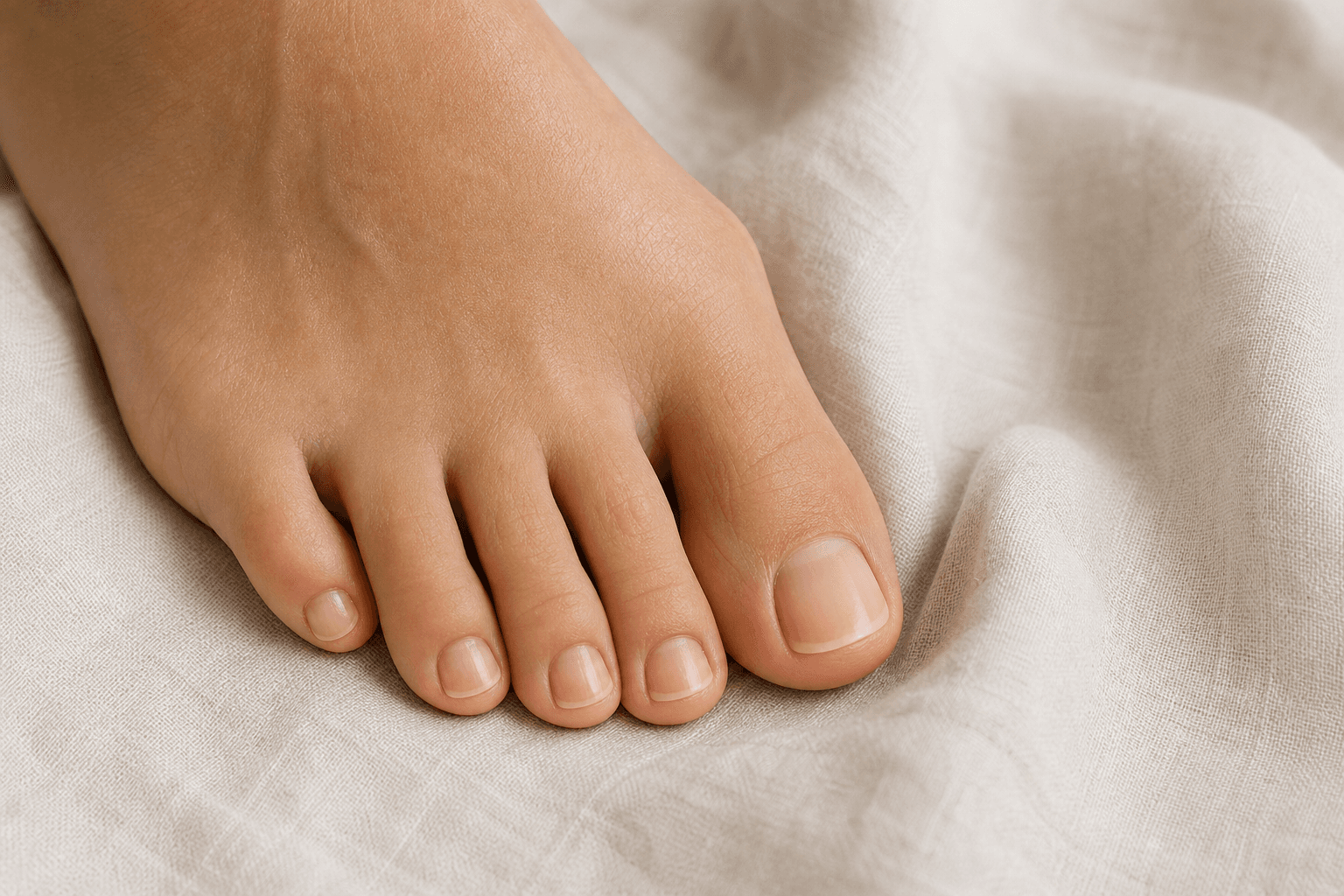
Metatarsalgia is pain and soreness in the ball of the foot, under the heads of the long metatarsal bones just behind your toes. It typically feels like a bruise, a burning ache, or the sensation of walking on a pebble or a bunched-up sock, and it is usually worse when you push off, stand for long hours or go barefoot on hard floors. It is a description of where it hurts rather than a single disease, so the useful work is finding what is overloading that spot.
The encouraging part is that most cases respond to changing the pressure: shoes with cushioning and room for the toes, a metatarsal pad placed just behind the sore area, a break from high-impact activity, and attention to the calluses that often build up there. Sources such as Mayo Clinic Care Network and university health systems describe this conservative approach as the usual first step, with improvement over several weeks for many people and longer for persistent cases.
This is the condition-level guide. If you are still working out what your symptom is, start with our ball of foot pain overview, which compares metatarsalgia with look-alikes.
What it feels like, and what it is not
Typical metatarsalgia pain sits under one or more of the metatarsal heads, most often the second and third, and may spread across the forefoot. It increases with weight-bearing and eases when you sit. Calluses under the area are common, and some people feel a pad-thin sensation, as if the cushioning has worn away.
It is worth separating it from other things that share the spot. Sharp, burning pain between the third and fourth toes with a feeling of a fold in the sock can be a Morton's neuroma. Pain under the big toe joint with tenderness on bending may be sesamoiditis. Pain that came on after a sudden increase in running or marching and is focused on one point can be a stress fracture. Tingling and numbness point toward nerves; see our numb feet page.
Common causes
Health-system sources commonly cite high-impact sport, shoes that are too narrow, too flat, too worn or high-heeled, excess body weight, and foot shape as drivers. A high arch, a second toe longer than the big toe, hammer toes (see hammer toes) and bunions can all shift load onto the metatarsal heads. A thinning fat pad under the forefoot, which can happen with age, removes natural cushioning. Tight calves reduce ankle motion and push more load forward, which is why calf stretching shows up in the plans.
Occupation matters too: hours on concrete, in stiff boots or in heels will keep the area irritated even when the cause is mild.
What eases it
Start with the shoe. Look for a thick, cushioned forefoot, a low heel, a roomy toe box so the toes can spread, and a stiff or gently rockered sole that reduces bending at the ball of the foot. Worn-out shoes whose midsole has compressed are a frequent culprit; replacing them is often the single most useful change. Our rocker-sole shoes guide explains why that shape shifts pressure away from the forefoot.
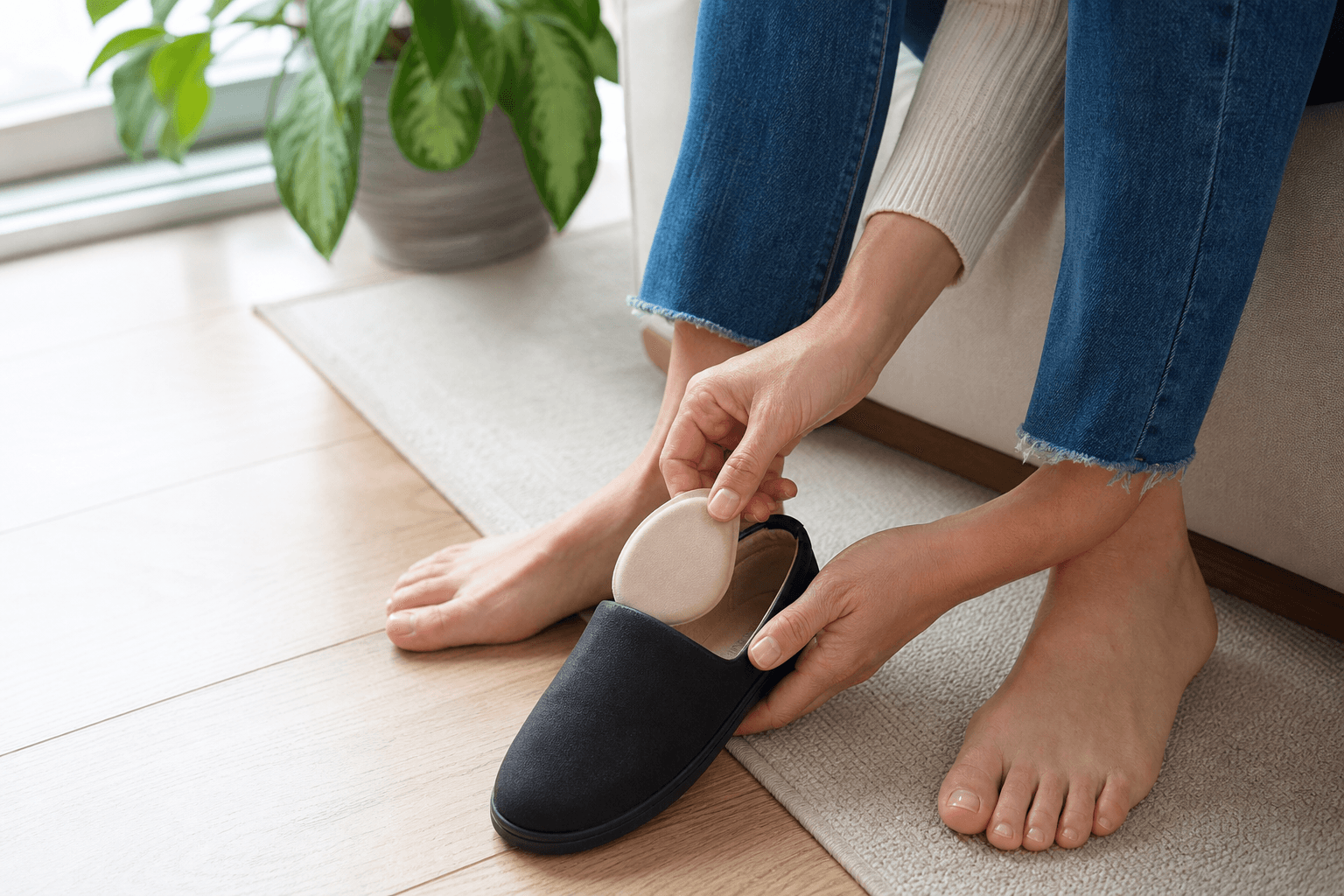
Add a metatarsal pad. Over-the-counter pads sit just behind the sore metatarsal heads, not under them, so they spread load rather than poke the sore spot. Place one, walk around for a few minutes, and adjust until the area feels unloaded. A supportive insole with a cushioned forefoot can do similar work; many people also use a good Akusoli insoles review as a starting point for what a supportive insole looks like.
Ice for 10 to 15 minutes after a long day, rest from jumping and running for a while, and return to activity gradually. Gentle calf stretching and, for some, simple toe-spreading and foot-strengthening exercises are commonly suggested by physical therapists. Over-the-counter pain relievers may take the edge off for a short time; check with a pharmacist if you have other health conditions.
Calluses and skin
Thick callus under the metatarsal heads concentrates pressure like a pebble. A podiatrist can safely reduce it, and softening with a moisturiser containing urea followed by gentle filing helps maintain it between visits. Never cut a callus with a blade at home, especially if you have diabetes or poor circulation. Our corns and calluses guide covers safe care.
Getting back to activity
Return to running or jumping sports gradually once walking is comfortable. Choose softer surfaces first, shorten sessions, and keep a day or two of lower impact between harder efforts. Cross-training such as cycling or swimming keeps fitness up without pounding the forefoot. If pain returns the morning after a session, you did too much; step back one level and build up more slowly. Rotating between two pairs of well-cushioned shoes also lets midsoles recover and helps vary the pressure points.
When to see a clinician
Get it examined if the pain has not improved after several weeks of better shoes and padding, if it came on suddenly after an injury, if there is swelling, redness or warmth, if you have numbness, or if you have diabetes. A podiatrist can assess your foot shape, rule out a stress fracture or neuroma, and offer custom orthoses if over-the-counter options are not enough. Persistent foot pain should always be evaluated by a doctor or podiatrist rather than ignored.
See how a cushioned insole handles pressure
Read our review of a supportive insole with a cushioned forefoot.
See how a cushioned insole handles pressure →Frequently asked questions
What is the fastest way to get relief from metatarsalgia?
There is no instant fix, but swapping to cushioned, roomy shoes, adding a metatarsal pad behind the sore area and resting from high-impact activity gives many people noticeable comfort within a couple of weeks.
Where do I put a metatarsal pad?
Just behind the metatarsal heads, toward the arch, not directly under the sore spot. The aim is to spread pressure off the painful area.
Is metatarsalgia the same as Morton's neuroma?
No. Metatarsalgia is a broad term for ball-of-foot pain. A neuroma is a specific nerve problem, usually with burning or numbness between two toes.
How long does metatarsalgia last?
Many people improve within several weeks of reducing pressure and changing footwear. Persistent cases can take months, and ongoing pain deserves an exam.
Can metatarsalgia become permanent?
Most cases can be managed with conservative changes. If foot shape problems such as hammer toes are driving it, a podiatrist can discuss longer-term options.
HeelCups is reader-supported. When you buy through links on our site we may earn an affiliate commission, at no extra cost to you. This article is general information about foot comfort and is not medical advice — see our medical disclaimer.