TOENAIL FUNGUS
Toenail Fungus: What Actually Helps, What Does Not, and When to See a Clinician
Thick, yellowed or crumbling toenails are common and slow to change — here is the honest read on topical solutions, oral antifungals and the shoe habits that keep new nails clear.
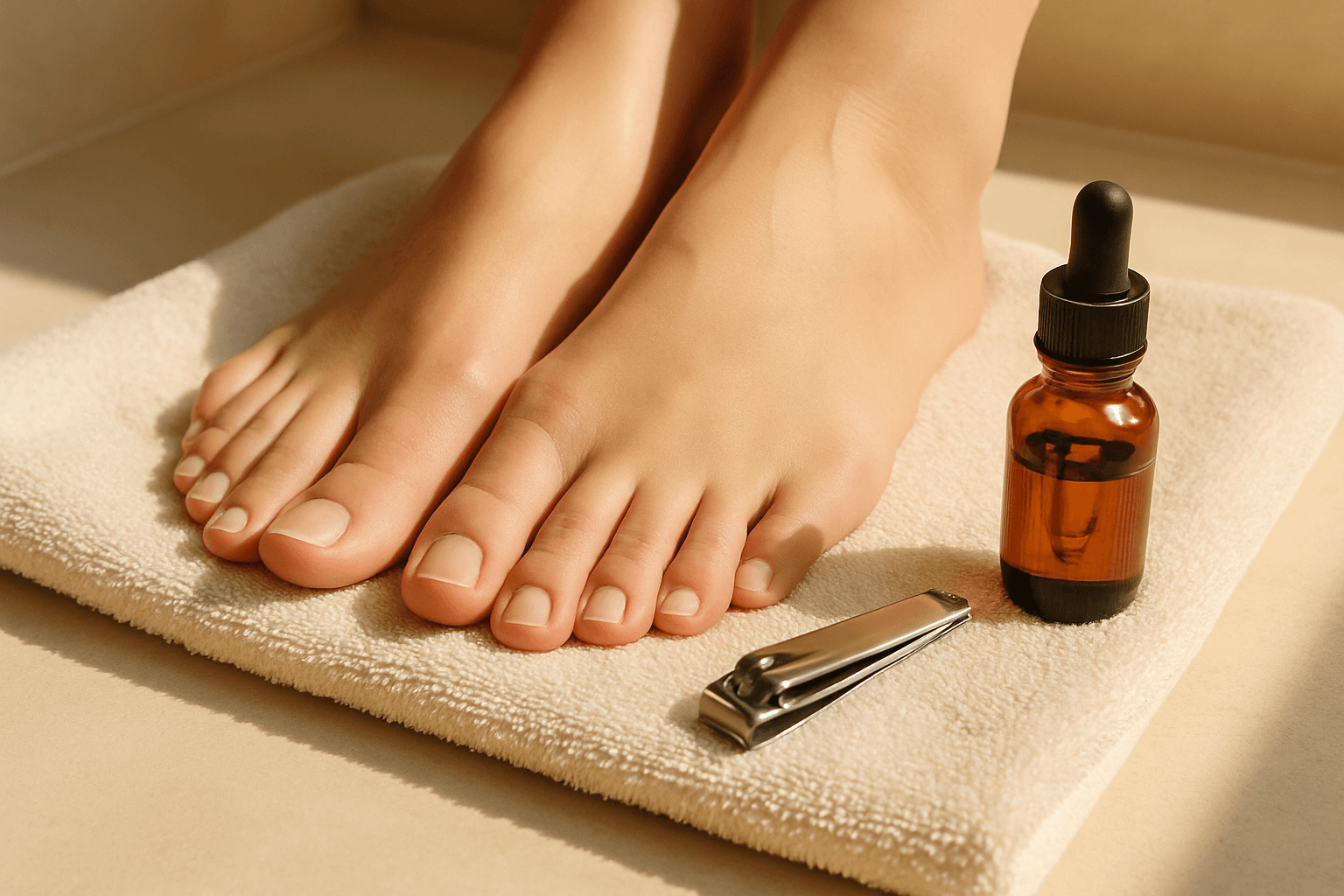
Toenail fungus — clinically onychomycosis — is one of the most common nail complaints in adults, and one of the slowest and most stubborn to change. A nail that has thickened, yellowed, lifted from the nail bed or crumbled at the edge did not get that way in a week, and it will not clear in a week either; a healthy new toenail takes nine to eighteen months to grow out from root to tip, and any real improvement follows that timeline. That mismatch between how quickly a bottle of solution promises results and how quickly a nail can actually change is why the aisle is full of products and why so many readers give up on them.
The honest picture is a lot more useful than the aisle. Mild, early cases — a small patch of discoloration on one or two nails, no thickening, the nail plate still intact — often respond over many months to a disciplined topical routine plus better shoe hygiene, and stay clear once the tissue is gone. Moderate and severe cases — multiple nails involved, thickening, crumbling, separation from the nail bed — usually do not respond to topicals alone; oral prescription antifungals from a clinician are what changes them, and the choice between an oral course and living with the nail is a decision worth having with a doctor or podiatrist. Diabetes and any circulation concern move the whole conversation into a same-week clinic visit, not a drugstore experiment.
This page walks through what actually helps at each severity, how to tell fungus from the conditions that mimic it, and the shoe and nail-care habits that keep new nails coming in clear. Nothing here is medical advice. Every recommendation on this hub is written for comfort, support and relief, and pointed at a doctor or podiatrist for anything that has not improved with honest home care. Fungus on the skin between the toes is a separate but related problem, covered in our guide to athlete's foot.
What toenail fungus actually is, and what it is not
Toenail fungus is an infection of the nail plate and the nail bed underneath it, most often by dermatophytes — the same family of fungi that cause athlete's foot — and occasionally by yeasts or non-dermatophyte molds. The organism digests keratin, the protein the nail is made of, which is why an infected nail thickens, discolors and eventually crumbles or lifts from the bed. It spreads most easily in warm, moist environments: shared shower floors, pool decks, gym locker rooms, sweaty shoes worn for long shifts. It is contagious enough that treating one nail while leaving the athlete's foot on the sole of the same foot untreated is a common way to reinfect a freshly clearing nail.
It is not the same as every yellowed or thickened toenail. Repeated trauma from a shoe that is too short — the classic distance-runner or hiker nail — thickens over years without any fungus present, and the pattern is a symmetric thickening across the whole plate rather than a starburst discoloration expanding from the edge. Psoriasis affects nails in a fraction of people who have skin psoriasis and produces pitting, oil-drop spots and separation without the crumbly texture of a fungal nail. A dark line under one nail that follows the length of the nail from the cuticle down is not fungus at all and warrants a same-week clinical exam — that is the pattern of a specific melanoma variant and needs an eye you cannot get in the drugstore aisle.
The practical read is that a nail with fungus almost always looks thickened, discolored (yellow, brown or white patches expanding from the tip or the sides rather than a single dark line from the cuticle), and often crumbly at the free edge, and it is usually accompanied by scaly, itchy skin somewhere else on the same foot. If those pieces do not add up, a clinician's exam — sometimes with a clipped nail sent for a lab confirmation — sorts what the aisle cannot.
What topical solutions realistically do
Over-the-counter topicals for toenail fungus fall into three families: tolnaftate and undecylenic acid solutions (older antifungals with reasonable athlete's foot data and modest nail data), tea tree oil and other essential-oil-based products (limited but non-zero clinical evidence, mostly on mild cases), and the emerging class of natural-oil blends marketed on nail-clearing claims. Prescription topicals are a separate category — efinaconazole, tavaborole and ciclopirox lacquer — with better clinical evidence than the OTC options for mild to moderate cases and prices that reflect it. All of these depend on the same thing: a formulation that can actually reach the nail bed through a thickened, damaged plate.
That is why every honest topical routine starts with mechanical preparation. Trim the nail short with clippers designed for thick nails; file the top surface of the affected part of the nail down with an emery board or a nail file so the plate is thinner and more permeable; scrub the tip and the sides with a soft brush and mild soap; and dry thoroughly before applying the solution. Do that every night for months. Applied to a thick, unprepared nail, the best topical in the aisle is doing very little; applied to a filed, cleaned, trimmed nail after a warm-water soak, the same product has a real chance of reaching the bed.
Timelines are long. Even with disciplined daily use, mild cases usually take six to nine months of visible improvement, and full clearance of a big toenail is a twelve to eighteen month project because that is how long the nail takes to grow out. Stop when the nail looks clear and the fungus can come back; keep going for a month or two past the clean-looking mark, and pair it with the shoe and skin habits below. The people topicals help are the ones with mild, early cases who stay disciplined for a year; the people they disappoint are the ones with moderate to severe cases where the fungus is deeper than any topical can practically reach.
When oral antifungals enter the picture
Prescription oral antifungals — terbinafine and itraconazole are the mainstays, with fluconazole a less common third option — reach the nail bed through the bloodstream rather than through the nail surface, and are the tool clinicians reach for when topicals will not do the job. Clinical trials and systematic reviews consistently find higher cure rates and lower relapse rates for oral courses than for any topical, especially in moderate to severe cases with multiple nails involved. A typical course is six weeks for a fingernail or twelve weeks for a toenail, dosed daily; the nail continues to grow out clear over the months that follow the course.
The trade-off is that oral antifungals are systemic drugs with real side-effect profiles, and the decision to take a course is a decision worth having with a clinician. Terbinafine can affect liver enzymes and taste perception; itraconazole interacts with a long list of common medications; both are usually avoided in pregnancy and in people with active liver disease. Most healthy adults tolerate a course without a problem, but the check-in with your primary care physician or a podiatrist is what makes that call safely rather than in the drugstore aisle.
Which is why the honest read on oral antifungals is that they are the standard of care for anyone whose nail matters to them and whose case is beyond the topical zone — a runner whose thickened big toe is falling apart, a nurse whose hands and feet are constantly wet, someone whose fungal nail is spreading — and the decision belongs with a clinician who can weigh the side-effect picture against your specific health history. This is not a decision the site can make for you.
The shoe, sock and skin habits that keep new nails clear
The reason toenail fungus comes back after any successful clearance — topical or oral — is that most people fix the nail without fixing the environment that grew it. The organism lives on skin, in socks, and inside shoes for weeks to months at a time, and a freshly clean nail growing out into the same warm, damp, contaminated environment is a nail primed for a reinfection. Break the environment and the odds tilt.
Rotate two pairs of everyday shoes so each pair has twenty-four hours to dry between wears; the difference in interior moisture between a shoe worn every day and a shoe worn every other day is enormous. Change socks the moment a shift or a workout ends, and pick moisture-wicking synthetic or merino wool socks over cotton for anyone whose feet sweat. Treat athlete's foot on the same feet aggressively — an OTC terbinafine or clotrimazole cream on the soles and between the toes for a full month, past the point the skin looks clear — because the same fungus lives there and reinfects nails constantly. If you have a home gym or share a shower, wear shower sandals in wet areas and never share nail clippers with a family member.
Nail-care mechanics matter too. Keep toenails trimmed short and straight across; a nail that grows past the fingertip catches, lifts and re-invites the fungus. File thickened nails down periodically rather than letting them build up into a home for the organism. Disinfect nail clippers between uses — a five-second wipe with rubbing alcohol is enough — because a clipper carries fungus from one nail to the next as reliably as a shared shower floor does. Compression socks and heated socks used for other complaints on this site do not cause or prevent nail fungus on their own; the moisture rules matter more than the fabric.
When toenail fungus is not the whole story
Diabetes changes this conversation. A diabetic foot with a fungal nail is at higher risk of secondary bacterial infection, of ulceration under a thickened nail that goes unnoticed because of reduced sensation, and of complications that a healthy foot would never have. Nothing on this hub is written for the diabetic foot; the standard advice for anyone with diabetes and a fungal nail is a podiatrist visit rather than an aisle experiment. The same is true for anyone with peripheral vascular disease, on immunosuppressive medication, or with a history of foot ulcers.
A nail that is painful, red at the surrounding skin, warm to touch, or draining is not a fungus problem in the moment — it is a bacterial infection layered on top, and it needs a same-week clinic visit. A dark streak or spot under a single nail that has not resolved with the nail growing out is worth a dermatologist's eye. Persistent pain under a thickened nail after any minor trauma can hide a small hematoma or a nail-bed injury and belongs with a clinician if it does not settle over a week or two.
The site pointer for related complaints: cracked heels covers the skin fissures that often show up alongside chronic athlete's foot, and the foot care hub covers the sock and skin habits that keep the whole foot healthier. A nail edge that digs into the skin instead is covered in our ingrown toenail guide. Persistent foot or nail problems that have not eased with honest home care deserve a doctor or podiatrist; the goal here is comfort, support and relief, and knowing when the picture has stopped fitting the self-care lane.
Read more foot-care guides
The sock, skin and nail habits that keep the whole foot healthier — comfort, support and relief, honestly written.
Read more foot-care guides →Frequently asked questions
How long does it take to get rid of toenail fungus?
Any real change is measured in months rather than weeks because a healthy toenail takes nine to eighteen months to grow out from root to tip. Mild cases treated with a disciplined daily topical routine usually show visible improvement over six to nine months, with full clearance of a big toenail taking twelve to eighteen months. Prescription oral antifungals from a clinician are typically a six-to-twelve-week course, with the nail continuing to grow out clear in the months after. Any product that promises results in days is not describing how a toenail works.
Do OTC topicals actually help toenail fungus?
For mild, early cases — a small patch of discoloration, no thickening, the nail plate still intact — a disciplined daily topical routine can help, especially when paired with filing the nail thin, treating athlete's foot on the same foot, and rotating shoes so they dry between wears. Moderate and severe cases with thickening, crumbling or multiple nails involved usually do not respond to topicals alone; that is where a clinician and prescription options enter the picture.
Is a prescription antifungal safe?
The oral antifungals used for toenail fungus — terbinafine and itraconazole are the mainstays — are systemic medications with real side-effect profiles, and the decision to take a course is a decision worth having with a clinician who can weigh those effects against your health history. Most healthy adults tolerate a course without a problem, but liver enzymes and drug interactions are watched during treatment. This is not a decision the site can make for you.
How do I know if it is toenail fungus or something else?
A fungal nail almost always looks thickened, discolored in yellow, brown or white patches that expand from the tip or sides, and often crumbly at the free edge, usually with itchy or scaly skin somewhere else on the same foot. Symmetric thickening across the whole nail without discoloration is often trauma from a short shoe rather than fungus. A dark streak that runs the length of one nail from the cuticle is not fungus and belongs with a dermatologist for a same-week exam. If the picture does not obviously fit, a clinician's exam sorts it.
Can I catch toenail fungus from a pedicure?
It is possible when tools are not properly disinfected between customers, and outbreaks traced to specific salons show up in the literature. A reputable salon that autoclaves metal tools between clients and uses disposable files and buffers is a lower-risk environment. If you are prone to nail issues, bring your own tools, avoid cutting the cuticles (which breaks a small barrier the fungus can cross), and skip the appointment if the salon's sanitation looks casual.
Will heated socks or compression socks make toenail fungus worse?
Neither causes toenail fungus on its own — the organism needs warmth plus moisture, and it is the moisture side of that pair that matters most for prevention. Heated socks worn for a few hours in a dry house are fine; compression socks worn all day are fine. What worsens fungus is a sock worn for a full sweaty shift and put back on the next day without being washed, or a shoe worn every day so the interior never dries. Wash socks in hot water, rotate shoes, and dry both fully between wears.
HeelCups is reader-supported. When you buy through links on our site we may earn an affiliate commission, at no extra cost to you. This article is general information about foot comfort and is not medical advice — see our medical disclaimer.