OUTER FOOT PAIN
Pain on the Outside of the Foot: Cuboid, Peroneal Tendon, Fifth Metatarsal and What to Try First
An ache along the pinky-side edge of the foot can come from several different structures. Here is how the common causes differ, what eases them, and which signs mean get it looked at.
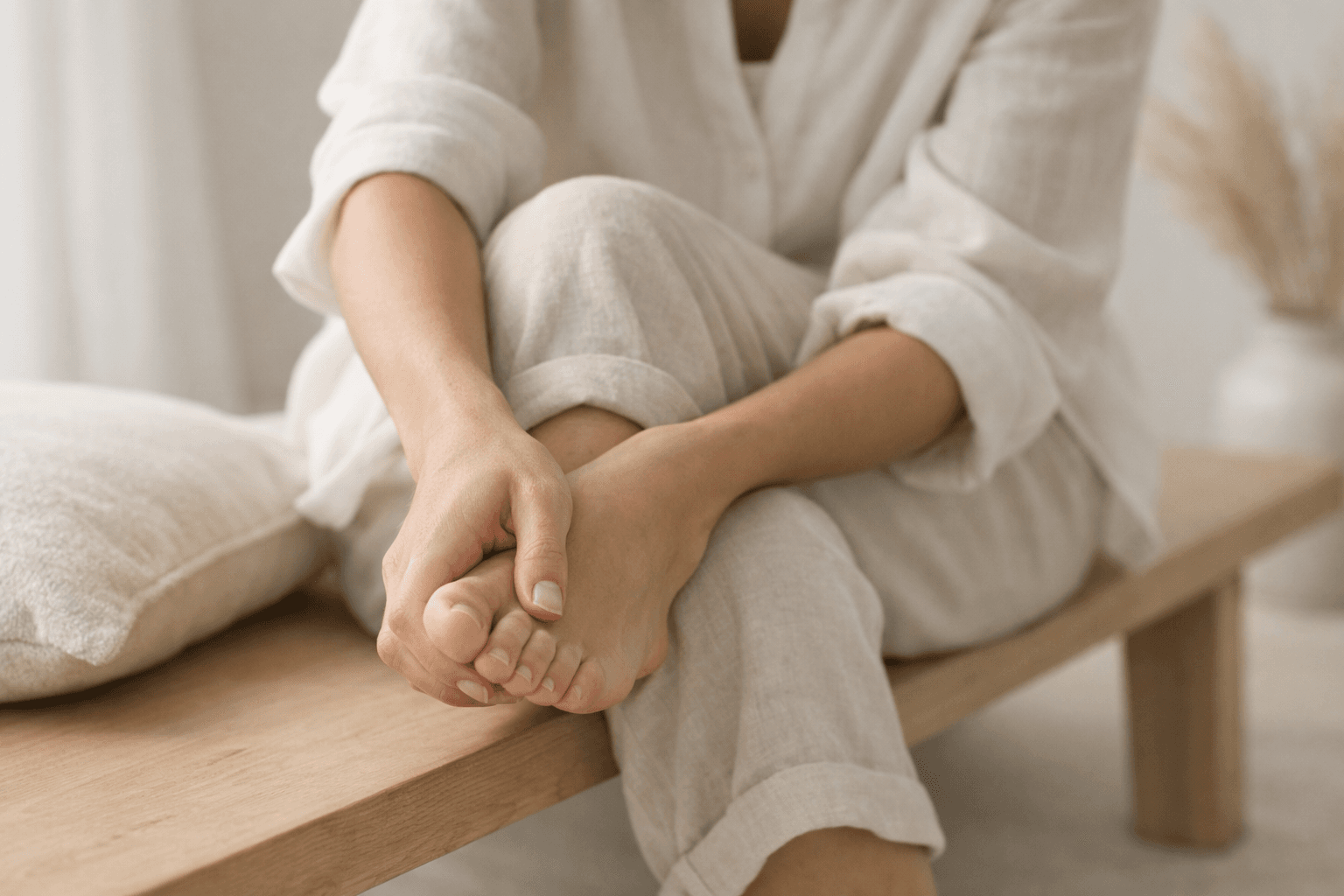
Pain along the outer edge of the foot, between the heel and the little toe, is a common complaint and a confusing one, because several different structures sit there. The usual suspects are the peroneal tendons that run behind the outer ankle bone, a small bone called the cuboid in the middle of the outer foot, and the long bone behind the little toe, the fifth metatarsal. Sprains and ill-fitting shoes round out the list.
This page sorts the patterns by where it hurts and what set it off, and covers sensible comfort measures: easing back on the activity, supportive footwear and a little padding. One rule up front: pain after a fall or twist where you cannot put weight on the foot, or with obvious swelling and bruising, needs an exam and likely imaging to rule out a fracture. That is not a self-care situation.
If your pain is nearer the heel, our page on pain on the outside of the heel goes into peroneal trouble in more detail. This page is general information, not a diagnosis.
Start by locating the pain
Press along the outer edge of the foot with one finger. Tenderness just behind and below the outer ankle bone points toward the peroneal tendons. A tender spot about halfway along the outer edge fits the cuboid. A tender bump at the base of the little toe's long bone, where it flares out, is the area of the fifth metatarsal. Pain on the sole just in front of the outer heel can be something else, such as irritation at the fascia, so pain on the inside of the heel and the plantar fascia pages help rule that in or out.
Peroneal tendon irritation
The peroneal tendons help hold the foot steady against rolling outward. They can become sore after a jump in activity, repeated ankle rolls or from shoes that lack lateral support. The ache sits behind the ankle bone and along the outer foot, and is often worse when you push off or walk on uneven ground.
Easing the load is the main step: cut back running or hiking for a while, choose shoes with a snug heel and a stable base, and avoid walking on slopes if they set it off. People who tend to roll their ankles may find the guidance in our page on supination insoles relevant, because feet that roll outward load this area.
Cuboid syndrome
Cuboid syndrome is described as a partial misalignment of the cuboid bone, producing pain on the outer midfoot that can spread towards the ankle. Clinical articles, such as the Hinge Health overview, list triggers including a sudden jump in training, jumping or side-to-side movement, and an awkward landing. Because it can look like an ankle sprain, it is sometimes missed.
A clinician can often examine it and, if appropriate, manipulate the area. Home measures are the same gentle ones: relative rest, padded supportive shoes and a gradual return. If the pain does not settle within a couple of weeks, book an exam rather than guessing.
Fifth metatarsal problems
The base of the fifth metatarsal is a common spot for avulsion injuries after an ankle roll and for stress fractures in people who suddenly increase activity. Those are bone problems. Pain at that spot after a twist, with swelling or bruising or trouble bearing weight, needs prompt imaging.
A quieter version is pressure from the shoe on a prominent bone, sometimes called a bunionette. Wider shoes or a soft pad often bring comfort there, and our page on bunions explains the similar pattern on the other side of the foot.
Comfort measures that make sense at home
For mild outer-foot soreness without red flags, a short rest from the aggravating activity, supportive lace-up shoes, and a firm insole with a deep heel cup can lower the load. Avoid flat flip-flops and worn-out trainers with a tilted sole. A frozen bottle or a cold pack for ten minutes after a long day may take the edge off.
Do not stretch or massage hard into a spot that feels like bone pain. If pressing makes a point sharply tender, treat it as a reason for an exam, not a reason to press harder.
Shoes and surfaces that make it worse
Lateral instability is a theme. Worn shoes with a sole that tilts outward, soft unsupportive sandals, and trail running on cambered paths all push the foot outward and ask the peroneal tendons and outer foot to work harder. Retire shoes whose heel wear is lopsided, and favour a firm, flat base with a snug heel counter. Road camber and sloping tracks matter too, so vary your route if one side of your foot is sore.
A gradual return matters as much as the first rest. Add distance or intensity in small steps over a few weeks, and stop at the first return of sharp pain rather than testing it.
When to see a doctor or podiatrist
Get checked soon if you cannot bear weight, there is swelling or bruising, the pain followed a fall or twist, it wakes you at night, or it has lasted more than a couple of weeks despite sensible rest. Persistent pain on the outside of the foot should always be assessed by a doctor or podiatrist, because a missed stress fracture is far easier to deal with early.
Explore the foot-care hub
Socks, skin, nails and the everyday habits that keep the rest of the foot comfortable.
Explore the foot-care hub →Frequently asked questions
Why does the outside of my foot hurt when I walk?
Common causes include peroneal tendon irritation, cuboid syndrome, a fifth metatarsal problem, an old ankle sprain, or shoes with poor lateral support. Where exactly it hurts helps narrow it down, and an exam can confirm.
How do I tell a stress fracture from tendon pain?
Bone pain tends to be pinpoint, worse with weight bearing and may ache at night. Tendon pain is more often spread along the tendon and worse with push-off. Only an exam and imaging can tell for sure.
Can insoles help pain on the outside of the foot?
A supportive insole may improve stability and spread pressure, which can bring comfort for some causes. It will not address a fracture or a joint problem, so persistent pain should be examined.
Should I rest or keep walking?
Mild soreness often settles with reduced load and supportive shoes. If you limp, the pain is sharp, or it is getting worse, stop the aggravating activity and get it looked at.
Is outer foot pain related to plantar fasciitis?
Not usually. Plantar fasciitis centres under the inner heel and arch. Outer foot pain involves different structures, although both can appear in the same person.
HeelCups is reader-supported. When you buy through links on our site we may earn an affiliate commission, at no extra cost to you. This article is general information about foot comfort and is not medical advice — see our medical disclaimer.