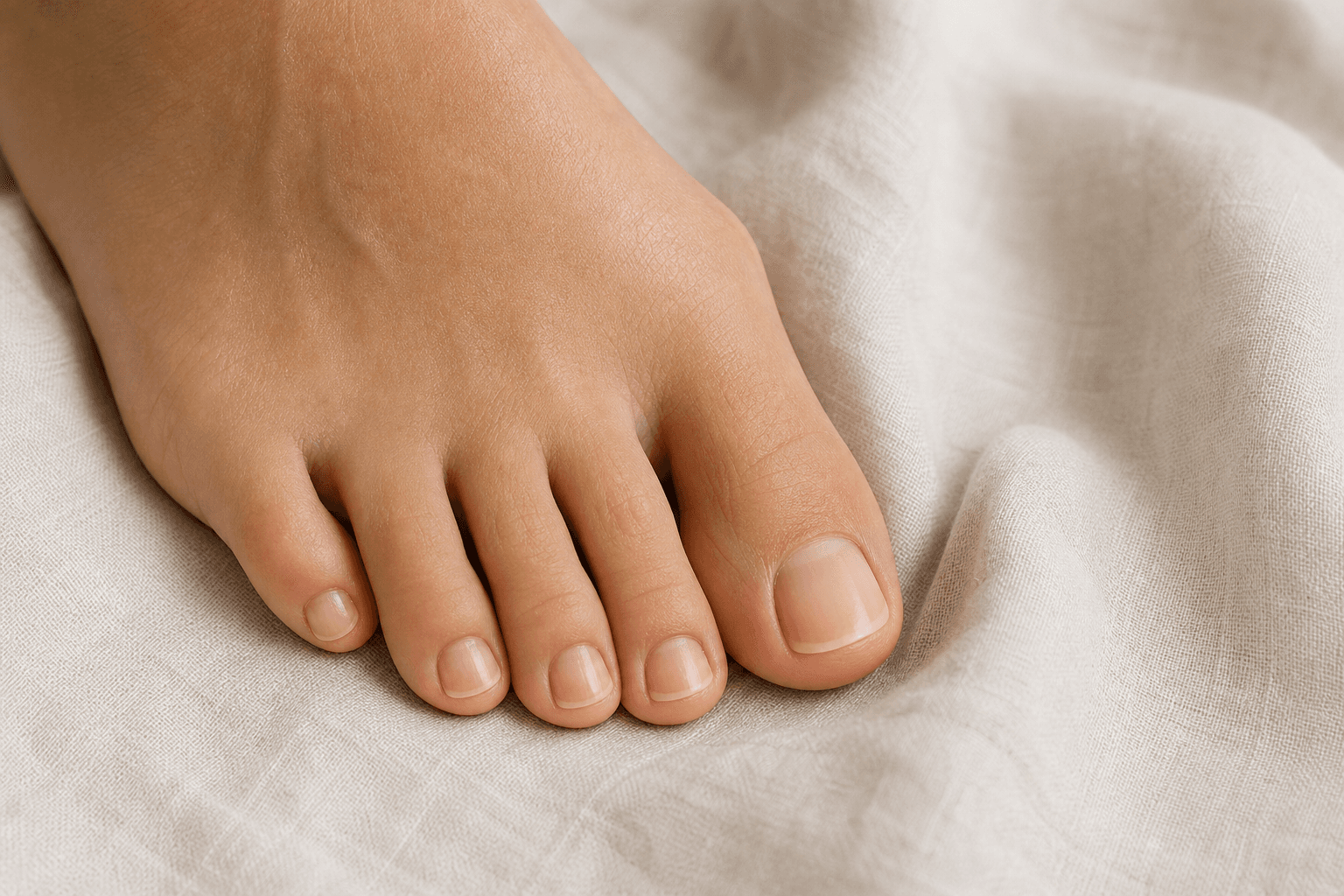
TURF TOE
Turf Toe: What It Is, the Three Grades and What Eases a Sore Big Toe Joint
Turf toe is a sprain at the base of the big toe, and it is not only for footballers. Here is what it feels like, how severity is graded, and how people get comfortable while it settles.
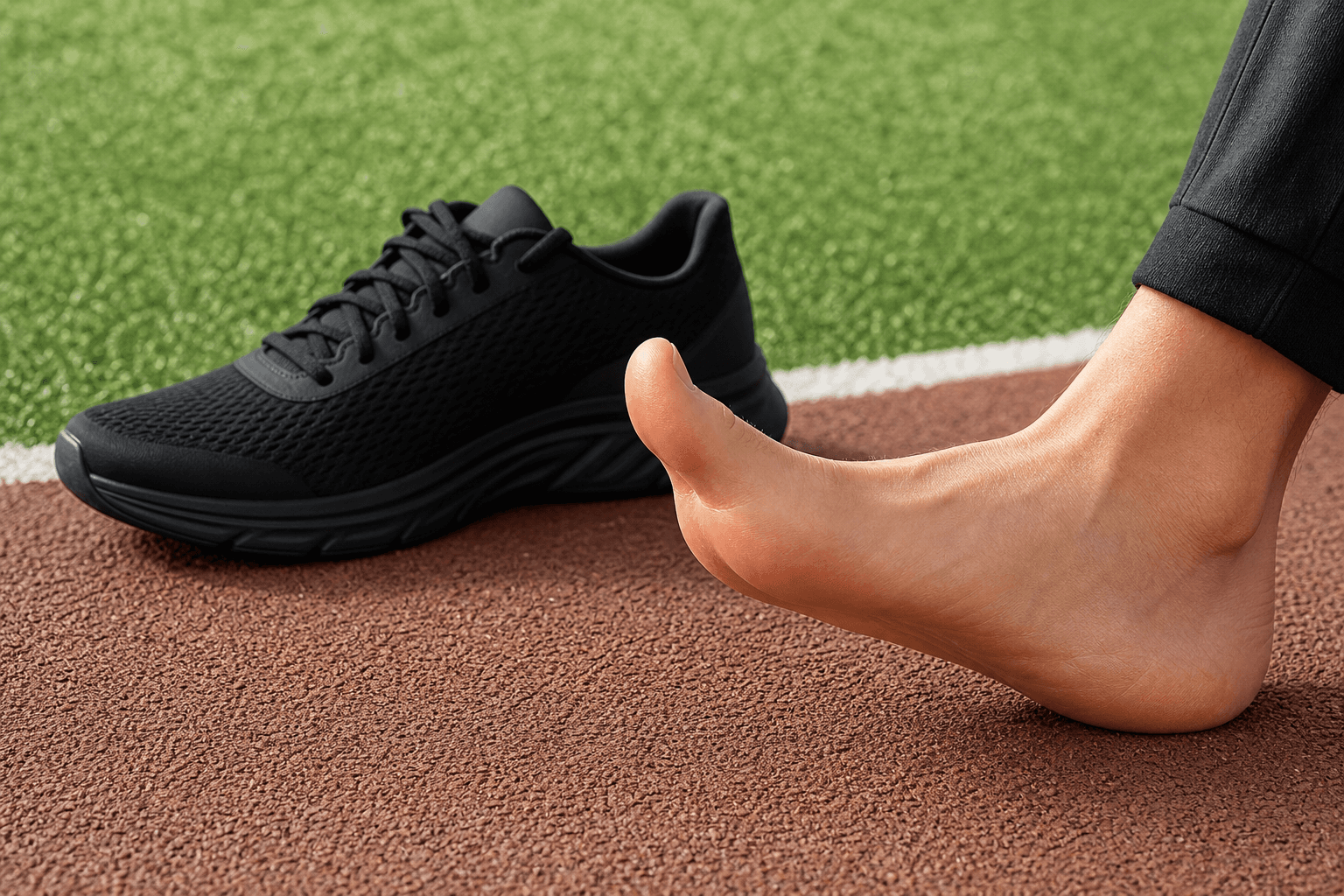
Turf toe is a sprain of the ligaments around the joint at the base of the big toe. It typically happens when the toe is forced upward past its normal range, such as pushing off hard, landing awkwardly, or stubbing the toe while the heel is raised. The result is pain, swelling and stiffness at the joint that worsen when you push off.
Doctors usually describe three grades, from a mild stretch to a complete tear. Mass General Brigham's sports medicine pages and similar clinic guides give mild cases days to a couple of weeks, with severe ones taking much longer. Those ranges are rough, since recovery depends on the grade and your activity.
Below: how to recognise it, how it differs from other big toe pain, what tends to bring comfort and when to get imaging. Not medical advice.
What it feels like
Pain and tenderness at the base of the big toe, swelling or bruising, and pain on bending the toe upward are typical. Some people feel a pop when it happens, and in more severe injuries the joint may feel unstable or loose.
Because every step ends with the big toe bending, even walking can hurt. Pain that builds over weeks without a clear injury is more likely big toe joint pain from stiffness or arthritis.
The three grades
Grade 1 is a stretch of the ligament with mild swelling and little loss of movement. Grade 2 is a partial tear with more swelling, bruising and limited movement. Grade 3 is a complete tear and may leave the joint unstable.
Clinic guides suggest roughly a week or two for grade 1, several weeks for grade 2 and months for grade 3, and surgery is considered for the most severe cases. Only an exam, and often an X-ray or MRI, can say which grade you have.
Who gets it
It is common in athletes who push off hard, including footballers, dancers and runners. Playing on firm surfaces in flexible, lightweight shoes leaves the big toe free to bend too far, which is a known contributor. Everyday causes exist too: a misstep off a kerb or a stubbed toe while the heel is raised.
What tends to bring comfort
Early on, people rest from the activity that caused it, ice the joint in a cloth for short periods, and elevate the foot. Stiffer-soled shoes limit how far the toe bends, which is the main practical idea. A rigid or rocker sole, described in our rocker-sole shoes guide, can take strain off the joint, and carbon fiber insoles are sometimes used for the same reason.
Taping the toe or a walking boot may be advised by a clinician for higher grades. Return to sport gradually and only when you can push off without pain.
Protecting the joint while you recover
Most of the practical advice comes down to limiting how far the big toe bends. Walk in shoes with a stiff sole, avoid going barefoot or in flexible flats while the joint is sore, and skip activities that need a forceful push-off, such as sprinting, jumping and hill work. Many people find that shortening their stride slightly also takes the edge off each step.
A firm, supportive insole can add stiffness inside a shoe you already own, though it will not replace a rigid sole. Have the shoe checked by pressing it: if it folds easily at the ball of the foot, the toe is still being asked to bend too far.
Ice in short sessions, gentle elevation and sensible rest are the other ingredients. Avoid forcing the toe through stretches while it is acutely sore; a clinician or physical therapist can add range-of-motion work when the joint is ready.
Getting back to activity
A useful rule of thumb is that you are ready to progress when walking is pain free, the toe bends comfortably without a sharp pinch, and swelling has gone. Then build up gradually: brisk walking, a gentle jog on a soft surface, then normal training. If pain returns, step back a stage instead of pushing through it.
Some athletes keep a stiffer shoe or insole for training after they return, since the joint can be vulnerable to a repeat sprain. Because the evidence for individual products is limited, treat these as comfort choices rather than guarantees, and ask your clinician what suits your sport.
When to get it looked at
Book an exam if you heard a pop, cannot bear weight, the toe looks deformed, bruising is significant, or pain is not easing after several days of rest. Numbness or colour change also needs prompt attention.
Unrelated heel pain can run alongside a limp, since altered walking loads the heel; our heel pain hub can help sort that out.
Frequently asked questions
What is turf toe?
A sprain of the ligaments at the base of the big toe, caused by the toe bending upward too far.
How long does turf toe take to recover?
Clinic guides suggest days to a couple of weeks for mild cases and months for severe ones. A clinician can give a better estimate once the grade is known.
Can I run with turf toe?
Pushing off often hurts, and returning too early can extend recovery. Wait until you can push off without pain, and ask a clinician for severe cases.
What shoes help turf toe?
Stiffer or rocker-sole shoes limit toe bending and many people find them more comfortable. Flexible minimalist shoes tend to be harder.
Is turf toe the same as a bunion or gout?
No. Turf toe follows an injury, while bunions develop slowly and gout often causes sudden hot, red swelling. A clinician can tell them apart.
HeelCups is reader-supported. When you buy through links on our site we may earn an affiliate commission, at no extra cost to you. This article is general information about foot comfort and is not medical advice — see our medical disclaimer.