HAGLUND'S DEFORMITY
Haglund's Deformity ('Pump Bump'): The Bony Bump at the Back of the Heel and What to Do About It
The firm bump on the back-outside corner of the heel that rubs on every stiff-heeled shoe is a Haglund's deformity. Here is what it actually is, why the tissue around it inflames, and the shoe and pad changes that make the biggest difference.
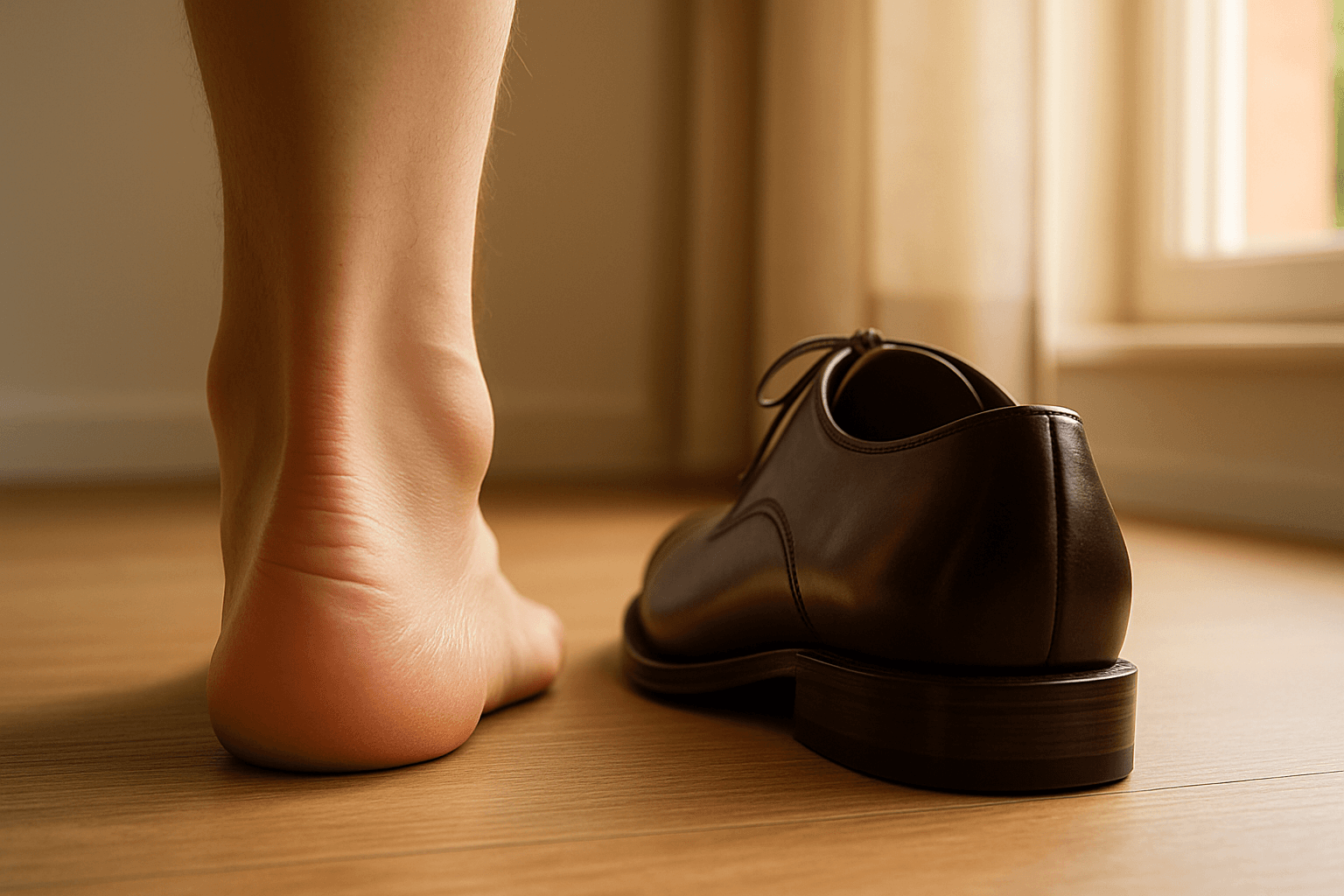
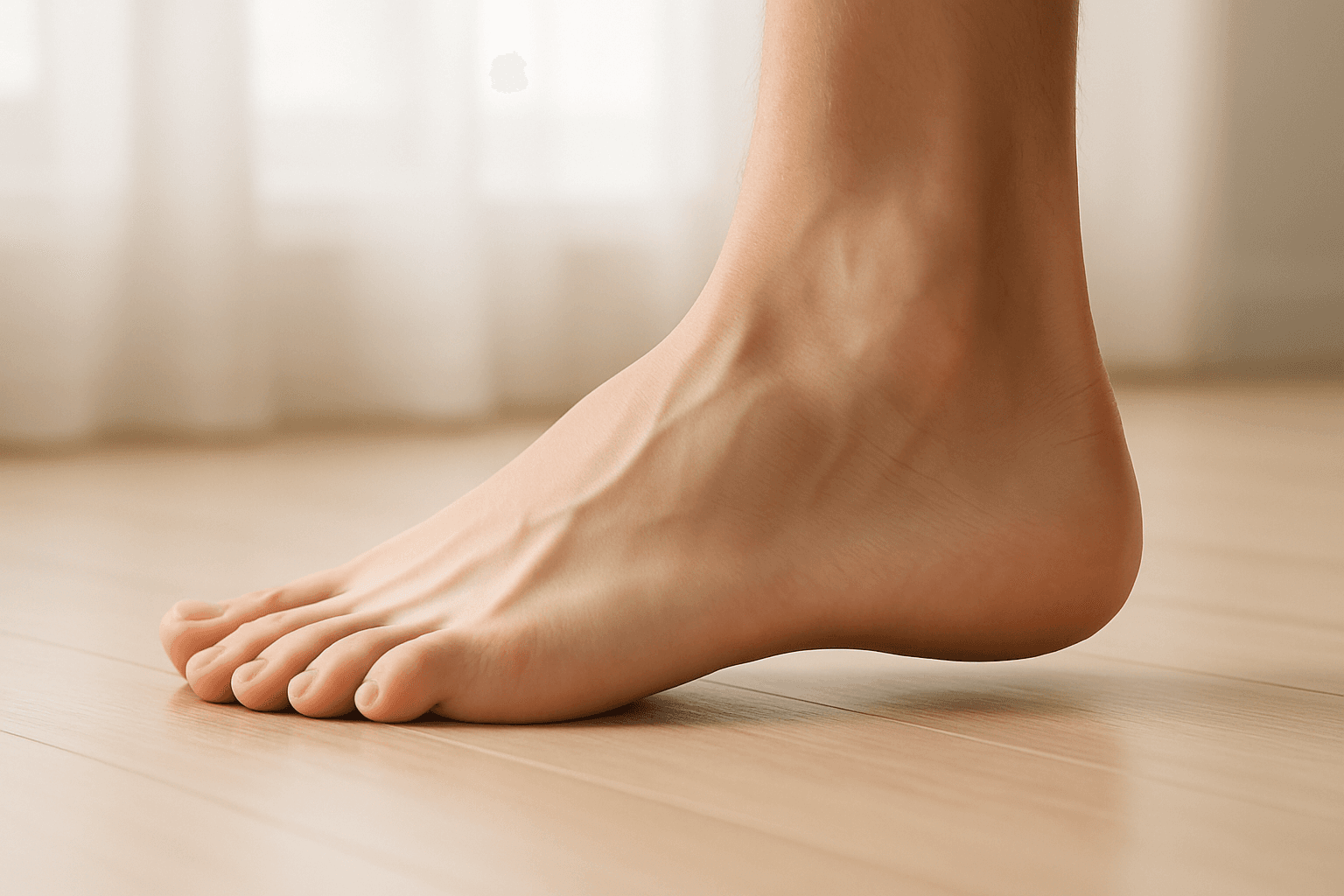
A Haglund's deformity is a bony prominence on the back of the heel bone, most often on the back-outside corner where the Achilles tendon meets the calcaneus. It is a shape, not a disease. Some people are born with a heel bone shaped that way; others develop a more prominent version over years of pressure from stiff-backed shoes. Old pump-style dress shoes gave the condition its everyday name, 'pump bump' — but the bump shows up just as reliably in figure skaters, hockey players, ski boot wearers, and anyone who spends long days in stiff-heeled dress shoes or work boots.
The bump itself is not usually the thing that hurts. What hurts is the retrocalcaneal bursa (a small fluid-filled sac between the tendon and the bone), the insertion of the Achilles tendon just above it, and the thin skin over the bump when a hard heel counter rubs directly on it. That trio inflames together and gives the classic Haglund's picture: a firm bump you can feel and often see, tender to the touch, painful in stiff-backed shoes and eased in a soft-backed shoe or a backless slide, sometimes with a red, thickened patch of skin over the bump from months of shoe pressure.
The plan is unglamorous but effective. Change the shoe environment so the hard counter is not pressing on the bump, pad the area so the tendon and bursa are not being pinched, add a small heel lift so the Achilles is not on constant stretch at its insertion, and give the tissue time to quiet down. Surgery to shave the bump is a real option — but for a very small minority of cases, after twelve months of honest conservative care. This page walks through what to try first, in what order, and when the bump is a clinic visit rather than a shoe-store visit. Nothing here is medical advice.
How to tell a Haglund's deformity apart from its neighbors
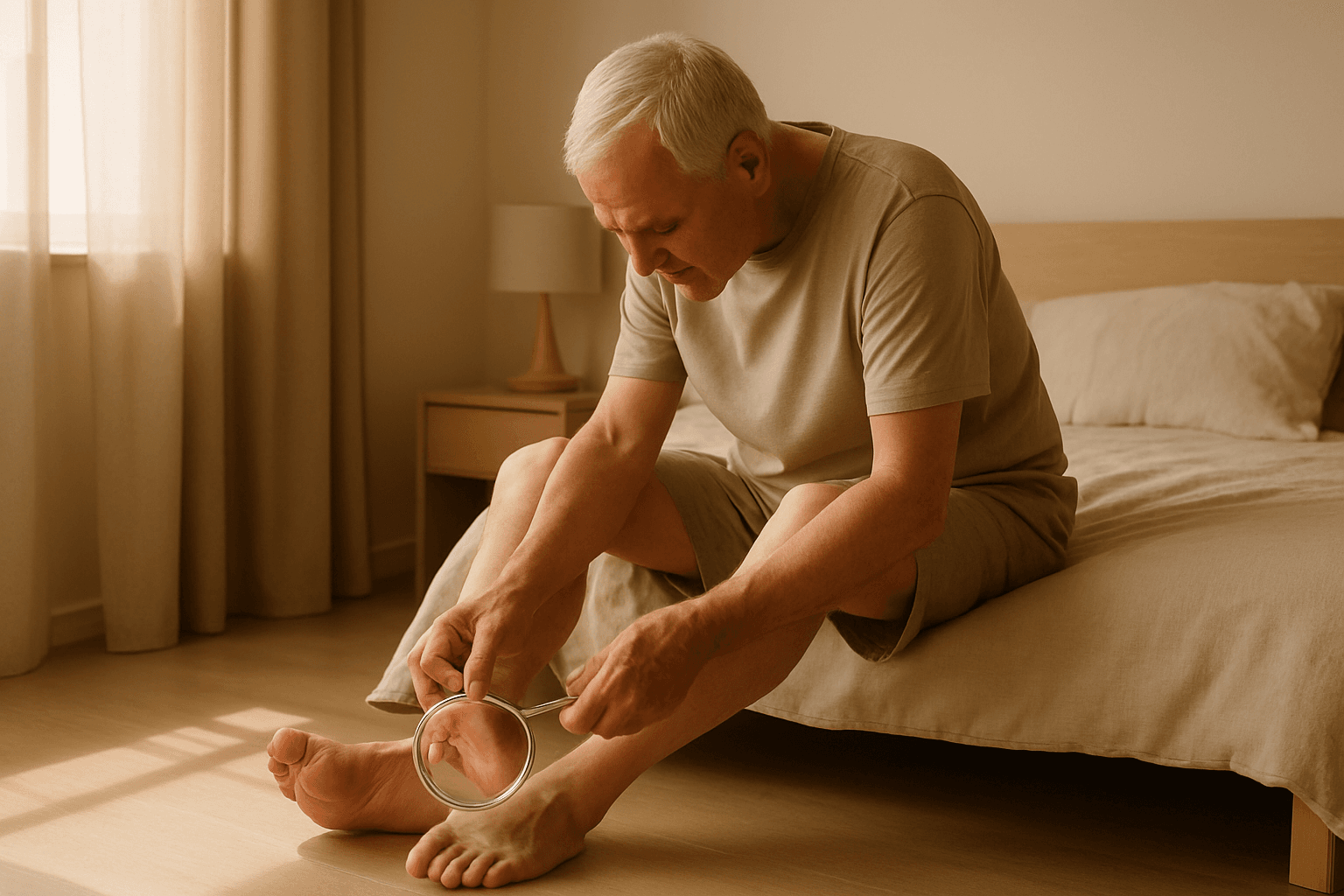
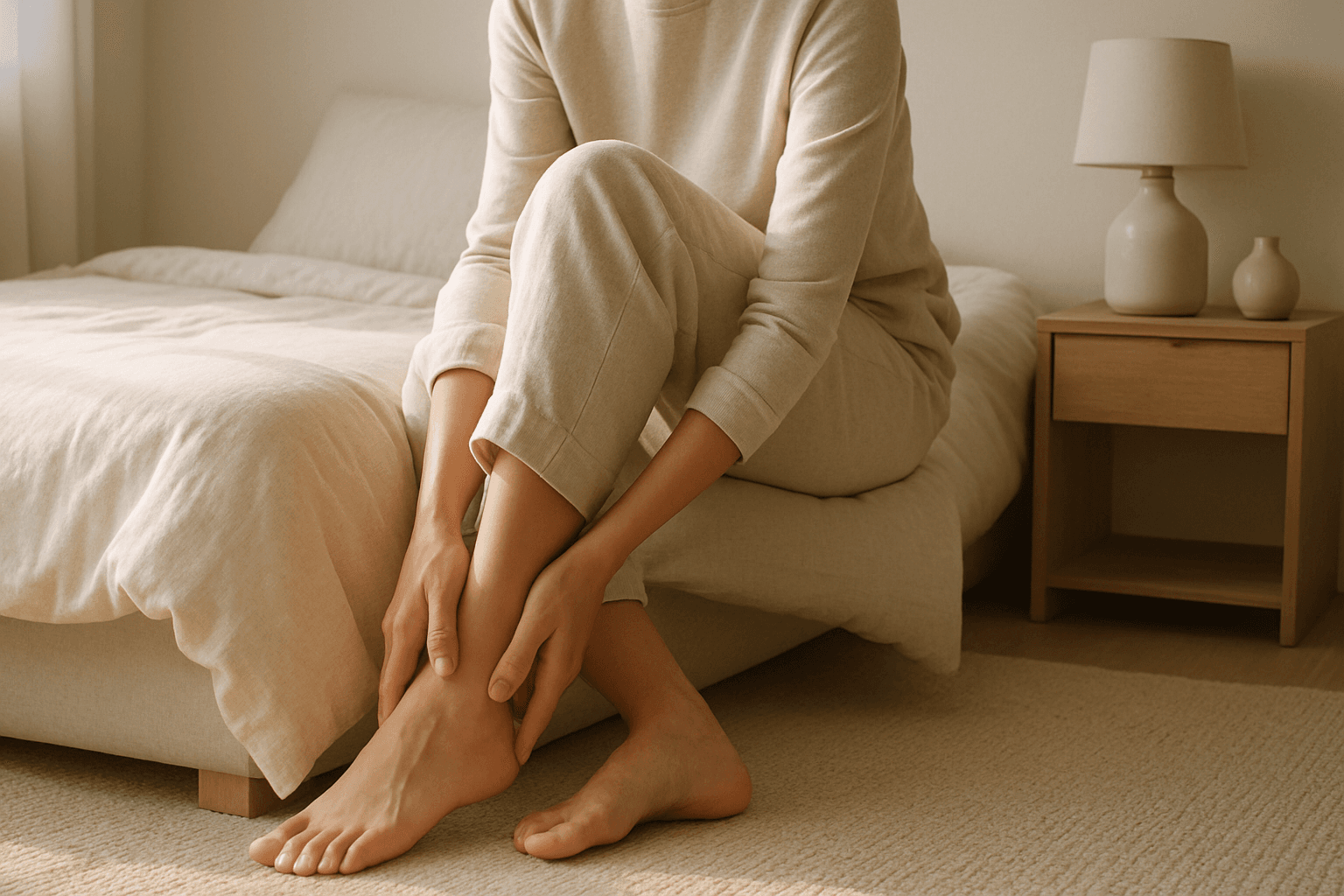
The tell is the map. Run a finger along the back of your heel from the sole up to where the Achilles tendon starts. If you feel a firm, bony prominence on the back-outside corner of the heel bone, usually about the size of a small grape, and pressing on it is tender, that is the Haglund's shape. A red, thickened, sometimes slightly darker patch of skin sits over the bump in a case that has been rubbing on a stiff shoe for months — the skin has thickened as a defense, and it can crack in dry weather. On some people the bump is symmetric on both heels; on others one side dominates because of a shoe or a sport.
What Haglund's is not: pain right underneath the heel toward the front, worst on the first steps in the morning (that is plantar fasciitis); a tender, slightly thickened band of Achilles two to six centimeters up from the heel bone (that is mid-portion Achilles tendinopathy — see our Achilles tendonitis walk-through for the pattern); a diffuse bruised feeling across the whole heel pad (that is a fat pad problem); or a deep, focal, exquisitely tender spot on the heel bone that hurts on every weight-bearing step after a recent activity spike (which needs a clinician's read for possible stress fracture).
The Haglund's bump often coexists with insertional Achilles tendinopathy and retrocalcaneal bursitis, because they share a shoe environment and a mechanical picture. Some clinicians call the whole cluster 'Haglund's syndrome' when all three light up together. The practical implication is that the plan is essentially the same whether you have a bump alone, a bump plus an angry bursa, or a bump plus an insertional tendon — the shoe changes, pads, heel lift and time do the work, and a physical therapist or podiatrist untangles the pieces if the case does not settle.
Why the tissue around a bump inflames in the first place
Every step you take with a stiff-backed shoe or boot presses the hard counter into the back of the heel. On most people that pressure is spread across a broad area and produces nothing more than a mildly warm heel at end of day. On a heel with a Haglund's prominence, the same pressure concentrates on a small spot of bone that sticks out, which pinches the retrocalcaneal bursa against the shoe and rubs the skin above it. Repeat that for weeks or months — a new job in stiff dress shoes, a season of hockey, a winter in ski boots, a wedding party of pumps on a marble floor — and the bursa inflames, the tendon insertion irritates, and the skin over the bump thickens into a red patch.
The Achilles side matters too. The tendon inserts onto the back of the heel bone right at or just above the level of the bump. Tight calves pull the tendon harder at its insertion, which loads the same area that the shoe is already pressing on. Runners and walkers with tight calves who train in low-drop shoes give the tendon less slack to work with, and the insertional area protests. That is why the useful plan is not just 'stop wearing the shoe' — it is 'stop wearing the shoe, add a small heel lift so the tendon has more slack, and keep the calves at length'.
Foot shape is a background factor. A high-arched foot naturally sits the heel bone in a slightly more prominent position at the back, which is why Haglund's bumps show up more often in high arches. Feet that supinate slightly (roll outward on the heel strike) load the back-outside corner of the heel more than a neutral foot, which is why the bump is most often on that corner. None of this is destiny — plenty of high-arched feet never develop a symptomatic Haglund's, and the shoe environment matters more than the foot shape.
The conservative plan that settles most cases
Start with shoes. The single highest-leverage change is to stop wearing the specific shoe whose stiff back is pressing on the bump for two to four weeks, ideally longer. Slip-on styles, backless slides, sneakers with a soft heel counter, or a running shoe with a padded collar are workable everyday choices for that window. If a specific pair of dress shoes or work boots is the culprit, a shoe stretcher used overnight at the heel can open up the counter enough that it no longer presses on the bump; a cobbler can also soften or notch the counter on a good pair. Some people find that lacing the shoe with our heel-lock lacing technique reduces heel slip enough that the bump rubs less over the course of a day.
Add a small heel lift to your everyday shoes. A quarter-inch to half-inch heel lift under a supportive insole shortens the working length of the Achilles at its insertion and takes some of the constant tension off the sore area. It also drops the bump slightly deeper into the heel counter, which reduces the direct pressure on the bump for most shoe styles. Do not use a very large heel lift — a big one creates its own problems and can shift pain up the calf. Once the pain has settled, most readers gradually reduce the lift over weeks rather than living in it permanently.
Pad the bump directly. A gel heel sleeve worn like a sock, or a felt or silicone donut pad that surrounds the bump without pressing on it, keeps the shoe counter from making direct contact. This is often the change that makes an unavoidable pair of shoes tolerable — a work uniform that requires stiff boots, a dress code that requires closed-back shoes. Pair the pad with the heel lift and the sensation shifts from 'ugh, that hurts' to 'I can feel it but it does not scream' inside a few days. Change the pad regularly if the skin over the bump has cracked, and keep the area moisturized so the thickened skin does not split.
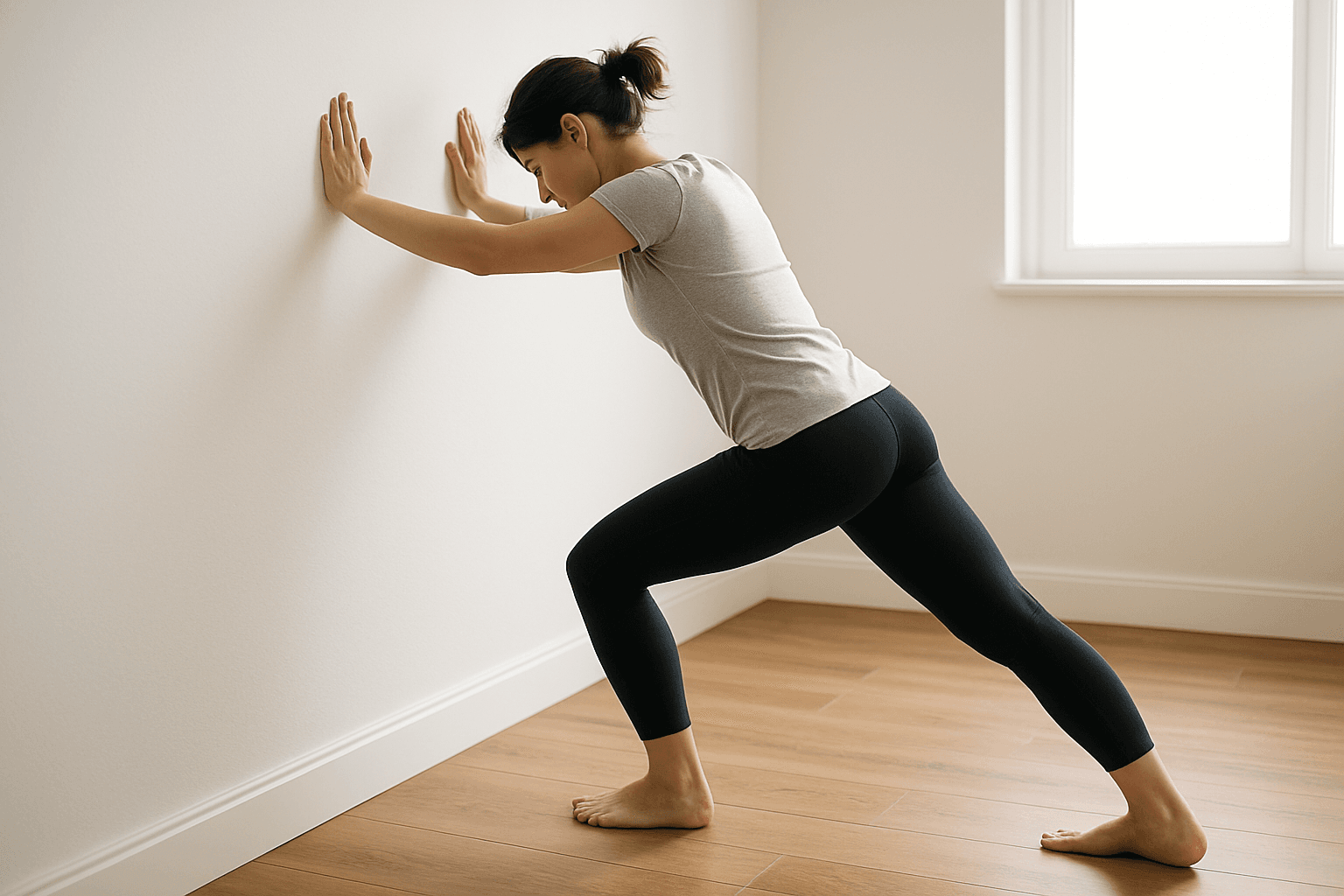
Keep the calves at length with a short daily calf stretch, once the acute soreness has settled. Two minutes per leg twice a day is enough. In an angry-hot Haglund's, hold off on aggressive stretching for the first week — you can flare the insertional tendon with too much stretch too early — and start with gentler ankle rocks on the sofa until things calm. Add heel drops from flat ground rather than off a step for the first few weeks; drops off a step stretch the tendon past neutral and can bother the insertional area. Our Achilles tendonitis walk-through covers the loading progression in detail.
Give the plan four to eight weeks before deciding it is not working. Bumps and bursae are slow tissue, and consistent daily changes across a month move the case more than any single week of aggressive treatment. Most Haglund's-plus-bursitis cases that stay in the conservative lane settle to a background level of no daily pain within eight to twelve weeks, though the bump itself is a bony feature and does not go away with any of this — you feel it less because the inflamed tissue around it has calmed.
When the plan is not enough
A case that has honestly done the shoe changes, the pads, the heel lift and the calf work for eight to twelve weeks without meaningful improvement is worth a podiatrist or foot-and-ankle clinician's read. The specialist ladder from there includes a course of physical therapy focused on the insertional tendon (loading rather than aggressive stretch), ultrasound-guided injections of the bursa (not the tendon itself — steroid injections into the Achilles substance are widely avoided because of rupture risk), extracorporeal shockwave therapy, and imaging (MRI) to look for the extent of tendon damage.
Surgery is a real option in the small minority of cases that resist twelve months of honest conservative care with a clear structural target on imaging. The procedure — a Haglund's resection, sometimes with a debridement of the retrocalcaneal bursa and reattachment of the Achilles insertion — has a good record for symptom relief, but the recovery is real: about six weeks in a boot, gradual return to full weight-bearing, and often three to six months back to full running. This is not a decision to make lightly, and it is very rarely a first-year move. If a surgeon is offering a Haglund's resection at week six of your first flare, ask specifically what conservative care they recommend trying first, and for how long, before scheduling.
Red flags worth naming: a sudden severe pain during a push-off with a popping sound or a feeling that something gave way (possible Achilles rupture, same-day urgent care), any hot swollen red heel with fever (infection risk, same-day urgent care), and any pain that wakes you at night or does not respond at all to load changes over weeks (deserves imaging). Otherwise, patience and the honest plan carry the case.
Everyday tricks that make life with a Haglund's bump easier
Own two pairs of shoes and rotate them daily so the bump is not pressed by the same counter every day. If a specific pair of dress shoes or work boots is essential, use a shoe stretcher on the heel counter overnight for a week, or take them to a cobbler for a heel-punch that softens the counter directly over the bump. Slip-on backless shoes are a friend at home; a backless slipper for indoors keeps daily hours off the bump.
Cold packs on the back of the heel for ten minutes after long days on stiff shoes take real edge off the bursa. Do not do heat on an angry bursa; heat can drive the inflammation for a day. Once the pain has settled into a background hum, warmth before a run and cold after is a reasonable rhythm.
For runners and walkers, drop mileage temporarily and add a running shoe with a moderate drop (eight to ten millimeters of heel-toe offset) and a soft, forgiving heel counter. Zero-drop shoes with stiff counters are the worst environment for a Haglund's. If you must wear a stiff-backed cleat, boot or skate, a well-fitted gel heel sleeve inside the shoe changes the surface the bump is pressing against. See our heel-lock lacing walk-through for the lacing pattern that reduces heel slip in running shoes without over-tightening the collar.
Every recommendation on this hub is written for comfort, support and relief. A Haglund's bump is a shape, not a disease; the pain that goes with it is usually the tissue around the bump complaining about a specific shoe environment, and it responds to changing that environment. Persistent back-of-heel pain that has not eased after four to six weeks of honest home care deserves an in-person exam by a doctor or podiatrist. See our pain in the back of the heel walk-through for the neighboring conditions and the broader map.
The full back-of-heel walk-through
Once you have mapped the pain to the back-outside corner of the heel bone, the pillar page on back-of-heel pain covers the neighboring conditions and the shared plan.
The full back-of-heel walk-through →Frequently asked questions
Is a Haglund's deformity a heel spur?
Not quite. A classic heel spur is a bony outgrowth on the underside of the heel bone at the plantar fascia attachment, and it is a slow response to years of fascia tension. A Haglund's deformity is a bony prominence on the back-outside corner of the heel bone that is a shape more than an overgrowth — many people are born with a heel bone that sits in a Haglund's-prominent shape. Both are common on imaging in people without pain; both hurt when the soft tissue around them inflames. Our heel spur vs plantar fasciitis walk-through covers the underside pattern; this page covers the back-of-heel version.
Can a Haglund's deformity go away without surgery?
The bump itself does not go away with conservative care — it is a bony feature. The pain that comes with it usually does. Most cases that honestly do the shoe changes, pad the bump, add a small heel lift and keep the calves at length settle to a background level of no daily pain within eight to twelve weeks. Surgery to shave the bump is a real option, but it is reserved for the small minority of cases that resist twelve months of conservative care.
What shoes are worst for a Haglund's deformity?
Anything with a stiff, hard heel counter that presses directly on the bump: dress pumps, dress oxfords with a rigid back, work boots, hockey and ice skates, ski boots, stiff-backed cleats. Zero-drop running shoes are also unfriendly because they do not shorten the tendon at its insertion. Backless slides, soft-backed slip-ons, sneakers with a padded collar, and running shoes with a moderate heel-toe drop and a forgiving counter are the friendlier categories.
Do heel cups help a Haglund's deformity?
A gel heel cup or heel sleeve that pads the back of the heel can help, especially when a specific shoe environment is unavoidable — a work uniform, a sport with a required stiff-backed shoe. The heel cup is doing two useful things: adding a small lift so the Achilles has more slack at its insertion, and putting a soft surface between the bump and the shoe counter. Combined with a supportive insole, it is a comfortable everyday setup. See our how to use heel cups walk-through for fit and style.
Does a Haglund's deformity mean I have Achilles tendonitis?
Not always, but the two often ride together. The Achilles inserts on the back of the heel bone right at or just above the level of the bump, and the mechanical picture that inflames the bursa around a Haglund's also loads the insertional area of the tendon. Some clinicians call the whole cluster 'Haglund's syndrome' when the bump, the bursa and the insertional tendon all light up together. Our Achilles tendonitis walk-through covers the insertional pattern in more depth.
How can I stop my dress shoes from rubbing the bump?
Two moves, usually enough. A shoe stretcher used overnight at the heel counter for a week, or a cobbler's heel-punch on the specific pair, softens the counter directly over the bump. Then wear a thin gel heel sleeve inside the shoe to spread the pressure across a broader area. If the pain is acute, rotate to a soft-backed shoe or backless style for two to four weeks first, and reintroduce the dress shoes after the bursa has settled.
HeelCups is reader-supported. When you buy through links on our site we may earn an affiliate commission, at no extra cost to you. This article is general information about foot comfort and is not medical advice — see our medical disclaimer.