BIG TOE JOINT PAIN
Big Toe Joint Pain: Stiffness, Bunions, Gout and Hallux Rigidus Compared
Pain at the base of the big toe can come from a stiff arthritic joint, a bunion, a sudden gout flare or overuse. Here is how to tell the patterns apart and what eases each one.
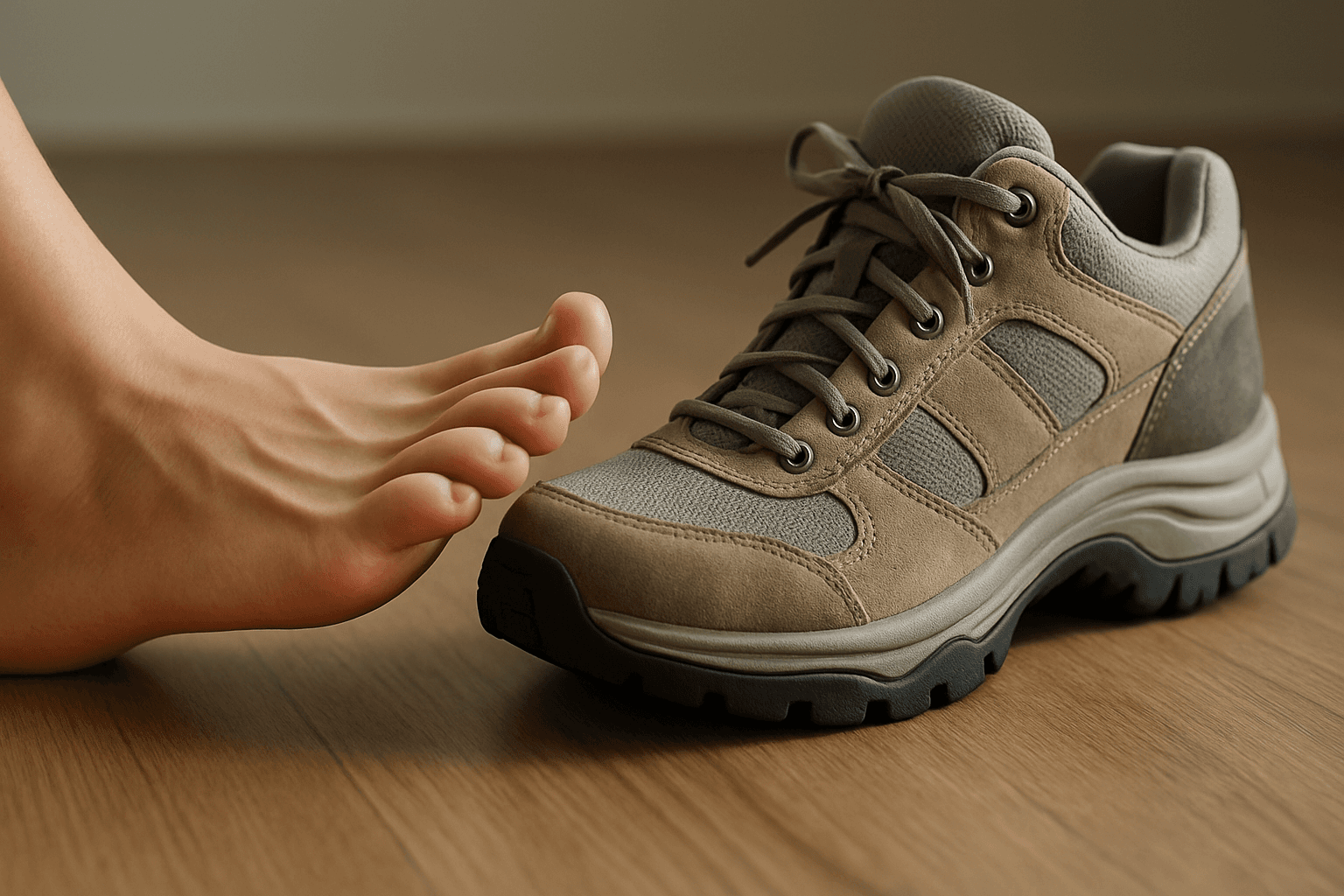
Pain at the base of the big toe usually comes from one of four things: a stiff, wearing joint (hallux rigidus), a bunion, a gout flare, or overuse of the joint. The pattern gives most of the clues. A joint that slowly loses its bend and aches when you push off points to hallux rigidus. A bony bump on the inner edge of the foot points to a bunion. A joint that turns hot, red and exquisitely tender overnight points to gout and needs prompt medical attention.
This is a comfort-and-orientation guide, not a diagnosis. For the bump-on-the-side pattern, our page on bunions goes deeper, and our ball of foot pain guide covers the forefoot just behind the toes.
More on the wider topic is on our foot care hub. Nothing here is medical advice. If a foot problem lasts more than a few weeks, keeps coming back, or comes with fever, spreading redness, numbness or discoloration, see a doctor or podiatrist rather than relying on a web page.
Hallux rigidus: the stiff big toe
Hallux rigidus is arthritis of the main joint of the big toe, where wear on the cartilage leads to stiffness and sometimes a bony bump on top of the joint. The American Academy of Orthopaedic Surgeons' OrthoInfo describes pain and stiffness in the joint, worse when walking, standing for long periods or in cold, damp weather, and difficulty bending the toe upward.
The telling moment is push-off. Walking uphill, squatting or going up on your toes are hardest because the joint cannot bend. Over time people may shorten their stride or roll the foot outward to avoid the toe, which can load other parts of the foot, including the heel and the outer edge.
Comfort measures include shoes with a roomy toe box and a stiff or rocker sole that reduces the bend the toe has to make, and sometimes a rigid insole or carbon plate. Our page on carbon fiber insoles explains what a stiff plate does and when it suits.
Bunions: the bump on the inner edge
A bunion, or hallux valgus, is a shift in the alignment of the big toe toward the second toe, with a bump on the inner edge of the foot. The joint can be red, sore and tender from rubbing against the shoe. Unlike hallux rigidus, the toe may still bend freely but drift sideways.
Relief generally centres on footwear: a wider toe box, soft uppers with no seam over the bump, and sometimes protective pads. Shoes do not reverse the shape of the foot, and a surgeon is the person to ask if the bump limits daily life.
Gout: the sudden, hot, red joint
Gout is a form of inflammatory arthritis caused by uric acid crystals in a joint, and the base of the big toe is a classic site. It typically arrives suddenly, often at night, with intense pain, swelling, warmth and redness, and even the weight of a bedsheet can feel unbearable.
A first attack should be assessed by a clinician, because other causes of a hot, swollen joint, including infection, need to be ruled out and gout has medical options that go beyond foot care. Resting and elevating the foot is comfortable in the meantime. Anyone with fever, or who feels generally unwell with a hot joint, should seek care the same day.
Overuse, turf toe and sesamoid irritation
Pain under the ball of the big toe can come from the two tiny bones beneath the joint, the sesamoids, which take body weight when you push off. Runners, dancers and people who stand on hard floors in thin-soled shoes may find the area tender and bruised-feeling.
Sprains of the joint, often called turf toe, follow forced upward bending of the toe and cause pain and swelling around the joint. These tend to ease with rest, cushioned and stiffer footwear and a gradual return to activity, but a sudden injury with major swelling or inability to bear weight deserves a medical visit.
What helps in everyday shoes
Across these conditions, the same footwear principles bring comfort: enough width and depth in the toe box, a sole that flexes mainly at the ball rather than bending sharply, and cushioning under the forefoot. A firm insole with a built-in forefoot cushion can make a stiff or sore joint more comfortable on hard floors.
Pain relief medicines and injections are for a clinician to discuss. A podiatrist or foot-and-ankle orthopedist can image the joint, confirm which condition is involved and advise on the next steps, which is worth doing if the joint is getting stiffer or the pain wakes you at night.
Browse the insoles guide
Stiff-plate and cushioned insoles, explained on the insoles hub.
Browse the insoles guide →Frequently asked questions
How do I know if my big toe pain is arthritis or gout?
Arthritis of the joint tends to build gradually with stiffness and pain on push-off. Gout often strikes suddenly with a hot, red, very tender joint. A clinician can confirm which one it is.
What is hallux rigidus?
It is arthritis of the main big toe joint, causing pain and a loss of upward bend. It is often noticed when walking uphill, squatting or going up on the toes.
Which shoes are best for a stiff big toe?
Many people find comfort in a roomy toe box with a stiff or rocker sole that limits how much the toe has to bend. A rigid insole or carbon plate may also help.
Is a bunion the same as arthritis in the big toe?
No. A bunion is a change in toe alignment with a bump on the inner edge of the foot, while hallux rigidus is wear of the joint cartilage. They can occur together.
Can big toe pain affect my heel?
Avoiding painful push-off can change how the foot loads, and some people notice extra strain along the outer foot or heel. This is one reason to address the toe rather than ignore it.
When should I see a doctor about big toe joint pain?
See a doctor or podiatrist for a sudden hot, red, swollen joint, pain after an injury, loss of movement that is getting worse, or pain that wakes you at night or lasts more than a few weeks.
HeelCups is reader-supported. When you buy through links on our site we may earn an affiliate commission, at no extra cost to you. This article is general information about foot comfort and is not medical advice — see our medical disclaimer.