BUNIONS
Bunions: What the Bump Is, What Eases the Ache, and Which Shoes Give It Room
A bunion is a shift in the big toe joint, not just a bump — here is what shoes, spacing and padding can do for comfort, and what only a clinician can address.
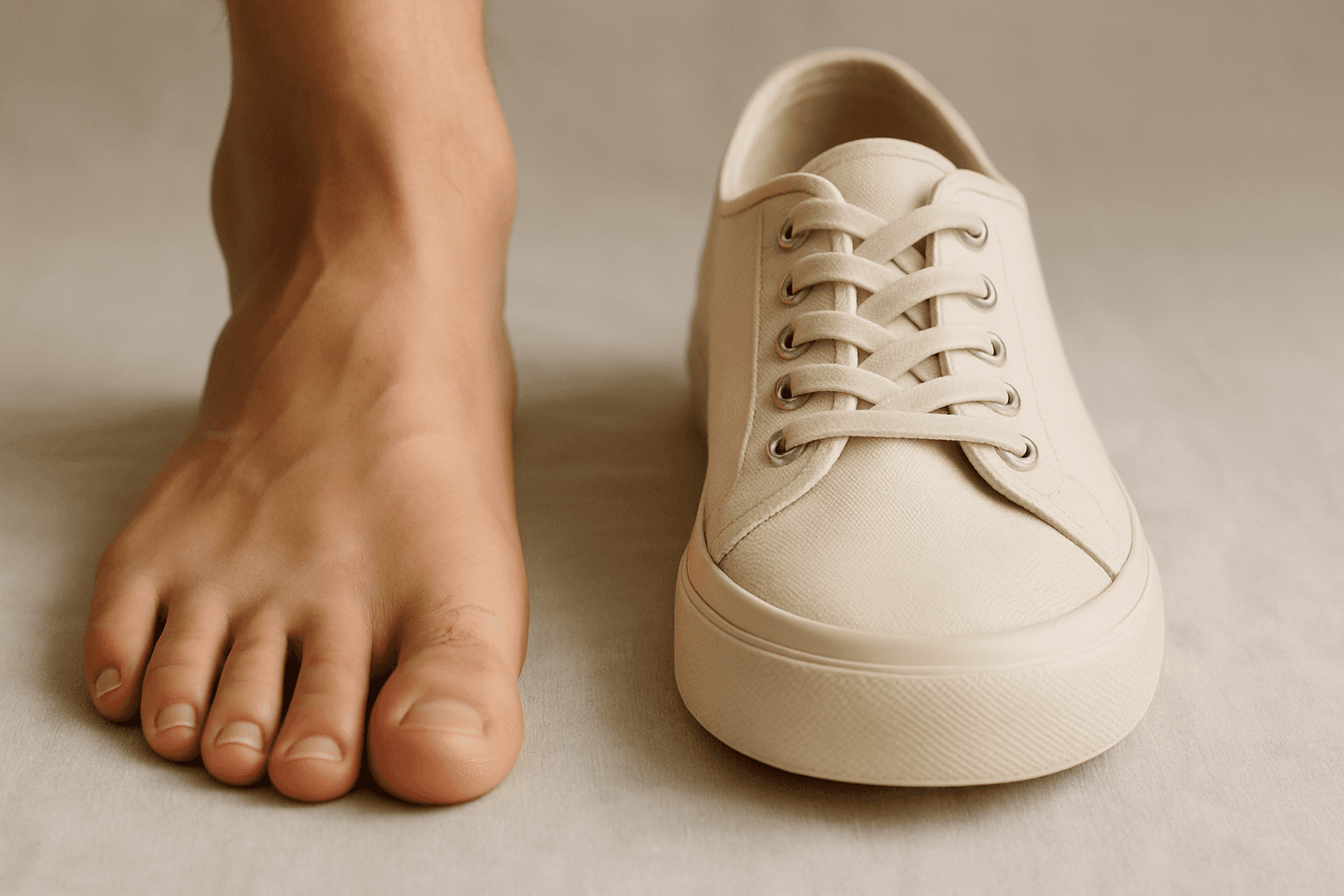
A bunion — hallux valgus — is a bony prominence on the inside of the foot at the base of the big toe, where the toe has angled toward the second toe and the first metatarsal head has shifted outward. The bump is the joint pushing against the shoe. It can be red, tender and sore after a day in narrow footwear, and it often sits next to a stiff, achy big toe joint.
The honest headline is that shoes, pads and spacers are comfort tools. Podiatry sources generally agree that a wider toe box, padding and supportive footwear are the usual first steps for pain, but none of them claims these measures straighten a bunion that has already formed. Realigning the joint is a surgical question, and that is a conversation for a podiatrist or orthopedic foot specialist.
This page covers how to tell a bunion from look-alike joint pain, what takes pressure off the bump, how to choose shoes and insoles with room for it, and when to get it looked at. It is general information, not medical advice. If the pain is in the joint itself rather than a bump, compare big toe joint pain.
What a bunion is, and what it is not
The visible bump is only part of the picture. In a bunion the big toe drifts toward the smaller toes while the long bone behind it angles the other way, so the joint becomes prominent. Over time the toe may crowd or overlap the second toe, and the skin over the bump can thicken or become inflamed.
Not every bump at the big toe is a bunion. A sudden, hot, intensely painful big toe joint that comes on overnight is a different pattern and needs prompt medical attention, since it can be gout or an infection. Stiffness with a bony bump on top of the joint rather than the side can be hallux rigidus, an arthritic big toe. A small painful bump near the little toe is a bunionette (a tailor's bunion). If you are unsure which you have, a clinician can tell them apart with an exam and an X-ray.
Bunions run in families, and foot shape matters, but footwear plays a part in how sore they get. Tight, pointed or high-heeled shoes squeeze the forefoot and press on the bump, which is why many people notice the ache is worse by evening and better barefoot or in roomy sandals.
Give the bump room: footwear that reduces pressure
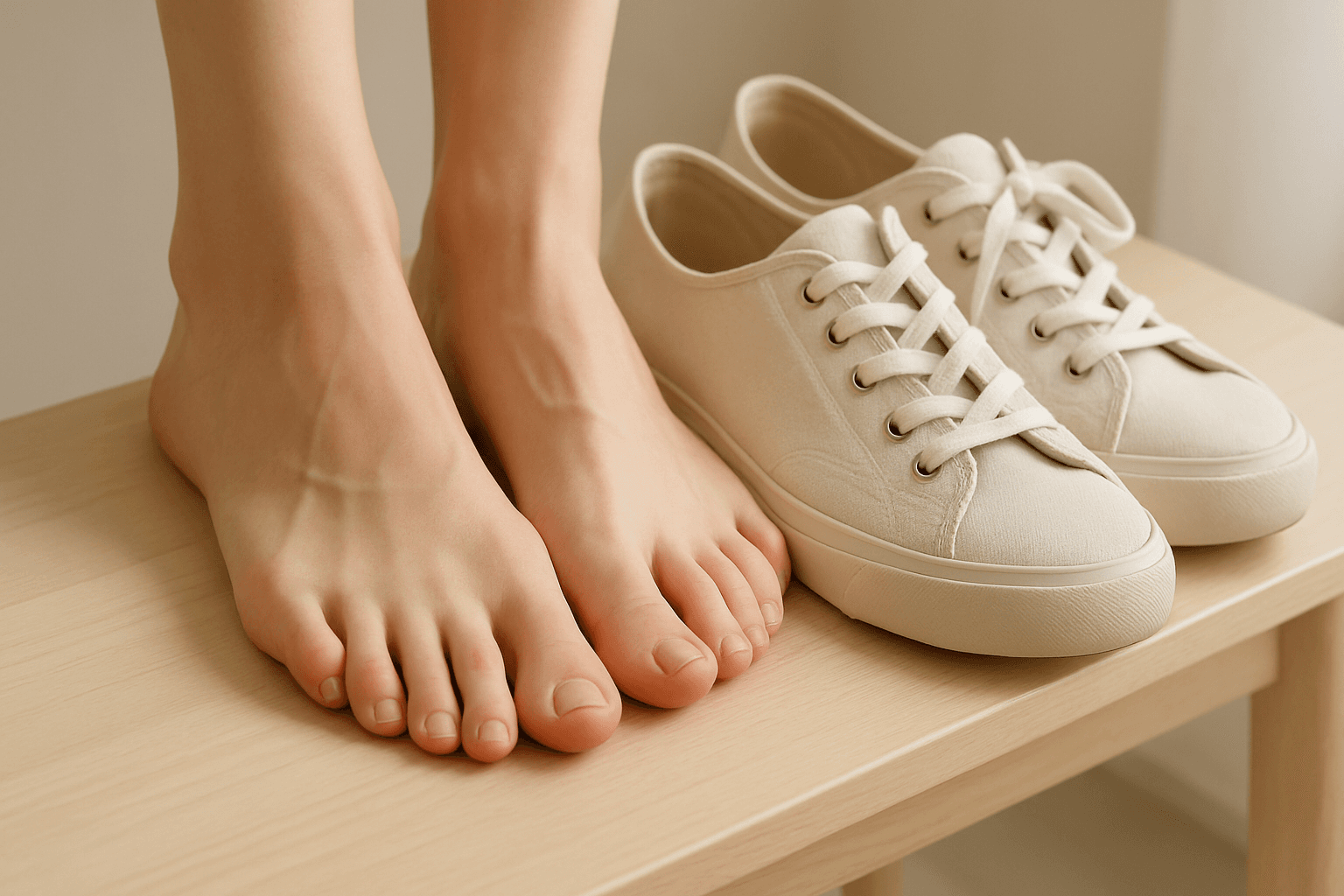
The single most useful change is a shoe whose toe box is wide enough that the big toe is not pushed inward and the bump is not pressed against the upper. Look at the shape of the shoe, not just the size number. Place your foot on the insole of a shoe you are considering: if the forefoot spills over the edges, the shoe is too narrow for you whatever the label says.
Features worth looking for are a rounded or squared toe box, a soft, stretchy or seamless upper over the joint, a low heel, and a firm midsole that does not twist in the middle. Avoid stiff leather over the bump and anything with an internal seam that lands on the joint. Some people find a shoe repair shop can stretch a leather upper locally over the bump, which is cheaper than replacing a shoe that is otherwise comfortable.
Heels higher than about an inch and a half shift body weight onto the forefoot, increasing pressure on the big toe joint. If you wear them for work, saving them for short stretches and carrying a roomier pair for the commute is a reasonable compromise.
Pads, spacers and splints: what they realistically do
Soft gel or fabric bunion shields sit over the bump and stop the shoe rubbing it, which can ease soreness and help protect irritated skin. Toe spacers, small silicone wedges worn between the first and second toes, can reduce the squeeze between them while you walk or stand. Both are comfort accessories and need a shoe with enough room to hold them; stacking a pad into a shoe that was already tight usually makes things worse.
Night splints and straightening braces are sold with big promises. Sources disagree on whether they do anything beyond comfort, and the reviews we found for this article cited no trial showing that any splint permanently realigns a bunion. If one feels good and you can sleep in it, fine, but treat it as a comfort option rather than a way to reverse the deformity.
Ice for ten to fifteen minutes after a long day can calm a sore, inflamed joint, and a short course of an over-the-counter pain reliever may be appropriate if your doctor or pharmacist agrees it is right for you.
Insoles, arches and bunions
Foot posture influences how load travels through the big toe joint. People with flat, flexible feet often roll inward as they push off, which loads the inside of the forefoot; a supportive insole with a firm arch can help the foot stay steadier through the stride, and that may reduce strain on the joint. Our guide to insoles for flat feet explains what features matter, and a heel cup and arch support combination can add the cushioning and stability that a thin factory insole lacks.
A custom orthotic made from a mold can be worthwhile when off-the-shelf options do not hold the foot comfortably; see orthotics vs insoles for how to decide. Whichever you choose, make sure the shoe has the room: an insole in a snug shoe can push the foot up into the upper and squeeze the forefoot further. Remove the factory liner first if needed.
Strengthening the small muscles of the foot is often suggested alongside footwear changes, such as picking up a towel with the toes or gently spreading the toes apart. These exercises are widely recommended for general foot comfort, but they are not shown to reverse a bunion, so keep expectations modest and stop if anything hurts.
When to see a clinician, and where surgery fits
See a podiatrist or doctor if the bunion hurts despite good shoes, if it limits walking or work, if the second toe is overlapping or developing a hammer toe shape, if the joint is red, hot and swollen, or if you have diabetes or reduced sensation in your feet. A clinic can take an X-ray to see how far the angle has progressed and talk through options, including prescription orthotics and, when pain persists, surgery.
Surgery is aimed at realigning the joint and is usually considered when conservative steps have not given enough comfort and daily life is limited. It involves recovery time, and results vary by procedure and person, so it is worth hearing the plan and the recovery timeline from a surgeon rather than taking it from a marketing page.
For related forefoot problems, see ball of foot pain, which is a common companion, and the foot care hub. Persistent foot pain that has not eased with honest home care deserves a doctor or podiatrist.
See our insole review
Arch support and a deep heel cup for the days your feet are on hard floors — comfort and support, honestly reviewed.
See our insole review →Frequently asked questions
Can you get rid of a bunion without surgery?
Shoes, pads and spacers can ease soreness, but the sources we reviewed did not show non-surgical measures straightening a bunion that has already formed. Realigning the joint is a surgical decision to discuss with a podiatrist or foot specialist.
Do bunion splints and toe straighteners work?
Some people find them comfortable, and sources disagree on whether they do anything more. We found no trial showing a splint permanently realigns the joint, so treat them as an optional comfort aid.
What shoes are best for bunions?
Choose a shoe with a wide, rounded or squared toe box, a soft upper over the joint, a low heel and a firm midsole. Compare your foot outline with the insole of the shoe to check the width.
Do insoles help bunions?
A supportive insole can steady a flat or rolling foot and cushion the forefoot, which may ease strain on the big toe joint. It needs a shoe with room; an insole in a tight shoe can squeeze the toes further.
Are bunions hereditary?
Foot shape tends to run in families, so many people with bunions have relatives who do. Tight, narrow footwear can make an existing bunion more irritated, but it is not the whole story.
How do I know if my big toe pain is a bunion or gout?
A bunion is a gradual bump at the base of the toe that aches with pressure. Gout tends to come on suddenly with intense pain, heat and swelling in the joint, and should be seen by a doctor promptly.
HeelCups is reader-supported. When you buy through links on our site we may earn an affiliate commission, at no extra cost to you. This article is general information about foot comfort and is not medical advice — see our medical disclaimer.