BACK OF HEEL
Pain in the Back of the Heel: Achilles, Bursa, Haglund's — and What to Try First
Back-of-heel pain is not plantar fasciitis, and the stretches that help the front of the heel can make the back worse. Here is how to tell what you actually have and what settles it.
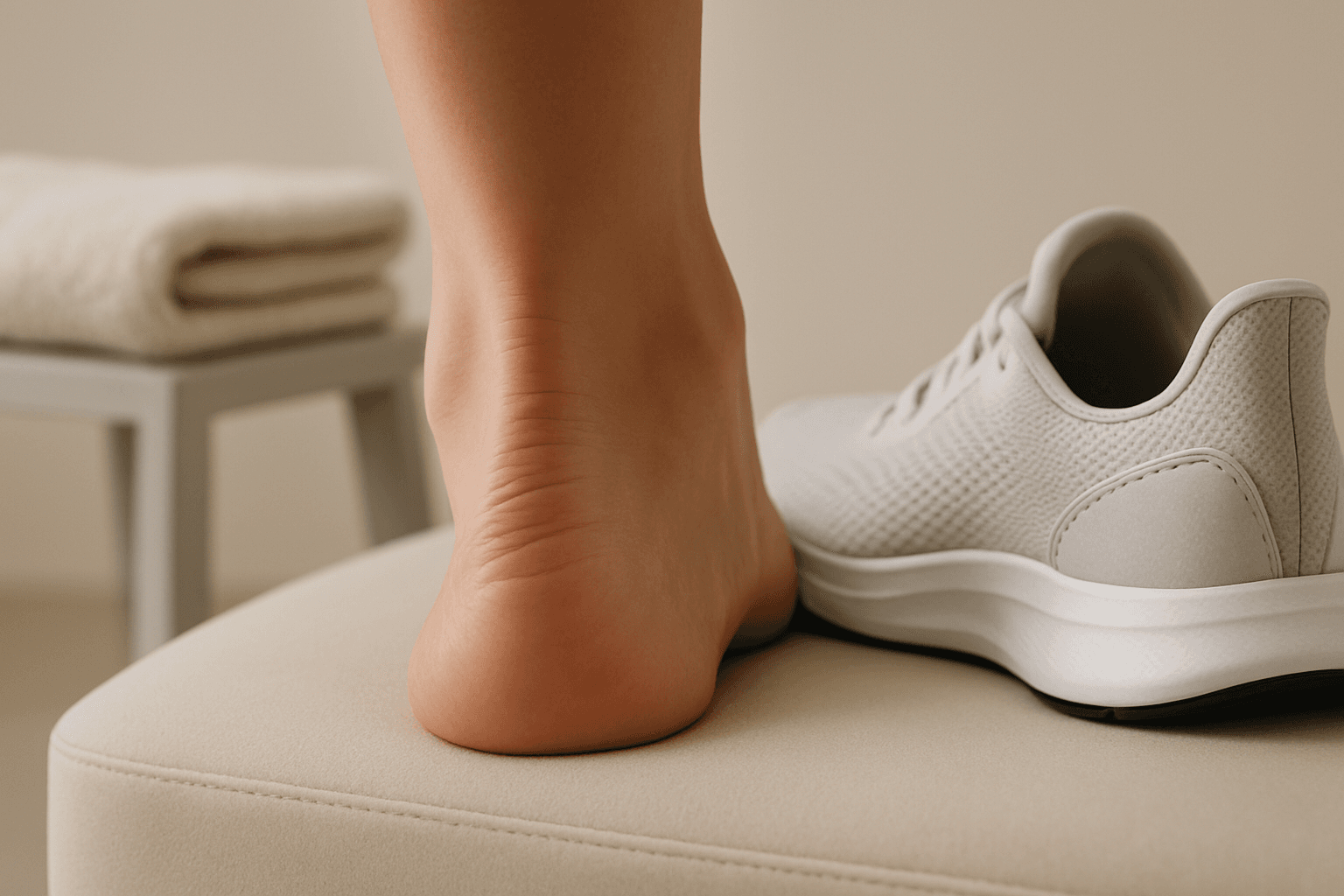
Pain at the back of the heel — the strip from where the Achilles tendon attaches to the heel bone up to about two inches above it — is a different animal from pain under the heel. The tissues are different, the triggers are different, and the useful first moves are different. Load a plantar fasciitis routine onto a back-of-heel problem and you can make it worse; the same aggressive calf stretch that soothes a sore plantar fascia irritates an angry Achilles insertion.
This page walks through the three most common causes of pain at the back of the heel — insertional Achilles tendinopathy, retrocalcaneal bursitis, and Haglund's deformity — how to tell them apart, and the first-line changes that ease each one. For the broader landscape of heel pain (pain under the heel, side of the heel, and the red flags that mean skip self-care), start on the heel pain hub.
Nothing on this page is medical advice. Persistent back-of-heel pain that has not eased after four to six weeks of honest home care, or that came with an injury or shows any red flag below, deserves an in-person exam by a doctor or podiatrist. Everything here is written for comfort, support and relief.
First, locate the tender spot and note when it hurts
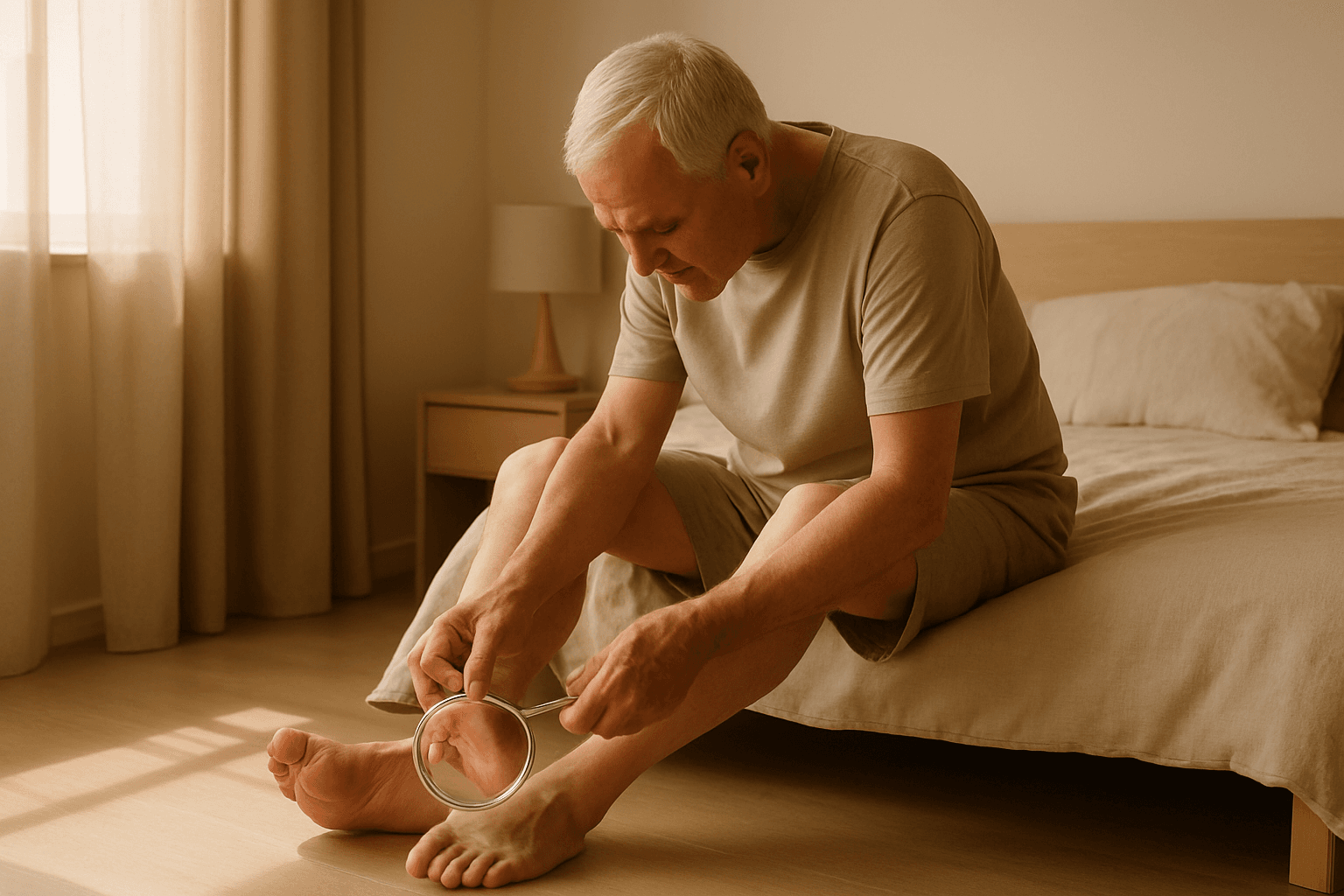
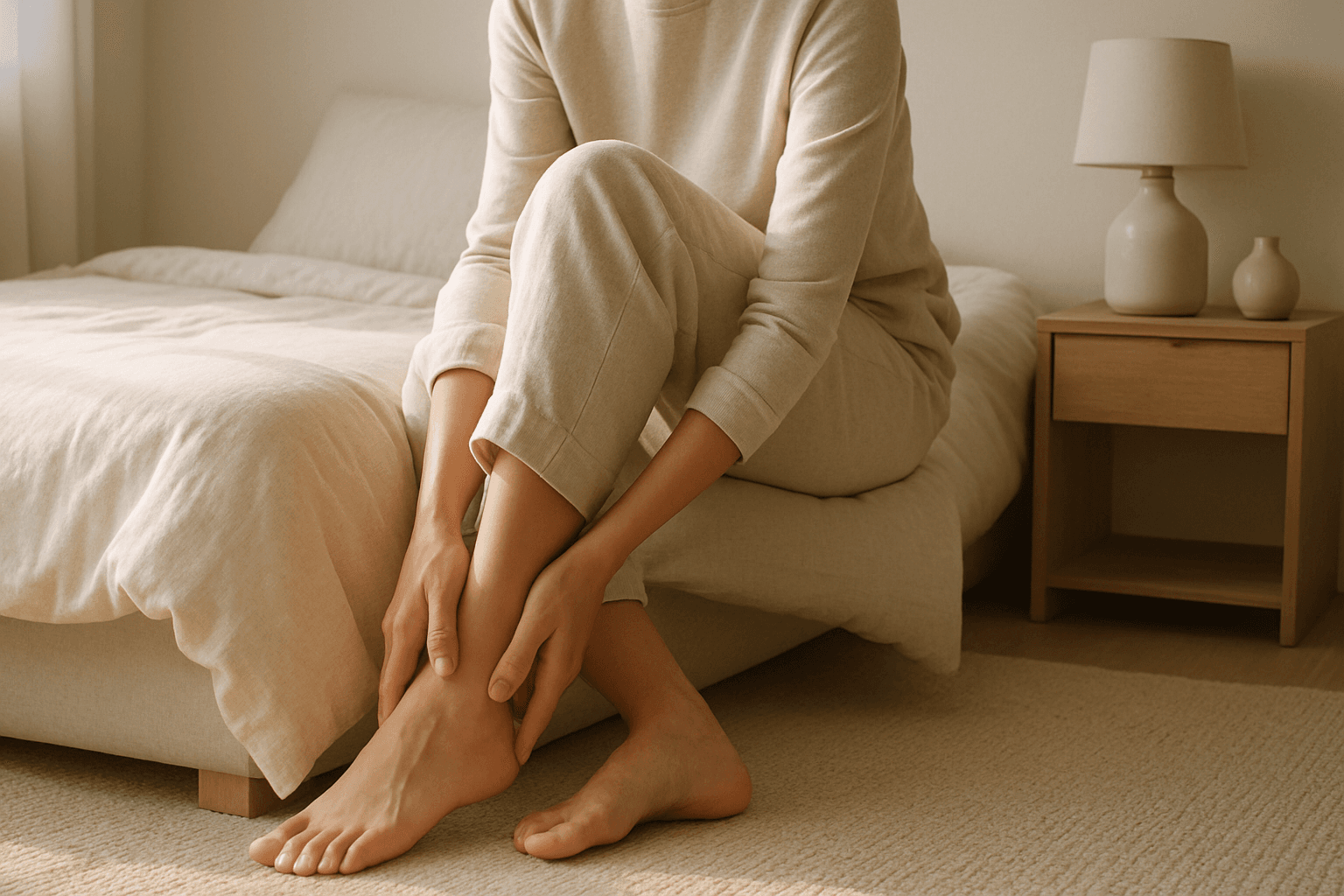
Sit down, feel the back of the heel and the strip of tendon just above it, and press slowly. Pain right at the point where the Achilles tendon meets the heel bone — a firm nub you can feel — is insertional Achilles tendinopathy. Pain in the middle of the Achilles, an inch or two above the bone, is mid-portion Achilles tendinopathy and generally has a better prognosis. Pain that lives more on the sides of the heel where the shoe's heel counter presses, or a visibly enlarged bony bump on the back-outer part of the heel that flares in stiff shoes, points at Haglund's deformity. Deep, achy pain that feels behind the tendon rather than in it, with swelling right in front of the Achilles insertion, is retrocalcaneal bursitis — inflammation of a small fluid sac between the tendon and the bone.
Timing narrows it further. Achilles pain is worst on the first steps in the morning, eases with a few minutes of walking, and flares with hills, stairs and speed work later in the day. Haglund's pain is closely tied to the shoe: bad in stiff-collared dress shoes and dress boots, easier in backless shoes or well-cushioned trainers. Bursitis pain is generally more constant, without the sharp morning spike, and swells noticeably. Any pain at rest, at night, or with any weight-bearing at all belongs with a clinician — see the red flags below.
Insertional Achilles tendinopathy — the most common back-of-heel problem
The Achilles is the biggest tendon in the body, and it takes several times your body weight through the back of the heel every push-off. Insertional tendinopathy — where the tendon meets the heel bone — flares when that load spikes: a mileage jump, hill or stair work, uphill hikes, or a sudden return to running after a layoff. Tight calves make it worse because a tight calf pulls up on the heel bone from the top the way plantar fasciitis pulls on it from the bottom. Our full Achilles tendonitis walk-through covers the two flavors of the condition — insertional and mid-portion — and the specific loading program each responds to.
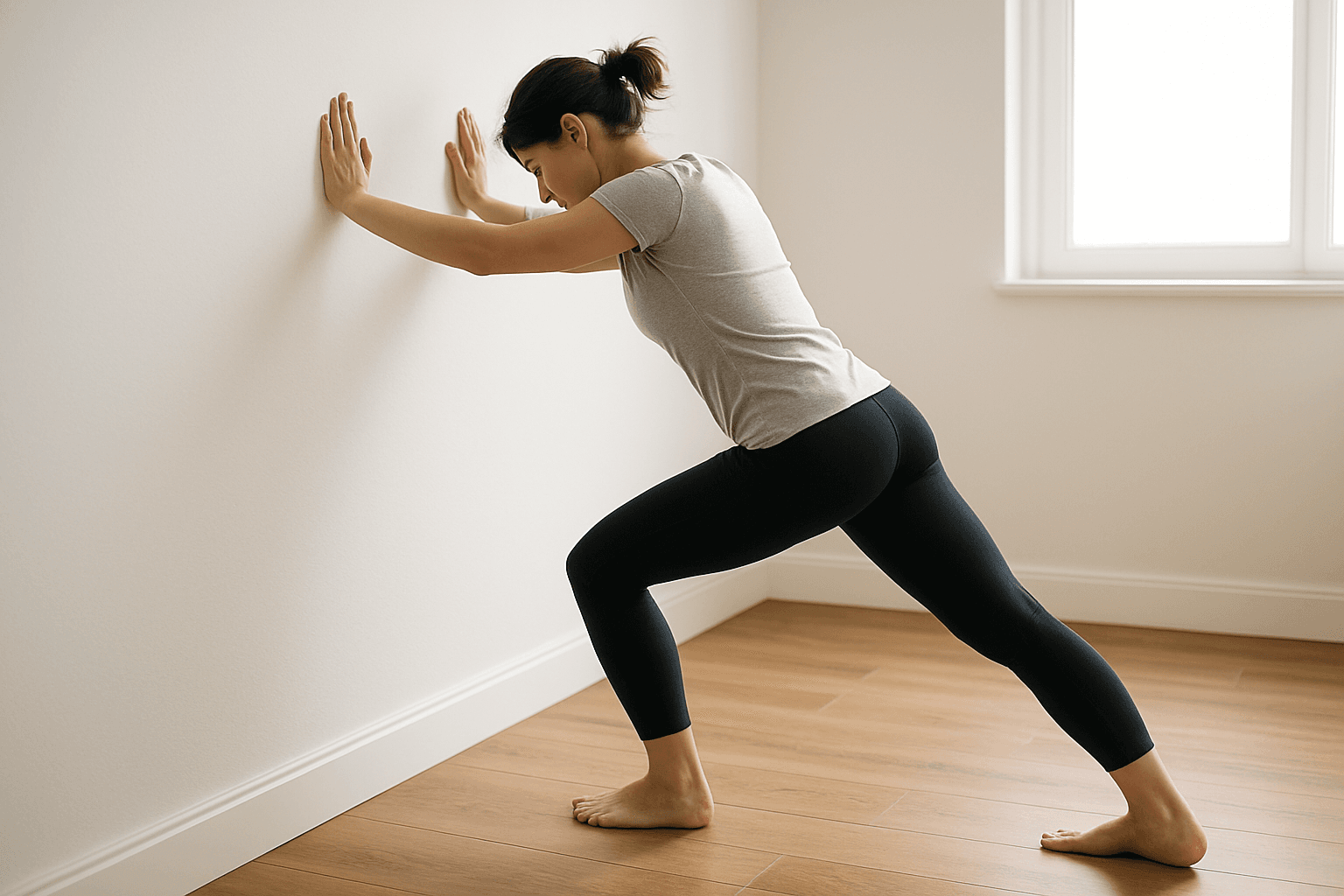
The daily plan that gets most people through it: a small heel lift (about six to twelve millimeters) in every shoe you wear all day, to take a slice of tension off the tendon; a temporary cut in hills, stairs and speed work for three to six weeks; and, importantly, no aggressive calf stretching in the acute phase. Static stretching that drops the heel below the step aggravates an insertional Achilles issue in the first weeks. Instead, when the acute pain has calmed to a dull ache, add slow eccentric heel raises done flat on the floor rather than off a step. Rise up on both feet, then lower slowly on the sore side over three to four seconds. Eight to twelve controlled lowers, once a day, is the load that shifts the tissue.
An anti-inflammatory taken for a bad day is fine; it is not a plan. A supportive insole with a deep heel cup underneath the heel lift is a nice extra — it stabilizes the heel and cushions impact — but the heel lift itself is the piece that specifically addresses the Achilles. Our Akusoli insoles sit under a lift comfortably and are trim-to-fit so they move between shoes.
Retrocalcaneal bursitis — the fluid sac that swells behind the tendon
There is a small fluid-filled sac (bursa) between the front of the Achilles tendon and the back of the heel bone, and its job is to let the tendon glide smoothly over the bone. It inflames from the same repetitive loading that irritates the tendon, and from direct pressure — a stiff dress-shoe heel counter, a hockey skate, or a rigid running-shoe heel — pressing on the tissue over hours. The classic sign is a soft, tender swelling right in front of the Achilles insertion, sometimes visible as a fullness on either side of the tendon.
The daily plan overlaps with the Achilles plan and adds one more piece: get the direct pressure off the area. That means backless slip-on shoes at home, and shoes with softer or lower heel counters at work for a few weeks; the stiff back edge of a dress shoe or a rigid running heel is often what is keeping the bursa flared. Ice for ten minutes after long days calms the swelling. A small heel lift under a supportive insole helps by lifting the tendon slightly away from the bursa. If a specific pair of shoes always makes it worse, put them away until the swelling settles rather than trying to tough it out.
Bursitis that keeps swelling despite two to three weeks of these changes, or a bursa that is hot, red or painful even at rest, is worth showing a clinician. An in-office aspiration or targeted injection sometimes gets a stubborn case over the line. Our dedicated heel bursitis walk-through goes deeper into telling the retrocalcaneal bursa apart from the subcutaneous "pump bump" bursa, the shoe-and-lift changes that quiet each one, and the red flags — warmth, redness, fever — that mean the bursa is a same-week clinic visit rather than a shoe-store one.
Haglund's deformity — the bony bump that rubs the shoe
A Haglund's deformity is a bony enlargement of the upper, outer corner of the heel bone. Some people are born with the shape; others develop it over years, and having a high-arched foot with a rigid heel strike raises the odds. The bump itself is not painful — plenty of people have one and never notice — but when it sits above the top of a stiff heel counter and rubs against it all day, the skin over it thickens and the underlying tissue (often the same retrocalcaneal bursa) inflames. That is what people mean when they call it a "pump bump": the fashion of women's pumps used to be a common trigger.
The first move is a shoe audit. Any shoe whose back edge lands right on the bump is a shoe to retire for a few weeks. Backless shoes, mules and clogs at home take pressure off the area entirely. Athletic shoes with softer heel counters, or with a notch cut in the collar, help. A small heel lift raises the whole heel slightly so the bump sits above the shoe's rub line rather than at it. Silicone gel sleeves that cover the back of the heel add cushioning if you cannot swap the shoe immediately. None of this shrinks the bump; the goal is to stop the rubbing so the soft tissue over it calms down.
Surgical shaving of a Haglund's bump is a real option for pain that has resisted six months or more of shoe changes, heel lifts, and physical therapy, but it is late in the ladder. Most people never need it. A podiatrist or foot-and-ankle clinician is the right person to sort that decision when the daily changes are not enough.
What to do this week, whichever pattern fits you
Regardless of which of the three you match closest, three moves help most back-of-heel pain in the first week. First, add a small heel lift — six to twelve millimeters, drugstore or dedicated silicone — to every shoe you wear all day, in both shoes (not just the sore one), so your gait stays symmetric. Second, cut hills, stairs and speed work for two to four weeks. Third, retire whichever shoes press directly on the sore area; sometimes that is the single change that lets the tissue quiet down.
Add a supportive insole with a deep heel cup under the heel lift for daytime shoes — the heel is more stable, and the fat pad cushions impact more evenly. Ice at the end of long days. Do slow, controlled double-leg heel raises on flat ground once the acute pain calms; save the eccentric drop-below-the-step exercise for later, once the insertional tissue has settled. Skip aggressive Achilles stretching in the acute phase. See the insoles hub for the buyer's guide to what pairs well with a heel lift.
Red flags: back-of-heel pain that is not a self-care problem
See a clinician sooner rather than later if: the pain followed a sudden "pop" or a specific injury (a full or partial Achilles tear is a real possibility, especially in adults over 40 doing occasional sprint or jump activity); you cannot rise onto the ball of the sore foot at all, or the calf feels weak compared to the other side; there is visible bruising, obvious asymmetry between the two Achilles, or a palpable gap along the tendon; the area is hot, red, spreading in warmth, or you have a fever; the pain wakes you at night or is present at rest; or it has been present for more than four to six weeks despite honest home care.
Persistent heel pain in a child or teenager is a different problem entirely — Sever's disease, an irritation of the growth plate at the back of the heel — and needs its own plan. It is common in active kids between about eight and fourteen and it always deserves an in-person exam rather than adult-style rehab.
How this differs from pain under the heel
The single most useful thing to know about back-of-heel pain is that it is not plantar fasciitis, however similar the words sound. Plantar fasciitis lives under the front of the heel bone and eases with aggressive calf stretching, a firm arch and a deep heel cup. Insertional Achilles pain lives at the back of the heel bone and generally hates aggressive calf stretching in its acute phase; a small heel lift and controlled slow calf loading are the useful moves instead. Both benefit from cutting the activity that spiked the load and both benefit from a supportive insole underneath the shoe.
If you are not sure which pattern is yours — or if it feels like both are involved — start with the why does my heel hurt map. When the picture is mixed, prioritize the acute phase treatment of whichever one is more painful right now, and add the other's routine once the acute pain has calmed.
The insole that pairs comfortably with a heel lift
A trim-to-fit insole with a firm arch and a deep heel cup — sits under a small heel lift and stabilizes the heel while the tendon or bursa calms down.
The insole that pairs comfortably with a heel lift →Frequently asked questions
Is pain at the back of the heel the same as plantar fasciitis?
No. Plantar fasciitis is pain under the heel where the plantar fascia meets the heel bone, worst with the first steps in the morning under the front of the heel. Back-of-heel pain lives at or just above the point where the Achilles tendon attaches to the heel bone, and the useful first moves — a small heel lift, less hill and stair work, no aggressive calf stretching yet — are different from the plantar fasciitis routine. Getting the diagnosis right saves you weeks of the wrong treatment.
Should I stretch my Achilles if it hurts at the insertion?
Not in the acute phase. Static stretches that drop the heel below the step or aggressively pull the toes up tend to flare insertional Achilles tendinopathy, especially in the first few weeks. Once the acute pain has calmed to a dull ache, slow controlled double-leg heel raises on flat ground are the load that helps. Progress to slow eccentric single-leg lowers when those are comfortable, and only add the below-the-step drop later, if at all — a physical therapist can guide the ramp.
Do I need a special shoe for back-of-heel pain?
You often need a different shoe rather than a new one. Any shoe whose back edge presses directly on the sore area (stiff dress shoes, some running shoe heel counters, work boots with rigid collars) is worth retiring for a few weeks. Backless slip-ons at home take pressure off entirely, and a shoe with a softer collar plus a small heel lift inside is the usual daytime setup.
How is Haglund's deformity treated without surgery?
Most Haglund's pain settles when the shoe stops rubbing the bump. That is: retire the offending shoes, use backless shoes at home, add a small heel lift so the bump sits above the shoe's rub line, and cushion the back of the heel with a silicone gel sleeve if you cannot swap the shoe today. Surgery to shave the bump is reserved for pain that has resisted six months or more of these changes plus physical therapy; most people never need it.
Is a heel lift the same thing as an insole?
No. A heel lift is a small wedge (usually six to twelve millimeters) placed under the heel of the shoe to reduce Achilles tension; an insole is a full-length support that shapes the arch and cradles the heel. For back-of-heel pain the heel lift is the specific tool; a supportive insole with a deep heel cup underneath it stabilizes the heel and cushions the pad. Wear the lift in both shoes so your gait stays symmetric. See our Akusoli insoles review for the pair we recommend first.
When is back-of-heel pain an emergency?
Sudden severe pain at the back of the calf or heel that felt like being kicked or a snap, followed by weakness pushing off the sore foot, is a possible Achilles rupture and belongs in urgent care today. Redness that is spreading, a hot swollen bump with a fever, or an inability to bear weight without severe pain are also same-day reasons to be seen. Everything shy of those falls into the honest four-to-six-week home care window.
HeelCups is reader-supported. When you buy through links on our site we may earn an affiliate commission, at no extra cost to you. This article is general information about foot comfort and is not medical advice — see our medical disclaimer.