TIRED FEET
Why Do My Feet Hurt at the End of the Day? Common Causes and Ways to Ease Tired Feet
Aching, heavy feet by evening are rarely a mystery: hard floors, tired shoes, swelling and a lot of hours upright. Here is how to work out which it is and what usually brings relief.
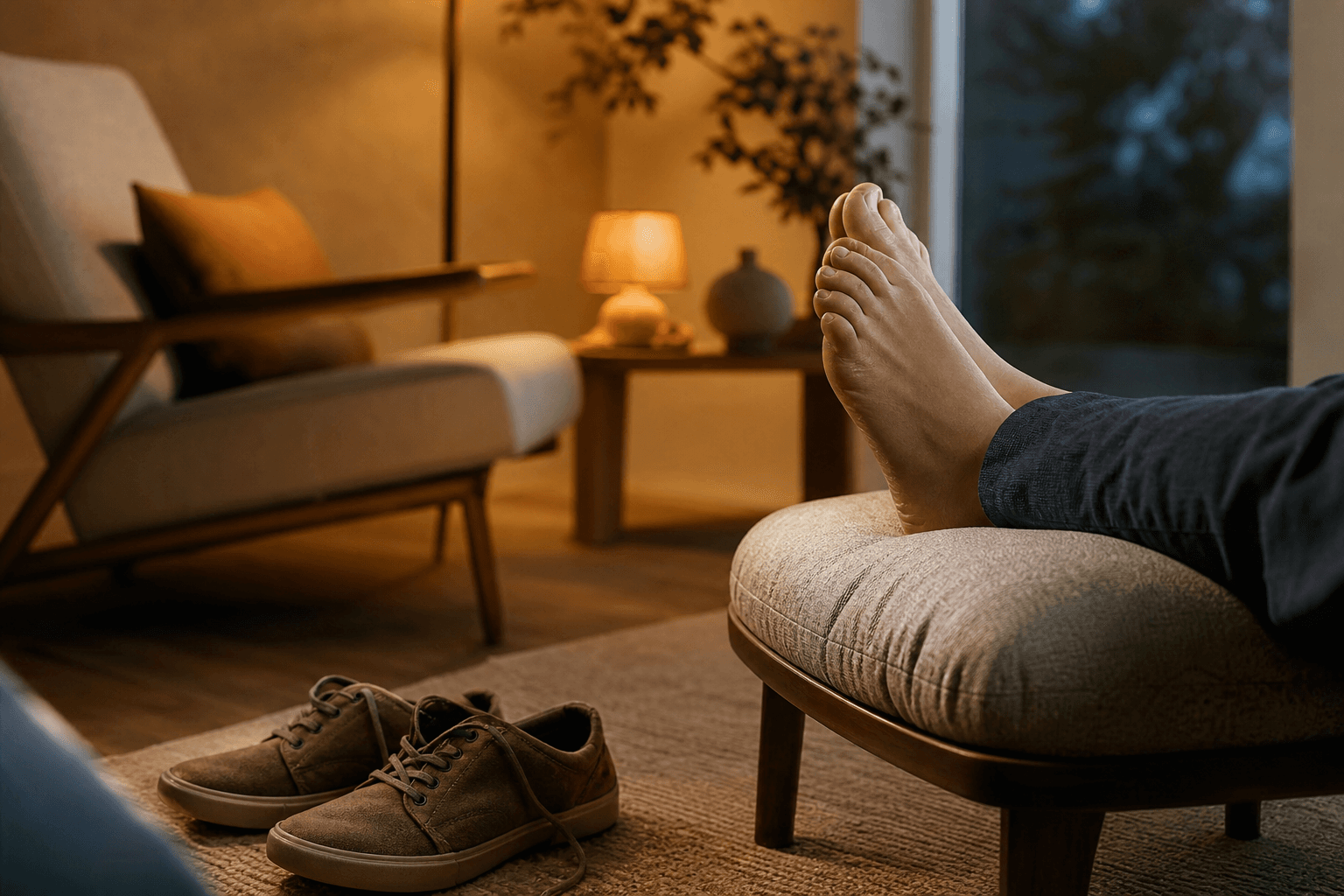
If your feet ache by evening, the likeliest explanation is simply load: your feet carry your full weight for hours, often on hard floors, in shoes that lost their cushioning months ago. Add a little fluid pooling in the lower legs after long standing, and you get the heavy, throbbing, tired feeling many people know well.
That ordinary end-of-day ache usually eases with rest and a few habit changes. What deserves attention is pain that is sharp, focused in one spot, present first thing in the morning, or that comes with swelling on one side, redness, numbness or tingling. Those point away from plain tiredness.
Below we sort the common causes, what tends to help, and when to see a doctor or podiatrist. Nothing here is medical advice.
The usual suspects
Podiatry blogs consistently list the same causes of end-of-day foot pain: long hours standing or walking, hard surfaces such as concrete and tile, worn or unsupportive shoes, and swelling that builds through the day. Foot shape matters too. Flat or very high arches can make feet tire faster because muscles and tissue work harder to control the foot.
Age plays a part as the heel's fat pad thins, and extra body weight increases load with every step. None of these are dramatic, but together they explain most evenings of aching feet.
Work out where it hurts
Pinpointing the spot helps. Under the heel with a morning spike usually points to plantar fasciitis (see plantar fasciitis symptoms). Under the arch is often arch pain. Across the ball of the foot suggests ball of foot pain. A general throb with puffy ankles looks more like fatigue and swelling.
If one specific area is repeatedly sore, follow its page rather than treating it as general tiredness.
What usually brings relief tonight
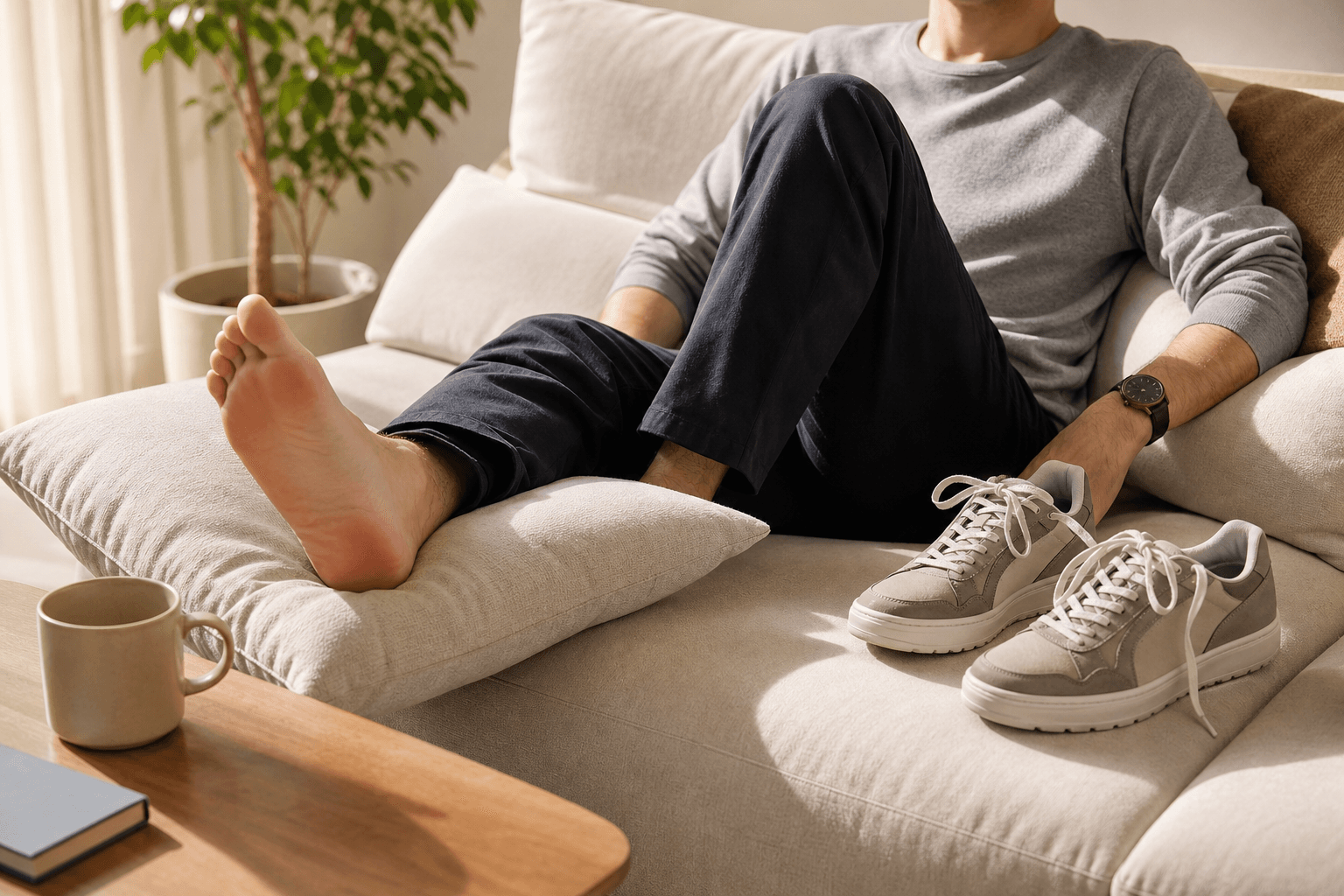
Get the feet up for fifteen to twenty minutes with them above heart level if comfortable. A warm soak, as covered in our foot soaks guide, a gentle self-massage with a ball under the arch, and simple calf and toe stretches all help many people unwind. These are comfort measures, not treatments for any condition.
A cool rinse or a cold pack can feel good on hot, swollen feet. Keep stretches gentle; stop if anything stabs.
Changes that help tomorrow
Start with shoes. If the midsole is creased or compressed, or the heel counter has collapsed, support is gone. Pick a shoe with a firm heel, some cushioning and room for the toes, and rotate between pairs. Our standing all day guide covers insoles for long shifts, and the Akusoli insoles review looks at one supportive option.
Graduated compression socks can ease the heavy, swollen feeling for some people who stand or sit for long periods. Move around regularly, shift your weight, and use an anti-fatigue mat if your job allows.
A simple evening routine
Routines work best when they are short enough to actually happen. Start by taking your shoes off as soon as you get home and, if the floors are hard, putting on a cushioned slipper rather than going barefoot; our slippers for plantar fasciitis page explains what to look for. Then spend two minutes on each calf with a wall stretch, because tight calves pull on the heel and arch and make the whole foot work harder.
Next, roll the underside of each foot over a tennis ball or a chilled water bottle for a minute or two, using light to moderate pressure. Finish by raising your feet on a cushion for ten to fifteen minutes while you read or watch something. None of this treats a condition; it simply gives tired tissue a break and gives you a read on how your feet feel from week to week.
Keep a loose note for a fortnight: which shoes you wore, how long you stood, and when the ache peaked. Patterns often jump out, such as one pair of shoes that always leaves you sore, or a shift on the hardest floor that is worse than the rest. That information is also useful if you do end up seeing a podiatrist.
Shoe and sock checks worth doing
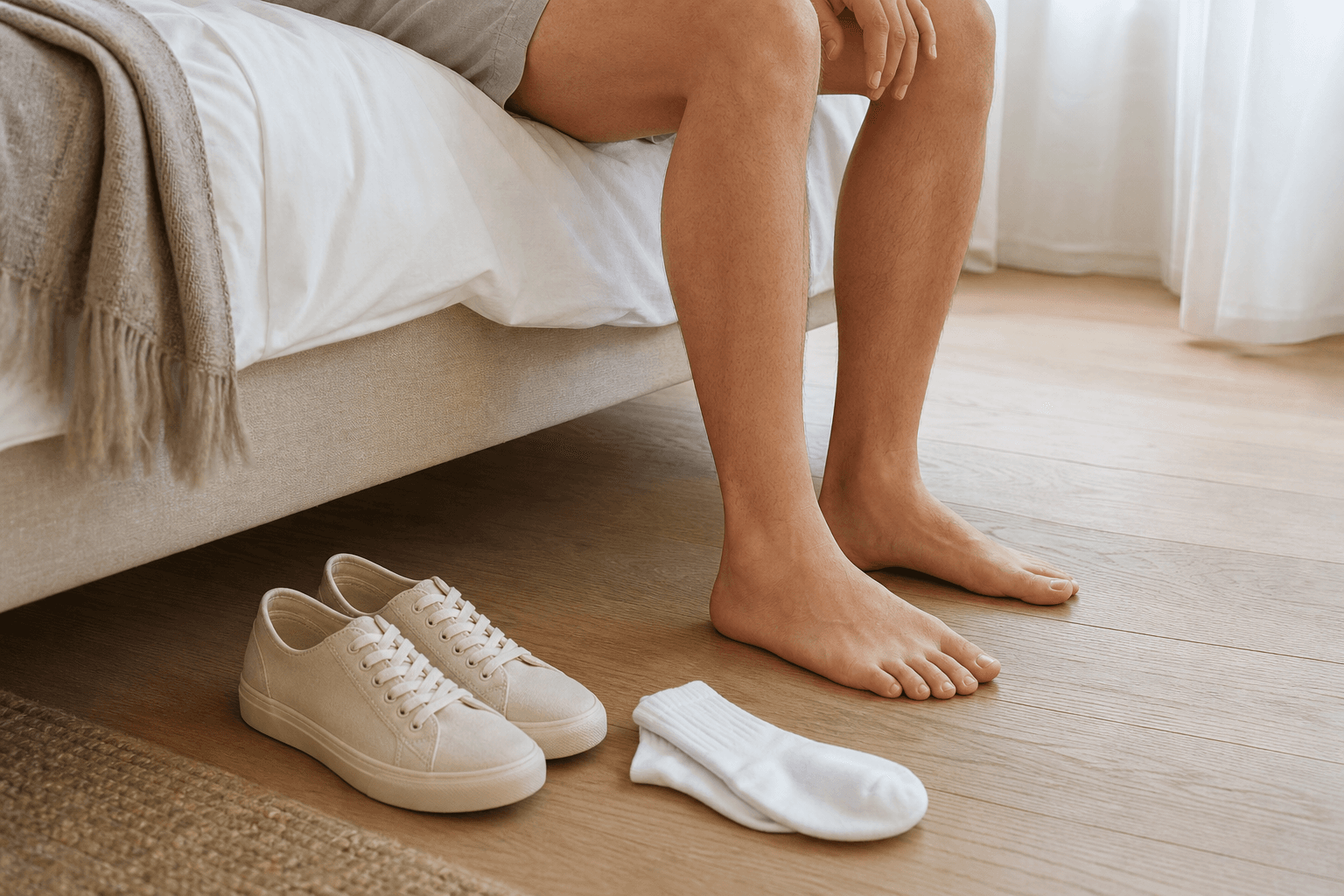
Press your thumb into the midsole: if it feels hard and creased, or the shoe tips over when you place it on a table and look from behind, it has probably outlived its support. Check the toe box too. Shoes that squeeze the toes can make feet ache and swell faster, so choose a shape with room to spread. Socks matter as well; thin cotton that stays damp can rub, whereas moisture-wicking blends keep the skin comfortable over long days.
If you buy new shoes, shop in the afternoon when feet are at their largest, and walk on a hard floor in the shop to check comfort rather than just the softness of the footbed.
When tired feet are something else
See a clinician if swelling affects only one leg, if the foot is warm, red or painful at rest, if you notice numbness, tingling or colour change, or if aching has lasted weeks despite better shoes and rest. Anyone with diabetes should raise foot changes early. Swelling that comes with breathlessness or chest discomfort needs urgent care.
Explore the foot care hub
Socks, skin, nails and everyday comfort for your feet.
Explore the foot care hub →Frequently asked questions
Why do my feet hurt at the end of the day?
Most often it is a mix of long hours on your feet, hard floors, worn shoes and mild swelling. Persistent or focused pain is worth having checked.
Do insoles help tired feet?
Many people find a supportive, cushioned insole more comfortable over long days, though results vary and they are a comfort measure rather than a treatment.
Are compression socks good for tired feet?
Graduated compression socks help some people feel less heavy after long standing or sitting. Ask a clinician first if you have circulation or heart conditions.
Should my feet swell by evening?
Mild swelling after a long day is common, but swelling in one leg, sudden swelling or swelling with pain, redness or breathlessness should be checked promptly.
When should I see a podiatrist?
If pain lasts more than a few weeks despite better shoes and rest, is sharp or localised, or comes with numbness, tingling, redness or warmth.
HeelCups is reader-supported. When you buy through links on our site we may earn an affiliate commission, at no extra cost to you. This article is general information about foot comfort and is not medical advice — see our medical disclaimer.