SESAMOIDITIS
Sesamoiditis: The Ache Under the Big Toe Joint, What Eases It and When It Needs an X-Ray
Two tiny bones sit under the big toe joint and can become irritated by push-off, hard floors and thin soles. Here is how the pattern reads and the comfort steps most people start with.
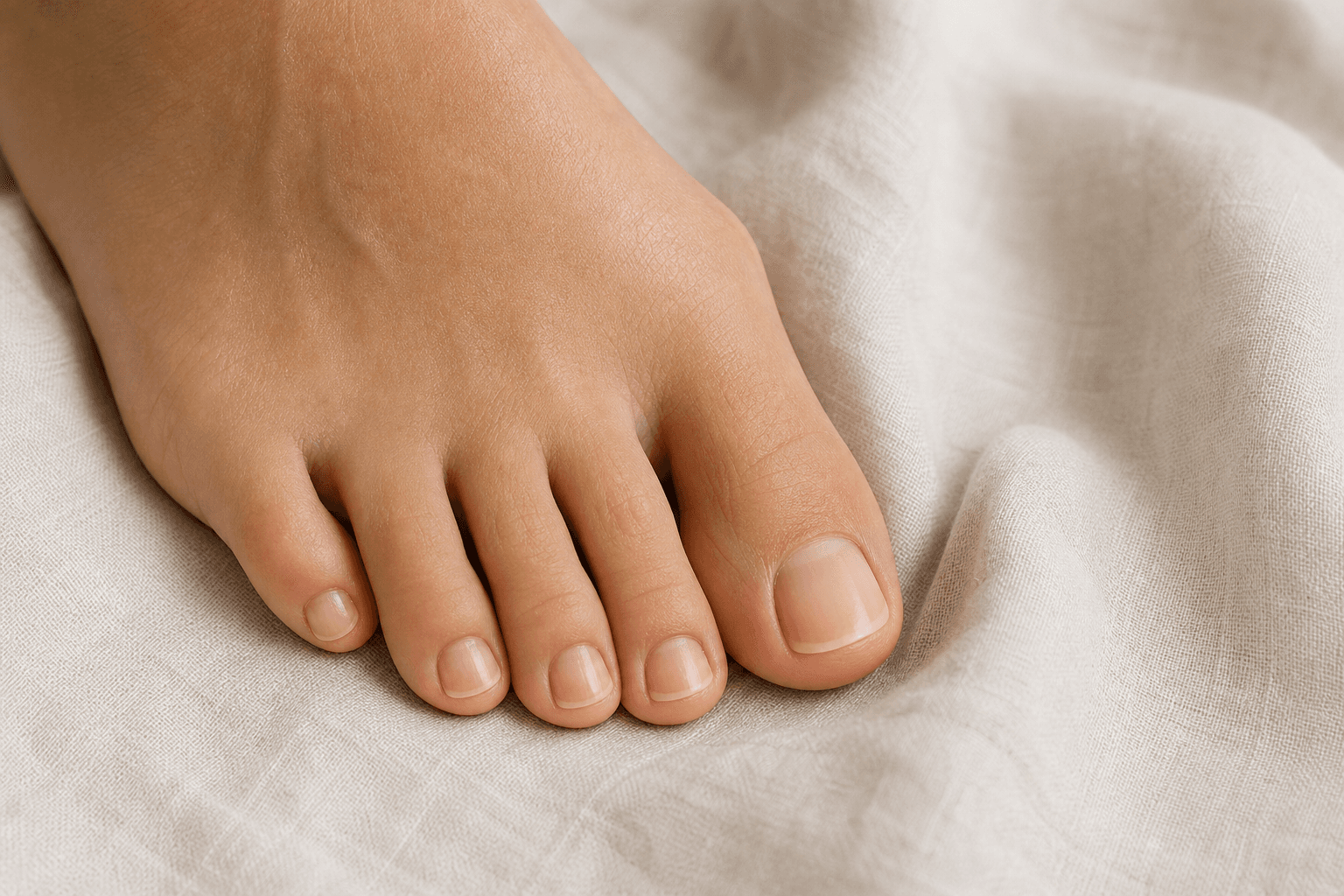
Sesamoiditis is irritation of the two small sesamoid bones that sit in tendons under the first joint of the big toe, plus the tissue around them. It shows up as a dull ache under the ball of the foot on the big toe side, often building slowly, and it tends to be worse when you push off, kneel, squat or wear thin, flat or high-heeled shoes.
According to the American Academy of Orthopaedic Surgeons' OrthoInfo, most cases are managed without surgery, using measures like cutting back the aggravating activity, soft-soled low-heeled shoes, padding and sometimes anti-inflammatory medicine. That fits our approach: reduce the load, add cushioning, and see a clinician if it does not settle.
This page explains how to tell sesamoiditis from its look-alikes, what to try first, and when to get it examined. It is general information, not medical advice. If you want the wider picture of forefoot pain, start with ball of foot pain.
What it feels like
The typical story is a gradual ache right under the big toe joint that you can pinpoint with a fingertip. Bending and straightening the toe may be stiff or sore, and there may be mild swelling. Pain usually comes on with weight on the ball of the foot, such as dancing, running, long walks or standing on hard floors. Sesamoiditis tends to build slowly, whereas a sesamoid fracture usually hurts immediately after a hard backward bend of the toe.
Because the symptoms overlap with other conditions, it helps to compare them. Pain in the joint itself with stiffness is covered in our page on big toe joint pain, and burning or pins and needles between the toes suggests Morton's neuroma.
Why the sesamoids get irritated
The sesamoids act like pulleys, taking pressure each time the big toe pushes the body forward. Repeated loading is the common thread: runners and dancers, people on their feet on concrete, and those who wear high heels or very thin soles. Higher arches can put more weight through the ball of the foot, so insoles for high arches may be worth a look if that fits you.
Comfort steps to try first
Start by easing the load. Pause the activity that sets it off, swap thin or flat shoes for a pair with a cushioned, slightly stiff sole and a low heel, and avoid going barefoot on hard floors. A small adhesive pad or a cushioned insole with a cut-out or dip under the big toe joint can shift pressure away from the sore spot, a measure described by clinical sources.
Ice for ten minutes after a long day can take the edge off. Rocker-style soles, which reduce how far the big toe bends at push-off, can also feel easier; see our page on rocker-sole shoes for how they work and how limited the evidence is.
What not to do
Do not push through sharp pain, and do not massage hard into the spot, because that can aggravate irritated tissue. Skip high heels and stiff-soled dress shoes while it is sore. Avoid long stretches of kneeling or squatting if those set it off.
Footwear and daily habits that spread the load
Shoe choice matters more than most people expect. A shoe that bends easily at the ball of the foot lets the big toe joint hinge sharply with every step, which loads the sesamoids. Press the sole: a firm forefoot that resists bending, with cushioning underneath, tends to be kinder. Roomy toe boxes help too, since a squeezed big toe joint is a more irritable one.
Think about the surfaces you stand on as well. A cushioned anti-fatigue mat at a standing desk, kitchen counter or workbench takes some of the sting out of long shifts, and rotating between two pairs of supportive shoes avoids the same pressure point being loaded all day. If you exercise, choose softer surfaces where you can, shorten sessions while sore and add time back gradually rather than all at once.
Tracking helps. Jot down which days the ache flares and what you did on them: a long walk in thin sandals, a gardening afternoon on your knees, a new class. Patterns usually emerge within a couple of weeks and tell you which change to make first.
Look-alikes worth knowing
Gout can hit the big toe joint with sudden, hot, red swelling, which is different from the slow ache here, and needs a clinician. A fracture of a sesamoid, arthritis in the joint, a bunion and a neuroma can all feel similar. Our page on bunions covers one of the more common ones. An X-ray, and sometimes an MRI, is how a clinician separates these.
When to see a doctor or podiatrist
See a clinician if the pain followed a sudden injury, you cannot push off, there is significant swelling or colour change, or it has not improved after a few weeks of sensible changes. If persistent pain stops you doing normal activities, ask a doctor or podiatrist about imaging and options such as physical therapy or custom orthotics.
Explore the foot-care hub
Everything below the ankle that is not heel pain: toes, skin, socks and everyday comfort.
Explore the foot-care hub →Frequently asked questions
What does sesamoiditis feel like?
A dull ache beneath the big toe joint that builds gradually, often worse on push-off, kneeling or in thin shoes. There may be mild swelling and stiffness when bending the toe.
How long does sesamoiditis last?
It varies. Mild irritation may settle within weeks once the load is reduced, while stubborn cases take longer. If it is not improving, see a clinician for an exam.
What shoes are best for sesamoiditis?
Look for a cushioned, slightly stiff sole, a low heel and room in the toe box. Avoid thin flat shoes and high heels while it is sore.
Can I keep running with sesamoiditis?
Mild cases sometimes tolerate reduced, softer-surface running, but sharp pain on push-off is a sign to stop and get it checked. A gradual return is usually advised.
Is it a stress fracture?
It can be difficult to tell without imaging. A fracture often hurts suddenly after impact or a hard backward bend of the toe. Only an X-ray or MRI can confirm which one you have.
HeelCups is reader-supported. When you buy through links on our site we may earn an affiliate commission, at no extra cost to you. This article is general information about foot comfort and is not medical advice — see our medical disclaimer.