METATARSALGIA
Ball of Foot Pain (Metatarsalgia): Why It Aches Under the Forefoot and What Actually Takes the Edge Off
A hot, bruised ache under the ball of the foot at the end of a long day is usually metatarsalgia — the umbrella term for irritation of the forefoot's small joints, fat pad and metatarsal heads. Here is how the pattern reads, what the daily plan looks like, and how to tell it apart from a nerve or a stress fracture.
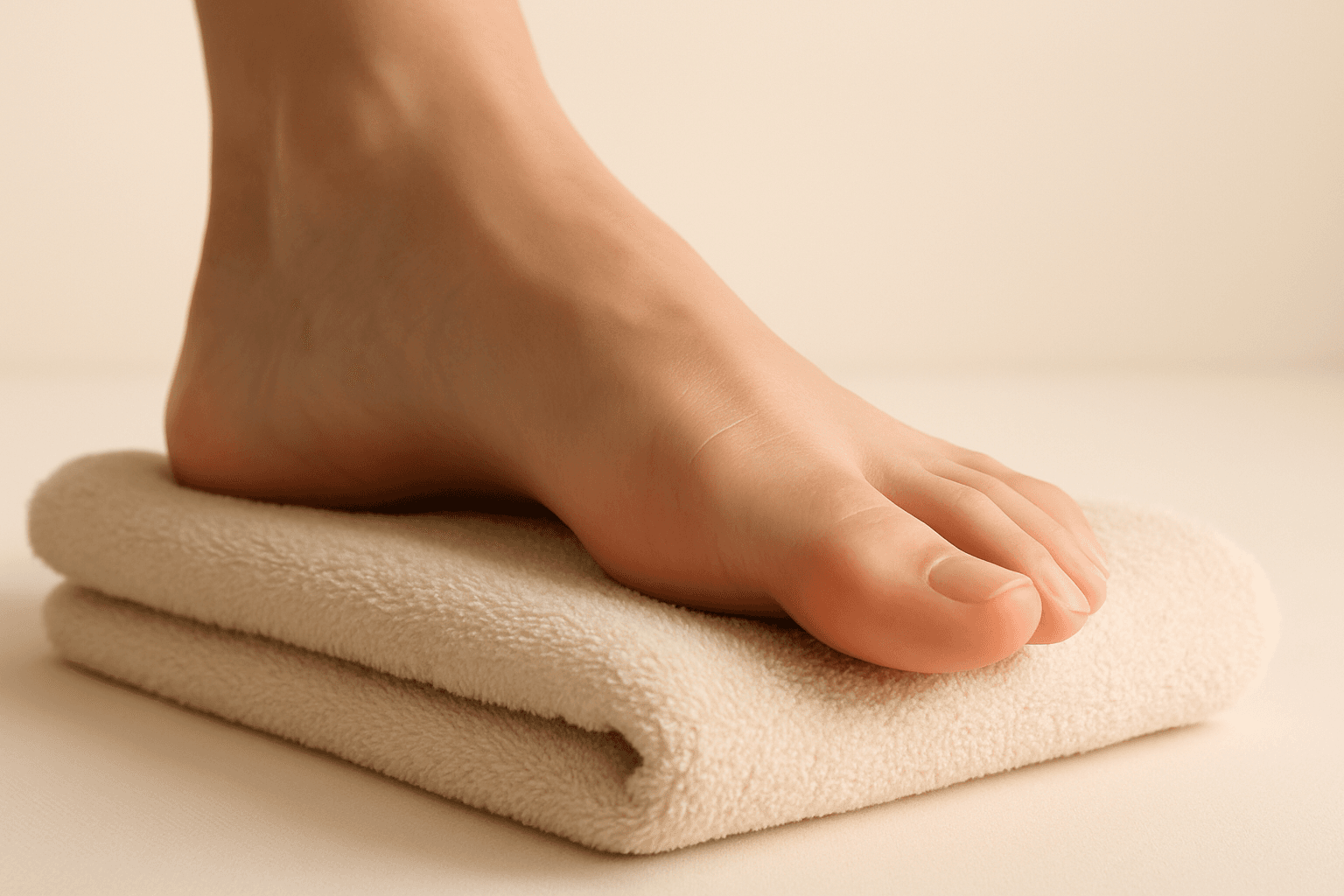
Metatarsalgia is the umbrella clinical name for pain and inflammation across the ball of the foot — the wide pad just behind the toes where the five long metatarsal bones end. It is not a single diagnosis; it is a description of a shared symptom picture that shows up when the forefoot's fat pad thins, the metatarsal heads take on more load than they can gracefully absorb, or the small joints between the metatarsals and the toes get irritated. The classic tell is a hot, bruised ache under the second and third metatarsal heads that builds through a walking day, worse in thin-soled shoes, better in cushioned shoes with a wider toe box.
It is one of the most common foot complaints in adults, and it climbs the list with age. The forefoot fat pad thins measurably from about age fifty onward, high heels concentrate load on a narrow band of forefoot, high arches shift more weight onto the forefoot, and any activity that pounds the forefoot — running, hiking, dancing, standing in place on a hard floor for a long shift — piles onto that mechanical picture. Runners get metatarsalgia during mileage spikes, hikers get it descending long trails in a heavy pack, waitresses and nurses get it after twelve hours in a supportive-but-flat shoe, dress-shoe wearers get it after a season in narrow pumps or narrow oxfords, and older adults get it because the pad has thinned and the forefoot is doing more of the shock-absorbing than it was born to.
This page walks the honest picture: what metatarsalgia is (and is not), why the ball of the foot hurts in the first place, the everyday plan that calms most cases, and the neighboring conditions worth ruling in or out — Morton's neuroma, sesamoiditis, a metatarsal stress fracture, and (occasionally) a systemic condition like rheumatoid arthritis that hits the forefoot early. Nothing here is medical advice, and no product on this site is a treatment for a forefoot condition. Every recommendation is written for comfort, support and relief. If the pain is burning or tingling between two toes, read about Morton's neuroma too.
What metatarsalgia is (and is not)
The ball of the foot is the wide pad just behind the toes, where the ends of the five metatarsal bones meet the ground. Under normal load a healthy adult foot distributes weight across all five metatarsal heads roughly equally, with the second and third metatarsals doing slightly more of the work because they sit under the highest part of the arch on push-off. A specialized forefoot fat pad cushions the bones from the ground, and small joints and tendons hold the toes in a functional position. Metatarsalgia is what happens when that system is overloaded, thinned or knocked out of balance.
The tell is diffuse aching under the ball of the foot that builds through a walking day and does not narrow to a single sharp spot. Take off your shoes at the end of a long day, sit down, and press across the ball of the foot with a thumb. In metatarsalgia the whole area is tender, sometimes with a slightly worse spot under the second or third metatarsal head; there is often a callused patch of thickened skin on the sole under the sore area, which is your body's response to repeated pressure. Cushioned shoes and thick socks help within seconds; thin-soled shoes and bare feet on hard floors flare it inside minutes.
What metatarsalgia is not: a sharp shooting or burning pain between two toes that comes with numbness or a clicking sensation (that is more consistent with a Morton's neuroma, a thickened nerve between the metatarsal bones); a specific tender bony point that hurts on every weight-bearing step and does not respond to shoe changes (that deserves imaging for a possible metatarsal stress fracture); or a hot, swollen, red joint of the big toe that came on suddenly (that is a classic gout presentation and needs a clinician's read). Metatarsalgia is the diffuse ache; the sharp, focal or systemic patterns are neighbors that need their own maps.
Why the ball of the foot hurts
Fat-pad thinning is the background factor most people underestimate. The forefoot fat pad thins measurably from about age fifty, similar to the heel fat pad, and by age seventy the average pad has lost meaningful thickness and springiness. Less cushioning under the metatarsal heads means each step lands with more force on bone, and the walking day accumulates soreness faster.
Shoes concentrate load in ways that add up. High heels shift body weight forward onto the forefoot — a two-inch heel roughly doubles the load on the ball of the foot compared to a flat shoe, and higher heels multiply it further. Narrow toe boxes squeeze the metatarsal heads together and change the load distribution. Thin-soled dress shoes and flat canvas sneakers give the fat pad none of the cushioning it needs on hard indoor floors. A season of any of these can flare a previously comfortable forefoot.
Foot shape matters. A high-arched foot loads the forefoot and the heel more than a neutral foot, because the midfoot flexes less under weight. Feet with a long second toe (sometimes called Morton's foot) concentrate load on the second metatarsal head, which is why the second-toe area is a common tender spot. A collapsed transverse arch across the forefoot spreads the metatarsal heads apart and lets the second and third heads drop lower than the others, so they take an outsized share of the load.
Activity spikes are the common trigger. A runner ramping mileage on hard surfaces, a hiker descending a long trail in a stiff-soled boot with a heavy pack, a dancer moving from soft studio floors to a hard performance stage, a nurse switching to a new pair of shoes for a twelve-hour shift — each is a specific mechanical change that catches the forefoot off-guard. The pattern is usually a week or two after the change, not the same day.
The everyday plan that calms metatarsalgia
Cut the specific activity that tipped it over, for two to four weeks, and reintroduce on a ramp. A runner drops mileage by half and moves long runs to softer surfaces; a hiker skips the heavy pack for a month; a dress-shoe wearer moves to a cushioned closed-toe shoe for a season. The load management piece is the highest-leverage change most readers underestimate.
Add a metatarsal pad to the shoes you spend the most hours in. A metatarsal pad is a small teardrop-shaped cushion, either felt or gel, that sits inside the shoe just behind the ball of the foot — not under the metatarsal heads, but immediately behind them. The pad lifts the metatarsal heads gently, redistributes load across the whole forefoot rather than the two or three heads that were carrying the brunt, and gives the fat pad more effective cushioning. Most insoles do not come with a metatarsal pad built in; a separate adhesive pad (eight to fifteen dollars) placed on top of your existing insole is the useful addition. Positioning matters — a pad placed too far forward pushes on the sore area rather than unloading it, and a pad placed too far back does nothing.
Move to shoes with a wider toe box, a cushioned midsole, and a slightly rockered sole for the everyday hours. A wide toe box lets the metatarsal heads sit in their natural spread rather than being compressed together. A cushioned midsole cushions the fat pad. A rockered sole (a slight upward curve at the front of the shoe) reduces how much the forefoot has to bend during push-off, which unloads the sore joint area. Zero-drop and minimalist shoes are unfriendly to a metatarsalgic forefoot; a running shoe with a moderate heel-toe drop and a supportive midsole is friendlier.
Cut barefoot time on hard floors. The same pattern that flares heel fat pad problems flares forefoot pad problems: hours barefoot on tile or hardwood at home give the pad no support, and the walking day starts already sore. A supportive backed slipper with a cushioned midsole beats a flat drugstore slide by a wide margin.
Ice at end of day for ten minutes on the sore ball of the foot. A small frozen water bottle rolled slowly under the forefoot works; a bag of frozen peas draped across the underside of the ball of the foot works better. Heat is not the friend of an acutely flared forefoot; leave it for once the pain has settled into a background hum.
Add a short daily strengthening routine — toe curls with a towel on the floor, marble pickups with the toes, single-leg calf raises off the edge of a step — twice a day for two minutes each. Building the small muscles that support the transverse arch of the forefoot takes weeks, not days, but the compounded effect at a month is what separates a fully-settled case from a chronic grumbling one.
Telling metatarsalgia from Morton's neuroma and stress fracture
Morton's neuroma is a thickened, irritated nerve that sits between two metatarsal bones, most commonly between the third and fourth. The pattern is a sharp, burning or electric pain between two toes, often with numbness of the tips of the involved toes, and a distinct clicking or pebble-in-the-shoe sensation. Squeezing the forefoot from side to side (compressing the metatarsal heads together) reliably reproduces the pain in a neuroma. The plan overlaps with metatarsalgia — wider toe boxes, cushioned shoes, a metatarsal pad — but a neuroma sometimes needs a corticosteroid injection or, in stubborn cases, surgical removal. A podiatrist is the right person to sort it.
A metatarsal stress fracture — sometimes called a march fracture, because it was first described in military recruits after long marches in stiff boots — is a hairline crack in one of the metatarsal bones from repeated overload without adequate recovery. The pattern is a specific tender bony point on top of the foot over the affected metatarsal, pain that hurts on every weight-bearing step, pain that does not respond meaningfully to shoe changes or a metatarsal pad, and often visible swelling on the top of the foot within a week or two of onset. X-ray in the first two weeks is often normal; a follow-up X-ray at three to four weeks usually shows the healing bone, or an MRI can catch it earlier. The plan from there is a walking boot for four to six weeks. Missing a stress fracture and walking on it turns a manageable four-to-six-week problem into a much longer one.
Sesamoiditis is a specific version of forefoot pain under the big toe joint, where two small pea-sized bones sit under the head of the first metatarsal. Runners, dancers and hikers with high arches see it most often. The pattern is focal tenderness right under the big toe joint, worse on push-off and in a shoe with a stiff forefoot. The plan is a cushioned shoe with a soft insole, a metatarsal pad set slightly to unload the big toe joint, and cut activity for two to four weeks. Persistent sesamoid pain needs a clinician's read.
When to see a clinician
Any forefoot pain that has not eased after four to six weeks of honest home care, or that is severe enough to change how you walk day-to-day, deserves an in-person exam by a doctor or podiatrist. So does any pain that follows a specific injury (a jump landing, a fall, a stubbed toe), any pain that comes with swelling, warmth or a color change, and any pain that wakes you at night or does not respond at all to shoe changes over weeks.
New-onset forefoot pain in an older adult, especially with symmetric involvement across both feet and morning stiffness that eases as the day progresses, is worth a primary-care visit to rule out inflammatory arthritis. Rheumatoid arthritis often shows up in the small joints of the forefoot first, sometimes years before the classic hand and wrist involvement, and the useful next step from there is a rheumatologist rather than a shoe change alone.
Diabetes with any reduced sensation in the feet changes the picture in a specific way: pressure the foot cannot feel is pressure the foot cannot protect itself against, and a small callus or a small blister on the ball of the foot can grow into a bigger problem faster than it does in a healthy foot. Forefoot pain in a diabetic foot, or any change in the skin over the ball of the foot, is a same-week conversation with the primary care physician who manages the diabetes.
Where metatarsalgia sits in the foot-care map
Metatarsalgia is a comfort-and-load problem, and it responds to comfort-and-load tools. It shares its logic with the heel-side conditions on this site — heel fat pad syndrome is essentially the forefoot's problem, at the other end of the foot — and the pair often ride together in the same walking day. A cushioned supportive insole in every shoe you own, a wider toe box for the everyday hours, and a metatarsal pad added on top of the insole cover most cases inside a month.
Every recommendation on this hub is written for comfort, support and relief. Nothing on this page is a treatment for a forefoot condition, and any product on this site is a comfort and support tool rather than a medical treatment. Our Akusoli insoles review covers the pair we would buy first for the everyday case; a small separate metatarsal pad (eight to fifteen dollars) placed on top of it is the useful upgrade for a metatarsalgic forefoot. See our foot-care hub for the broader map of everything below the ankle that is not heel pain. If the sore spot is at the base of the big toe, see whether a bunion is behind it.
The cushioned insole we would pair with a metatarsal pad
A supportive insole with a deep heel cup plus a small metatarsal pad on top is the everyday setup that calms most metatarsalgia inside a month.
The cushioned insole we would pair with a metatarsal pad →Frequently asked questions
What is the difference between metatarsalgia and a Morton's neuroma?
Metatarsalgia is a diffuse, bruised ache across the ball of the foot that builds through a walking day and does not narrow to a sharp spot. Morton's neuroma is a sharp, burning or electric pain between two toes — usually the third and fourth — often with numbness of the tips of the involved toes and a clicking or pebble-in-the-shoe sensation. Squeezing the forefoot from side to side reliably reproduces the pain in a neuroma; in plain metatarsalgia the whole area is tender and the squeeze is not distinctly worse. A podiatrist can tell the two apart in one office visit.
Do metatarsal pads actually help?
Yes, when they are placed correctly. A teardrop-shaped felt or gel pad positioned just behind the ball of the foot (not under the metatarsal heads) lifts the heads gently and redistributes load across the whole forefoot rather than the two or three heads that were carrying the brunt. Most readers notice a difference within a few days, and a well-placed pad is one of the highest-leverage everyday changes for metatarsalgia. If a pad makes the pain worse, it is almost certainly too far forward — try repositioning it a quarter-inch back toward the heel.
Should I avoid running with metatarsalgia?
For most cases, cut mileage by half for two to four weeks, run on softer surfaces (a track or a smooth trail rather than concrete), and reintroduce on a ramp. Pain that stays at a three-out-of-ten and does not build across the run is workable; pain that climbs during the run, or is worse the morning after, is asking for a bigger cut. A supportive running shoe with a cushioned midsole and a slightly rockered sole is friendlier than a minimalist or racing shoe during the flare.
Are barefoot shoes bad for metatarsalgia?
Not universally, but they are the wrong shoe during a metatarsalgic flare. Barefoot and minimalist shoes offer very little cushioning under the forefoot and demand more of the small forefoot muscles than most feet have gradually built up to. If you love barefoot-style shoes, keep them in the rotation for shorter, easier days and use a supportive cushioned shoe with a wider toe box during the flare. Sudden transitions to barefoot shoes are a common way to trigger metatarsalgia in the first place.
How long does metatarsalgia take to settle?
A mild case that honestly cuts the trigger activity, adds a metatarsal pad and moves into a cushioned wide-toe-box shoe is often noticeably better inside three to four weeks and largely settled by six to eight weeks. A stubborn case that keeps loading the forefoot through the flare — high-heels-through-the-holidays is a common story — can drag on for several months. Chronic metatarsalgia in an older adult with a thinned fat pad often needs the daily insole-and-pad routine as a permanent maintenance habit, not just a flare-response.
When should I see a doctor for ball-of-foot pain?
Any forefoot pain that has not eased after four to six weeks of honest home care, any pain that follows a specific injury (a jump, a fall, a stubbed toe), any pain with visible swelling, warmth or a color change, any pain that wakes you at night, and any new symmetric forefoot pain in an older adult with morning stiffness. Diabetics with any change in the skin or sensation of the forefoot should call the same week. A podiatrist or foot-and-ankle clinician is the right first stop.
HeelCups is reader-supported. When you buy through links on our site we may earn an affiliate commission, at no extra cost to you. This article is general information about foot comfort and is not medical advice — see our medical disclaimer.