BUNIONETTE
Tailor's Bunion (Bunionette): The Bump by Your Little Toe and What Eases the Rubbing
A tender bump on the outer edge of the foot at the base of the little toe is a tailor's bunion. Here is what it is, how it differs from a regular bunion, and the footwear and padding steps that usually come first.
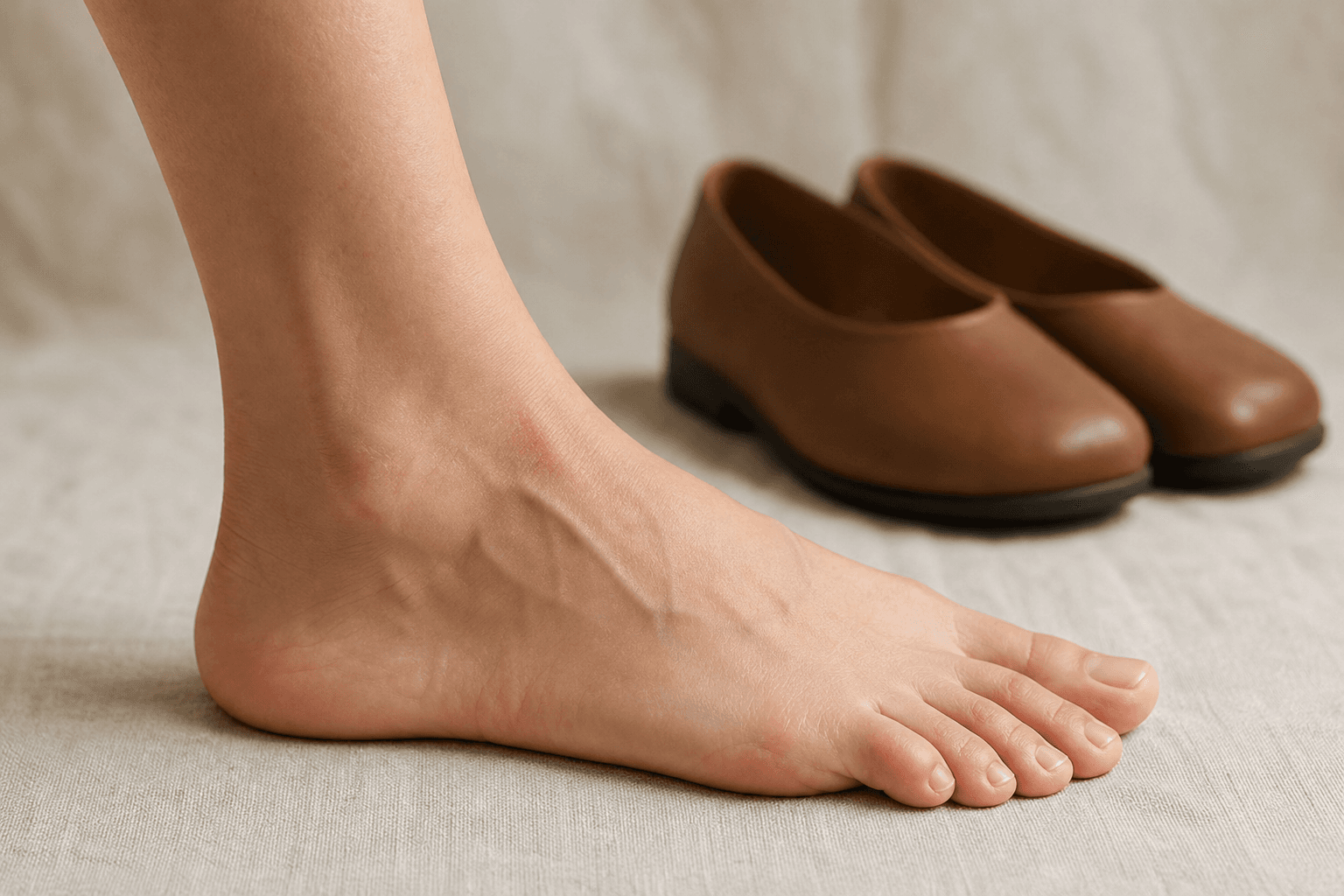
A tailor's bunion, also called a bunionette, is a bony bump on the outer side of the foot at the base of the little toe. It forms where the fifth metatarsal bone's head sticks out or the little toe angles inward, and it gets sore mostly where shoes rub on it. Foot and ankle surgeons' patient site Foot Health Facts describes it as a prominence of the fifth metatarsal, with redness, swelling and pain over the bump, usually aggravated by shoes that are too narrow in the toe box.
The first steps are almost always about reducing pressure: roomier shoes, a soft pad over the bump, and a short break from whatever is rubbing. These steps ease discomfort but do not reshape bone. If the pain persists despite good footwear, a podiatrist or foot and ankle specialist can look at an X-ray and discuss options.
This guide covers how to recognise a bunionette, what to try first, and when to get it looked at. For the more common big-toe version, see our guide to bunions.
Tailor's bunion vs a regular bunion
A regular bunion sits on the inner side of the foot at the big toe joint. A tailor's bunion sits on the outer side, at the little toe joint. Both involve a bump where bone alignment has shifted and where footwear can irritate the skin and the soft tissue over it. The name comes from tailors who traditionally sat cross-legged, pressing the outer foot against the floor.
You can have both at once. Many people with a bunionette also have a bunion, wide forefoot, or a flat or flexible foot. Heredity plays a role; tight, narrow or pointed shoes are the usual trigger for pain, not the sole cause.
What it feels and looks like
Typical signs are a visible bump on the outer forefoot, redness or swelling over it after a day in shoes, a thickened callus on the bump, and aching that eases when you take shoes off. Pain can also appear under the fifth metatarsal head. Because the area is also where a callus, bursa or small nerve can be irritated, our corns and calluses page helps with the skin side of things.
If the bump is new, painful at rest, or has appeared after an injury, do not assume it is a bunionette. A broken fifth metatarsal, a gouty joint or an inflamed bursa can look similar, and a quick exam sorts them out.
Footwear that makes a difference
Choose shoes with a wide, deep toe box that let the little toe lie flat, a soft upper that does not press on the bump, and a firm, flexible sole. Seams over the outer forefoot are a common irritant. Shoes with a stretchy or perforated upper, or those a cobbler can stretch locally, can help. Avoid pointed toes and high heels, which push body weight toward the forefoot.
Try shoes late in the day when feet are largest, and stand up in them. The little toe should not feel squeezed against the next one.
Everyday habits that reduce rubbing
Rotate shoes so no single pair presses on the same spot every day. Wear socks without thick seams over the outer forefoot, and choose breathable fabrics so skin stays dry; moist skin blisters more easily. If a pair of shoes you love is slightly tight, a shoe repair shop can often stretch the leather over the bump. Keep calluses gently smoothed with a pumice stone after a shower rather than cutting them. Visit the wider foot care hub for more on skin and shoe fit.
Pads, spacers and insoles
A soft gel or foam bunionette pad worn inside the shoe can cushion the bump. Pads that are too thick make the shoe tighter, so go for a thin one and a roomy shoe. Moleskin or a donut-shaped pad can offload a sore spot. Sleeves and toe separators are sold for the little toe; they may add comfort but should not be expected to move bone, a point we also make in our guide to bunion correctors.
An insole with cushioning under the forefoot can lessen pressure when pain is under the bump rather than over it. A clinician may suggest custom orthotics in some cases.
Pain relief and what else is used
Resting the foot, using ice with a cloth between it and the skin, and short courses of over-the-counter pain relievers are described in clinic guidance as typical early steps. Check with a pharmacist or doctor before taking pain relievers regularly, especially past a few weeks. Clinicians may also offer injections for a very inflamed bursa.
Surgery is generally discussed only when pain persists despite sensible footwear and conservative care; it depends on X-ray findings, age and activity level, and is a decision to make with a foot and ankle surgeon.
When to see a doctor
See a podiatrist or doctor if pain persists after a few weeks of better shoes and padding, if the skin over the bump is broken, if the area is hot, red and swollen, or if you have diabetes, numbness or poor circulation. Sudden pain after an injury could be a fracture of the fifth metatarsal, so get it checked. This article is general information, not personal medical advice.
Explore the foot care hub
More on bunions, corns, calluses and comfortable footwear.
Explore the foot care hub →Frequently asked questions
What is a tailor's bunion?
A bony bump at the base of the little toe on the outer edge of the foot. It is also called a bunionette.
What causes a tailor's bunion?
Foot shape and inherited alignment are the main drivers. Narrow or tight shoes rub the bump and bring on the pain.
Can a tailor's bunion go away without surgery?
The bony bump itself will not go away with pads or shoes, but pain and rubbing can often be eased with roomier footwear and padding.
What shoes are best for a tailor's bunion?
Shoes with a wide, deep toe box, soft seamless uppers and a firm, flexible sole. Avoid pointed toes and high heels.
Do bunionette pads work?
They can cushion the bump and reduce friction, which is a comfort measure rather than a correction. Choose thin ones and a roomy shoe.
When is surgery considered?
Typically when pain continues despite conservative care. A foot and ankle specialist will review X-rays and discuss options.
HeelCups is reader-supported. When you buy through links on our site we may earn an affiliate commission, at no extra cost to you. This article is general information about foot comfort and is not medical advice — see our medical disclaimer.