POSTERIOR TIBIAL TENDONITIS
Posterior Tibial Tendonitis: The Heel-and-Arch Pain That Isn't Plantar Fasciitis
Pain along the inside of the ankle and under the arch is the posterior tibial tendon talking, not the plantar fascia — and it responds to a different plan. Here is how to tell the two apart, the daily moves that calm the tendon, and when the picture needs a specialist.
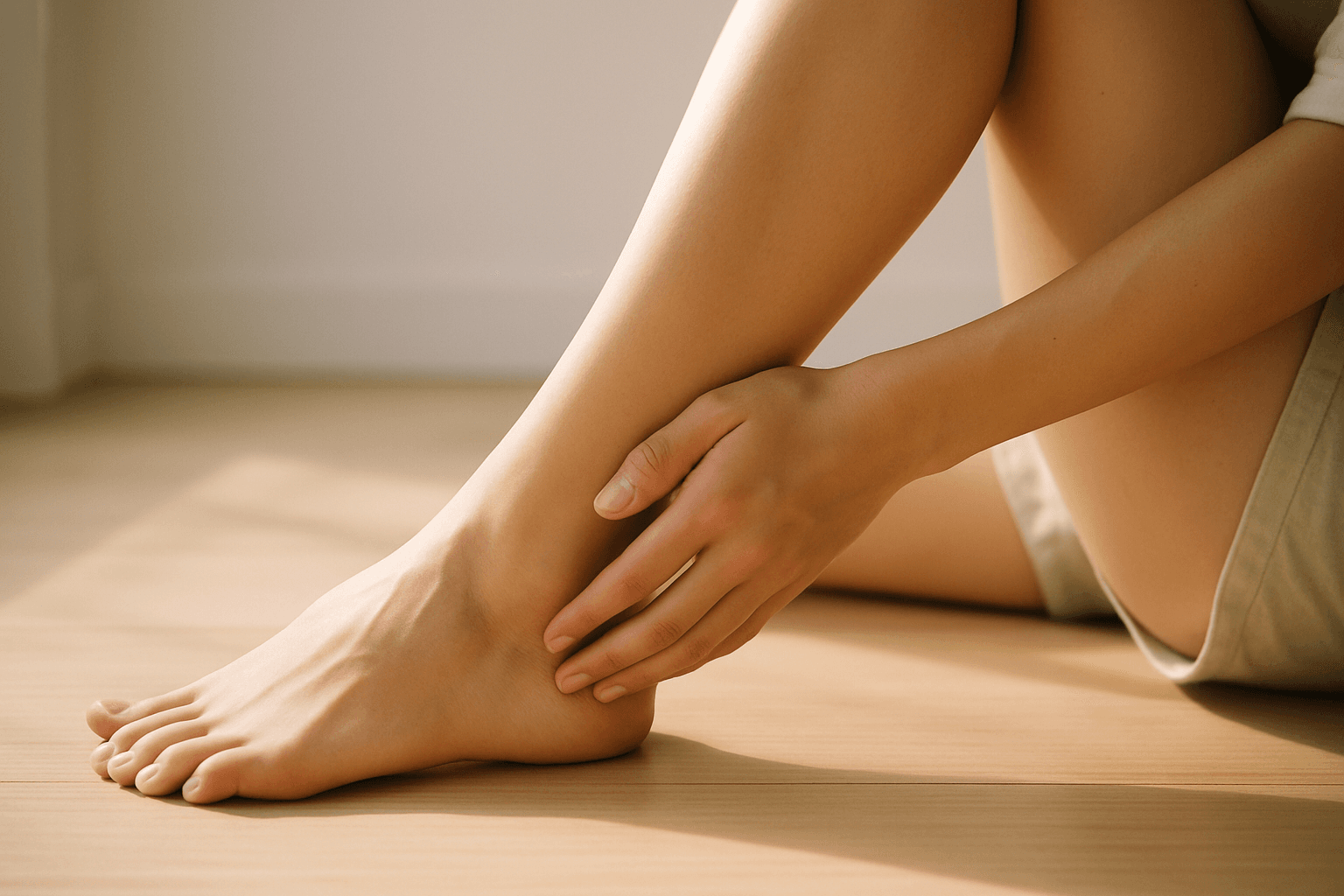
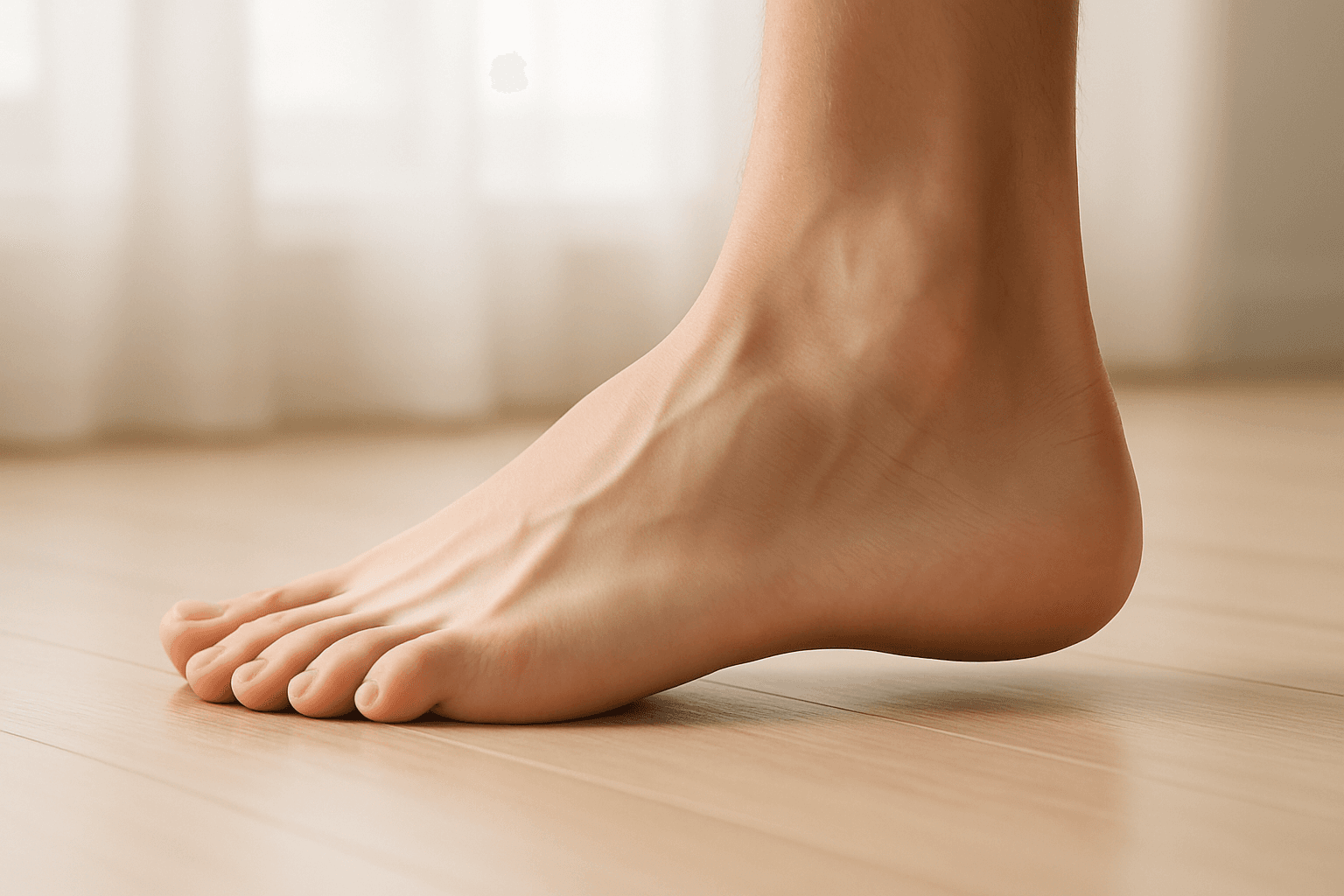
The posterior tibial tendon runs down the inside of the ankle and under the arch of the foot, and it is the single most important tendon for holding the arch of the foot up during every step you take. When it is irritated, the pain lives along the inside of the ankle and down into the arch, often with a slight flattening of the arch itself that you can see in a mirror if you compare one foot to the other. It is one of the most commonly missed foot diagnoses in general practice, because the pain pattern overlaps enough with plantar fasciitis to send readers down a stretch-and-insole routine that is right for the wrong tendon. If your pain is more of a general ache across the sole, see our guide to pain in the arch of the foot.
Posterior tibial tendonitis — formally called posterior tibial tendon dysfunction once it has progressed — is a different problem than plantar fasciitis, and it responds to a different plan. Both tend to come on gradually with a job change, a mileage ramp, a weight gain or a flat-shoe summer, and both tend to feel better in good shoes and worse in bad ones. But the plantar fascia wants gentle stretching and a firm arch; the posterior tibial tendon wants a firm arch, a medial post that leans the foot slightly inward, and relative rest — never aggressive stretching while it is acutely inflamed. Mix the two routines up and you can send a mild tendon case into a stubborn, months-long one.
Nothing on this page is medical advice. Pain along the inside of the ankle or arch that has lasted more than three to four weeks, a visibly flatter arch than the other foot, or an inability to do a single-leg heel raise on the painful side are reasons to see a podiatrist or foot-and-ankle physician promptly — a tendon that has started to fail does not reliably recover on home care alone. Every recommendation on this heel pain hub is written for comfort, support and relief.
Where it hurts and how to tell it apart from plantar fasciitis
Posterior tibial tendonitis hurts in a very specific place: along the inside of the ankle bone (the medial malleolus), the finger's width of tendon that runs just behind and below it, and the first inch or two of the arch where the tendon fans out and inserts into the navicular bone. If you press along that line with your thumb, there is almost always a tender band. The pain gets louder when you stand on tiptoes, when you walk on uneven ground, and after a long day on your feet; it eases with rest and with a shoe that supports the inside of the arch firmly. Swelling along the inside of the ankle is common and is one of the clearest tells.
Plantar fasciitis is a different map. It hurts under the front of the heel, worst with the first steps of the morning, eases with movement in the first few minutes, and lives at the heel bone or an inch forward of it along the arch — not up at the ankle. The classic post-static dyskinesia (the stab after any long sit) is a plantar fasciitis fingerprint; a tendon pain pattern builds through the day and does not reset the same way with a short walk. If pushing on the arch feels sore but the inside of the ankle is quiet, the fascia is the better bet; if pushing along the inside of the ankle is sore and the arch itself is only tender where the tendon ends, the tendon is the better bet. Our bottom of heel pain walk-through is the fuller sort if the location is not obvious.
What is actually going on in the tendon
The posterior tibial tendon is one of the hardest-working tendons in the lower leg. Every step you take, the muscle in the deep calf pulls on this tendon to help lift the arch of the foot and lock the midfoot into a rigid lever for push-off. Over years, under too much load, in the wrong footwear, or in a foot that was flat to begin with, the tendon can start to fray — not a sudden tear, but a slow degeneration (tendinosis) that eventually weakens its hold on the arch. The arch begins to drop. The foot rolls further inward on each step. The tendon, now stretched beyond its working length, protests louder and the arch flattens further. The pattern is a slow spiral and it is why ignoring posterior tibial pain is more costly than ignoring most other foot pains.
Who gets it, by volume: women over forty, people who have gained ten to twenty pounds in the last couple of years, flat-footed adults whose arch was always borderline, people whose jobs put them on hard floors for long shifts, and runners who ramped up on a worn-out stability shoe. Diabetes, hypertension and inflammatory arthritis are all risk factors that quietly raise the odds. None of this means a tendon case is destined to progress — early intervention almost always works — but it does mean the pattern deserves to be taken seriously the first time it shows up, not the fifth.
The daily plan that calms the tendon down
The first move is a supportive shoe with a firm medial arch and, ideally, a slight medial post — a shoe whose inside edge is firmer than its outside edge, which gently stops the foot from rolling inward. Stability running shoes, structured walking shoes and most work shoes with real arch structure fit the bill; flat canvas sneakers, worn-out trainers, zero-drop barefoot shoes and flip-flops do not. The between-walks shoe matters as much as the primary one — hours on hard floors in a soft slipper is a slow re-injury of the tendon. For readers who need to add arch support to the shoes they already own, a trim-to-fit insole with a firm medial arch is the usual upgrade; our Akusoli insoles review is the one we would reach for first for arch support.
The second move is relative rest, which is quieter than it sounds. Cut the specific activity (long walks, standing shifts, mileage) that lit the tendon up by thirty to forty percent for two to three weeks. Swap higher-impact training for cycling, swimming or an elliptical if you train. Avoid barefoot time on hard floors entirely during a flare — a supportive sandal or a walking shoe with your insole in it from the moment feet touch the floor is the quietly biggest change most readers can make. Ice the inside of the ankle for ten minutes at the end of a long day; the tendon sits close enough to the skin that the cold reaches it quickly.
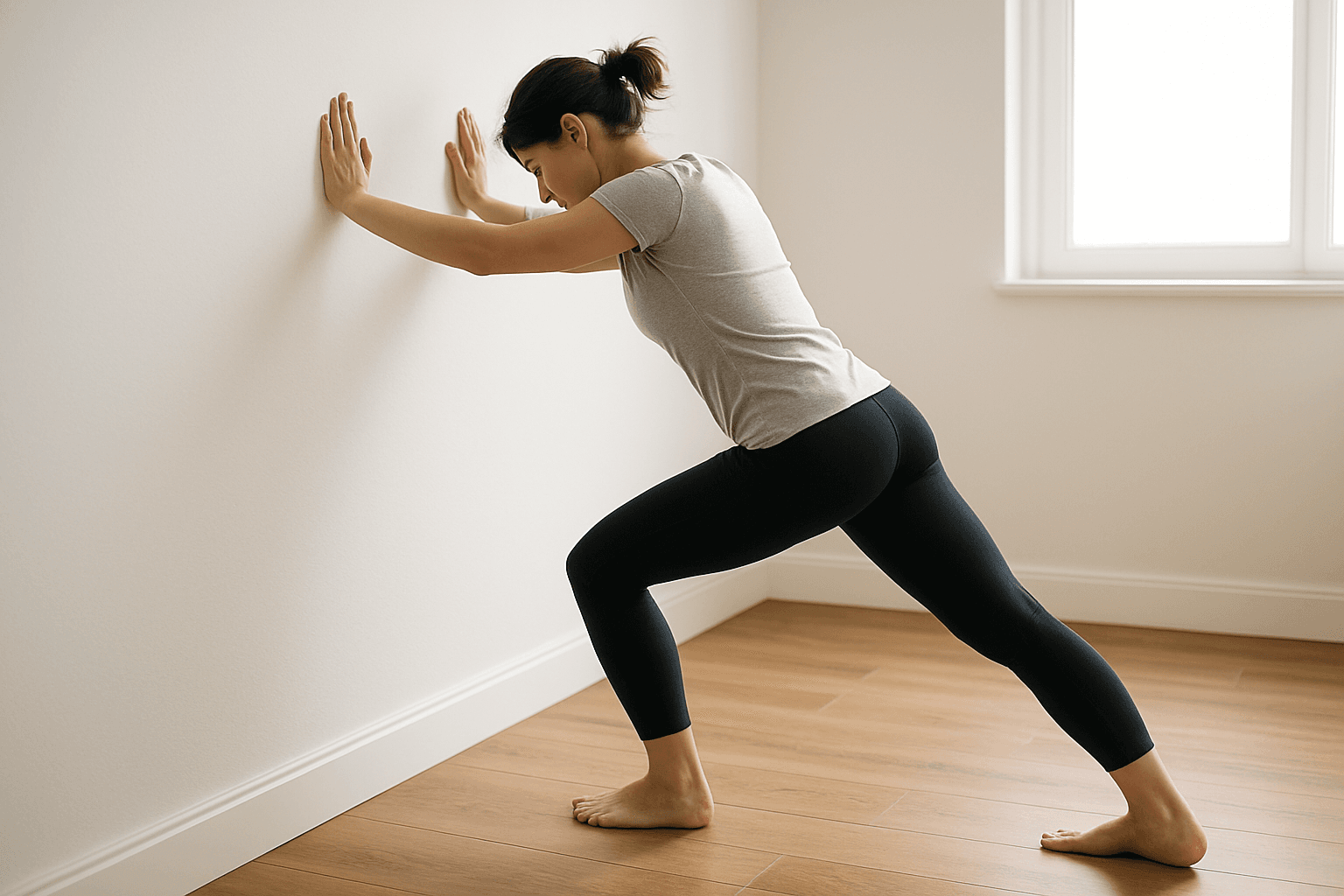
The third move is strength, and it comes once the acute pain has calmed. Short-foot exercises, towel curls, and progressive single-leg balance work rebuild the small muscles that support the tendon. A true single-leg heel raise, done slowly and with control, is the gold-standard rehab move once a clinician has cleared you for it. Aggressive calf stretching, which is a first move for plantar fasciitis, is not a first move here — it can irritate an inflamed tendon. Our general plantar fasciitis stretches page covers the stretches that are safe for most calf-and-arch issues, with the caveat that a tendon problem wants a physical therapist's eye on the program.
The single-leg heel raise test
The single most useful home test for the posterior tibial tendon is the single-leg heel raise. Stand near a counter or a wall for balance, place one foot on the floor and lift the other, then rise onto the ball of the planted foot and lower slowly. A healthy tendon lets you do ten to fifteen controlled reps without pain, and the heel visibly rotates inward (the sole turning slightly toward the midline) at the top of each raise as the midfoot locks into a rigid lever. A tendon in trouble either hurts within the first few reps, cannot complete the full range, or produces a heel that stays straight or rolls outward instead of inward.
Readers who cannot complete a single pain-free heel raise on the sore side should see a podiatrist or foot-and-ankle physician promptly rather than continuing to treat the foot as plantar fasciitis at home. A failed single-leg heel raise is one of the clinical signs that moves a case from early tendonitis toward later-stage dysfunction, where the tendon has lost enough integrity that casting, bracing or surgery enter the conversation. Catching it earlier matters.
Stages, surgery and when a clinician has to step in
Clinicians stage posterior tibial tendon dysfunction in four buckets. Stage one is inflammation of a tendon that still works and an arch that still looks normal; home care, supportive footwear and physical therapy almost always resolve it. Stage two is a tendon that has lost some integrity and an arch that has begun to flatten but can still be corrected by hand or by a stiff insole; a custom orthotic or a short course of a walking boot often enters the picture here, along with directed physical therapy. Stage three is a tendon that is not functional and an arch that has fallen and become rigid; surgery is usually on the table. Stage four involves ankle changes too and is reconstructive.
The reason the staging matters is that stage one responds beautifully to the daily plan on this page, and stage three usually does not respond to any home routine. The window between them is where most readers live and where getting a clinician's eye on the foot once pays back many times over. A one-visit confirmation that the tendon is intact and the arch is maintained is often all it takes to turn an anxious reader into a confident home rehabber. A one-visit catch of early stage two can be the difference between a six-week recovery and a two-year one.
Nothing on this site is a treatment for tendon disease, and nothing in the comfort aisle replaces a formal exam. Persistent inside-of-ankle pain that has lasted more than three to four weeks, a visibly flatter arch than the other foot, an inability to do a single-leg heel raise on the painful side, pain with any swelling, warmth or color change, or heel-and-arch pain in a reader with diabetes, inflammatory arthritis or a recent injury are all reasons to see a podiatrist or foot-and-ankle physician rather than another month of self-care.
Add the arch support the tendon has been doing alone
A trim-to-fit insole with a firm medial arch and deep heel cup — gives the posterior tibial tendon some of its load back while the daily routine does its work.
Add the arch support the tendon has been doing alone →Frequently asked questions
How do I tell posterior tibial tendonitis from plantar fasciitis?
Location is the biggest tell. Posterior tibial tendonitis lives along the inside of the ankle bone and the first inch of the arch where the tendon inserts; plantar fasciitis lives under the front of the heel. Timing is the second tell. The tendon pain builds through a day and does not reset with a short walk; plantar fasciitis is worst with the first steps after a long sit and eases with a few minutes of movement. If you can see a flatter arch on the sore side compared to the other foot, or you cannot complete a pain-free single-leg heel raise, you are almost certainly in tendon territory and deserve a clinician's exam.
Will insoles help posterior tibial tendonitis?
A supportive insole with a firm medial arch is one of the most useful early interventions, because it mechanically takes some of the arch-holding load off the tendon with every step. Over-the-counter insoles are often enough for stage-one cases; later stages may need a custom orthotic with a specific medial post built in. The between-walks insole, in the shoes you wear all day for everything that is not a workout, usually matters more than any one pair.
Can I run with posterior tibial tendonitis?
During an active flare, usually not — the repeated single-leg loading is the activity most likely to make a tendon problem worse, and running through it is one of the shortest routes to a stage-two case. Switch to low-impact training (cycling, swimming, pool running, an elliptical) for two to four weeks while the tendon calms, work on strengthening the arch and the calf complex, and return to running once you can do fifteen pain-free single-leg heel raises on the sore side and have had a clinician clear the plan.
What stretches help posterior tibial tendonitis?
Aggressive stretching is not a first move for an acutely inflamed tendon the way it is for plantar fasciitis — a strained tendon does not want to be pulled on. Gentle calf stretching once the acute pain has calmed is reasonable, as are short-foot exercises and progressive single-leg balance work to rebuild the small foot muscles. A physical therapist's eye on the specific routine is worth more than any article; this is one of the diagnoses that most benefits from a few supervised sessions.
How long does posterior tibial tendonitis take to heal?
A stage-one case caught early, with supportive footwear and a sensible load cut, often settles in four to six weeks. A longer-standing case with any tendon degeneration can take three to six months of consistent care. A later-stage case where the arch has started to flatten may need bracing, a walking boot or surgical consultation and takes much longer. The honest signal is not time but function: a tendon that can do fifteen pain-free single-leg heel raises is a tendon on the mend; one that still cannot do five after six weeks of honest care needs a specialist read.
When should I see a doctor for posterior tibial pain?
Promptly — more promptly than for most heel pain patterns. Reasons to call: pain along the inside of the ankle that has lasted more than three to four weeks, a visibly flatter arch on the sore side, any swelling that lasts into the morning, an inability to do a single-leg heel raise on the painful side, pain with warmth, numbness or a color change, a history of diabetes or inflammatory arthritis, or any sudden sharp pop that preceded the pain. A podiatrist or foot-and-ankle physician is the right person for the first exam.
HeelCups is reader-supported. When you buy through links on our site we may earn an affiliate commission, at no extra cost to you. This article is general information about foot comfort and is not medical advice — see our medical disclaimer.