HAMMER TOES
Hammer Toes: Why the Middle Joint Bends, What Eases the Rubbing and When Shoes Stop Being Enough
A toe that curls down at the middle joint can rub, callus and ache. Here is what causes it, which shoes and pads give it room, and why early action matters.
A hammer toe is a toe, usually the second, third or fourth, that bends downward at the middle joint so it looks like a small hammer or claw. Early on the joint is flexible and you can still straighten it with a finger. The short answer on what helps: shoes with a deep, roomy toe box, soft pads over the rubbing knuckle, simple toe exercises, and a clinic visit if the toe has stiffened or hurts despite better footwear.
The American Academy of Orthopaedic Surgeons' OrthoInfo page notes that early hammer toes respond to simple measures and that untreated ones can stiffen and may need surgery. That is the main reason not to ignore one, even if it only looks like a cosmetic oddity.
This page covers the toes, not the heel, but they are connected: how your toes grip and push off changes load across the foot. Nothing here is medical advice. If a toe is red, hot, ulcerated or painful, or you have diabetes, see a doctor or podiatrist.
What causes a hammer toe
The Mayo Clinic describes the cause as often unknown but lists poorly fitting shoes, foot injury and conditions such as diabetes among the contributors. Muscle and tendon imbalance is a common mechanism: when the small muscles that keep the toe straight are overpowered, the middle joint curls. Shoes that squeeze the toes, especially a short or narrow toe box or high heels, keep the toe bent for hours and can set the shape.
Other foot shapes play a part. A bunion can push the big toe against the second toe and crowd it into a bend, and a high arch can pull the toes into a claw-like position. Our guide to insoles for high arches explains why rigid feet often carry more toe problems.
Flexible versus rigid
The key question is whether the joint still moves. A flexible hammer toe can be gently straightened by hand, which means conservative options have the best chance. A rigid one will not straighten and often has thick skin over the knuckle. The distinction is what a clinician checks first, and it largely decides what comes next.
Shoes that give the toe room
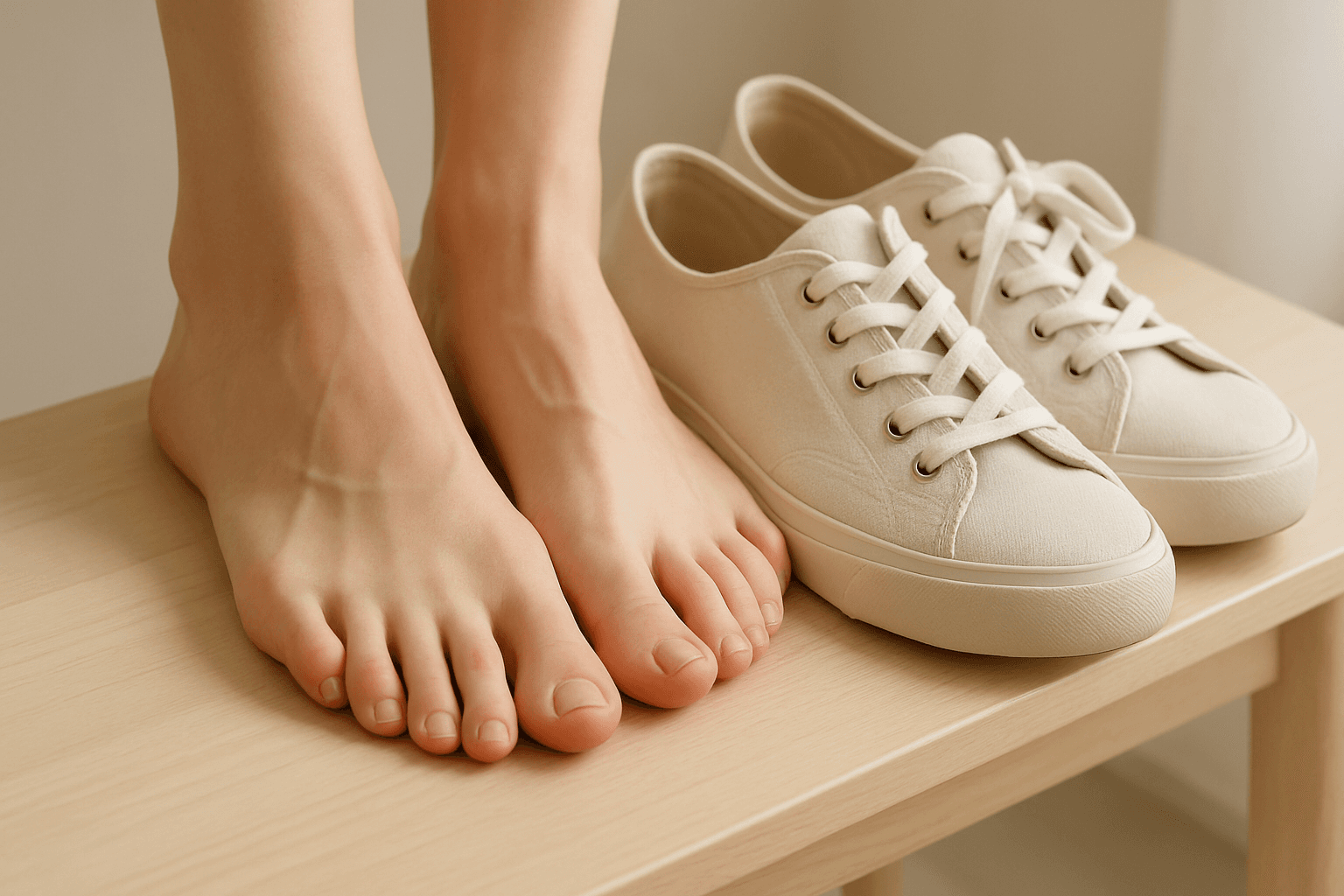
Footwear is the first lever. EBSCO's summary of hammertoes advises roomy toe boxes and soft soles and says to avoid high heels and shoes that squeeze the toes. In the shop, look for a toe box with real depth, not only width, so the top of the shoe does not press the raised knuckle. Press your thumb on the top of the shoe over your toes; there should be space.
Try shoes late in the day when feet are largest, and check for seams over the knuckle, which can rub into a sore. Our page on pain on the top of the foot covers lacing adjustments that reduce pressure from the top.
Pads, sleeves and insoles
The Mayo Clinic says changing footwear and using shoe inserts may ease pain and pressure. In practice, soft gel or fabric sleeves over the knuckle cut friction, and a crest pad under the ball of the foot can help hold the toe in a more neutral position. A metatarsal pad or orthotic is something a podiatrist can fit for a more advanced case.
If the toe tip is jamming into the shoe, a little cushioning beneath the toe tip can ease the load. Keep any padding thin; a thick one can push the toe into the shoe's roof and make things worse. Corns that build on the knuckle are covered in our corns and calluses guide.
Simple exercises
For a flexible toe, short daily exercises are commonly suggested to keep the joint mobile: gently straightening the toe by hand for a few seconds, picking up a small towel or marbles with the toes, and stretching the toes against a wall. They are low-risk, but evidence that they reverse a bent toe is limited, so think of them as maintenance for flexibility rather than a way to correct the shape. Stop if they cause sharp pain.
Calf tightness can change how the foot loads, so general stretching helps too; see our guide on tight calves and heel pain.
When it needs a clinic
Book a visit if the toe is painful despite shoe changes, if it is stiffening, if the skin over the knuckle is breaking down, or if it limits walking. A podiatrist or orthopaedic specialist can assess flexibility, take an X-ray and talk through options. Rigid or painful toes may be offered a surgical procedure, which is a decision to make with a clinician and not something to rush. People with diabetes or poor circulation should have any foot deformity checked early, because rubbing sores can become serious.
More foot care guides
Bunions, corns, nails and more below the ankle, on the foot care hub.
More foot care guides →Frequently asked questions
Can a hammer toe be straightened without surgery?
A flexible hammer toe may be managed with roomier shoes, pads and exercises, which can ease symptoms and may stop it progressing. A rigid toe will not straighten by hand and a clinician can discuss other options.
What shoes are best for hammer toes?
Shoes with a deep, wide toe box, soft uppers and low heels. Avoid pointed toes, high heels and seams over the knuckle.
Do hammer toes get worse over time?
OrthoInfo notes that untreated hammer toes can stiffen, which is why early attention to footwear is advised.
Are hammer toes linked to heel pain?
Not directly, but toe shape affects how the foot pushes off and how load spreads, so they can occur together. See our heel pain hub if the heel is the main complaint.
What is the difference between a hammer toe and a bunion?
A bunion is a bump at the base of the big toe. A hammer toe is a bend in the middle joint of a smaller toe. A bunion can crowd the second toe and contribute to a hammer shape.
When should I see a doctor?
If the toe is persistently painful, stiff, red, ulcerated or limiting walking, or if you have diabetes or reduced sensation. Persistent foot pain deserves a professional opinion.
HeelCups is reader-supported. When you buy through links on our site we may earn an affiliate commission, at no extra cost to you. This article is general information about foot comfort and is not medical advice — see our medical disclaimer.