ACHILLES
Achilles Tendonitis: Why the Back of Your Heel Hurts and What Actually Calms It Down
Pain at the back of the heel is a different animal from pain underneath it. Here is what Achilles tendonitis actually is, how to tell it apart from plantar fasciitis and a Haglund's bump, and the specific plan the tendon responds to.
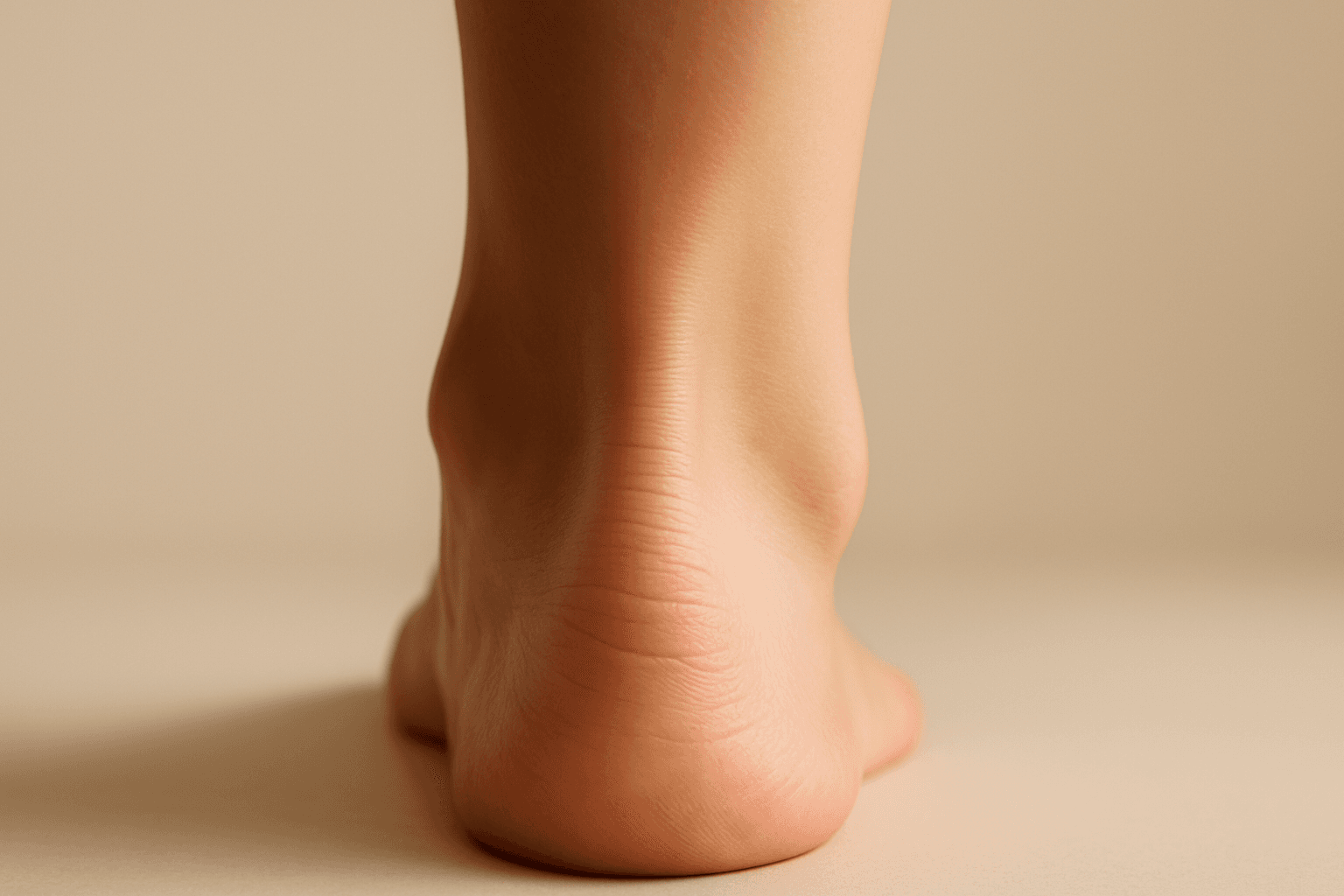
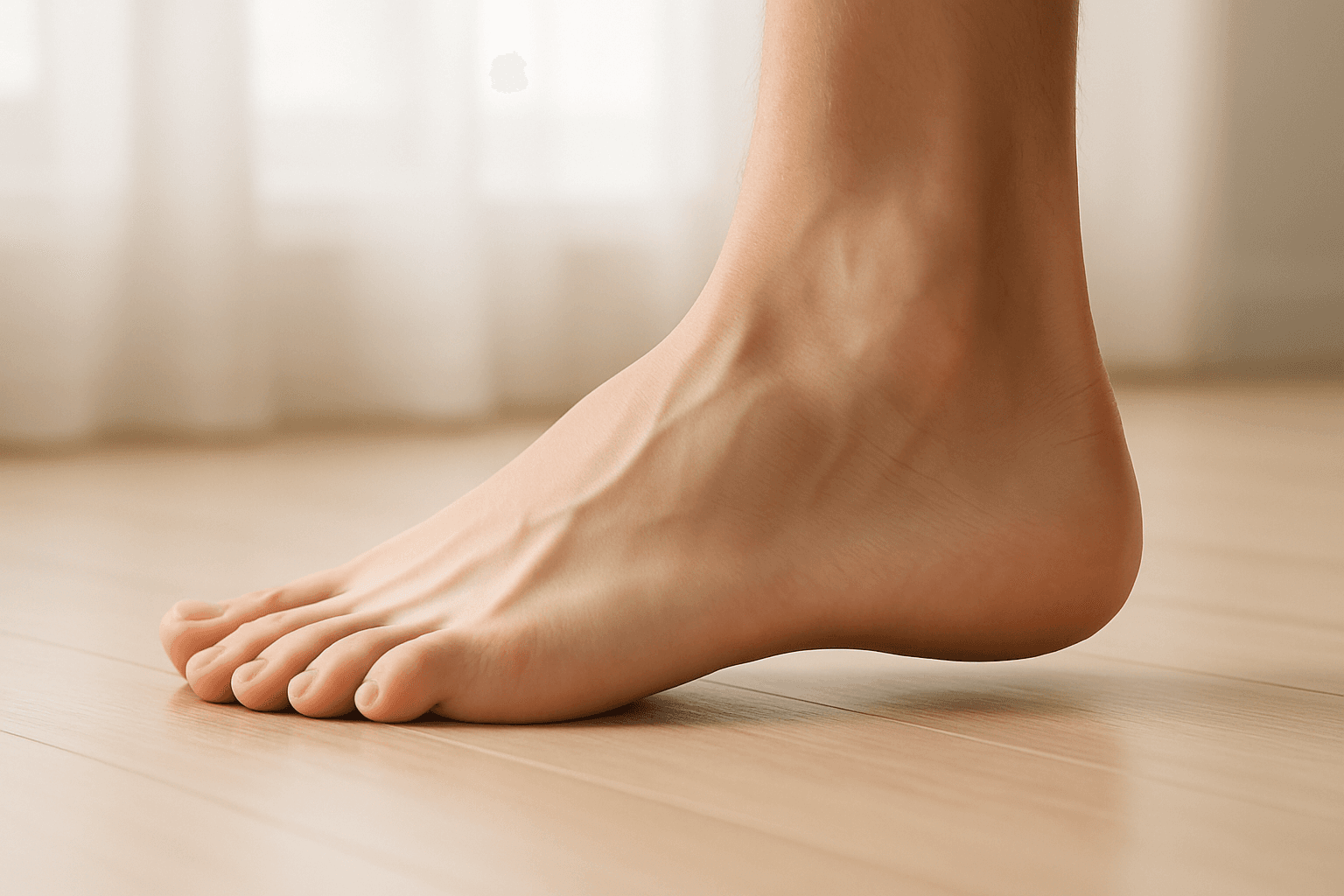
Achilles tendonitis — clinicians now more often say Achilles tendinopathy, because the tissue picture is degenerative more than inflammatory — is irritation of the thick tendon that connects the calf muscles to the back of the heel bone. It shows up in two flavors that behave differently. Mid-portion tendinopathy sits two to six centimeters above the heel and often feels like a slightly thickened, tender rope. Insertional tendinopathy sits right where the tendon meets the heel bone and often comes with a bony bump (a Haglund's deformity) that a shoe's stiff back rubs against. The two share a family resemblance and split at treatment.
The main thing to know if the back of your heel hurts is that plantar fasciitis it is not, and the plantar fasciitis routine does not fit. Achilles pain rewards a small heel lift, not a flat insole; eccentric calf loading once the acute pain has calmed, not aggressive stretching in the first week; and shoes with a softer heel counter that does not press directly on the bump. Load a fascia routine onto Achilles pain and you can quietly make it worse. This page walks the two patterns, the plan each responds to, the mimic conditions to rule out, and when the tendon needs a clinician.
Nothing here is medical advice, and this is not a diagnosis. Persistent Achilles pain that has not eased after four to six weeks of honest home care, or any acute, severe pain that came with a sudden pop or a feeling that something gave way, deserves an in-person exam by a doctor or podiatrist — a full Achilles rupture is a separate emergency and needs urgent care. If both heels ache with lingering stiffness, our page on arthritis and inflammatory heel pain explains when to ask a clinician about it. If calf stiffness is part of your story, read about tight calves and heel pain.
How to tell you actually have Achilles tendonitis
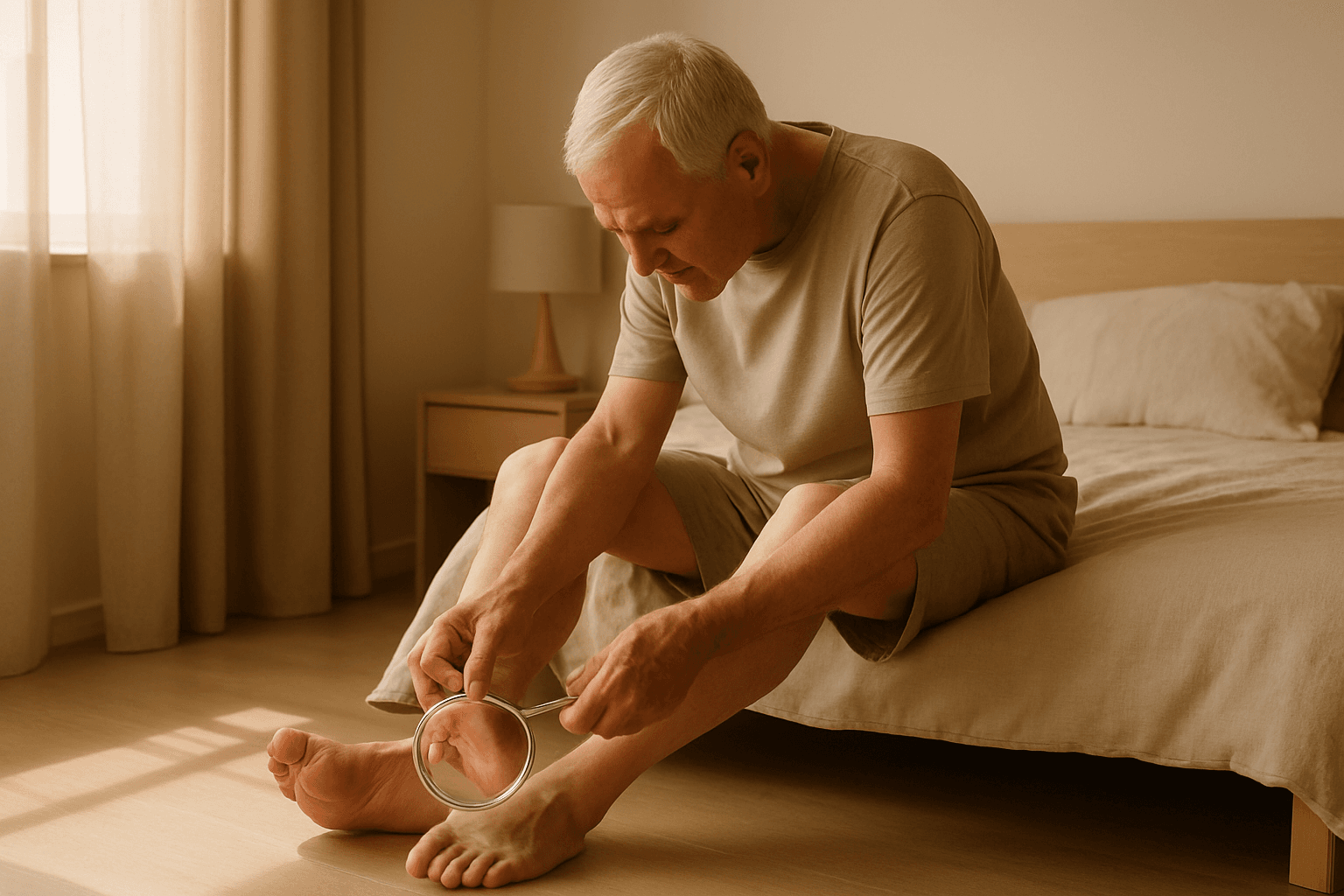
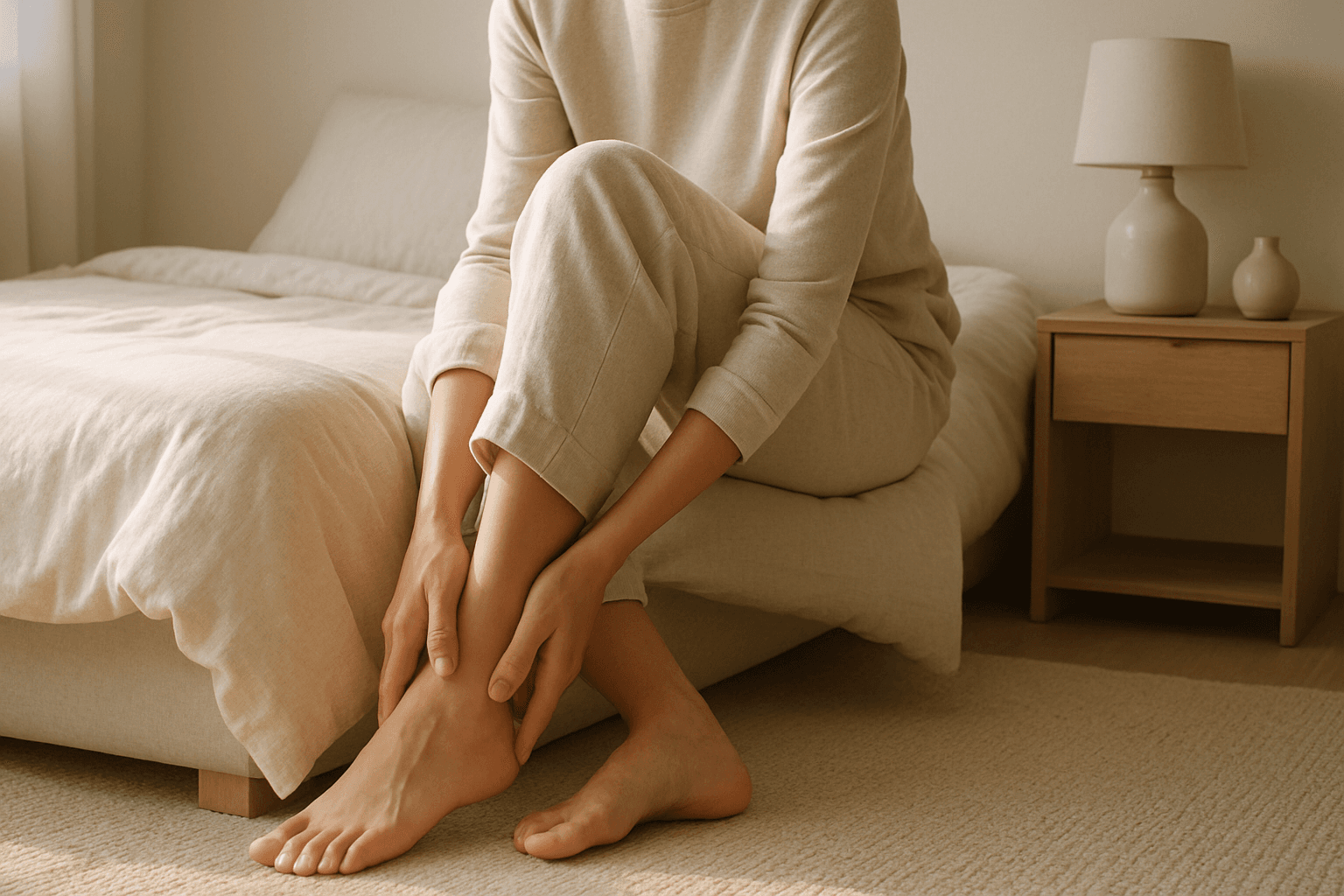
The map is the diagnosis for most readers. Run your thumb up the back of the heel, over the tendon, and into the calf. If there is a tender, slightly thickened band two to six centimeters above the heel bone, that is the mid-portion pattern. If the tender spot sits right where the tendon inserts onto the heel bone — often on the outside back edge, sometimes with a visible bony bump — that is the insertional pattern. Pain that lives underneath the heel toward the front, worst in the first steps of the morning, is plantar fasciitis, not Achilles; our plantar fasciitis symptoms walk-through covers the difference.
The behavior matches the anatomy. Achilles pain classically hurts on the first steps in the morning, then eases somewhat, then flares again with hills, stairs, and pushing off during running. A stretch of the calf reproduces the tender area's pain. It is worse in a stiff-backed shoe that presses on the insertion, and it improves in a shoe with a slight heel lift that shortens the working length of the tendon. Fascia does not care about heel lifts one way or the other; the Achilles cares a lot.
One test worth learning: stand on both feet, then slowly rise onto your toes ten times. Achilles tendinopathy reproduces the tender-band pain by rep four to eight in most readers. Fascia rarely reacts to this test at all. Cases that fail this test badly, with an obvious weakness compared to the other side, deserve a clinician's read sooner rather than later.
What the tendon actually responds to
Achilles tendinopathy has one of the best-supported conservative plans in sports medicine, and the piece with the strongest evidence is progressive eccentric loading. The Alfredson protocol — a specific pattern of slow heel drops off a step, done morning and evening, ramped over twelve weeks — has been the backbone of tendon rehabilitation for two decades and shows consistent benefit in randomized trials. Modern programs (heavy slow resistance, tendon-neutral loading) add options for readers who cannot tolerate the Alfredson drops, but the core idea is the same: the tendon responds to controlled, gradually increasing load, not to rest alone.
The order matters. In the first one to two weeks of a fresh flare, cut the specific trigger (a mileage spike, a return to hill running, a new pair of firm-backed shoes), add a small (about a quarter-inch to a half-inch) heel lift to your everyday shoes to shorten the tendon's working length, and let the acute soreness settle. Do not aggressively stretch a hot tendon; that is the plantar fasciitis playbook and it does not fit here. Once the tender-thumb pain is a background ache rather than a sharp complaint, begin a gentle eccentric or slow-loading program. Most readers can graduate to full loading over eight to twelve weeks; some cases need the full three months and a physical therapist's eye.
Shoe choice is doing more work here than most readers realize. A running or walking shoe with a moderate drop (eight to ten millimeters of heel-toe offset) and a soft, forgiving heel counter is friendlier to an insertional Achilles than a zero-drop shoe with a stiff heel cup. Work shoes and boots with a hard back edge that presses on the insertion drive insertional cases badly; a softer counter, laces adjusted to reduce heel slip, and the heel-lock lacing technique for runners are five-minute changes that shift the daily load meaningfully.
Mimic conditions worth ruling out
Retrocalcaneal bursitis is the closest mimic. A small bursa (a fluid-filled sac) sits between the Achilles tendon and the front of the heel bone, and it can inflame on its own from repeated pressure. The pain sits right where the tendon meets the heel bone, exactly where insertional Achilles lives, but it responds better to shoe changes and a short course of anti-inflammatories than to eccentric loading. In practice these two often coexist, and a clinician's exam separates them.
Haglund's deformity is a bony bump on the back-outside corner of the heel bone. It is a shape, not a diagnosis, and many people have one without any pain. When it does cause pain, the mechanism is a stiff shoe back rubbing on the bump and irritating the tendon and bursa above it. Padded heel sleeves, a softer-backed shoe, and (in stubborn cases) a shoe stretcher on the offending pair are the useful first moves. Surgery to shave the bump is a real option in cases that resist twelve months of honest care.
A partial Achilles tear or a rupture is the mimic that must not be missed. A sudden sharp pain during a push-off, a feeling like being kicked in the calf, or an audible pop is the classic story. Weakness rising onto the toes on the affected leg, or a gap you can feel in the tendon, is a same-day emergency-department visit. A missed Achilles rupture heals poorly and outcomes are much better with prompt evaluation.
Sever's disease in kids and teenagers is a different animal entirely. Persistent heel pain in an active eight-to-fourteen-year-old is almost always a growth-plate irritation at the back of the heel bone, not adult Achilles tendinopathy, and it needs a pediatric plan.
A conservative daily plan the tendon actually likes
Phase one, weeks zero to two: cut the trigger (dial mileage back to what does not aggravate the tender area, or take a full week off if pain is sharp), add a small heel lift to your everyday shoes, switch out any stiff-backed shoes that press on the insertion, and use a bag of frozen peas on the tender spot for ten minutes after long days. This phase is about calming, not building.
Phase two, weeks two to eight: begin a slow-loading program. Eccentric heel drops (stand on a step, come up on both feet, transfer weight to the sore leg, slowly lower the heel below the step level) done in three sets of fifteen morning and evening are the Alfredson standard for mid-portion cases. Insertional cases do better with the same drops done on flat ground rather than off a step, so the tendon is not stretched past neutral. Add load slowly — a small backpack, then a heavier one — over weeks. Some soreness during the exercise is expected; sharp pain that lingers overnight is a signal to back off a rep.
Phase three, weeks eight to twelve: reintroduce the activity that flared it, but on a ramp. Runners add ten to fifteen percent a week to distance, and reintroduce hills last. Standing workers add half shifts back before full shifts. Keep the daily loading program going for at least twelve weeks after pain has resolved — the tendon's structural remodeling continues after the pain is gone, and the readers who quit at week eight are the readers who flare again at month four.
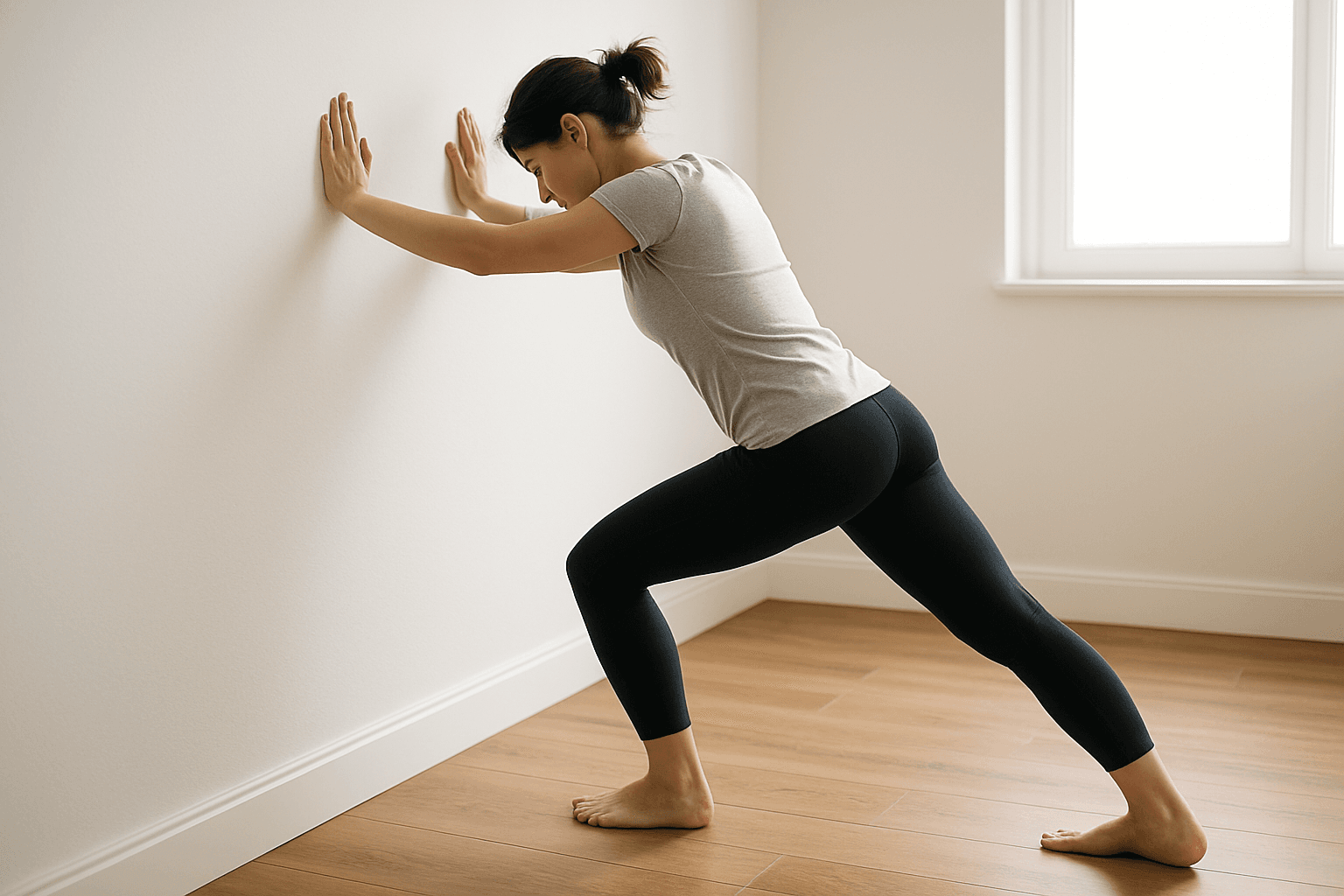
Two things that are worth adding across phases: a supportive shoe in every hour of the day, not just during the exercise session; and a real look at the calf. Tight calves are almost universal in Achilles cases, and gentle calf stretching once the acute phase has passed (not aggressively in week one) helps the whole system. Any shoe worn on hard floors for more than an hour a day benefits from a firm insole with a supportive heel; for mixed heel-pain pictures, the Akusoli insoles we would install first pair with a small heel lift in insertional cases.
When the tendon needs a clinician
A sudden severe pain with a pop, weakness pushing off, or a gap you can feel in the tendon is not a home-care picture. Same-day urgent care or an emergency department visit is the right move; a full Achilles rupture heals much better with prompt evaluation and treatment.
Anything that has not moved after four to six weeks of an honest conservative plan (trigger cut, heel lift, loading program, supportive shoes) deserves an in-person exam. A physical therapist experienced with tendon rehabilitation is the highest-yield next stop for most readers, and eight to twelve sessions of a well-run program moves a large fraction of stubborn cases. Ultrasound-guided injections, extracorporeal shockwave therapy, and orthobiologic injections are real options at the specialist level for cases that plateau on the loading program.
Corticosteroid injections directly into the Achilles tendon substance are widely avoided because of the tendon rupture risk; if a clinician has recommended one, ask specifically about the risk profile and whether an alternative is available. Surgery for chronic Achilles tendinopathy is reserved for pain that has resisted six to twelve months of honest care with a clear structural target on imaging; it is not a first-year decision.
The full back-of-heel walk-through
Once you have mapped the pain to the tendon, the pillar page on back-of-heel pain covers the neighboring conditions and the full plan.
The full back-of-heel walk-through →Frequently asked questions
How do I know if my heel pain is Achilles tendonitis or plantar fasciitis?
Location does most of the work. Achilles tendonitis lives at the back of the heel — either where the tendon meets the heel bone (insertional) or a couple of inches higher up the tendon (mid-portion) — and reproduces the tender area's pain when you rise onto your toes or stretch the calf. Plantar fasciitis lives underneath the heel toward the front, with the classic first-step morning stab that eases as you walk. Loading a fascia routine (aggressive stretching, a flat insole) onto Achilles pain can make it worse, so getting this map right matters.
How long does Achilles tendonitis take to settle?
A moderate case with an honest daily plan — trigger cut, small heel lift, slow-loading program morning and evening, supportive shoes — usually feels meaningfully better at four to six weeks and settles over three months. Chronic cases that had been building for months, or that involve insertional pain and a Haglund's bump, often need six months or more of consistent loading and shoe changes. Cases still bad at three months of honest care belong with a physical therapist for a specialist-level program.
Should I stretch my Achilles if it hurts?
Not aggressively in the first one to two weeks of an acute flare. A hot, tender tendon does not respond well to being pulled hard on stretch; that is the plantar fasciitis playbook and it does not fit here. Wait until the sharp complaint has settled to a background ache, then reintroduce gentle calf stretching alongside a slow-loading program. Eccentric heel drops off a step (or on flat ground for insertional cases) are the piece of the plan with the best evidence, not aggressive stretching.
Do heel lifts help Achilles tendonitis?
Yes, especially in the acute phase. A small heel lift of about a quarter-inch to half-inch in your everyday shoes shortens the tendon's working length and takes some of the constant tension off the sore area, which is why nearly every early-phase plan includes one. Do not overdo it — a very large lift creates its own problems and can make the calf compensate poorly. Once the pain has settled and the loading program is underway, most readers gradually reduce the lift over weeks rather than living in it permanently.
Can I keep running with Achilles tendonitis?
Sometimes, on a much shorter leash. If your pain is a background ache that does not spike during or after a run and does not linger the next morning, a maintenance level of running (dial back mileage by thirty to fifty percent, cut hills and speed work, run on softer surfaces) is often compatible with recovery. If the pain sharpens during a run, lingers the next morning, or is worse rising onto your toes than it was a week ago, take a full week off, restart the acute-phase plan, and reintroduce running on a stricter ramp. Our heel pain when walking or running walk-through covers the return-to-load ramp in more detail.
When is Achilles pain an emergency?
A sudden sharp pain with a popping sound or a feeling that something gave way, along with weakness pushing off the affected foot or a gap you can feel in the tendon, is a same-day urgent-care or emergency-department visit. A full Achilles rupture heals much better with prompt evaluation and often requires either a specific bracing protocol or surgical repair. Do not walk it off; get it looked at that day.
HeelCups is reader-supported. When you buy through links on our site we may earn an affiliate commission, at no extra cost to you. This article is general information about foot comfort and is not medical advice — see our medical disclaimer.