ONE WEEK
Can You Cure Plantar Fasciitis in One Week? What Realistically Helps in Seven Days
The one-week question is really two questions: can you feel meaningfully better by day seven, and can the underlying tissue be fully healed in the same window? The answers are honest yes and honest no.
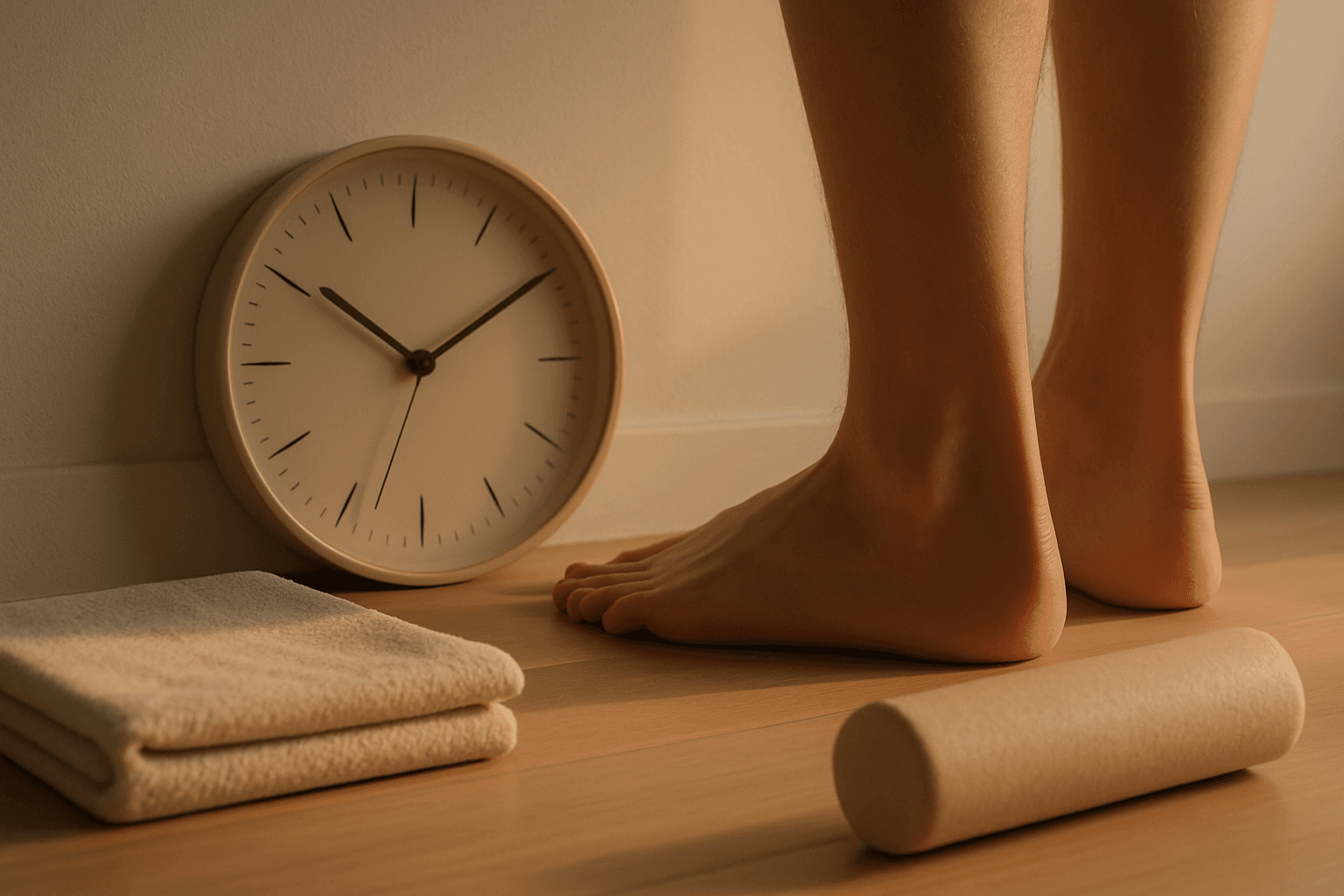
The search for a one-week fix is one of the most common questions people ask when a stabbing morning heel pain lands in their life for the first time. It is a fair question, and the honest answer has two parts. Can the plantar fascia — a thick, ligament-like band of collagen at the underside of the foot — go from irritated and painful to fully healed in seven days? No. Real tissue remodeling takes weeks. Can most people feel meaningfully better by the end of a week if they set up the daily basics correctly and take the load off the fascia? Yes, and often much better than they expect.
This page is written for that first week. It walks through what plantar fasciitis actually is, what "cure" does and does not mean in a soft-tissue overuse injury, the day-by-day plan that gets you real comfort by day seven, and the red flags that mean your first move should be a clinic visit rather than another stretch. Everything on this page is aimed at comfort, support and relief; nothing on this site cures a foot condition. For the broader map of the problem, see the plantar fasciitis hub.
If you have already been managing plantar fasciitis for months, a week-focused plan is still useful — it is essentially a reset. The same daily basics that give a beginner meaningful relief in seven days often unstick a plateaued case, especially when the sticking point turns out to be an unsupportive shoe worn all day.
What "cure in one week" is really asking
Plantar fasciitis is a tissue overload problem. Micro-tears at the fascia's attachment on the heel bone outpace repair; the tissue thickens, becomes reactive, and pain signals amplify. That process took weeks or months to build up in most people — a mileage jump, a new job on hard floors, ten pounds gained, a summer of flat sandals — and it will not fully undo itself in seven days. What can change in seven days is how much of your body weight the fascia is carrying on each step and how tight the calf and Achilles above it are, and both of those changes turn down the pain fast.
In practice, most people who commit to a real one-week plan see a step-change in the morning first-step pain by day three or four, and end-of-day soreness starts to drop by day five to seven. Full recovery — the fascia genuinely calm, the tissue done remodeling — is a six-to-twelve-week horizon for most, longer for a stubborn case. The one-week question, honestly answered, is about relief and comfort in the short term while the real healing continues underneath.
The three levers you actually control this week
Almost all of the short-term relief comes from three levers. Lever one is tension in the calf and Achilles. A tight calf pulls up on the heel bone, which pretensions the fascia on the other side of that same bone; every step you take then loads the fascia further than it should be loaded. Twice-daily calf and fascia stretching drops that pretension across a week and buys you softer first-step pain fast.
Lever two is what happens under the heel and arch for the eight to twelve hours a day you are wearing shoes. A supportive insole with a firm medial arch and a deep, cushioned heel cup unloads the fascia and cradles the fat pad. Flat drugstore foam does neither. The pair we would buy first — trim-to-fit for the shoes you already own — is in our Akusoli insoles review.
Lever three is the specific activity that tipped the tissue over. It was almost never an even, gradual thing — usually it was a spike. If it was a mileage jump, cut mileage in half for this week. If it was a new twelve-hour shift, add sit-down breaks and change out of flat work shoes as soon as you get home. If it was a summer of barefoot floors, put on a supportive slipper at home for a week. Reduce, do not eliminate. The point is to get the fascia below its overload threshold for seven days.
Day-by-day: the honest one-week plan
Day 1 (today). Before your feet hit the floor tomorrow, put a bath towel on your nightstand. Read our plantar fasciitis stretches walk-through and pick the three that fit your day — the towel stretch, the wall calf stretch, and the seated fascia stretch cover most people. Order the supportive insole so it arrives by day three. Take note of the specific activity that flared it and decide how you will pull back this week.
Days 2 to 3. Do the towel stretch sitting up in bed before standing, morning and evening. Add the wall calf stretch and the seated fascia stretch after breakfast and again before bed. Ice or a frozen water bottle rolled slowly under the arch after your longest hours on your feet — five minutes is enough. Keep off hard floors barefoot; a supportive slipper is not overkill. Cut the flaring activity in half.
Days 4 to 5. Add the insole to every shoe you wear all day and ease in over these two days — three to four hours the first day, most of the day the second. If the arch and heel cup feel like a lot at first, that is normal; the tissue is adjusting to being supported. Keep the stretching routine going. Most people notice the biggest shift in end-of-day soreness in this window.
Days 6 to 7. Wear the insole for full days. Add a few minutes of the low-load exercises from our plantar fasciitis exercises page — towel scrunches while you watch TV, short-foot drills at the desk, ten slow double-leg heel raises — to start rebuilding the small foot muscles that share arch-support duty with the fascia. Compare morning pain and end-of-day soreness with day one; most people find a real difference here, even if the fascia is not "cured."
Day 8 onward. If pain is meaningfully softer by day seven, keep everything you did and add a second short exercise block a day for the next three to five weeks; that window is when the fascia and its supporting cast actually settle. If pain has barely moved, the most common reason is an unsupportive shoe still worn during the workday — swap the shoe or add the insole there, not just at home — and give it two more weeks. If it is worse, or any red flag below shows up, book a clinician.
What does not deliver a one-week miracle
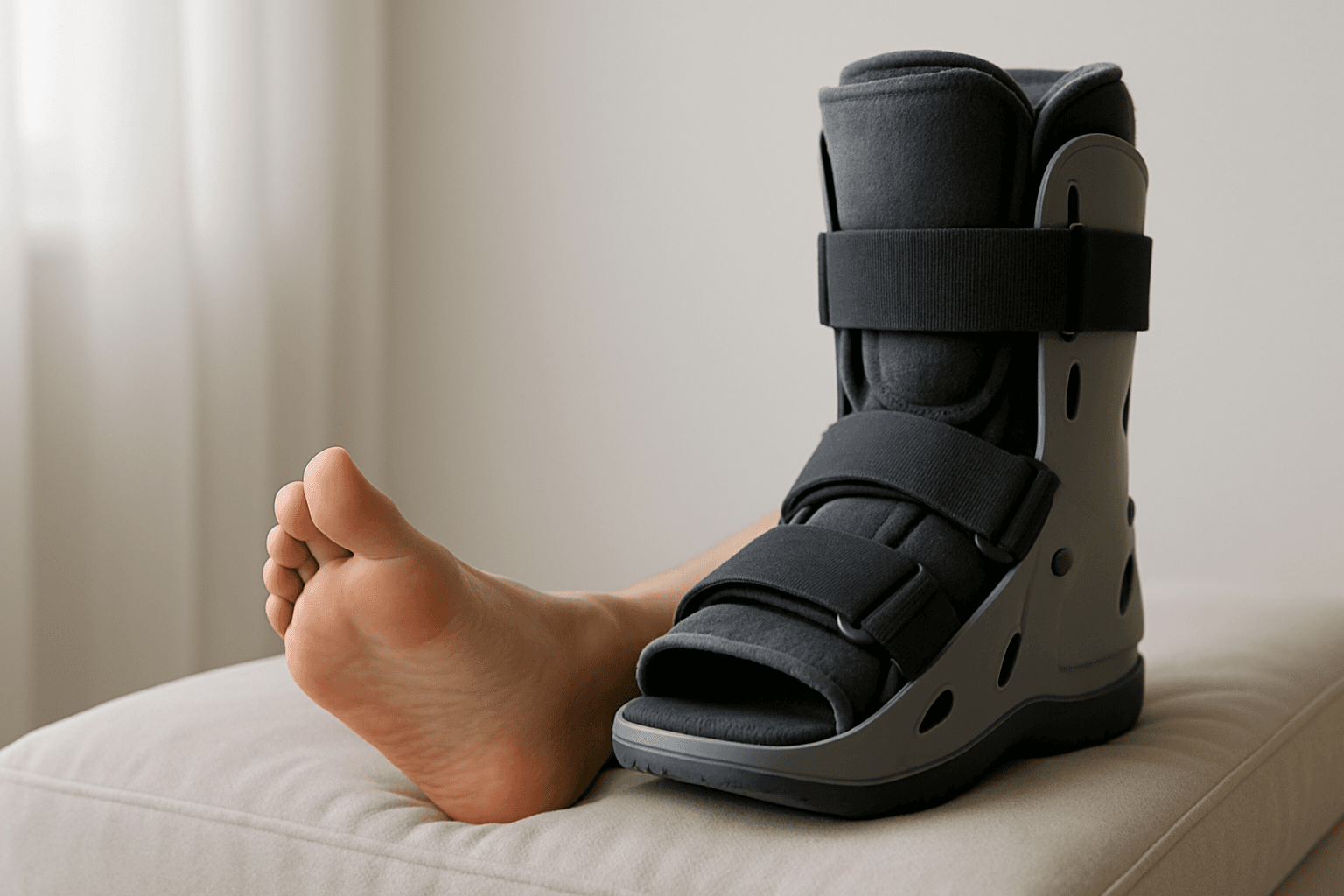
A single-modality gadget is the trap. A night splint alone, a taping strip alone, a percussion gun alone, a copper compression sock alone, a KT tape tutorial alone — none of these outperform the boring three-lever plan above. Some of them are useful add-ons once the basics are in; a night splint in particular helps people whose morning pain is severe and does not budge with the towel stretch, but it is week three-plus territory, not day two. The people who report a "cure in one week" almost always changed several boring things at once.
The other common trap is doing everything for two days, seeing a bit of relief, and stopping. Plantar fasciitis is a repeat-load problem; the fascia is under load every step you take. Stopping the routine drops you back into the overload zone within days. Set the routine up so you do not need willpower — towel next to the bed, insole in the shoe, phone alarm for the evening stretch.
And finally, over-the-counter anti-inflammatories are comfort medicine, not treatment; use them for a bad day, not as a plan. The same is true of an ice bath, a hot foot soak or a menthol rub. They are fine to include; they are not the reason people get better.
Red flags that mean skip the self-care plan
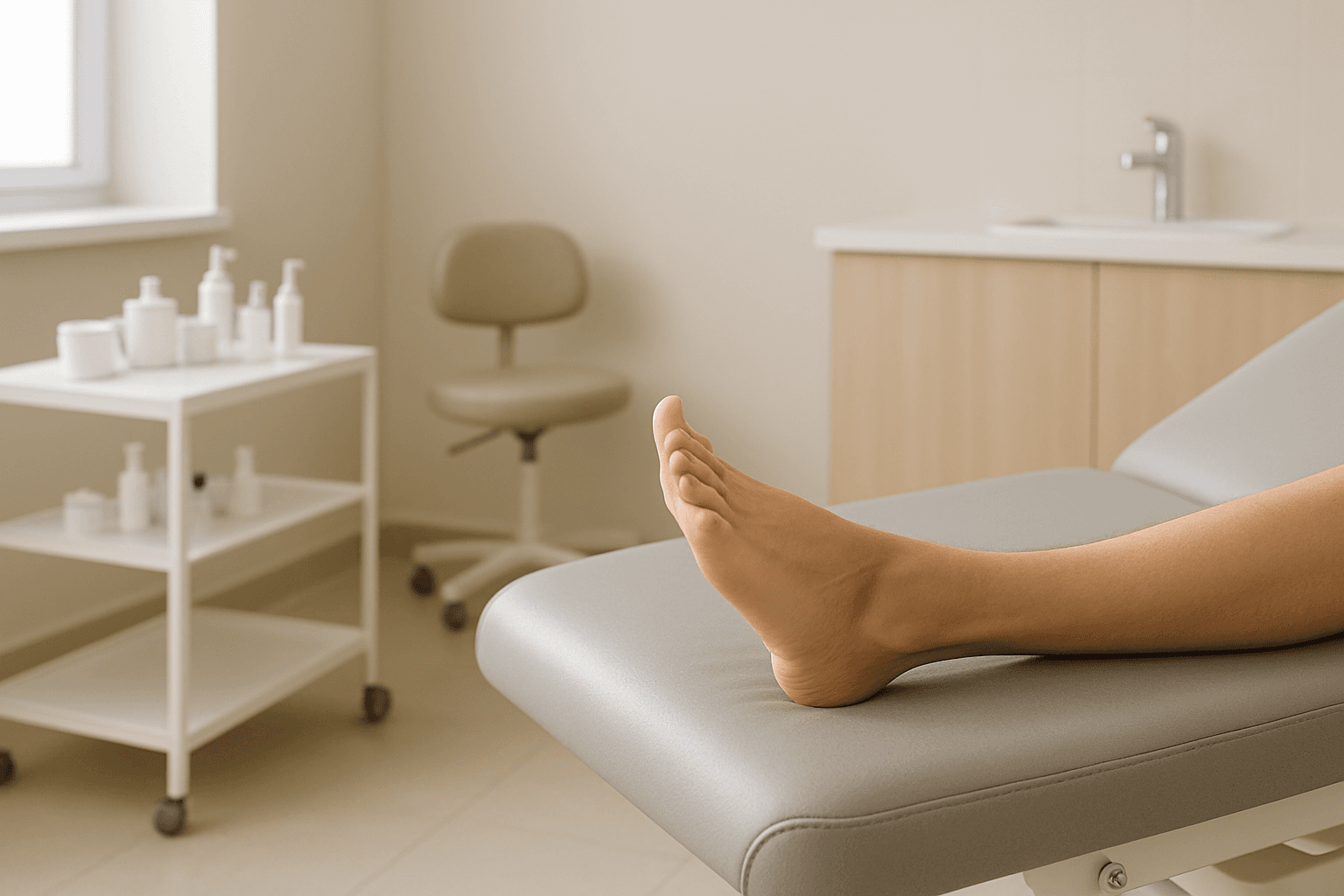
See a doctor or podiatrist this week, not next month, if any of these fit: the pain followed a specific fall or twist and started immediately; it is severe enough that you cannot bear weight without limping; it comes with swelling, warmth, redness or a fever; there is numbness, tingling, burning or a color change in the sole; it wakes you at night or is present at rest; or the pain is on the back of the heel where the Achilles attaches rather than under the heel (that is a different problem — see why does my heel hurt).
Heel pain in a child or teenager is almost never plantar fasciitis; a growth-plate irritation called Sever's disease is far more likely and needs a different plan. Persistent heel pain on both sides at once in someone under forty is another reason for a clinic visit rather than more foam rolling — inflammatory conditions can present that way. None of these belong in the seven-day self-care lane.
A realistic definition of "better" by day seven
For most people who follow the plan, day seven looks like this: morning first-step pain that is real but a fraction of what it was on day one, end-of-day arch fatigue rather than a stabbing heel, and a walk to the mailbox that no longer requires an inward wince. It is not silence. It is the difference between an angry tissue and a calming one. That is the outcome that keeps people doing the routine long enough for the fascia to actually heal.
If you got there, do not stop. The tissue is still repairing itself under a lower load than it had two weeks ago, and it needs another three to eight weeks of that lower load before the routine can safely relax. Keep the insole in the shoes you wear all day, keep the morning towel stretch, and add the small-muscle exercises so the fascia stops carrying the whole day on its own. For the ongoing routine that turns week one relief into full recovery, our plantar fasciitis hub has the map.
The insole that makes the seven-day plan actually work
A trim-to-fit insole with a firm arch and deep heel cup — unloads the fascia during the eight to twelve hours a day when it matters most.
The insole that makes the seven-day plan actually work →Frequently asked questions
So is a one-week cure for plantar fasciitis a myth?
A cure in seven days — meaning the underlying tissue is fully healed and the problem cannot come back — is not realistic for a soft-tissue overuse injury. Meaningful comfort, softer morning pain and less end-of-day soreness within a week are realistic for most people who commit to the daily basics: twice-a-day calf and fascia stretching, a supportive insole in every shoe worn all day, and a temporary cut in whatever activity tipped the tissue over. Keep going for six to twelve weeks and full recovery is on the table.
What is the fastest thing I can do today?
Set a bath towel on your nightstand and do a thirty-second towel stretch for each foot before you stand up in the morning. That single change eases the first-step pain that most people find the most awful part of plantar fasciitis, and it costs nothing. Pair it with a wall calf stretch after breakfast and a frozen water bottle under the arch in the evening, and you have covered ninety percent of what a physical therapist would give you on visit one.
Do I have to stop running or working out for a week?
You almost never have to stop entirely, but the specific activity that flared the fascia usually needs a temporary cut. If it was running, swap to cycling or the pool for the first week and drop your mileage by half when you resume. If it was standing all day at a new job, add real sit-down breaks and change into supportive shoes the moment you get home. Reduced, not eliminated, is the goal — the fascia needs less load, not zero load.
Will an insole really change things in a week?
For most people, yes — because you are on your feet for eight to twelve hours a day and the shoe is where the fascia lives during those hours. A firm medial arch and a deep, cushioned heel cup unload the fascia and cradle the fat pad; flat drugstore foam does neither. Ease in over the first two days so your feet adjust, then wear it all day. Our first pick is in our Akusoli insoles review.
Is a night splint worth trying in the first week?
Usually not. Splints are a useful add-on for stubborn morning pain that has not moved after two to three weeks of honest home care; jumping to one on day two of week one skips the cheaper, higher-yield changes. If morning first-step pain is still severe at three weeks despite the towel stretch and insole, a soft dorsal night splint or a boot-style splint is worth adding, ideally after a clinician has taken a look.
What if the pain is much worse after one week?
That is uncommon if you actually reduced the flaring activity, and it is a signal to see a clinician. The most common reasons pain climbs in week one are pushing through a run or long shift instead of scaling it back, aggressive rolling directly on the sore heel bone, or an unrecognized second problem — a stress reaction, an Achilles issue, a nerve entrapment — masquerading as plantar fasciitis. A hands-on exam sorts these out fastest.
HeelCups is reader-supported. When you buy through links on our site we may earn an affiliate commission, at no extra cost to you. This article is general information about foot comfort and is not medical advice — see our medical disclaimer.