ICE OR HEAT
Ice or Heat for Plantar Fasciitis? What Each One Actually Does — and When to Use It
Ice calms an angry fascia at the end of the day; gentle warmth lengthens stiff tissue before you stretch. The common advice to "use whatever feels good" is right but incomplete — here is the honest timing map most readers get wrong.
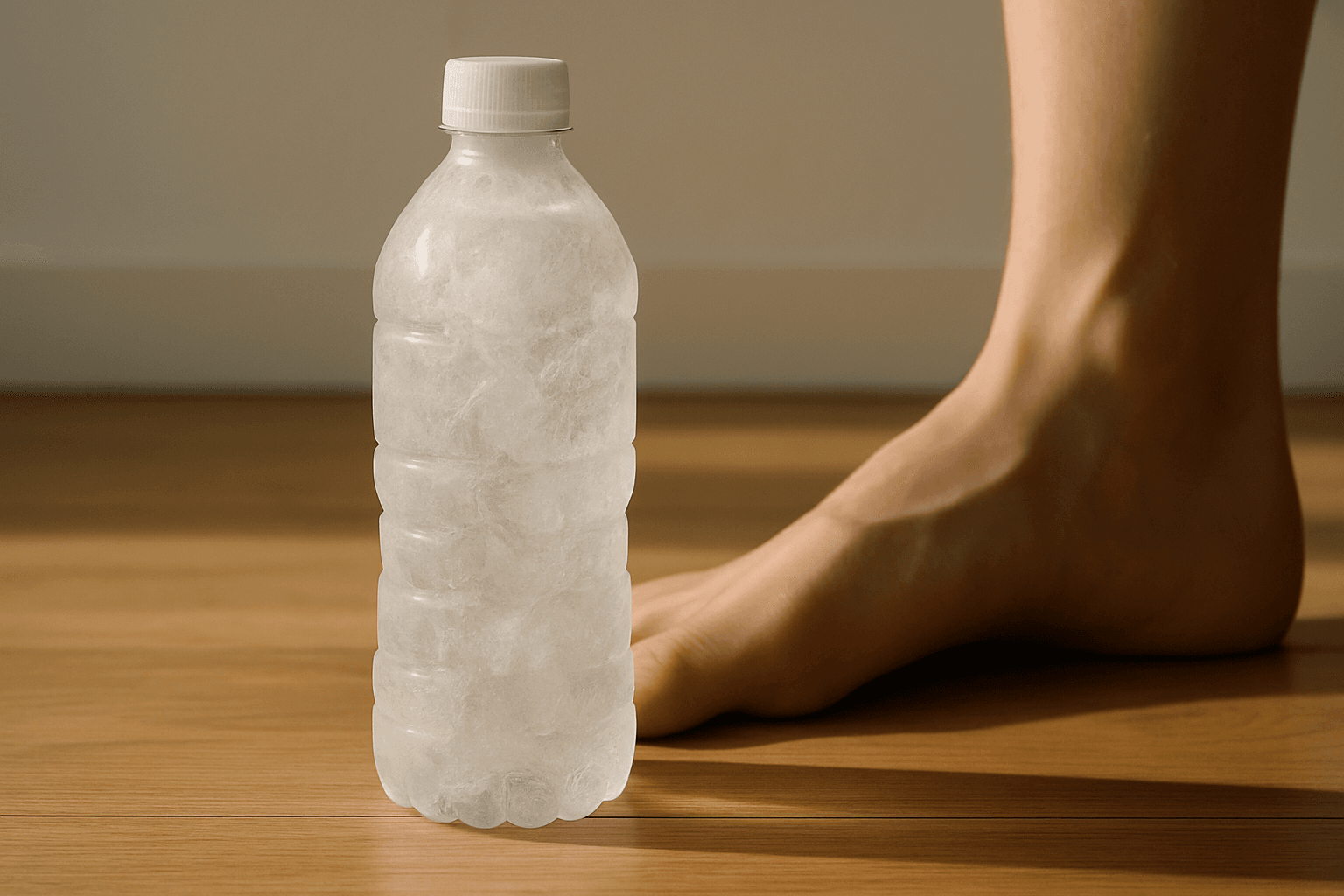
Ice or heat for plantar fasciitis is one of the most-asked questions in heel pain, and it is one of the few places where the honest answer is both, at different times of day, for different reasons. Ice calms an angry fascia at the end of a long day on your feet, blunts the evening ache that sets up the next morning's stab, and does its best work in the first forty-eight to seventy-two hours of an acute flare. Gentle warmth lengthens stiff tissue before you stretch, loosens tight calves that are pulling on the fascia, and is the right first move on a chronic case that is more about stiffness than inflammation. Using them in the wrong order — heat on an angry acute flare, ice on a stiff chronic morning — is a reliable way to make a flare worse.
The common clinic advice to 'use whatever feels good' is not wrong, but it is incomplete. Most readers can comfortably use both in the right rhythm, and the daily plan that works for the majority of plantar fasciitis cases pairs ice at the end of the day with a brief warm-up before the morning stretch routine. This page walks through what each one actually does at the tissue level, the specific home protocols that have the best evidence, the mistakes that make a flare worse, and when neither ice nor heat is the right answer and the fascia needs a different conversation. Our plantar fasciitis treatment walk-through covers the full daily plan this fits inside.
Nothing on this page is medical advice. Icing and gentle warmth are comfort tools that pair with the rest of the daily plantar fasciitis routine; they are not a treatment for the underlying tissue, and they do not substitute for supportive footwear, a firm-arched insole, a daily stretch routine or a load cut on whatever activity tipped the fascia over. Every recommendation on this hub is written for comfort, support and relief — nothing on this site is a treatment or a cure for plantar fasciitis.
What ice actually does at the tissue level
Cold applied to the heel does three useful things. It constricts the small blood vessels in the superficial tissue, which reduces the volume of inflammatory fluid moving into an acutely irritated fascia and the surrounding fat pad. It slows the local metabolism of the tissue, which reduces the production of inflammatory mediators that keep the pain cycle running. And it has a direct analgesic effect on the sensory nerves that carry pain signals — the same effect that makes a cold pack numb a bruise within a few minutes. For plantar fasciitis, the dominant useful effect for most readers is the third one: ice is a reliable short-term pain reducer that lets the fascia quiet down for the evening.
The right ice protocol for plantar fasciitis is boring and effective. Freeze a plastic water bottle (a smooth one, not a ribbed sports bottle) overnight, sit down at the end of the day with it under the arch, and roll gently back and forth from the ball of the foot to the heel for ten to fifteen minutes a side. The rolling action adds a mild self-massage to the cooling. If a frozen bottle is too cold through a sock, add a thin dish towel between the bottle and the skin. A frozen golf ball under a specific tender spot does the same job with more focal pressure for a smaller area. A cold pack held against the heel does the cooling without the massage and is a reasonable second choice if rolling is uncomfortable.
The rule most readers get wrong is timing. Ice is for the end of the day, after the fascia has done its work and the inflammatory signal is highest; it is not for the morning. A cold fascia first thing in the morning is a tighter fascia that stabs more at the first step. Save the ice for after dinner, after the last long walk of the day, or after a hard training session; put the morning energy into gentle warmth and the stretch routine instead.
What heat actually does, and when it earns its place
Heat applied to the heel and calf does something different. It dilates the small blood vessels, which brings warm fresh blood into stiff tissue; it lowers the viscosity of the connective tissue around the fascia, which makes stretching more effective; and it reduces resting muscle tone in the calf, which takes some of the pull off the fascia at the heel attachment. For plantar fasciitis, the useful effect is almost entirely on the stretching routine. A fascia that has been warmed for five to ten minutes stretches further and more comfortably than a cold fascia, and the stretch does more useful work on the tissue.
The right heat protocol is gentle and brief. A warm shower on the feet for five minutes, or a dedicated foot soak in warm (not hot) water for five to ten minutes, or a microwaveable heat pack held against the calf for ten minutes before the morning stretch routine — any of these is the right dose. Follow it immediately with the stretch sequence. Our plantar fasciitis stretches walk-through covers the full routine; the warm-up is what makes the morning version of it actually work on tissue that has been shortened for eight hours overnight.
The common mistake with heat is applying it to an acute, angry flare. In the first two to three days of a sharp new flare — the kind that starts after a long day of standing or an unaccustomed hike and feels hot and tender to touch — heat makes the inflammatory signal louder, not quieter. The useful rule for the acute flare: ice for forty-eight to seventy-two hours, then shift back to the ice-at-night, warmth-before-stretching rhythm once the flare has cooled. Chronic, stiff cases that are three or six months in and more about stubborn tightness than hot inflammation often respond better to warmth throughout the day; even then, a short end-of-day ice session is usually a comfort worth keeping.
The daily rhythm that pairs them correctly
The pattern that works for most readers with a typical plantar fasciitis case has four pieces across the day. Morning: five to ten minutes of gentle warmth (a warm shower on the feet or a short warm soak), then the morning stretch routine (towel or belt stretch of the calf and fascia in bed before your feet touch the floor, thirty seconds three rounds each side; our plantar fasciitis stretches walk-through covers the sequence), then the supportive shoe and insole go on before you take the first full steps. Midday: no ice, no heat — just the supportive shoe and the insole doing their job, and if a long walking break appears, a short seated calf stretch between tasks.
Evening: after dinner or after the last long block of standing or walking, ten to fifteen minutes of ice under the arch with the frozen water bottle, rolling gently. Night: the supportive slipper or house shoe for any barefoot time (hardwood and tile are reliable late-evening triggers), the gentle evening stretch (short calf and fascia stretch before bed, same sequence as the morning but half the volume), and the night splint if your morning pain is severe enough that your clinician has recommended one — our night splint for plantar fasciitis walk-through covers the pick.
What this rhythm is doing is matching the tissue's state through the day. Morning fascia is cold and short — warmth and stretch lengthen it before it gets loaded. Working-day fascia is being asked to do its job — the shoe and insole protect it from overload. Evening fascia is irritated from the day's work — ice calms it down before overnight shortening. Night fascia is in its shortened resting position — the splint, if used, holds it at a mild stretch. Each tool fits a specific window; using any of them in the wrong window either does nothing or makes things worse.
Contrast therapy, menthol rubs and the gadgets that look useful
Contrast therapy — alternating ice and heat in short cycles — gets asked about a lot and has thin evidence for plantar fasciitis specifically. It is popular in sports medicine for other injuries and probably does no harm; three to five minutes of warm, two minutes of cold, repeated two or three times, is the usual protocol. For most readers it offers no clear advantage over the simpler rhythm above, and the time cost adds up. If a reader finds it comforting at the end of a long day, there is no reason not to use it; if it feels like a chore, skipping it does not change the trajectory.
Topical menthol rubs (the active ingredient in cooling muscle creams) produce a cold sensation on the skin without actually cooling the underlying tissue. They are a comfort tool with no real anti-inflammatory effect on the fascia, which does not make them useless — the sensation itself can be soothing, and the ritual of rubbing in a cream adds a mild self-massage that has a real effect. Topical NSAID creams (diclofenac gel is the most common over-the-counter version in the United States) do deliver a small dose of anti-inflammatory medication into the superficial tissue; the evidence for plantar fasciitis specifically is thin but the risk profile is friendlier than oral NSAIDs, and a short course on top of the icing routine is a reasonable addition for a stubborn flare.
Dedicated heel-cooling and heat-therapy products (gel heel cups with a cold pocket, electric foot warmers, shaped boot ice packs) are mostly convenience variations on the same underlying effect. A frozen water bottle under the arch is cheaper and more effective than most of the branded cooling heel cups, because the rolling adds a self-massage that a static cold pack does not. A microwaveable rice sock in a cotton cover is cheaper and more effective than most electric foot warmers for a short morning warm-up. Spend the budget on a better insole and a supportive slipper before any specialty hot-cold device.
When neither ice nor heat is the right answer
If a case has been through the ice-at-night, warmth-before-stretching routine for four to six weeks alongside supportive shoes, a real insole and an honest daily stretch, and the morning stab is unchanged, the fascia is telling you that it has moved past what temperature alone can address. The next steps are a physical therapy course for a formal strengthening program, a night splint for stubborn morning pain, and the specialist ladder beyond — a cortisone injection, shockwave therapy, or in a smaller group a surgical conversation. Our plantar fasciitis treatment walk-through covers the full ladder in order.
Ice is a reliable comfort tool but it is not safe in a few specific populations. Patients with Raynaud's phenomenon, peripheral vascular disease, peripheral neuropathy from diabetes or other causes, or cold urticaria should avoid ice on the feet or use it under a clinician's guidance. If you have reduced sensation in your feet, you cannot reliably feel when the ice is cold enough to damage the skin, and a brief frostbite from a ten-minute ice session on a numb foot is a real risk. In any of those cases, a cool damp cloth is the safe substitute, and a conversation with your primary care physician about pain management strategies that do not rely on cold is the right starting point.
Heat has fewer absolute contraindications but a similar caution for reduced sensation and for diabetic feet where a mildly too-hot pad can produce a burn the patient does not feel until the skin is already damaged. Keep heat sources warm rather than hot, limit sessions to ten minutes, and check the skin after every use. Pregnancy is not a contraindication to local heat on the feet, though the general advice to avoid full-body hot baths and saunas in pregnancy still applies — a warm foot soak is fine; a hot soaking bath past comfortable warmth is not. Our heel pain in pregnancy walk-through covers the pregnancy-specific picture.
The honest expectation
Ice and heat do real work in a plantar fasciitis case, and used in the right rhythm they take meaningful edge off the day-to-day experience of the condition. They are not what resolves the case. The underlying tissue needs a supportive shoe, a firm-arched insole, a daily stretch routine, and a load cut on whatever activity tipped the fascia over, for the weeks and months it takes the fascia to calm down. Ice and heat make those weeks more comfortable; they do not shorten them meaningfully on their own.
A useful benchmark: a reader following the full daily plan — supportive shoes, a real insole, morning warmth and stretch, midday protection, evening ice — usually feels a noticeable reduction in morning pain in the first one to two weeks, meaningful improvement at three to six weeks, and settling of the case over three to six months. Our how long does plantar fasciitis last walk-through covers the full timeline and what each phase of the resolution looks like.
If any of the picture-changing symptoms show up — pain at night, numbness, tingling, swelling, warmth that does not come from recent exercise, color changes, or pain that followed a specific injury — the ice-and-heat routine is not the right next step. Those changes belong with a doctor or podiatrist, and the fascia routine can wait while the clinical picture gets a proper read.
The full daily routine ice and heat fit inside
Ice at night and warmth in the morning are two pieces of a four-piece daily routine — stretches, supportive shoes and a firm-arched insole do the rest of the work.
The full daily routine ice and heat fit inside →Frequently asked questions
Should I use ice or heat for plantar fasciitis?
Both, at different times of day. Ice (ten to fifteen minutes with a frozen water bottle rolled under the arch) at the end of the day calms the inflammatory signal that sets up the next morning's stab. Gentle warmth (a warm shower on the feet, a short warm soak, or a heat pack on the calf for ten minutes) before the morning stretch routine lengthens stiff tissue and makes the stretches more effective. The most common mistake is doing it the other way around — heat on an angry fascia at the end of a long day makes a flare worse; ice first thing in the morning on cold fascia stabs harder on the first step.
How long should I ice my heel for plantar fasciitis?
Ten to fifteen minutes a side is the right dose. Longer than twenty minutes with cold directly against the skin starts to increase the risk of a superficial cold injury, and the useful anti-inflammatory and analgesic effect has mostly been delivered inside the first fifteen minutes. Use a thin cloth between the ice and the skin if a frozen water bottle feels too cold through a sock, and roll the bottle gently rather than pressing hard — the rolling adds a mild self-massage that is part of the therapeutic effect. One or two sessions in the evening are typical for most readers.
Can heat make plantar fasciitis worse?
Yes, in two specific situations. Heat applied to an acute, angry flare in the first forty-eight to seventy-two hours — the kind that feels hot and tender to touch after a long day of standing or an unaccustomed hike — makes the inflammatory signal louder and typically produces more pain over the next twelve to twenty-four hours. Heat applied to a chronic case right at the end of the day, replacing the ice that would normally close the day, often leaves readers with a worse morning the next day. In both situations, the fix is to shift the heat to the morning (before stretching) and keep the ice for the evening (after the day's load).
Is a frozen water bottle better than an ice pack?
For plantar fasciitis specifically, yes, in most cases. A smooth plastic water bottle frozen overnight gives you a rolling cold cylinder that both cools the fascia and adds a mild self-massage from the ball of the foot to the heel. A static ice pack held against the heel delivers only the cooling effect without the massage, and does not reach as much of the fascia. The water bottle is also free, dripless (keep the cap on), and easier to use for ten minutes while watching television than a sports ice pack that has to be held in place. A frozen golf ball under a specific tender spot is a useful supplement for focal tenderness.
Can I use a heating pad on my heel overnight?
No — overnight heat on the heel is a bad idea for two reasons. First, the dilation of blood vessels under sustained heat is not a therapeutic effect you want for eight hours; the fascia and the surrounding tissue do better with the natural overnight rest. Second, the burn risk from an electric pad left against the skin for eight hours is real, especially if you have any reduction in sensation in your feet. Use heat for ten minutes in the morning before stretching if you need it, and skip the overnight heat. If your case has severe morning pain, a night splint is a safer and more effective overnight tool than a heating pad — our night splint for plantar fasciitis walk-through covers the pick.
Does a hot bath help plantar fasciitis?
A warm (not hot) foot soak for five to ten minutes before the morning stretch routine is a reasonable warm-up and can make the stretches more effective. A long hot soak at the end of the day in place of the evening ice is more likely to leave you with a worse morning. For a full hot bath, the effect on the fascia specifically is minimal — the heat does not penetrate deeply enough through the surrounding tissue to meaningfully change the fascia's state — and if you enjoy a hot bath for other reasons, there is no reason not to take one. Just do the fascia stretch while you are in it, since that is where the useful effect comes from.
HeelCups is reader-supported. When you buy through links on our site we may earn an affiliate commission, at no extra cost to you. This article is general information about foot comfort and is not medical advice — see our medical disclaimer.