CORTISONE SHOTS
Cortisone Shots for Plantar Fasciitis: How They Work, How Long They Last, and the Honest Risks
A corticosteroid injection into the plantar fascia origin is the single fastest-acting tool on the plantar fasciitis ladder — and it is also the one with the biggest trade-offs. Here is what the shot actually does, which cases are the right fit, and the small list of risks that keep responsible clinicians from offering it as a first move.
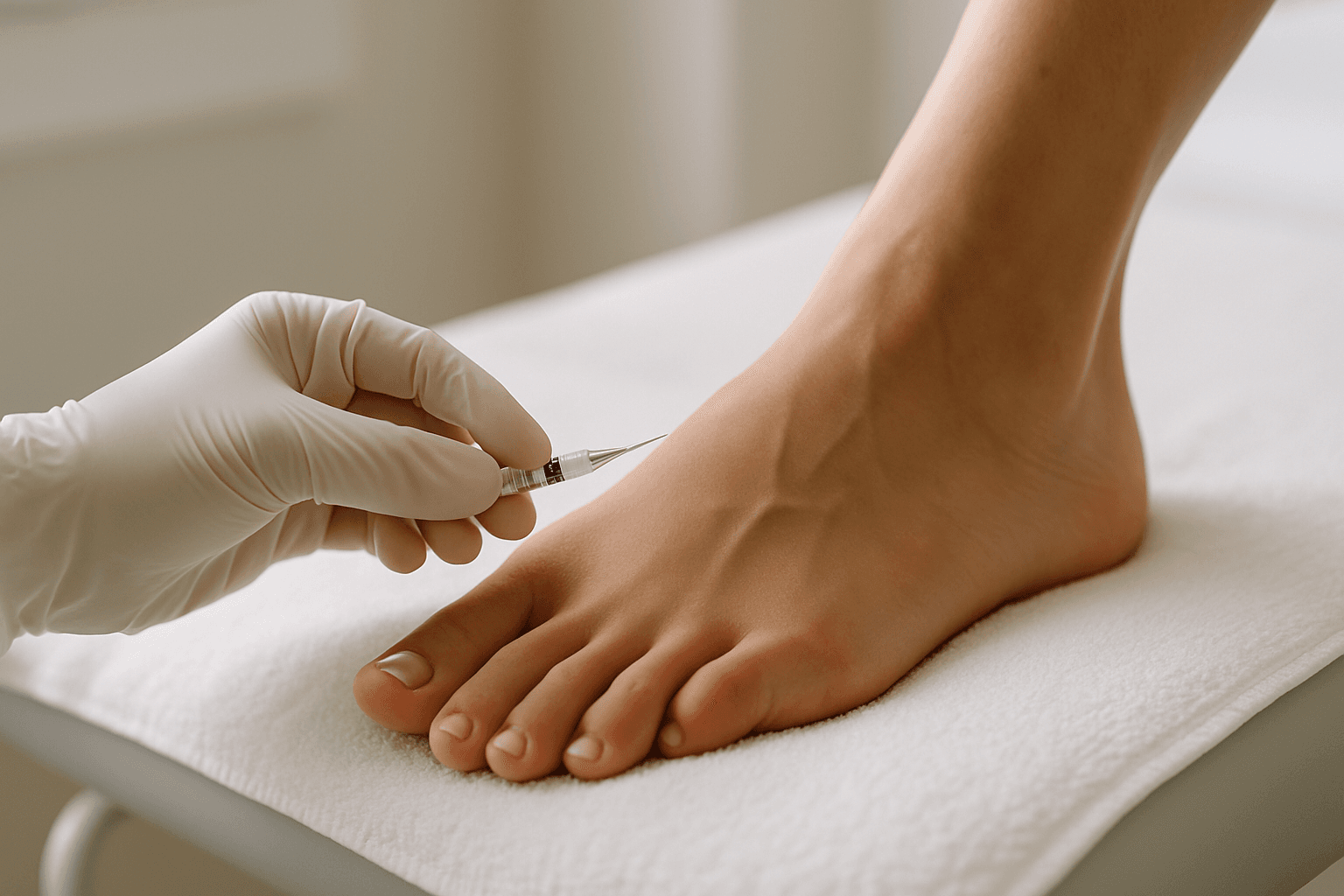
A corticosteroid injection — commonly called a cortisone shot — delivers a potent anti-inflammatory steroid directly into the sore spot where the plantar fascia attaches to the heel bone. It is the single fastest-acting tool on the whole plantar fasciitis ladder, with most patients reporting meaningful pain relief inside one to two weeks of the shot. It is also the tool with the most explicit trade-offs: the benefit is often shorter-lasting than patients hope, the injection itself is painful enough that most clinics use a nerve block or combine the steroid with a local anesthetic, and the small list of real risks — plantar fascia rupture, fat pad atrophy, skin pigment changes — is why responsible clinicians save it for cases that have earned the escalation.
If you are three or four weeks into a daily stretching routine and a supportive insole, you are not the audience for this page. Our plantar fasciitis treatment walk-through covers the daily plan that settles the overwhelming majority of cases without an injection, and shortcutting to a shot at week four is a well-documented way to spend a hundred and fifty dollars for a temporary quiet that would have arrived on its own by week eight. If you are at month three or beyond, have honestly done the daily stretches, worn supportive shoes, used an insole in every pair you spend hours in, and the morning stab is still brutal, a cortisone injection is one of the three options a podiatrist will usually float next — the other two being shockwave therapy and, in a smaller number of stubborn cases, a surgical conversation covered in our plantar fasciitis surgery walk-through.
Nothing on this page is medical advice. A corticosteroid injection is a clinic procedure that belongs with a trained foot-and-ankle clinician — a podiatrist or an orthopedist with foot-and-ankle experience is the right person to decide whether you are a candidate, to place the needle under ultrasound guidance for the best accuracy, and to time the shot inside the rest of your care. This page is to help you walk into that visit with the right questions. Every recommendation on this hub is written for comfort, support and relief — nothing on this site is a treatment or a cure for plantar fasciitis.
What a cortisone shot actually is and does
Corticosteroids are a class of synthetic hormones modeled on cortisol, the body's own anti-inflammatory steroid. In orthopedic use, a long-acting corticosteroid such as methylprednisolone, triamcinolone or betamethasone is combined with a small volume of local anesthetic (usually lidocaine or bupivacaine) and injected directly into the inflamed tissue. For plantar fasciitis, the target is the medial heel attachment of the plantar fascia, where ultrasound usually shows the fascia thickened and the tissue around it inflamed. The anesthetic quiets the pain within minutes; the steroid takes effect over the next three to seven days as it suppresses the local inflammatory cascade in the fascia and the small bursa under it.
The useful mental model is that a cortisone injection is a short, powerful dose of anti-inflammatory medication delivered exactly where it is needed, without the systemic exposure of weeks of oral steroids. It does not strengthen the fascia, does not shorten the natural history of the underlying overuse pattern, and does not change the daily load that caused the flare in the first place. What it does is buy a window of several weeks in which the fascia is calm enough that the rest of the care ladder — stretching, supportive footwear, insoles, physical therapy, a load cut — has a chance to catch up. Patients who use that window well do better than patients who treat the injection as the finish line.
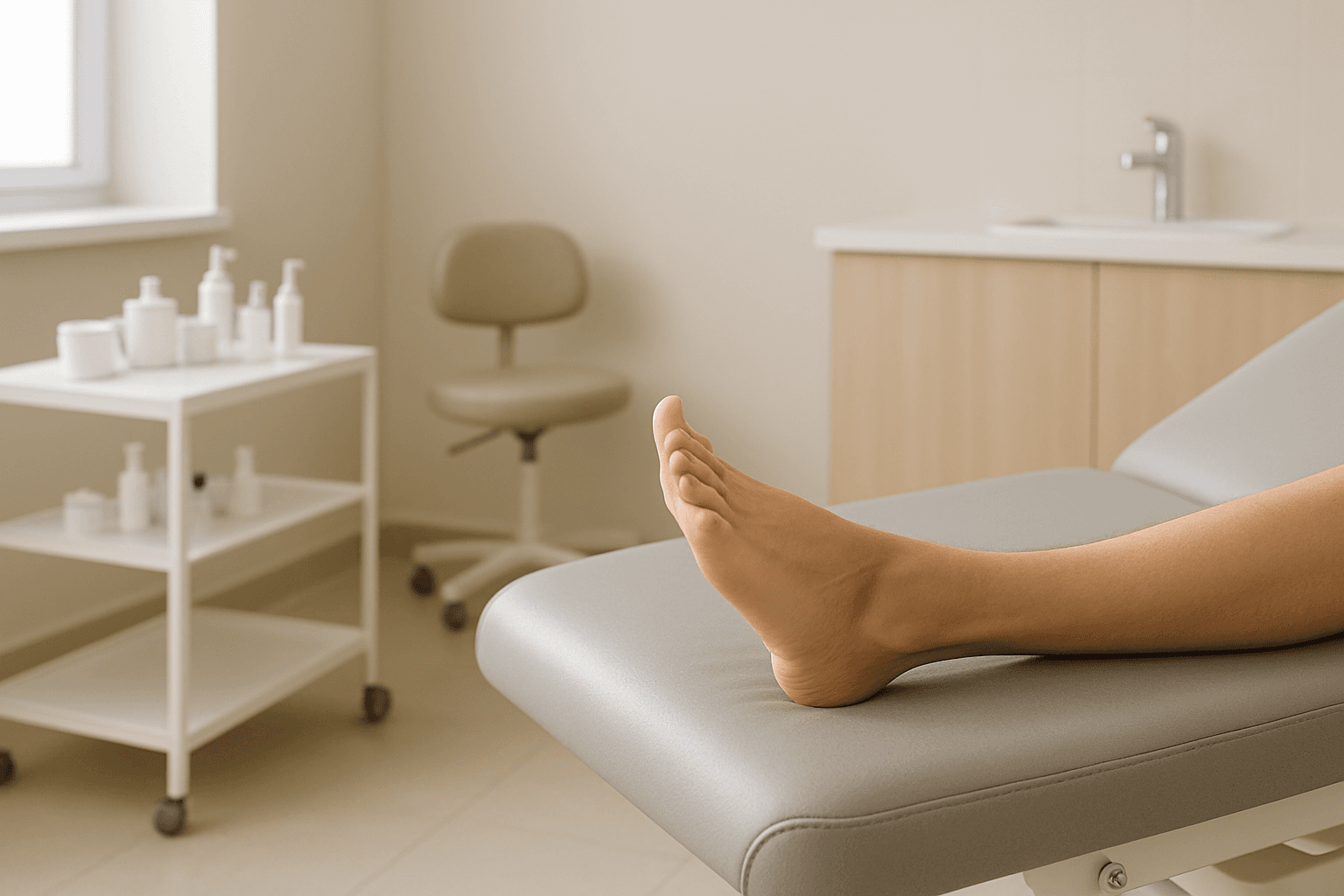
The injection itself takes about ninety seconds of actual needle time. The clinician palpates the tender spot at the heel, often confirms position with a portable ultrasound, cleans the skin, and places the needle either through the thick plantar skin from below or through the softer medial skin from the inside of the heel. Most clinics prefer the medial approach because the plantar skin is thick enough to make the shot genuinely painful, and because a medial entry can be guided more easily by ultrasound. A posterior tibial nerve block before the shot — a separate injection of local anesthetic behind the inner ankle bone — makes the whole experience far more tolerable and is standard in many foot-and-ankle practices.
How well it works, and for how long
The evidence base for cortisone injections in plantar fasciitis is large, consistent on the short-term effect, and more sobering on the medium-term effect. A well-cited 2012 randomized trial in the British Medical Journal by McMillan and colleagues compared ultrasound-guided dexamethasone injection against saline placebo and found a meaningful reduction in heel pain at four weeks in the steroid group, with the benefit shrinking by three months and essentially gone by six months. Multiple systematic reviews since — including a 2017 Cochrane review and a 2019 meta-analysis in the Journal of Foot and Ankle Research — have reached the same shape: a reliable short-term win at four to eight weeks, a diminishing signal by three months, and no clear long-term advantage over conservative care at six to twelve months.
The useful translation of that evidence is honest. If your fascia is in an acute flare and you need the pain to be meaningfully lower in the next month — a specific wedding, a work trip, a return-to-run deadline, a hard shift schedule — a cortisone injection has the best short-term signal of anything on the ladder. If you are looking for a six-month solution and you are not simultaneously fixing the shoe, the insole and the daily routine, the odds are high that the pain comes back inside a few months and you are back where you started with one shot already used up on the clock. The injection is a window, not a cure.
A smaller subset of trial participants — roughly a quarter to a third depending on the study — report that their pain stays meaningfully improved at six months and beyond after a single shot. These are usually patients whose daily routine changed in the window the injection opened: they used the lower pain to actually do the stretches, actually wear the insole, actually cut the trigger activity. The injection did not fix them; it gave them the quiet in which the real routine could stick.
The honest risk list
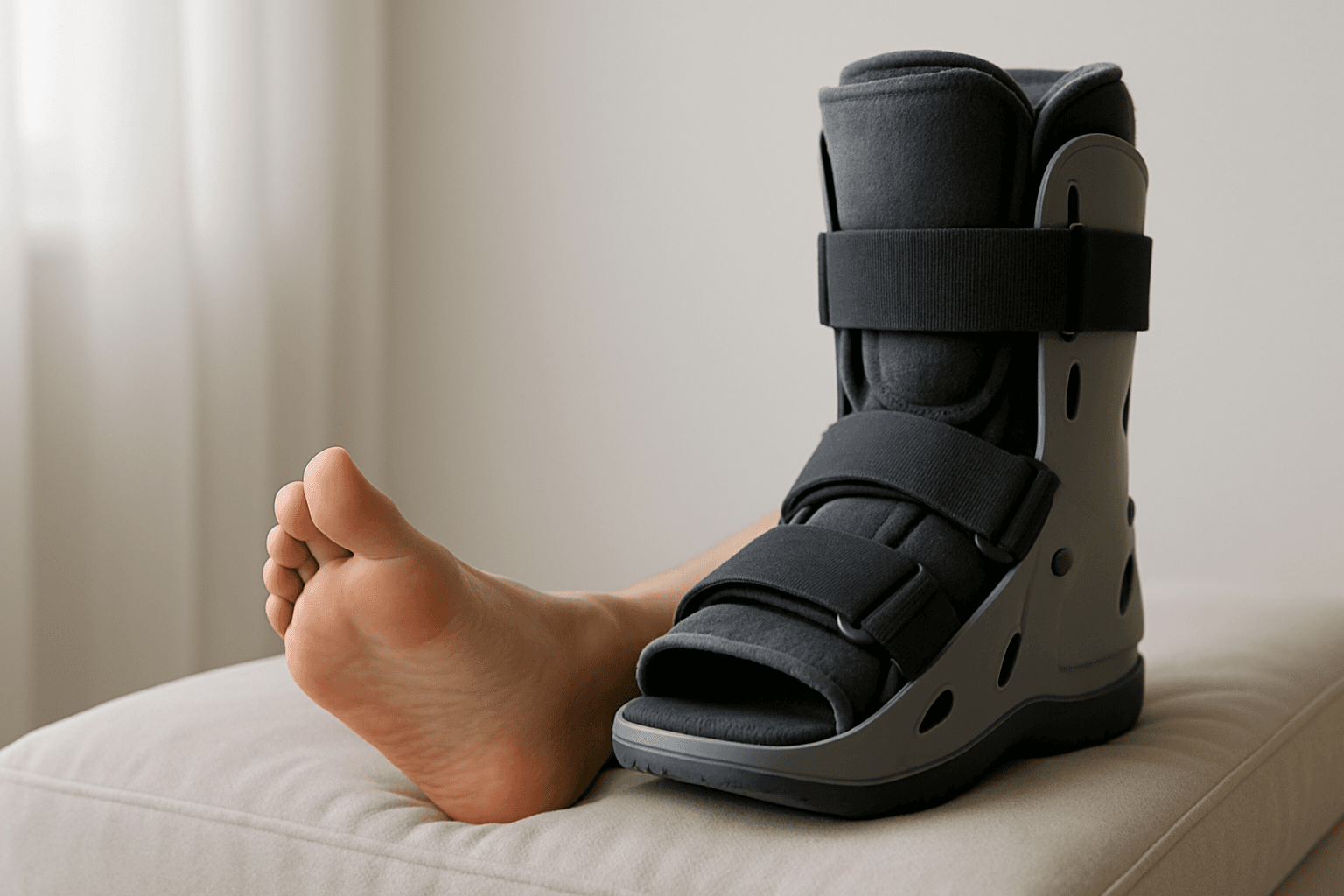
Corticosteroid injections for plantar fasciitis carry a specific list of risks that are small per shot but accumulate with repeated injections, and the risk conversation is a legitimate reason modern podiatrists limit how often they offer them. The most-cited risk is plantar fascia rupture — a partial or complete tear of the thick fascia at or near the injection site, usually in the weeks after a shot. Reported rupture rates range from under one percent to around ten percent across case series, with higher risk for patients who had multiple injections, who returned to full load too quickly, or who had an already-thickened and chronically inflamed fascia on ultrasound. Fascia rupture is usually treated conservatively (walking boot for four to six weeks, then a slow return) and most patients recover well, but it changes the mechanics of the foot and can produce arch pain or a flat-foot pattern that outlasts the original heel pain.
The second risk, more insidious because it is slower, is fat pad atrophy. The heel fat pad is a specialized shock-absorbing tissue, and repeated corticosteroid exposure can thin it over months to years. A thinned fat pad produces a bruised, tender heel that hurts on every heel strike regardless of what shoe or insole you use, and the atrophy is largely irreversible. Case series suggest the risk is tied to multiple injections rather than a single shot, which is why most podiatrists cap plantar fascia injections at one or two over any twelve-month window and three to four in a lifetime.
Smaller, more common risks include a post-injection flare (ironically painful for twenty-four to forty-eight hours as the steroid crystals irritate the tissue before settling), skin pigment changes at the injection site (a lighter patch of skin that may be permanent, more visible in darker skin tones), subcutaneous fat atrophy at the needle track, a small infection risk at any injection site, and a transient blood sugar spike in diabetic patients that can last several days. These are routine disclosures on an informed consent form rather than reasons to decline the shot in most cases, but they are worth knowing before the needle enters.
Who the shot is designed for
The textbook candidate is an adult with heel pain under the medial heel attachment of the fascia, worst with the first steps in the morning and after sitting, that has lasted more than two to three months and has not responded to a legitimate stretch of conservative care. 'Legitimate' means a daily stretch routine (calf and plantar fascia stretches morning and night, our plantar fasciitis stretches walk-through covers the sequence), a supportive shoe (our doctor-recommended shoes walk-through covers what to look for), a firm-arched insole in the shoe worn most hours — our Akusoli insoles review is the pair we would install first — and a cut in whatever activity tipped the fascia over.
The patient who should wait on the shot is the one who has honestly done four weeks of the routine and is already seeing early improvement. Plantar fasciitis has a slow natural resolution curve, and the three-to-six-week mark is where the home routine usually starts to show. Shortcutting an injection at the moment the fascia is already beginning to settle wastes the shot on a case that would have resolved without it, uses up part of the lifetime injection count, and leaves nothing in the toolbox if the pain comes back worse at month six. Our plantar fasciitis how long walk-through covers the natural resolution timeline that is the backdrop for every injection decision.
A short list of contraindications applies. Pregnancy — most clinicians avoid elective corticosteroid injections during pregnancy, especially after the first trimester, because of the systemic absorption and the pregnancy-specific caution covered in our heel pain in pregnancy walk-through. Active local infection or an open wound over the injection site. Poorly controlled diabetes, where the transient blood sugar spike after the shot is a real concern. Known allergy to the specific steroid preparation. A patient on full therapeutic anticoagulation may be injected safely in most cases, but the clinician will usually discuss the timing of the shot relative to the anticoagulant schedule.
What to do after the shot
The first forty-eight hours after a cortisone injection are the window where a post-injection flare is most likely. Reduce activity, ice the heel for ten to fifteen minutes a few times across the day, and avoid aggressive stretching or long walking shifts for two full days. The pain of the shot itself (not the plantar fasciitis) usually settles within twenty-four to seventy-two hours; if it is worse at day three than day one, call the clinic rather than waiting.
The next two to six weeks are the window where the fascia is at its highest risk of rupture, and the useful rule is to resist the urge to go full throttle just because the heel feels normal. Keep the supportive shoe and the insole in every pair you wear all day. Keep the daily stretch routine running (gentle, not aggressive — our plantar fasciitis stretches walk-through covers the right intensity). Runners should return gradually over three to four weeks rather than resuming the full training load the week after the shot. Workers on concrete should not treat the quieter heel as a license to drop the micro-breaks and the insole swaps.
If a repeat injection is being considered because the first one wore off, the clinician's rule of thumb is at least three to six months between shots and no more than two shots in any twelve-month window, with the lifetime count capped around three or four. A heel that needs more than that is a heel that deserves a different conversation — shockwave therapy sits adjacent on the ladder with a longer-lasting benefit and a friendlier risk profile for chronic cases, and surgical options come in for the smaller group that has failed both.
Where the shot sits on the ladder
The modern treatment ladder for plantar fasciitis in most mainstream podiatry and sports-medicine practices runs roughly: eight to twelve weeks of honest conservative care (stretch, shoes, insole, load cut), a formal physical therapy course if the earlier rungs have not been enough, a trial of a night splint for stubborn morning pain, a cortisone injection, extracorporeal shockwave therapy, and — rarely — a surgical conversation. The injection and shockwave sit at roughly the same point on the ladder for different reasons: injections for faster but shorter-lived relief, shockwave for slower but longer-lasting change. Many clinicians use the two sequentially rather than as competing options — an injection to settle an acute flare in a stubborn case, then a shockwave course over the following months if the pain creeps back.
Platelet-rich plasma injection has emerged as an alternative to corticosteroids for chronic plantar fasciitis and is increasingly offered to patients who want to avoid the specific risks of steroids. The evidence base for PRP is smaller than for cortisone but growing, and the risk profile is friendlier — no fat pad atrophy risk, no reported pigment changes, lower rupture risk. The trade-offs are cost (usually several hundred dollars out of pocket and often not covered by insurance), a longer onset of relief (several weeks rather than one), and the need for a clinic equipped with the centrifuge system to prepare the plasma.
Surgical options — partial plantar fasciotomy most commonly — are the last rung on the ladder and are reserved for pain that has resisted six to twelve months of honest conservative care including injection or shockwave. Our plantar fasciitis surgery walk-through covers what the operation involves, what recovery looks like, and the honest read on long-term outcomes. For readers whose heel pain is at the back of the heel rather than under it, heel spur treatment is a cousin conversation — the injection evidence there is similar but the target tissue is different.
The daily routine the injection is designed to work with
A cortisone shot opens a window of lower pain — the routine of stretches, supportive shoes and a firm-arched insole is what keeps the window from closing again.
The daily routine the injection is designed to work with →Frequently asked questions
How much does a cortisone shot for plantar fasciitis cost?
In the United States, a corticosteroid injection for plantar fasciitis typically runs one hundred to three hundred dollars out of pocket with insurance coverage, and three hundred to seven hundred dollars without. Most private plans cover it as a routine orthopedic procedure under the appropriate ICD-10 code (M72.2). Medicare generally covers plantar fascia injections for medically documented chronic cases. The cost of ultrasound guidance is sometimes billed separately and is well worth it — guided injections are more accurate and tend to produce better outcomes than blind injections.
How long does a cortisone shot last for plantar fasciitis?
Most patients report meaningful pain relief within one to two weeks of the injection, with the strongest benefit at four to eight weeks. The signal diminishes between three and six months in the published trial populations, and the average patient is back to roughly their pre-injection pain level by six to twelve months — unless the window of lower pain was used to install the daily routine (stretching, supportive shoes, insoles, load reduction) that holds the gains after the steroid wears off. The best outcomes come from using the shot as part of a plan rather than as a standalone fix.
Does a cortisone shot in the heel hurt?
The injection itself is more painful than most steroid injections elsewhere in the body because the plantar skin and the surrounding tissue are both dense. Most clinics mix the steroid with a local anesthetic (lidocaine or bupivacaine) and increasingly perform a posterior tibial nerve block before the shot, which numbs the entire area and makes the needle itself largely painless. Without the nerve block, patients typically rate the shot a six or seven on a ten-point scale. A post-injection flare in the first twenty-four to forty-eight hours is common and responds to ice and acetaminophen; sharper pain at day three or beyond is a reason to call the clinic.
How often can you get a cortisone shot for plantar fasciitis?
The practical rule in most podiatry practices is no more than two injections in any twelve-month window into the same plantar fascia, with at least three to six months between shots, and a lifetime cap around three or four. The limit exists because the two main cumulative risks — fat pad atrophy and plantar fascia rupture — are tied to repeated steroid exposure rather than to any single injection. A heel that needs more frequent injections than that is a heel that deserves a different step on the ladder: shockwave therapy, PRP, or a surgical conversation.
What are the side effects of a cortisone shot in the heel?
The small common ones are a post-injection flare for twenty-four to forty-eight hours, a mild bruise or soreness at the needle site, and a transient blood sugar spike in diabetic patients that can last several days. The larger but rarer ones are plantar fascia rupture (reported in roughly one to ten percent of cases depending on the series, more likely with repeated injections or early return to high load), fat pad atrophy that produces a tender bruised heel on every heel strike (slow, cumulative, largely irreversible), skin pigment changes at the injection site that may be permanent and are more visible in darker skin tones, and local subcutaneous fat loss at the needle track. Infection risk is small but real at any injection site.
Is a cortisone shot better than shockwave therapy?
Neither is strictly better — they do different things on different timelines. A cortisone injection acts fast (one to two weeks to peak effect) and wears off relatively quickly (three to six months on average), with a specific risk list dominated by rupture and fat pad atrophy. Shockwave therapy acts slowly (six to twelve weeks to peak effect) and the benefit lasts longer in trial populations, with a friendlier risk profile. For a patient who needs rapid short-term relief for a specific event, cortisone has the stronger case. For a patient with a stubborn chronic case who can tolerate a slower response, shockwave often sits higher on the ladder. Many clinicians use them sequentially rather than as competing options — our shockwave therapy for plantar fasciitis walk-through covers the full picture.
HeelCups is reader-supported. When you buy through links on our site we may earn an affiliate commission, at no extra cost to you. This article is general information about foot comfort and is not medical advice — see our medical disclaimer.