SANDALS
Sandals for Plantar Fasciitis: What to Look For (and What to Skip) Before Summer Travel
Strappy sandals can be comfortable or brutal on a sore heel. The difference comes down to the footbed, the heel cup and the straps.
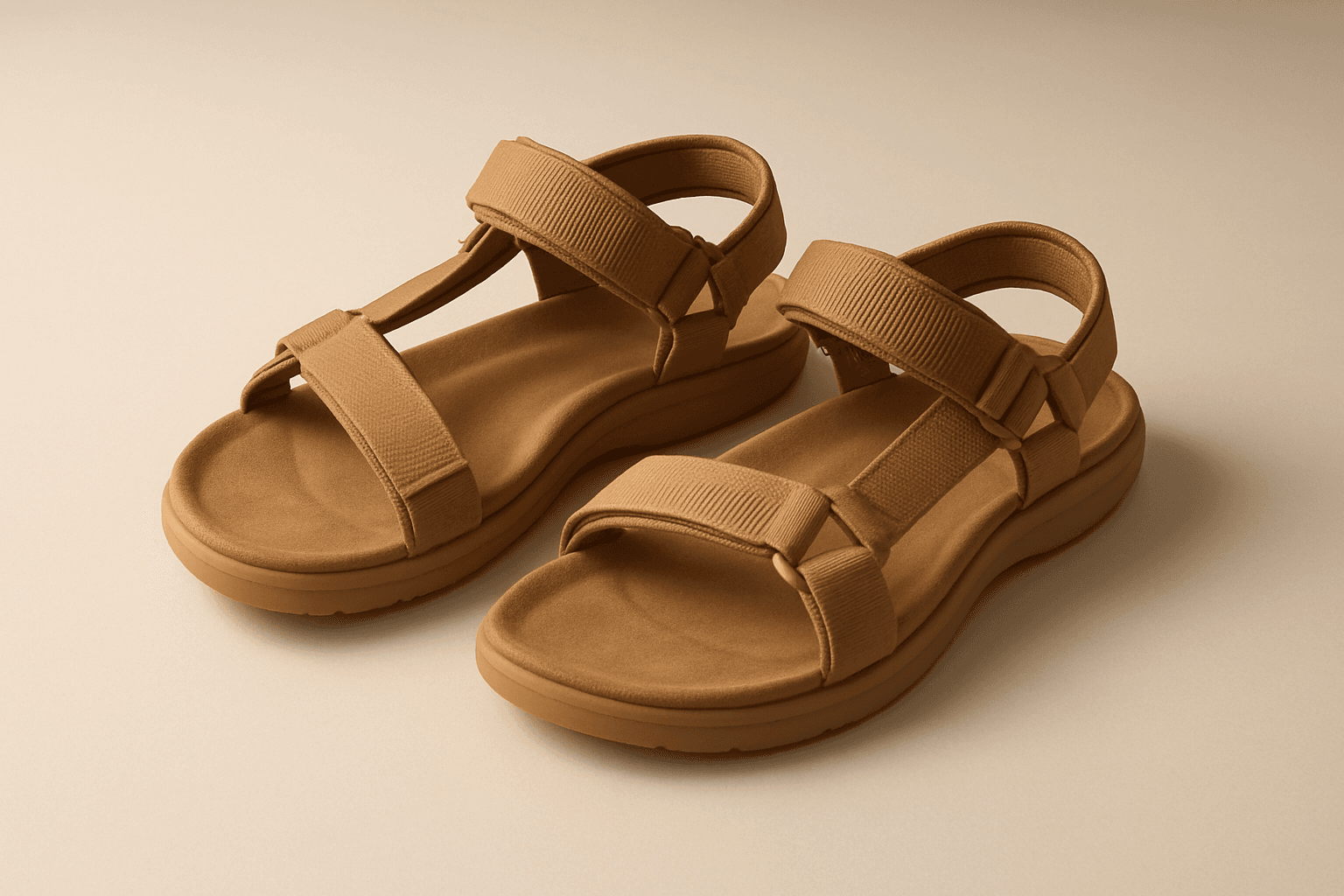
The best sandals for plantar fasciitis have a contoured footbed that fills in the arch, a deep heel cup, a firm midsole with some cushion, and adjustable straps that hold your foot in place. Flat, thin sandals with no arch or heel structure are the ones to skip, because they let the arch sag and leave the heel pad with little to work with.
Foot and ankle clinics and podiatry sources tend to say the same three things: arch support, a deep heel cup and adjustable straps. A heel cup that is deep enough limits how far the heel rolls inward, which otherwise flattens the arch and adds tension on the plantar fascia. The footbed should be at least as wide as your foot, and the midsole should be cushioned enough to take the edge off hard floors.
This guide covers what to check on any sandal, how it differs from flip-flops and slippers, how to make the sandals you already own more comfortable, and when heel pain means a visit to a clinician. It is about comfort and support and is not medical advice.
The four features that matter
Arch contour. The footbed should rise to meet your arch. Press your thumb into the arch of the sandal: if it collapses easily or is flat, the support will not hold up after a day of walking. A firm contour spreads load across the foot rather than letting it fall on the heel and fascia.
Deep heel cup. Look for a footbed with a defined, cupped heel that sits around the fat pad. It positions the heel and keeps it from sliding. Cushion in this spot should not bottom out when you press it.
A firm but cushioned midsole. Podiatry-oriented sources mention EVA and polyurethane as common midsole materials. What matters is that the midsole flexes where your toes bend, not in the middle of the arch. Try the bend test: a sandal that folds in half at the arch is not giving support.
Adjustable straps. A strap across the instep, and ideally one behind the heel, keeps your foot centered on the footbed. Without them your toes grip to keep the sandal on, which tires the foot.
Why flip-flops and thin slides are the weak spot
A flat thong flip-flop has no arch, no heel cup and little cushion, and your toes clench to hold it on. That combination is exactly the one that tends to aggravate a sore heel. Our flip-flops and plantar fasciitis page explains it in more detail, and slippers for plantar fasciitis covers the indoor version. A sandal that scores well on the four features above is a much better summer choice than a pool slide.
Backless slides deserve a special mention. With no strap behind the heel, your toes have to grip on every step, and the heel is free to slide around the footbed instead of sitting in the cup. A slide with a deep contoured footbed can be fine for the beach or the hotel pool, but it is a poor choice for a day of walking. If you love the slip-on style, look for versions with a rear strap or a firm contoured footbed, and keep them for short outings.
How to test a pair before you commit
Try sandals on in the afternoon, when feet are slightly larger, and walk on a hard floor, not carpet. Stand on one foot and see whether your arch feels held or sagging. Check that the heel sits fully inside the cup and that your toes are not hanging over the front. Walk for several minutes: a good sandal should feel stable, not sloppy. Plan to wear a new pair for an hour or two at first, and extend slowly, as with any change in footwear.
Making sandals you already own work harder
Some sandals have a removable footbed, and many people swap in a supportive insole or add a heel cup for extra cushioning. Check the fit: the sandal needs room for the insole without pushing your foot over the edges. Thin, flat, sealed sandals usually cannot be improved this way. Our heel cups vs insoles page explains when each makes sense. For closed shoes, a trim-to-fit insole such as Akusoli insoles is the sort of firm-arch, deep-cup option to look at.
Summer travel: a simple plan
Long days of sightseeing in sandals are a common trigger for a flare. Alternate between a supportive sandal and a closed supportive shoe, rather than wearing one pair for 12 hours. Stretch your calves and the arch in the morning and the evening using the routines in our plantar fasciitis stretches page. Avoid walking barefoot on hard hotel floors or sand for long stretches, and give yourself sit-down breaks.
When to get help
Sandals are a comfort tool and not a treatment. If heel pain has lasted more than a few weeks despite sensible footwear and stretching, or comes with swelling, numbness, tingling, redness, or pain at night, see a doctor or podiatrist. People with diabetes or reduced sensation should be careful with open footwear because small cuts are easier to miss. A podiatrist can also tell you what level of support your foot needs. The main plantar fasciitis hub has the wider picture.
Read our Akusoli insoles review
For closed shoes, a trim-to-fit insole with a firm arch and a deep heel cup.
Read our Akusoli insoles review →Frequently asked questions
What should I look for in sandals for plantar fasciitis?
Look for a contoured footbed that fills your arch, a deep heel cup, a firm midsole with some cushioning, and adjustable straps. These are the features foot and ankle sources commonly highlight.
Are flip-flops bad for plantar fasciitis?
Flat, thin flip-flops with no arch or heel structure tend to be a poor choice for a sore heel. Supportive thong-style sandals with a real footbed are better, though many people prefer a strapped design.
Can I put an insole in my sandals?
If the sandal has a removable footbed and enough room, yes. Check that your foot does not sit too high or hang over the edge. Sealed or very flat sandals usually cannot take one.
How long should I wear new sandals at first?
Start with an hour or two and add time over several days so the foot can adjust.
Should I see a doctor about heel pain from sandals?
If pain persists beyond a few weeks, or comes with swelling, numbness or night pain, see a doctor or podiatrist.
HeelCups is reader-supported. When you buy through links on our site we may earn an affiliate commission, at no extra cost to you. This article is general information about foot comfort and is not medical advice — see our medical disclaimer.