PF SOCKS
Plantar Fasciitis Socks: What Compression, Arch Straps and Night Sleeves Actually Do
Compression sleeves, arch-strap sports socks and soft night socks are three different tools with three different jobs — here is what each one changes and which pair to try first.
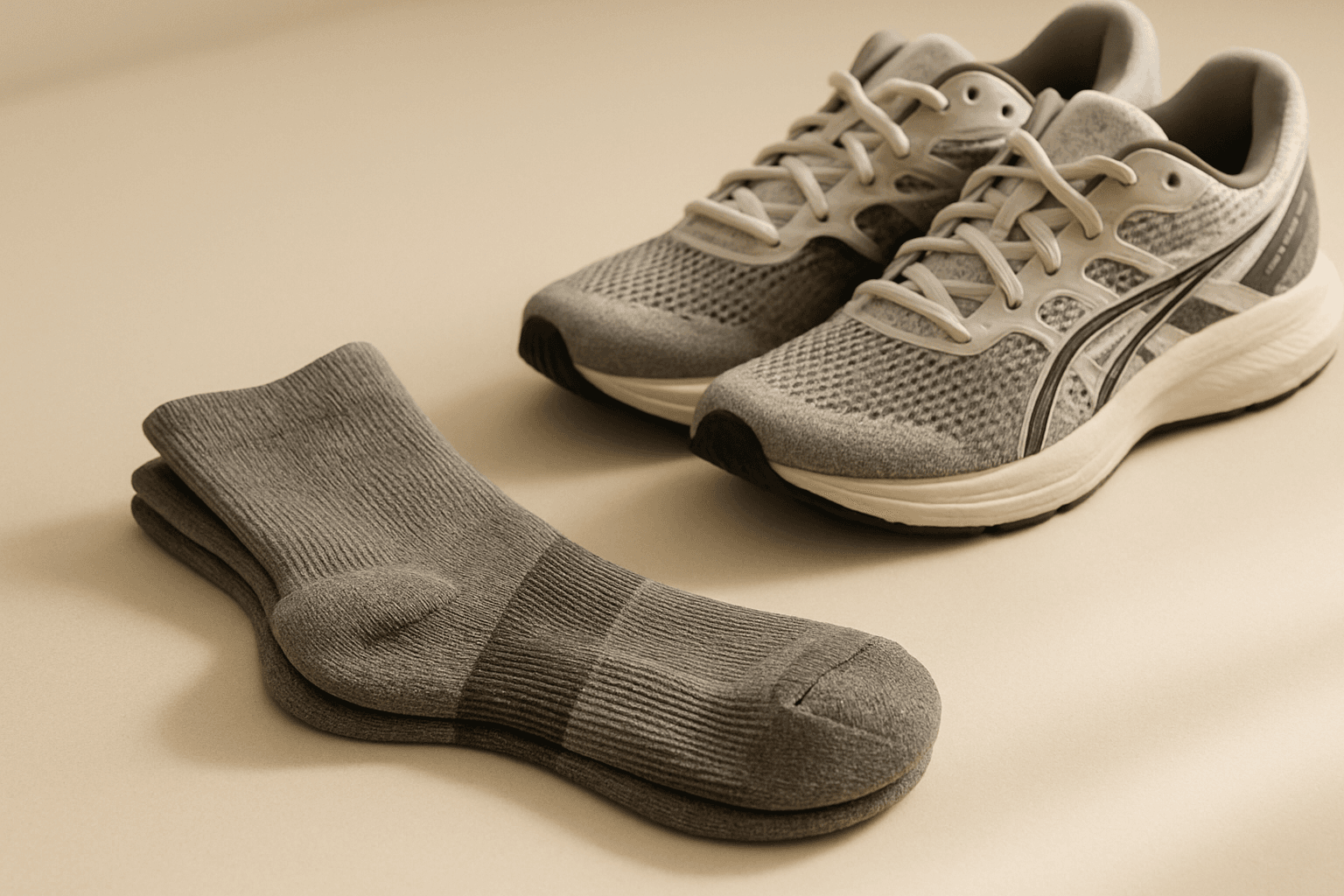
"Plantar fasciitis socks" is a marketing bucket that covers three genuinely different products, and the confusion in the aisle is real. There are graduated compression sleeves that hug the arch and heel; there are arch-strap sports socks with a woven-in band under the medial arch; and there are soft, cushioned night socks with a gentle stretch that hold the ankle in a mild dorsiflexion. Each targets a different part of the plantar fasciitis picture, and picking the wrong one first is why plenty of readers try a pair, feel nothing, and write the category off. Sorted properly, one of the three does noticeable work for most people, especially in the first-steps-of-the-morning stretch of the day.
None of these is a treatment for plantar fasciitis, and no sock is going to change the fascia the way honest calf and arch stretching plus a supportive insole in every shoe does. What a well-chosen sock does is a smaller, more specific job — cut the mid-day arch fatigue that comes from over-stretching, add gentle compression that keeps swelling and heaviness down through a long shift, or hold the foot in a slightly better position overnight so the fascia is not as short and stiff at first step. Combined with the daily routine, that is a real quality-of-life shift; on its own, it is a partial answer.
This page sorts the three sock types by what they actually do, when each one earns the money, and the honest limits on any of them. Nothing here is medical advice. Persistent heel pain that has not eased after four to six weeks of honest home care deserves an in-person exam by a doctor or podiatrist. Every recommendation on this hub is written for comfort, support and relief.
Compression sleeves: the sock that acts most like a support
The most common product sold as a plantar fasciitis sock is a graduated compression foot sleeve. It looks like an ankle sock with the toes and heel cut out, is often made from a spandex-nylon blend, and applies more pressure across the mid-foot arch than at the ankle. The idea is straightforward: gentle circumferential pressure on the arch reduces micro-swelling in the fascia and the surrounding tissue, feels supportive under the arch the way a light bandage feels supportive around a sore joint, and — for a lot of readers — takes the edge off mid-day arch fatigue after a long walk or shift.
The evidence base for compression sleeves in plantar fasciitis is modest but not zero. Small clinical trials and systematic reviews of ankle compression sleeves and plantar fascia-specific compression garments generally find that they help symptom scores while worn, without shifting the underlying tissue on imaging. In practical terms: a compression sleeve is a comfort layer that some people notice and some do not. If you notice it, wear it through the day in shoes that will not fit a full insole (dress shoes, sandals, slip-ons); it stacks nicely under socks and does not crowd the fit.
What compression sleeves do not do is replace an arch-supporting insole. They add a light circumferential squeeze; they do not hold the arch's shape under body weight the way a firm foam-over-plastic arch does. If you can only afford one tool for a plantar fasciitis routine, spend it on a supportive insole and a stretch band, not on a sleeve. If you already have those, a sleeve is a reasonable add-on for the shoes an insole cannot fit.
Arch-strap sports socks: a woven-in band under the arch
The second product family is a sports sock — a fuller sock rather than a sleeve — with a woven-in compressive band that runs under the medial arch. Brands market them as "arch support socks" or "plantar fasciitis athletic socks." The band is essentially a wide elastic strip integrated into the sock's construction; it provides more targeted pressure under the arch than a plain compression sleeve does, and stays in place through athletic movement in a way an aftermarket over-the-sock strap does not.
These socks earn their money mostly for runners and walkers who feel arch fatigue during and after their sessions. The woven band adds a proprioceptive cue — a felt sense of where the arch is — that some readers find helps keep the foot from rolling inward during runs. That effect is a comfort and awareness thing rather than a mechanical fix; the sock does not correct pronation the way an orthotic does. Still, for a runner working through mild plantar fasciitis symptoms, an arch-strap sock plus a supportive insole in the shoe is a genuinely useful pairing.
The main downside is that a good pair costs three to five times what a plain athletic sock does, and the band packs down within a season of heavy use. Rotate two pairs so they can dry and recover between wears, and expect to replace them yearly if you run in them daily. For a warehouse or nursing shift on a hard floor, a compression sleeve plus a supportive insole in the work shoe is a better spend than an athletic arch-strap sock, which was not designed for twelve hours of static load.
Night socks: soft sleeves that hold a mild dorsiflexion
The third product is a soft night sock — a stretchy, cushioned sleeve worn to bed that holds the ankle in a gentle dorsiflexion (foot pulled a few degrees toward the shin) all night. The design goal is to keep the fascia at closer to its walking length overnight so it does not shorten and stiffen while you sleep, which is what makes the first steps of the morning hurt so predictably in plantar fasciitis. A soft night sock is a much lighter-weight alternative to a rigid night splint, which many people find too bulky to actually sleep in.
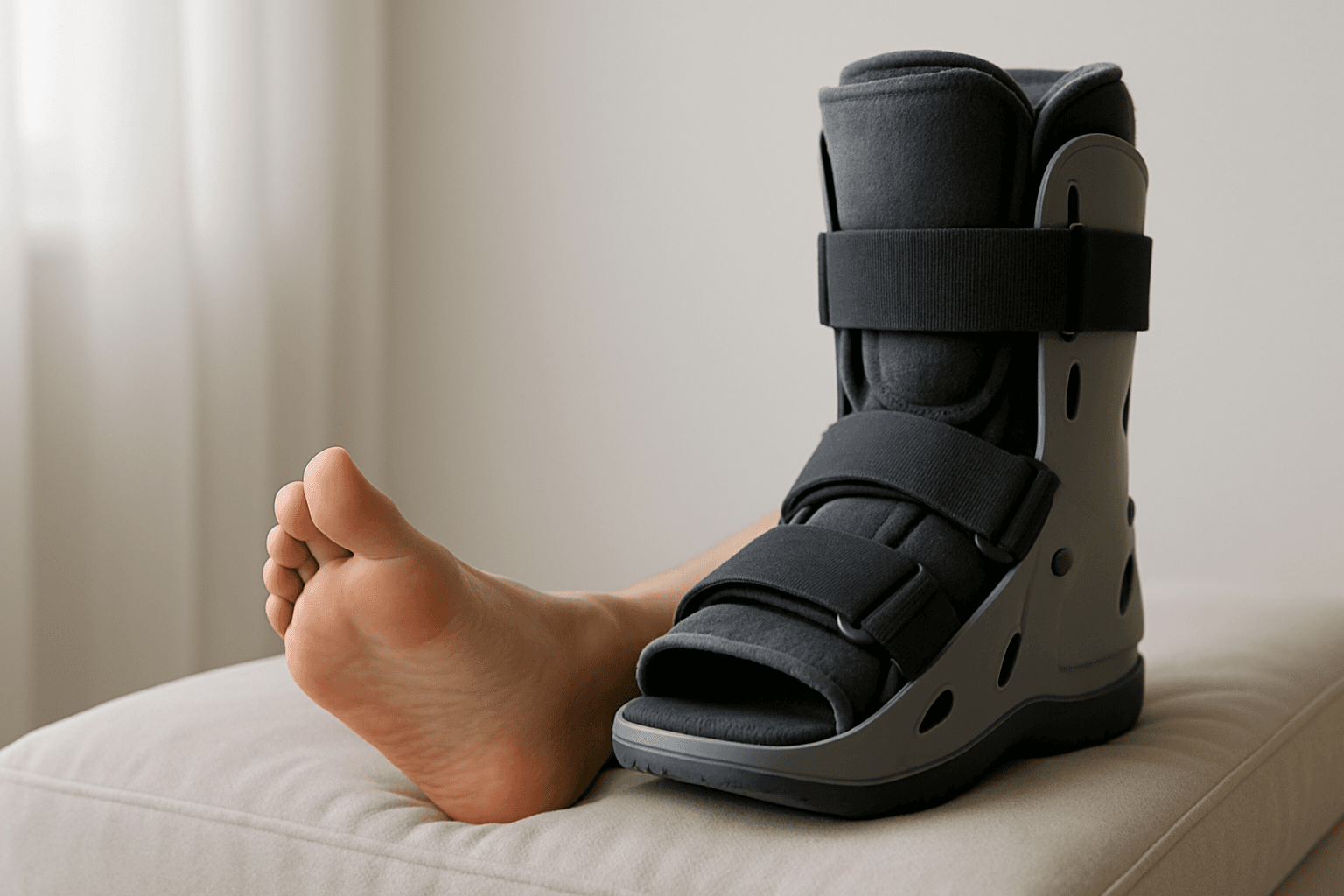
A night sock is a partial answer. It applies less mechanical stretch than a rigid boot-style splint, and imaging studies suggest that partial stretch through the night is meaningfully less than what a hard splint provides. On the other hand, a night sock that people actually wear all night is more effective than a rigid splint that gets kicked off after twenty minutes. For a lot of readers, that trade-off lands on the night-sock side, especially in the first month of a plantar fasciitis flare when morning pain is the loudest symptom. Our morning heel pain walk-through covers the full ten-minute routine that goes with it.
Night socks are best used alongside the daily plan rather than on their own. Pair them with a pre-bed calf stretch, an insole in the first shoe you put on in the morning, and the towel-stretch on the edge of the bed before your feet touch the floor. Give the whole routine three to four weeks before deciding whether it is working — morning heel pain is stubborn but responsive when the whole picture is right. If nothing has moved after four weeks of honest daily use, a rigid night splint is the next step up.
Fabric, fit and washing: the details that matter
Most plantar fasciitis socks are a spandex-nylon blend with some percentage of polyester or cotton for feel. The stretch fibers do the compression work; the higher the spandex content, the firmer and more durable the compression, and the shorter the useful life. A pair in the 15 to 20 mmHg range at the arch is the sweet spot for daytime wear — supportive enough to feel like something without crossing into medical compression territory. Anything labelled 20 to 30 mmHg is medical-grade compression and worth using only on a clinician's advice, especially for readers with circulation concerns.
Fit matters more than brand. A compression sleeve that slides down through the day is not doing the job it was bought for; a sock whose arch band ends up under the ball of the foot rather than the arch is doing nothing at all. Measure your foot's arch circumference and pick a size against the maker's chart, not the shoe size shortcut most brands print on the front. If you are between sizes, size down for firmer compression and up for comfort. A pair that is uncomfortable within the first hour is the wrong pair, not a break-in problem — compression socks do not have a meaningful break-in period the way an insole does.
Wash on cool and air-dry. Hot water and tumble drying break down spandex fastest; a pair washed hot and dried hot is often noticeably looser after ten cycles. Rotate two pairs so each has twenty-four hours of no-load rest between wears, which lets the fibers recover most of their compression. Replace daily-wear pairs every six to twelve months; when the compression no longer feels distinct against a fresh pair, the pair has done its life's work.
Where socks fit in a full plantar fasciitis routine
A sock is a small piece of a bigger picture. The routine that changes plantar fasciitis for most people is a supportive insole with a firm arch and deep heel cup in every shoe worn for more than an hour, honest calf and fascia stretching morning and night, self-massage with a firm ball or a frozen bottle after long days, and a cut in whatever activity tipped the tissue over — a mileage jump, a summer of flat sandals, a new job on concrete. Our plantar fasciitis stretches page has the daily stretch routine, and our Akusoli insoles review is the pair we would install in the shoe you wear most.
Layered onto that, the sock choices sort by problem. Mid-day arch fatigue in shoes that will not fit a full insole: a compression sleeve. Arch fatigue during runs or walks: an arch-strap sports sock plus an insole in the shoe. Morning first-step pain that dominates the picture: a soft night sock, then a rigid night splint if a month of the sock plus the morning routine has not moved the pain. None of these is a substitute for the supportive insole and the stretch band; all of them can add real comfort on top.
Nothing on this hub is a treatment for plantar fasciitis. The goal is comfort, support and relief while the tissue calms down, and knowing when to step out of the self-care lane. Persistent heel pain that has not eased after four to six weeks of honest daily practice — or that came with a specific injury, or comes with swelling, warmth, numbness, tingling or a color change — deserves an in-person exam by a doctor or podiatrist.
The supportive insole that goes with any sock
A firm medial arch and a deep heel cup — the mechanical change that a sock cannot make on its own.
The supportive insole that goes with any sock →Frequently asked questions
Do plantar fasciitis socks actually work?
Compression sleeves and arch-strap socks do a small, real job — gentle pressure under the arch that cuts mid-day fatigue for many readers, especially in shoes that will not fit a full insole. Night socks that hold a mild dorsiflexion overnight take some edge off morning first-step pain. None of these tools changes the underlying fascia the way a supportive insole plus a calf and arch stretch routine does. Match a sock to a specific symptom and stack it on top of the daily routine; do not expect a sock alone to move a stubborn plantar fasciitis flare.
Should I wear compression socks all day for plantar fasciitis?
For most readers, a compression foot sleeve in the 15 to 20 mmHg range through the workday is a reasonable comfort tool, especially in dress shoes or sandals where a full insole will not fit. Take them off overnight so the skin dries and circulation runs unrestricted. If you have a circulation concern, a history of blood clots, or the sleeve leaves marks that do not fade within twenty minutes of removal, check with a clinician before wearing compression daily.
Are night socks better than a night splint?
Night socks are a lighter-weight partial version of a rigid night splint — they apply less mechanical stretch overnight, but people actually wear them all night, and imaging studies of both tools suggest morning heel pain improves most for people who use their chosen tool consistently. Start with a soft night sock; if morning first-step pain has not eased after three to four weeks of the sock plus the ten-minute morning routine, a rigid boot-style splint is the reasonable next add-on.
Can I run in plantar fasciitis socks?
Yes — arch-strap sports socks are specifically built for it, and a compression sleeve worn under an athletic sock is a common runner's setup. Neither replaces a supportive shoe or an insole; a runner with plantar fasciitis symptoms should be pairing the sock with a running shoe that has real arch support and, in most cases, cutting weekly mileage by a quarter for the first few weeks of the flare. Our plantar fasciitis exercises page covers the return-to-run drills that help.
How tight should a plantar fasciitis compression sock feel?
Firm and supportive, but never painful or numbing. A sleeve in the 15 to 20 mmHg range at the arch should feel like a light bandage across the mid-foot within the first minute of wear; the sensation fades as the foot acclimates. If the sock leaves deep marks that do not fade twenty minutes after removal, if your toes tingle or go pale, or if pulling the sock on takes real effort, size up. Compression that is uncomfortable within the first hour is the wrong size, not a break-in problem.
Do plantar fasciitis socks replace an insole?
No. A sock adds gentle compression or a light overnight stretch; an insole with a firm medial arch and a deep heel cup holds the arch's shape under body weight for eight to twelve hours a day, which is the mechanical change that matters most for plantar fasciitis. If you can only spend on one tool, spend it on a supportive insole in the shoe you wear the most hours in; add socks as a comfort layer on top once the insole is doing its job.
HeelCups is reader-supported. When you buy through links on our site we may earn an affiliate commission, at no extra cost to you. This article is general information about foot comfort and is not medical advice — see our medical disclaimer.