RUNNING WITH PLANTAR FASCIITIS
Running With Plantar Fasciitis: When to Keep Running, When to Pull Back, and How to Return Without a Relapse
Running does not cause plantar fasciitis, but a specific pattern of running can light the fascia up — and the honest decision tree about continuing, cutting back, cross-training or taking real time off is more nuanced than the two camps on running forums let on.

Running with plantar fasciitis is the question that splits every heel pain forum into two camps. One camp says never run through fascia pain, take six weeks fully off, cross-train only, and come back when the morning stab is gone. The other camp says that total rest deconditions the tissue, that the fascia tolerates a careful running load from very early in a flare, and that the real risk is losing a season to a problem that would have let you keep training on half mileage. Both camps have a point, and both are wrong when they are treated as a universal rule. The honest answer depends on what week of the flare you are in, what your pain pattern looks like on the day, and how disciplined you are about the parts of running that are nothing to do with the running itself — the shoe, the warm-up, the surfaces, the mileage ramp and the stretching routine around the sessions. Racket-sport players get the same pattern; see heel pain from pickleball.
This page is the full walk-through of the decision we would make if we had plantar fasciitis and a race or a routine to protect. It covers how to tell whether today is a running day or a cross-training day, the specific shoe and insole setup that actually earns the right to keep logging miles through a flare, the surfaces and the pace that calm the fascia versus the ones that light it up, the stretch routine that lives around the run rather than inside it, the return-to-run progression after a layoff, and the hard rule for when running has to stop regardless of how badly you want to keep going. Our plantar fasciitis treatment walk-through covers the daily plan that lives underneath every running decision; this page is the running-specific layer that sits on top of it.
Nothing on this page is medical advice. Running with plantar fasciitis is a judgment call that should be made alongside a sports medicine doctor, a podiatrist or a physical therapist who has watched you run and read your tissue, especially if the pain has lasted more than four weeks or you are training for a specific event. Every recommendation on this hub is written for comfort, support and relief — nothing on this site is a treatment or a cure for plantar fasciitis.
The two patterns of running-flavored plantar fasciitis
Runners' plantar fasciitis almost always traces to one of two patterns, and the two have different repair strategies. The first is the volume-ramp pattern: mileage went up more than ten to fifteen percent in a week, or a new training block added long runs or hill repeats before the fascia had adapted, and the morning stab showed up within a few weeks of the jump. The fix for this one is a load cut, not a load stop — the fascia got irritated by the specific increment, not by running itself, and it responds well to running at the pre-ramp volume while the daily stretching routine, the supportive insole and the shoe choice do the real work. Our plantar fasciitis prevention walk-through covers the ten-percent rule and the ramp mistakes that most volume-flare runners made before they knew to watch for them.
The second is the shoe or surface pattern: a switch to a minimalist shoe over the summer, a new pair that turned out to have less arch structure than the old pair, a season of track work after a season of trail, or a move to a job that puts you on concrete all day between runs. The fix for this one is harder because it is not about the run — it is about the hours when you are not running. A runner on supportive insoles for the eight hours of a standing shift usually tolerates full training mileage without a flare; the same runner in flat canvas shoes between runs can have the fascia stabbing even on a cut-back week. Our doctor-recommended shoes for plantar fasciitis walk-through covers the between-runs shoe choice that is often doing more of the damage than the run itself.
The useful first move for any runner with a new flare is to run the two patterns against each other honestly. If mileage ramped in the four weeks before the pain started, cut it; if the between-runs shoes are flat and the floors are hard, fix that first. Many runners are in both patterns at once, and the useful decision is to tackle the shoe side first (it is easier) while the mileage side settles over two to three weeks.
Is today a running day? The daily decision tree
The useful rule most sports medicine clinicians give runners with early plantar fasciitis is a traffic-light system based on morning pain and the first ten minutes of the run. Green: morning pain is a one or two out of ten and settles within a few minutes of walking, and the first ten minutes of the run are pain-free or barely noticeable. Running is on; keep the planned session or trim fifteen percent for safety. Yellow: morning pain is a three or four, settles slowly, and the first ten minutes of the run are a mild background ache that does not get worse as you warm up. Running is on, but cut the planned volume by a third, drop any hills and speed work, and keep the pace conversational. Red: morning pain is a five or more, does not meaningfully settle with the first steps, and the first ten minutes of the run get worse rather than better as you warm up. Running is off; today is a cross-training day.
The second half of the rule is what happens over the next twenty-four hours. A session that was green or yellow on the ten-minute check, but produced a sharper morning stab the next day than the morning before the run, is a session you should not have done. Three sessions like that in a row and you need to cut the running volume further and lean harder into the daily stretch routine, the insole and the shoe. A session that was yellow on the ten-minute check but calmed down after the first mile and left the next morning no worse than the one before is a session the fascia tolerated, and the pattern that lets most runners keep training through a mild flare.
The specific tissue reason behind the rule is that an angry fascia tends to be stiffer, more painful and less tolerant of load before it warms up; a fascia that warms up and lets you run is a fascia whose irritation is low enough that movement is net calming. A fascia that gets worse as you run is a fascia whose irritation is high enough that movement is adding to the inflammatory signal. The ten-minute check is the practical read on that difference.
The shoe, the insole and the sock stack
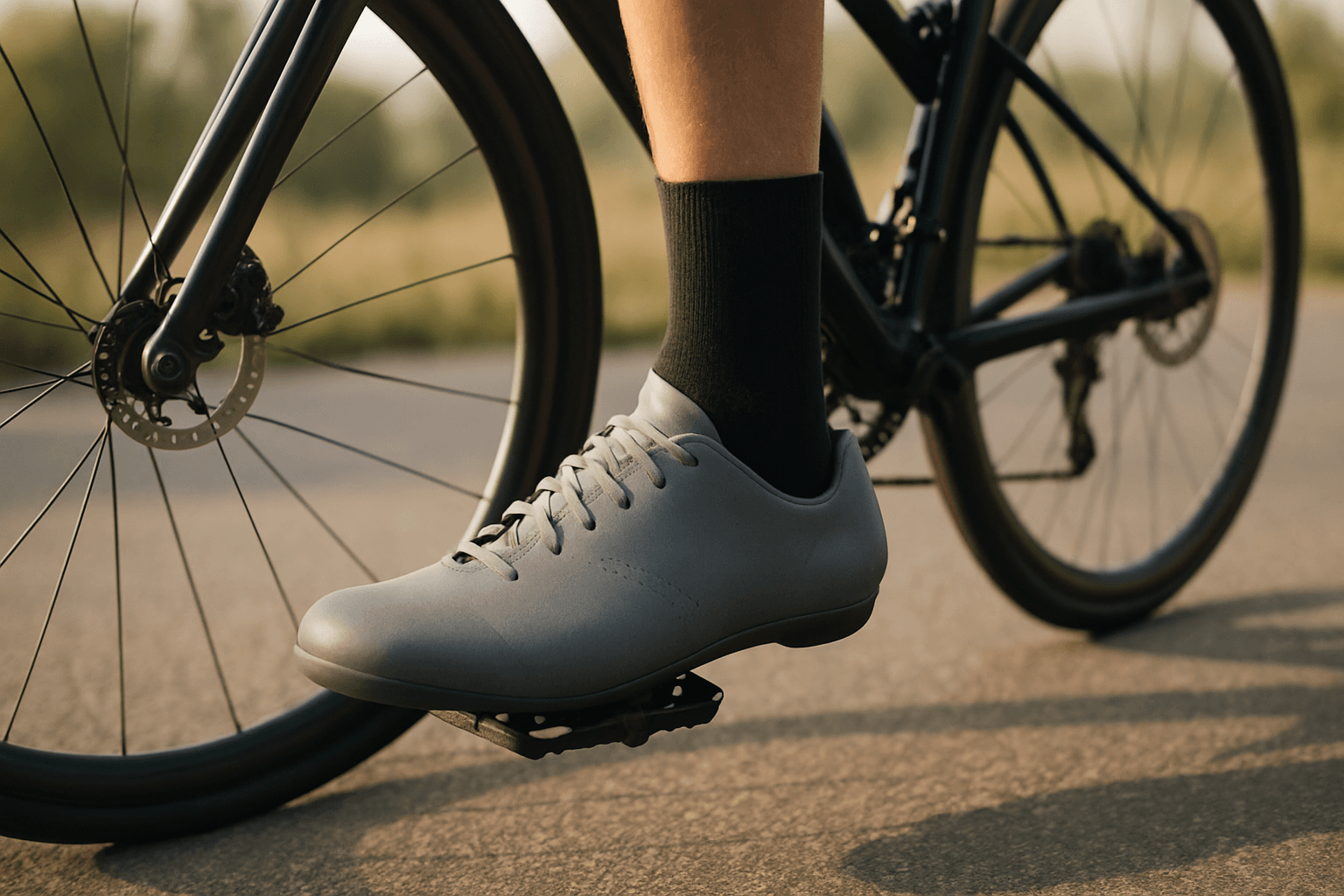
Running with plantar fasciitis is a shoe decision as much as a training decision. The shoe you want for a flare has three features: a real medial arch structure that does not collapse under body weight (most of the daily trainer category qualifies; most of the super-flexible minimalist category does not), a moderate heel-to-toe drop around eight to ten millimeters (zero-drop shoes shift more load into the fascia and are a reliable late flare trigger), and a stiff rocker or at least a stiff forefoot that reduces the amount of flex the fascia has to tolerate at toe-off. The ultra-cushioned maximalist category is usually fine on the cushioning but variable on the arch — try before you buy a second pair in that category.
Insoles inside a running shoe are a trickier conversation than insoles in a work boot. Many modern daily trainers already have shaped footbeds; swapping in a firm aftermarket insole on top of that geometry can feel too tall and crowd the midfoot. The useful rule is to try the shoe as-is first, run two or three easy miles, and only add an aftermarket insole if the arch feels unsupported after that test. For runners whose feet also live in flat work shoes between training sessions, the right place to put the aftermarket insole is in the work shoe, not the running shoe — the between-runs hours are where the fascia is actually overloaded. Our Akusoli insoles review is the pair we would install in the between-runs shoe first.
Compression socks are a comfort upgrade with a real anti-swelling effect that most runners with plantar fasciitis find helpful on long runs and recovery days. Our compression socks for feet walk-through covers the useful stack. The sports-medicine evidence for taping during the run itself is thinner than enthusiasts claim; a short course of taping before a specific race or long run can give meaningful short-term relief, and our plantar fasciitis taping walk-through covers the technique.
Surfaces, pace and the parts of running to drop first
Surfaces matter more than most runners realize. Running on a rubberized track, a packed dirt trail, or a treadmill belt delivers meaningfully less impact into the fascia than running on asphalt, and asphalt delivers less than concrete sidewalks. A runner with a mild flare who moves half of their weekly volume onto softer surfaces usually sees the morning pain settle within two to three weeks without any other change. The useful rule is that trail runs, treadmill runs and track sessions are the sessions to protect through a flare; the long concrete sidewalk run through downtown is the session to replace or move to softer ground.
Pace matters almost as much. The specific mechanical irritation of plantar fasciitis is highest at the paces where the fascia is loaded fast — sprint intervals, hill repeats, and sustained tempo work — and lowest at the easy conversational pace most runners log their base miles at. The useful rule for a flare is to keep the easy mileage and drop the quality: no intervals, no tempo, no hills until the morning pain is consistently below a three out of ten. For a race-focused runner this feels like a loss, but it is the trade that keeps the running itself available; dropping quality for three weeks is a far smaller loss than cutting all running for eight.
The parts of a running schedule to drop first, in order, are: hill repeats and plyometrics (highest fascia load per minute), sprint intervals and short-rest speed work (second highest), tempo and threshold work (middle), long runs (middle, but mostly through volume rather than intensity), and easy base miles (lowest). A runner cutting training through a flare should drop from the top of that list down, keeping the easy base and the long run first because they are the sessions that most reliably hold aerobic fitness. Cross-training replaces the hard sessions: the elliptical, aqua jogging, cycling and rowing all deliver real cardiovascular load without reloading the fascia between runs. A short supportive-shoe walk is also a reasonable low-impact option on cross-training days, and our walking with plantar fasciitis walk-through covers the shoe, surface and distance choices that keep the fascia calm.
The stretch routine that lives around every run
The stretching that matters for a running plantar fasciitis case is not during the run; it is before, after, and in the hours in between. The specific moves are the standard calf and fascia routine — our plantar fasciitis stretches walk-through covers the sequence — but the timing map for runners has four windows. First window: a short warm-up before the run (five minutes of gentle walking plus one round each of the calf stretch and the seated fascia stretch) that is enough to raise tissue temperature without doing serious stretching work on cold tissue. Second window: a longer post-run stretch session (ten to fifteen minutes, three rounds of each stretch) in the thirty to sixty minutes after you finish, when the tissue is warm and most receptive. Third window: a short mid-afternoon stretch break if the next session is the following morning. Fourth window: a short pre-bed stretch that preserves some length in the fascia through the overnight shortening, and a frozen water bottle under the arch for ten minutes to settle the inflammatory signal from the day.
Eccentric calf raises are the single move with the best evidence for runners with plantar fasciitis and chronic calf tightness. Three sets of ten slow heel drops off a step, loaded with a backpack or dumbbells as you tolerate, four to six times a week, builds the calf-and-Achilles complex that takes load off the fascia. Our plantar fasciitis exercises walk-through covers the full strength routine and the right loading progression. Runners who neglect the strengthening side and lean entirely on stretching tend to plateau at a slow-but-persistent flare that does not quite resolve; strengthening is what closes the loop.
The common runner mistake is treating the stretch routine as something that happens on bad days instead of a daily non-negotiable. The fascia is a slow-adapting tissue; thirty days of twice-daily stretching reliably moves the morning pain scale down in most runners, and skipping the routine on good days is how a flare that was almost resolved comes back the week after the first green-light run.
The return-to-run progression after a real layoff
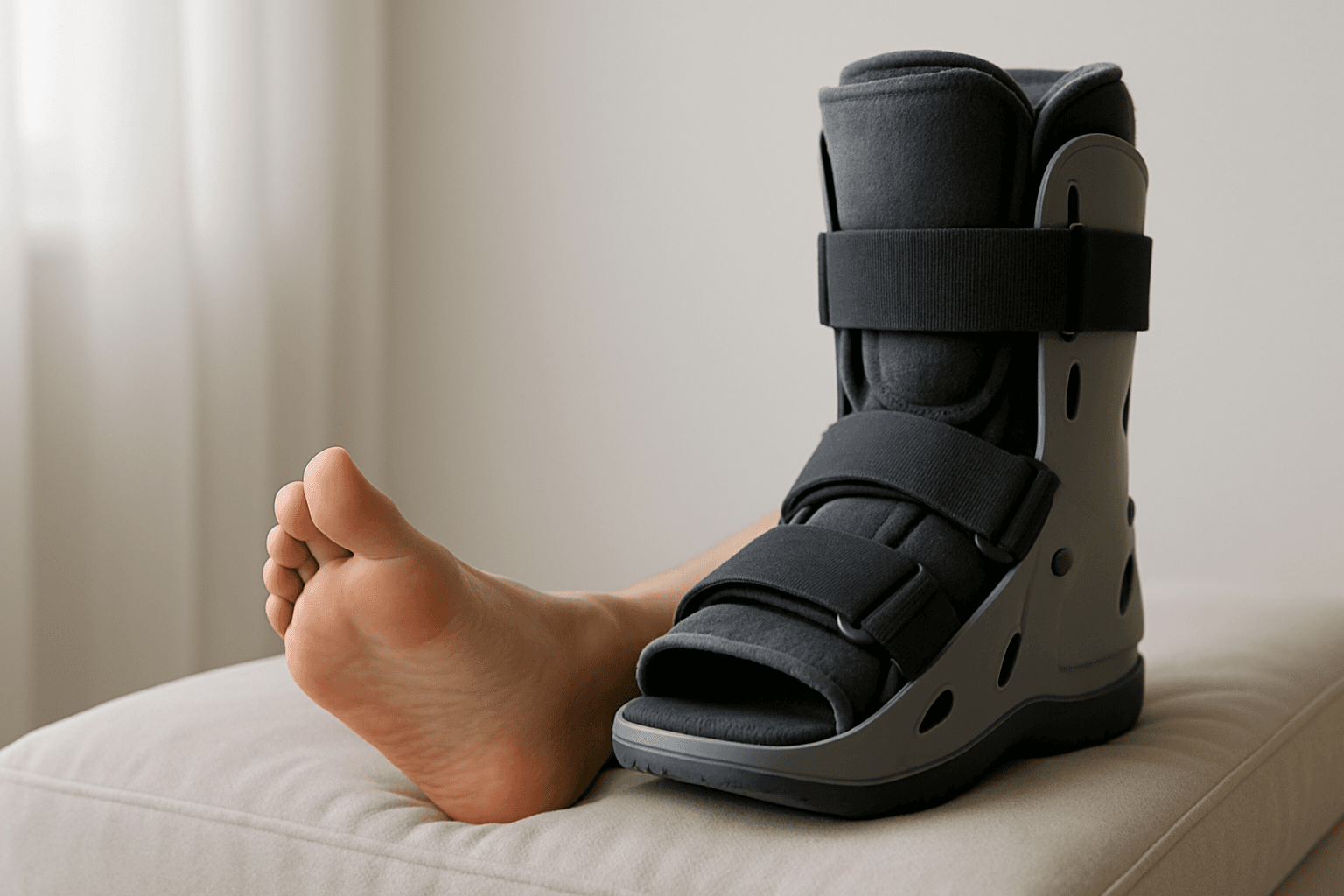
Not every flare lets you keep training. Red-light pain for more than a week, a pain level that keeps climbing week over week, or a flare that landed you in walking boot or taping territory means a real layoff — usually two to four weeks fully off running, with cross-training to hold fitness. The return-to-run progression after a layoff is a specific thing, and most runners rush it. The useful rule is the ten-percent-of-pre-flare rule for week one and a return by percentage each week after, with a strict green-light pain requirement on every session.
A typical two- to four-week return progression looks like this. Week one: three sessions of twenty minutes, alternating one minute of easy running with two minutes of walking, on a soft surface, no hills, no speed. Week two: three sessions of thirty minutes with the ratios narrowing to two minutes running and one minute walking. Week three: three sessions of thirty to forty minutes of continuous easy running on soft surfaces. Week four: four sessions of thirty to forty-five minutes, still all easy, still soft surfaces, no hills, no quality. Week five is the earliest a careful returner should reintroduce the long run, keeping it under forty-five minutes and still easy. Week six is the earliest to reintroduce hills, and week seven or eight is the earliest for sprint and interval work. Any session that produces a worsening of morning pain the next day is a step back to the previous week.
Runners who have had plantar fasciitis once are at meaningfully higher risk of a recurrence, and the useful preventive is to keep the stretching routine, the between-runs shoe and the eccentric calf raises as non-negotiables after the return. The fascia is forgiving if you treat it well in the ninety days after a flare; it is unforgiving if the flare resolves and the routine disappears with it.
The hard stops: when running has to pause regardless of plans
Three patterns are reasons to stop running until a clinician reads the foot regardless of a training plan or a race deadline. The first is pain that keeps climbing week over week despite a load cut, honest stretching and a supportive shoe — a fascia that is not responding to conservative care is a fascia that may have moved past the volume-cut window and into territory that needs a formal physical therapy course, a night splint, or a specialist conversation. The second is a sharp pop or a sudden sharp pain under the heel during a run, especially if a corticosteroid injection has been given in the last two months — plantar fascia rupture is uncommon but real and needs an in-person exam within a few days. The third is pain that spreads outside the fascia pattern (into the ankle, the top of the foot, the Achilles, or up the leg) or pain that comes with swelling, warmth, numbness, tingling, color change, or night pain that wakes you — these are patterns that are not plantar fasciitis and need a clinician to read.
A race deadline is not a reason to run through red-light pain. The two most common outcomes of pushing through a red-light flare for a race are either a worse race than you would have had on a careful return progression (because the fascia is irritated enough on race day to blow up by mile three), or a six-month recovery instead of a two-month one. Most sports medicine clinicians will support a shorter race distance over a planned longer one, a slower pace over a planned faster one, or a deferral over a start — the race calendar is not worth a seasonal injury.
Clinic options when conservative care has plateaued include a formal physical therapy course (the single highest-leverage escalation and often enough on its own), a night splint for stubborn morning stiffness (our night splint for plantar fasciitis walk-through covers the pick), a cortisone injection as a short-term window-opener (our cortisone shots for plantar fasciitis walk-through covers the trade-offs), extracorporeal shockwave therapy as the longer-lasting but slower option, and a surgical conversation for the small subset that resists six to twelve months of honest care.
The daily routine that lives underneath every running decision
Running with plantar fasciitis is a judgment call on top of a solid base. The daily stretch, shoe and insole routine is what makes the judgment call available at all.
The daily routine that lives underneath every running decision →Frequently asked questions
Can I run through plantar fasciitis or do I need to stop completely?
Most runners with early or mild plantar fasciitis can keep running with the right adjustments — cut volume by twenty to forty percent, drop hills and speed work, move half the mileage onto soft surfaces, and keep the daily stretch and insole routine running underneath. The traffic-light rule is the honest decision tool: a morning pain of one or two out of ten that settles with the first steps is a green-light day, three or four with a mild background ache that does not get worse as you warm up is yellow and you cut the session, five or more that gets worse rather than better in the first ten minutes is red and the day becomes cross-training. Running through a red-light pain is the pattern that turns a mild flare into a six-month recovery.
What is the best running shoe for plantar fasciitis?
The shoe you want has three features: a real medial arch structure that does not collapse under body weight, a moderate heel-to-toe drop of around eight to ten millimeters, and a stiff rocker or forefoot that reduces fascia flex at toe-off. Daily trainers in the structured-cushion category meet all three; most zero-drop and minimalist shoes do not and are a reliable late flare trigger. Our doctor-recommended shoes for plantar fasciitis walk-through covers the specific features to look for. The between-runs shoe (what your feet live in for the other sixteen hours of the day) matters at least as much as the training shoe, and that is usually where a supportive insole makes the biggest difference.
How long should I take off running when plantar fasciitis flares up?
A mild flare caught early with a disciplined load cut, a daily stretching routine, a supportive shoe and an insole in the between-runs footwear often needs no complete layoff — you cut volume and quality for two to three weeks while the fascia settles. A moderate flare that does not respond to a cut, or that lands you in red-light pain on consecutive runs, usually needs two to four weeks fully off running with cross-training to hold fitness, followed by a careful six- to eight-week return progression. A severe flare, especially one that involves a walking boot or sharp sudden pain, is a sports medicine conversation about the fuller timeline. The useful rule is that a careful early response is almost always shorter than the layoff that pushing through requires.
What surfaces are safest to run on with plantar fasciitis?
Softer surfaces deliver meaningfully less impact into the fascia than hard ones. In rough order from best to worst for a flare: rubberized tracks, packed dirt or crushed limestone trails, treadmill belts, well-maintained grass, asphalt roads, and concrete sidewalks. A runner who moves half of their weekly mileage onto the top three categories usually sees the morning pain scale drop by a point or two within two to three weeks without any other change. Trail running is also easier on the fascia than most road running because the varied surface and smaller steps distribute load across more muscles — if you have access to trails and the surface is not technical enough to risk a twist, they are an underrated option during a flare.
Will treadmill running make plantar fasciitis worse?
No — a treadmill belt is a softer surface than almost any outdoor option, and treadmill runs are usually easier on the fascia than road runs of the same volume. The two caveats are that the treadmill's constant pace rewards the slightly over-stride most people fall into on belts, which can lightly load the fascia in a way outdoor running does not, and that a treadmill incline (any grade above one or two percent) climbs steeply in fascia load because of the toe-off angle. For a runner through a flare, a mostly-flat treadmill belt at a conversational pace is usually one of the safer sessions available.
What should I do if my plantar fasciitis gets worse after a run?
First, read whether it is worse that evening (a mild temporary post-run flare that settles with ice and rest is normal) or worse the next morning (the honest signal that the fascia did not tolerate the session). If it is worse the next morning, the next day is a cross-training day, the following week drops a quarter of the weekly volume, and the daily stretch and ice routine runs harder for two weeks. Three next-morning-worse sessions in a row is the signal to drop running entirely for a week, lean fully into the daily routine, and come back on the return-to-run progression. If the pain climbs week over week despite a load cut, or if you have a sharp new pain that does not match the usual fascia pattern, a sports medicine or podiatry visit is the right next step.
HeelCups is reader-supported. When you buy through links on our site we may earn an affiliate commission, at no extra cost to you. This article is general information about foot comfort and is not medical advice — see our medical disclaimer.