CAUSES
What Causes Plantar Fasciitis? The Everyday Triggers Behind Most Heel Pain
A plain-English look at how plantar fasciitis actually develops, the ordinary habits and life events that trigger it, and the risk factors that shift the odds.
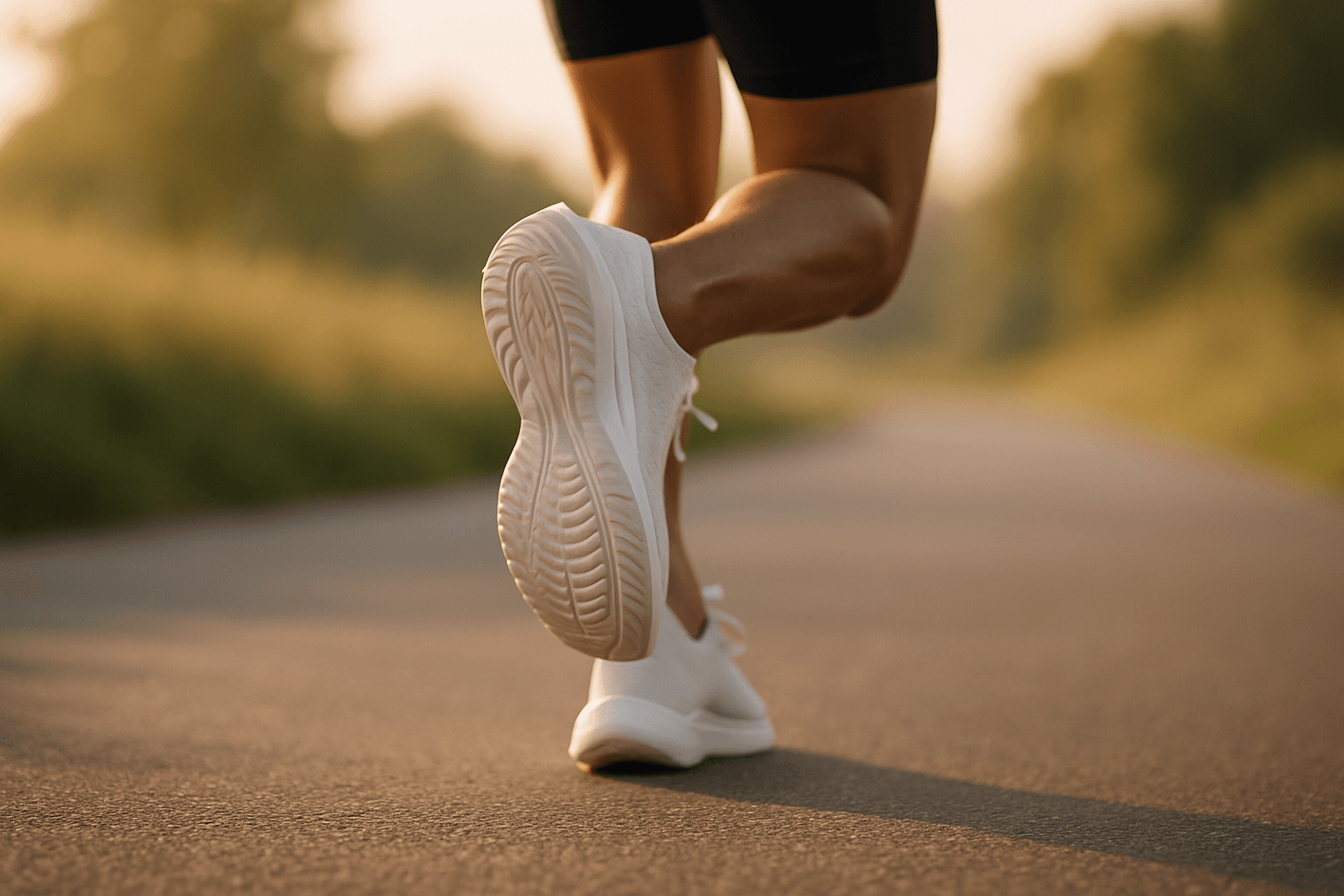
Plantar fasciitis is an overuse injury of the plantar fascia, the thick, ligament-like band that runs from your heel bone to the base of your toes and holds up the arch of your foot. It develops when the fascia takes on more load, more often, than it can quietly absorb. That framing matters because plantar fasciitis is almost never caused by one dramatic event; it is caused by weeks or months of small overloads adding up, and the fix is unglamorous — take load off the tissue, lengthen the calves that pile onto it, and give it time.
Every real cause of plantar fasciitis comes back to that same mechanical picture: too much pull on the fascia, too little recovery between bouts, and often a tight calf pulling extra tension up through the heel. Once you see the pattern, the risk factors and triggers below stop feeling random. They are all different ways of tilting the load-versus-recovery balance in the wrong direction.
This page is background reading, not a diagnosis. If your pattern of pain does not obviously fit the fascia, our plantar fasciitis symptoms walk-through covers the map and the mimic conditions; the plantar fasciitis treatment walk-through is the honest ladder once you have named the cause. If you have had heel pain for more than a few weeks despite honest home care, or if it came with an injury, swelling, numbness or a fever, book a doctor or podiatrist. Nothing on this site is written to cure plantar fasciitis — the goal is to give you comfort, support and relief while your body heals, and to help you see when a clinician needs to step in.
The short mechanical story: micro-tears, not one big tear
The plantar fascia is built to stretch a small amount with every step. When you push off, the toes lift, the arch flattens slightly, and the fascia lengthens by a few millimeters — the so-called windlass mechanism. Over thousands of steps a day, that repeated loading is normal and healthy. Plantar fasciitis starts when the fascia is loaded past its comfortable working range often enough that tiny tears at its heel attachment outpace the repair. The tissue becomes thickened, irritated and painful, and pain sensors in the surrounding area become more reactive.
This is why the classic sign — a stabbing pain under the heel with the first steps of the morning — makes so much sense. Overnight, the fascia has shortened and cooled. Standing up puts your full body weight on it before it has warmed up, and the sore tissue protests. A few minutes of walking loosens it and the pain eases, then creeps back later in the day as the load piles up.
Tight calves: the single most consistent contributor
In clinic after clinic, tight calf muscles turn up on the exam of nearly every patient with plantar fasciitis. The gastrocnemius and soleus share the Achilles tendon, which anchors on the back of the heel bone; the plantar fascia anchors on the underside of the same bone. When the calves are tight, the Achilles pulls up on the heel, which effectively pretensions the fascia on the other side. Every step you take then puts the fascia under more strain than it should be under.
This is why calf stretching shows up in every serious plantar fasciitis routine, why walking a lot in high-heeled shoes shortens the calves and quietly raises your risk, and why sitting all day at a desk with your knees bent and heels down works against you. It is also why our plantar fasciitis stretches page keeps returning to the wall calf stretch and the stair calf drop.
Ordinary life events that trigger it
The most common trigger is not exercise; it is a change in routine. A new job that puts you on your feet for eight to twelve hours on hard floors. Standing at a booth or convention for a weekend. A summer of flat sandals or barefoot time on hardwood. Ten to twenty extra pounds gained over a busy year. The last trimester of pregnancy. Returning to running after a layoff. In every case, the fascia is being asked to do more work than it did last month, without a proportional increase in support or recovery.
Runners have their own version of the same story: mileage jumped too fast, a switch to minimalist shoes, hill or speed work added on top of an already full week, or a stubborn refusal to replace shoes that are 600-plus miles in. The 'ten percent rule' — do not increase weekly mileage by more than about ten percent — exists precisely because tissues like the plantar fascia and Achilles adapt slowly. Break the rule for a few weeks and you find out where your weakest link is.
Risk factors that stack the deck
Age plays a role: plantar fasciitis is most common between about 40 and 60, when the fat pad under the heel starts to thin and the fascia loses a little of its elasticity. Body weight is a lever: every extra pound at rest becomes several extra pounds of load under the heel during push-off. Occupation is another: teachers, nurses, retail and warehouse staff, hairdressers and factory workers all show up disproportionately in the case series because of the sheer hours on hard floors.
Foot shape shifts the odds without being destiny. Very high arches transmit more shock to the heel and forefoot with less give in between, so the fascia and heel fat pad take a beating. Flat feet or feet that over-pronate stretch the fascia through more of its range with every step, so the fascia gets loaded further. Both shapes benefit from a supportive insole with a firm arch and a deep heel cup; the goal is to hand some of the shock absorption to the shoe. Our Akusoli insoles review covers our first-pick for the shoes you already own.
Other conditions that raise the risk include a very tight Achilles tendon (whether from genetics or a life spent in heeled shoes), a leg length discrepancy that puts extra load on one side, and inflammatory conditions like reactive arthritis or ankylosing spondylitis when heel pain is bilateral and does not fit the usual pattern. That last group is one reason a clinician's eyes are worth the visit if home care is not working.
Footwear you can blame, and footwear that helps
The single worst everyday choice for a sore fascia is a flat, unsupportive shoe worn for hours on hard floors — flip-flops, thin canvas sneakers, worn-out foam slides, dress shoes with no arch. They provide no arch support, no meaningful heel cushioning and no help with shock absorption; the fascia does all the work.
Shoes that help share three features: a firm heel counter that holds the heel in place, a real arch support that lifts and cradles the medial arch, and enough cushioning under the heel to blunt the impact without collapsing. You do not need a top-of-the-line running shoe; a mid-range walking or running shoe with a supportive insole inside it beats an expensive fashion sneaker every time. If your favorite shoes are otherwise fine but shallow on support, a trim-to-fit insole is often all you need. See our insoles hub for the buyer's guide.
When it looks like plantar fasciitis but isn't
Not every pain under the heel is plantar fasciitis. A stone bruise from a bad landing feels similar for a few days and settles on its own. A heel spur on X-ray is often incidental — a bony change that formed over years and is rarely the pain generator itself; the same daily supports and stretches that soothe plantar fasciitis usually soothe a painful spur. Tarsal tunnel syndrome, where a nerve is pinched inside the ankle, causes burning and tingling into the sole that stretching alone won't quiet. A calcaneal stress fracture causes deep, focal heel pain that worsens with any impact, does not follow the morning-worst pattern, and needs imaging.
Persistent heel pain in a child or teenager is almost never plantar fasciitis; a growth-plate irritation called Sever's disease is far more likely and has its own treatment plan. And plantar fasciitis on both heels at once, in someone under 40, is a signal to look at systemic causes rather than mechanical ones. Any of these deserves a doctor's assessment rather than more foam rolling. Not sure which pattern is yours? Start on our heel pain hub for a symptom-by-symptom map.
What actually helps once you know the cause
The three-part routine that moves the needle for most people is direct: stretch the calves and fascia morning and night, wear a supportive shoe with a firm arch and deep heel cup all day (not just at work), and back off the exact activity that tipped the tissue over the edge — the extra mileage, the new job's first month of eight-hour shifts, the summer of barefoot floors — for two to four weeks. Once the acute soreness has calmed, a few minutes a day of plantar fasciitis exercises — towel scrunches, short-foot drills and slow heel raises — rebuilds the small foot muscles and calves that share load with the fascia, so it stops carrying the whole day on its own. Icing after long days is a comfort measure worth including. A night splint, taping, a corticosteroid injection or a short course of anti-inflammatories are useful add-ons when a clinician recommends them.
Give any honest routine three to six weeks before deciding it is not working, and change one variable at a time. Two weeks of a real insole and a daily stretching routine tell you far more than a drawer of half-tried gadgets. If you are asking the fair, common question of whether meaningful relief is possible in the first seven days, our can you cure plantar fasciitis in one week walk-through sets a realistic day-by-day plan. Once the acute pain is behind you, our how to prevent plantar fasciitis walk-through is the honest habit list for keeping a second episode from arriving. If the pain has not budged, worsens, or comes with red-flag symptoms, that is when a clinician earns their fee.
The insole that takes load off the fascia
A trim-to-fit insole with a firm arch and deep heel cup so the fascia is supported through the whole day, not just at bedtime.
The insole that takes load off the fascia →Frequently asked questions
Can plantar fasciitis just appear out of nowhere?
It feels that way, but there is almost always a preceding change in load — a new job, a mileage jump, a summer of flat sandals, ten pounds gained over a year, or a stretch of poor shoes. The tissue tolerates a rising load until it does not, and the first morning of sharp heel pain is usually the point where it stopped tolerating. Ask what was different in the two to eight weeks before the pain started and you will usually find your answer.
Is plantar fasciitis caused by a heel spur?
No. Heel spurs are common in people without any pain at all, and many people with plantar fasciitis have no spur on X-ray. The spur forms as a slow response to years of pull on the heel bone; the pain comes from the irritated soft tissue, not the bone. Treatment for a painful heel with a spur looks essentially identical to treatment for plantar fasciitis without one — see our heel spur vs plantar fasciitis walk-through for the full comparison.
Does running actually cause it?
Running does not cause plantar fasciitis on its own — plenty of runners never get it. What causes it in runners is a sudden spike in load: a rushed return from injury, a big weekly mileage jump, hill or speed work stacked on top of an already full schedule, or worn-out shoes. Consistent training with gradual mileage increases and shoes replaced around every 400 to 500 miles keeps most runners out of trouble.
Can being overweight cause plantar fasciitis?
Higher body weight is one of the risk factors that stacks the deck, because every step multiplies force through the heel, but it is not a sole cause and it does not mean lean people are safe. A ten to twenty pound weight gain over a short period is one of the classic triggers because the fascia has not had time to adapt to the new load. Losing weight helps prevention and recovery; supportive footwear helps regardless of weight.
Why does it hurt most in the morning if I did not do anything to it overnight?
During sleep, the fascia shortens and cools with your foot in a relaxed, pointed-down position. Standing up puts your full body weight on the shortened, sore tissue before it has warmed up, and the tiny tears from the previous day get stretched all at once. The pain fades as the fascia warms and lengthens with movement, then returns as the day's load builds up. A towel stretch before your feet hit the floor is what most people notice first when they start a routine.
Can I keep exercising, or do I have to stop entirely?
You almost never have to stop entirely, but the specific activity that tipped the tissue over usually needs a temporary cut. If it is running that flared, swap to cycling or the pool for two to four weeks while you stretch, strengthen and support. If it is standing at work, add a supportive insole to your work shoes and take real breaks off your feet. Most people do best with reduced, not eliminated, activity while the fascia calms down.
HeelCups is reader-supported. When you buy through links on our site we may earn an affiliate commission, at no extra cost to you. This article is general information about foot comfort and is not medical advice — see our medical disclaimer.