FLIP-FLOPS
Flip-Flops and Plantar Fasciitis: Why Summer Is a Heel Pain Trap and the Supportive Alternatives That Still Feel Like Summer
The classic drugstore flip-flop is the single most reliable summer trigger for a plantar fasciitis flare — but the fix is not year-round sneakers. Here is why the flat foam strap is so hard on the fascia, which supportive sandals keep the summer feel, and the honest read on the brands most readers ask about.
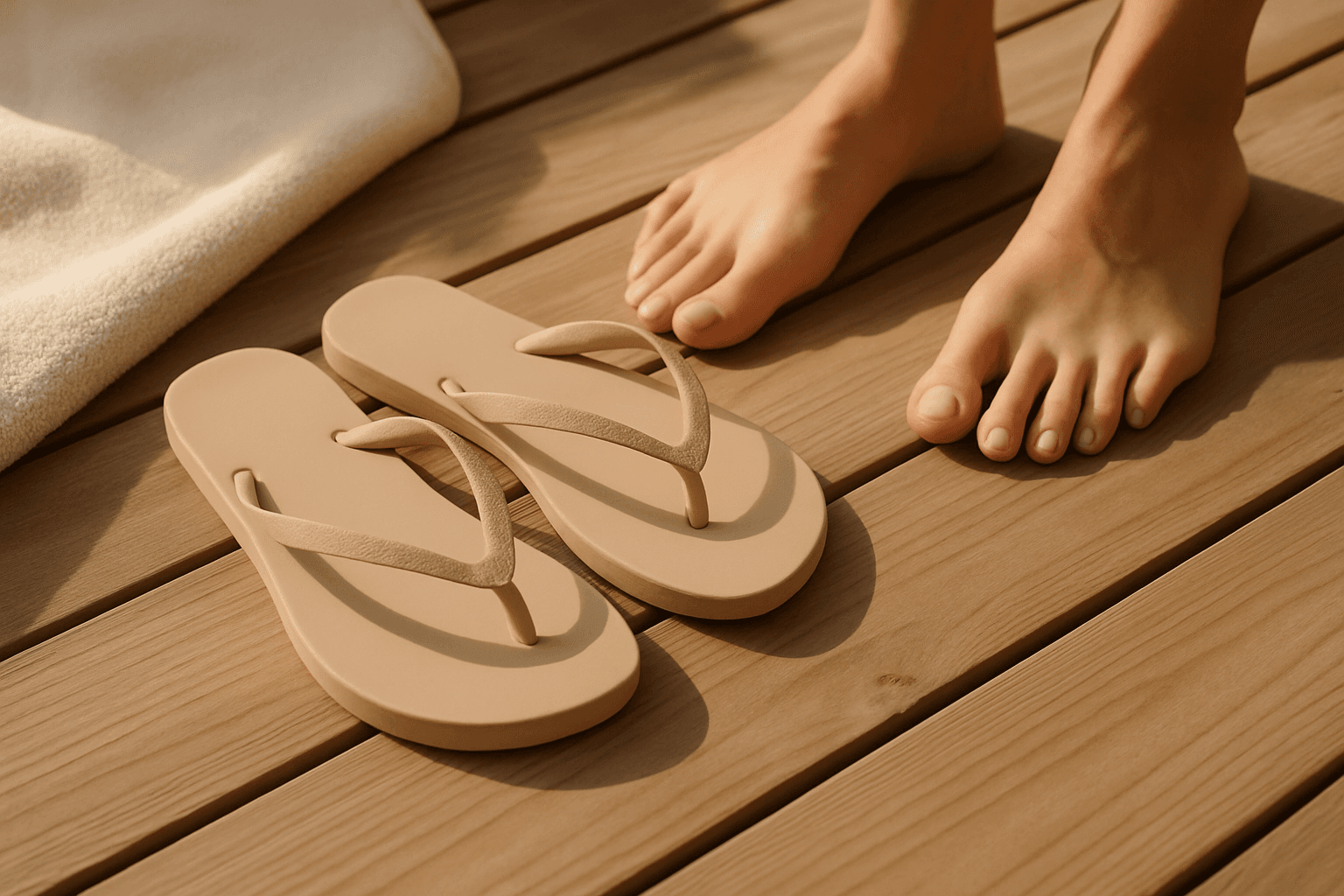
The three-dollar foam flip-flop is one of the most reliable summer triggers for a plantar fasciitis flare, and it is also one of the hardest triggers for readers to accept — because the sandal in question is comfortable in the moment, cheap to replace, and tied up with the summer rituals of a pool day, a beach weekend or a backyard barbecue. The physics of the sandal are the whole story: a flat foam sole with no arch structure, a thong strap that forces the toes to grip the sandal with every step to keep it on the foot, and a thin footbed that packs down inside a few weeks of wear and offers less and less cushioning as it ages. The fascia takes the brunt of all three, every step, for the hours of a long summer day on hard surfaces that would already be irritating in a supportive shoe.
The useful fix is not year-round sneakers. The supportive sandal category has grown enormously in the last decade — there are honest, arch-supported, deep-heel-cup options at every price point from twenty-five dollars to a hundred and fifty, in styles that still read as summer rather than orthopedic. This page walks through what specifically is wrong with the classic flat flip-flop at the tissue level, the three features a supportive summer sandal needs to earn its spot in the rotation, the honest read on the brand categories most readers ask about (recovery slides, cork-footbed sandals, structured sport sandals, orthotic-friendly flip-flops), the specific daily rules that let you keep some flat sandal time without triggering a flare, and the shoe-rotation strategy that keeps the fascia happy through a long summer on your feet. Our doctor-recommended shoes for plantar fasciitis walk-through covers the closed-shoe side of the rotation.
Nothing on this page is medical advice. Footwear choice is one lever in a bigger plantar fasciitis plan, and the daily stretching routine, supportive insole and load management covered in our plantar fasciitis treatment walk-through are the base this layer sits on top of. Every recommendation on this hub is written for comfort, support and relief — nothing on this site is a treatment or a cure for plantar fasciitis. For a longer look at strapped styles, see our guide to sandals for plantar fasciitis.
What a flat flip-flop actually does to the fascia
A classic drugstore flip-flop does three things to the fascia at the same time, and each of them would be a problem on its own. The flat foam sole with no medial arch structure means the fascia is unsupported through its full stretch with every step — the arch is the anatomical structure the fascia helps hold up, and a sandal that does not share any of that load hands all of it back to the fascia. On a tile floor or a concrete pool deck for several hours, the cumulative load is significant; a long day on your feet in flat flip-flops can produce a morning stab the next day that a long day in supportive shoes would not.
The thong strap compounds the problem by forcing the toes to grip the sandal with every step to keep it from flying off. The specific movement is called gripping or scrunching, and it is driven by the flexor digitorum brevis and flexor hallucis brevis — the small intrinsic foot muscles that run alongside the plantar fascia. Hours of gripping fatigue these muscles and shifts more of the load onto the fascia itself, in the same way that tired hikers end a long descent with sore quads because the glutes have given up. A sandal with a secured heel strap removes the gripping entirely because the sandal stays on the foot without the toes holding it.
The thin, soft footbed is the slower third problem. New flip-flops have some initial cushioning that packs down within a few weeks of regular wear, and the sandal that felt comfortable in April has often lost most of its padding by August. Readers wearing the same pair for a second summer are usually walking on a foam layer thin enough that the heel bone and the fat pad are taking most of the impact directly — which is why so many flat-sandal plantar fasciitis flares happen late in the summer rather than in the first week of wearing the sandal.
The three features a supportive summer sandal needs
The useful rule for picking a summer sandal that will not trigger a flare is the same rule for picking a daily shoe: a real medial arch structure, a cradled heel cup, and a stiff enough sole that the sandal does not fold in half when you hold it by the heel. All three features are available in sandal styles that still read as summer. The medial arch is the single most important of the three — the arch structure in a supportive sandal is often more visible than it would be in a sneaker because the sandal is open, which is why cork footbed sandals look sculpted at the arch. A sandal where the midfoot of the sole is flat is a sandal that will irritate the fascia regardless of the strap configuration.
A cradled heel cup is the second feature and it is what most casual slides miss. The specific shape is a deeper, scooped-out heel section that holds the fat pad in place on each heel strike instead of letting it squirt out sideways under load. The scoop is small — a few millimeters is enough — but it changes the shock absorption meaningfully, and it is one of the features our heel cups vs insoles walk-through covers in detail. Sandals that advertise 'contoured footbed' or 'anatomical heel' are usually the ones with real heel cups; sandals with a flat, flush heel section usually do not.
The stiff sole is the third feature. A supportive sandal should resist folding when you hold it at the heel; the midfoot should bend only a modest amount under firm hand pressure. The physics is simple — a sole that folds easily under hand pressure folds easily under body weight, and the fascia has to make up the difference every step. Sandals with a shank (a stiff plate running through the midfoot) usually test well on this; thin-soled slides and classic foam flip-flops usually do not. The useful at-home test is to pick a sandal up by the heel and try to fold it in half: if it collapses easily, it will not support the fascia.
The sandal categories that work, honestly
The cork-footbed category (Birkenstock being the brand most readers ask about, with Haflinger, Mephisto, Finn Comfort and other European makers in the same lane) is the long-standing winner for plantar fasciitis on paper and in most readers' experience. The cork is molded into a shaped footbed with a visible arch, a scooped heel cup and a stiff shank; the cork itself molds to the foot over the first few weeks of wear, which deepens the fit. The caveat is that the stock cork footbed is firmer than modern cushioning expectations and takes a two- to three-week break-in; readers who want immediate softness often bounce off cork in week one and give up before the footbed has molded. For readers who stay with the break-in, cork sandals typically become the comfortable summer default they expected the flip-flop to be.
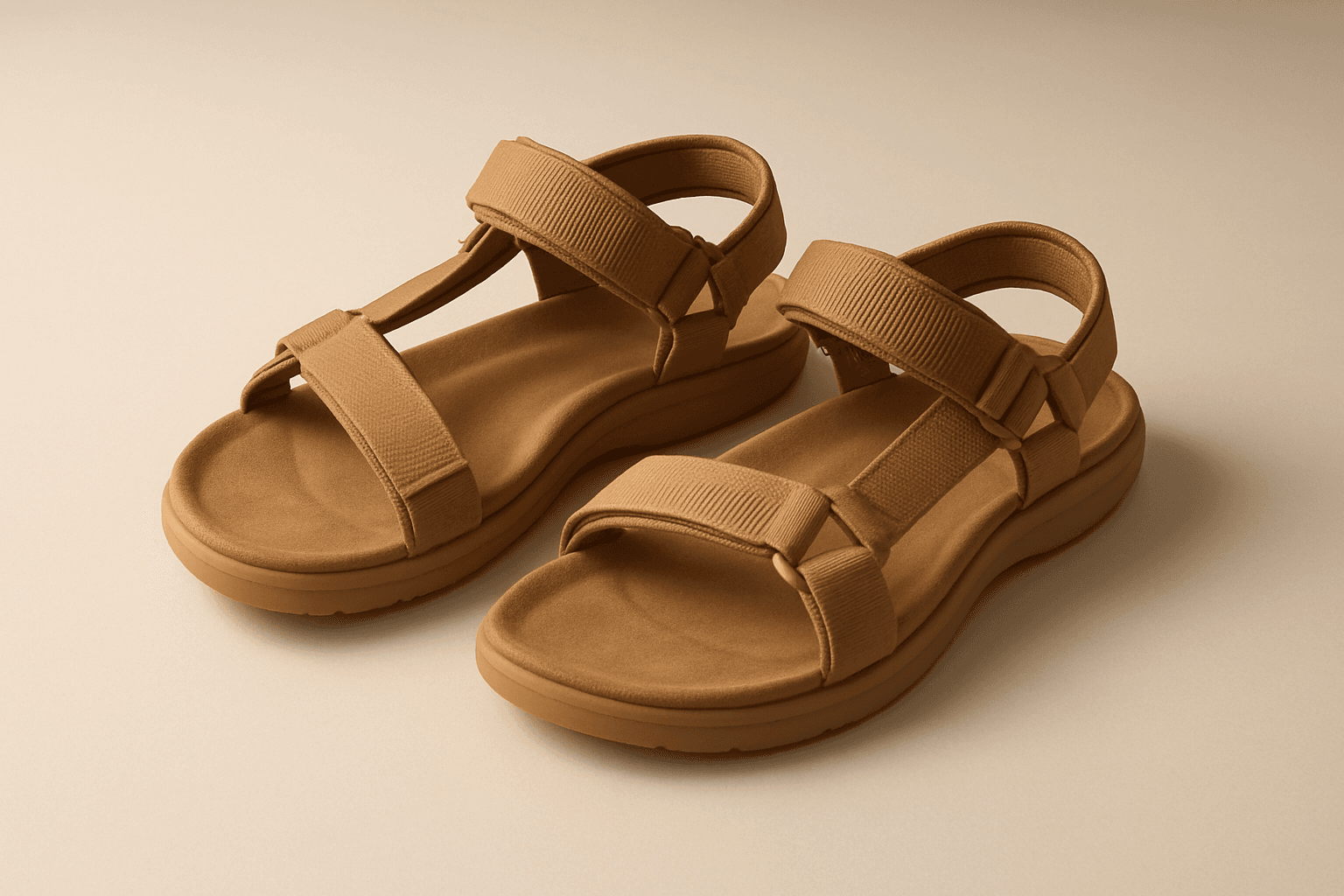
The structured sport sandal category (Teva, Chaco, Keen, Merrell and similar outdoor-brand sandals with secured heel straps) is the second strong lane. These sandals typically have a shaped arch, a secured heel strap that eliminates the toe gripping, and a cushioned footbed that packs down more slowly than drugstore foam. The style skews casual-outdoor rather than beach-vacation, and the look is not for every reader, but the biomechanics are reliably good. Chaco specifically has a wider arch structure that many readers with higher arches find uncomfortable at first and more supportive once broken in. The useful rule is to try sport sandals on in a store, walk around for ten minutes, and read whether the arch structure feels like a push or a cradle.
The recovery slide category (Oofos, Hoka Ora, Kane Revive and similar foam-focused slides) is a more complicated lane. The marketing is often framed around plantar fasciitis directly, and most of these sandals do have more arch structure and cushioning than a drugstore flip-flop. The useful honest read is that the recovery slide is a step up from the flat flip-flop and a step down from the structured cork or sport sandal; the foam cushioning is noticeably comfortable in the first hour and reliably packs down over months of wear. For readers whose summer footwear needs are mostly a post-shift decompression slide at home, recovery slides are a reasonable pick. For readers whose feet live in sandals for eight to ten hours a day of real activity, a structured cork or sport sandal is usually the better pick.
The orthotic-friendly flip-flop and sandal category (brands like Vionic, Olukai, Rainbow and others that sell flip-flop styles with built-in arch structure) is the lane for readers who really want the look and feel of a flip-flop and are willing to pay more for a built-in arch and heel cup. The best of these approach cork-sandal biomechanics in a flip-flop silhouette; the worst are only marginally better than drugstore foam with better marketing. The useful at-home test is the same stiff-sole test and the visible-arch-and-heel-cup test; honest brands in this lane will have both features obviously, and the sandal will cost in the forty-to-eighty-dollar range rather than the ten-to-twenty-dollar range of true drugstore flip-flops.
The rules for keeping some flat sandal time without a flare
The useful rule for readers who do not want to retire the drugstore flip-flop entirely is to treat it as a specific-task sandal rather than an all-day shoe. The two tasks it does genuinely well are a short walk from the car to the pool, and a shower or locker-room sandal where hygiene is the goal and tissue is on the clock for minutes rather than hours. For either of those tasks, the fascia barely notices. The fascia starts to notice around the thirty-to-forty-minute mark of walking in a flat flip-flop on hard surfaces, and the morning-after price of a long summer day in flat flip-flops is usually locked in by the end of the day.
The second useful rule is to never wear a flat flip-flop two days in a row during a flare or in the ninety days after a resolved flare. The fascia tolerates occasional loading much better than daily loading, and the overnight recovery between days is what makes a once-a-week flip-flop day survivable where seven-days-a-week would produce a reliable flare. A pair of structured sport sandals or cork sandals as the default, with a flat flip-flop reserved for pool days and shower trips, is the pattern that most readers find lets them keep the summer rituals without the heel pain.
The third useful rule is to be honest about the house slipper and the between-shift slide. Many readers' summer plantar fasciitis flares are not driven by their outdoor footwear at all — they are driven by eight hours of barefoot time on hardwood or tile at home while the air conditioning runs, with the only sandal in the house being the flat drugstore flip-flop by the back door. A supportive house slipper or recovery slide used as the indoor default fixes the hidden hours that no outdoor sandal choice can reach. Our compression socks for feet walk-through covers an adjacent indoor option for readers who prefer a sock-and-slipper combination to a slide alone.
The shoe rotation that keeps a long summer easy on the fascia
The useful mental model for summer footwear is a rotation of three or four pairs rather than a single sandal, because the fascia tolerates loading variety better than it tolerates the same geometry imposed on it every hour of every day. A reasonable rotation looks like a supportive structured sandal as the all-day outdoor default, a comfortable supportive closed shoe for the days you drive, work or walk long distances (our doctor-recommended shoes for plantar fasciitis walk-through covers the pick), a supportive house slipper or recovery slide for indoor hours, and a flat drugstore flip-flop or shower sandal for pool and locker-room duty. The exact models matter less than the pattern.
Readers whose feet live in sandals from May through September are usually surprised at how much of a difference the house slipper makes once they start wearing one. The fascia is loaded (differently but still loaded) during the sixteen hours a day a reader is not in outdoor shoes, and a supportive house slipper is often the single highest-leverage change in the whole rotation. The specific style matters less than the structure — a slipper with a real arch and a stiff enough sole, not a soft moccasin that bends in half.
Readers who want to add an insole to a sandal they already own can sometimes do so if the sandal has a removable footbed and the aftermarket insole is cut to fit; most slip-in sandals and many structured sport sandals accept a trimmed footbed. Our Akusoli insoles review is the pair we would try first for this use. The exceptions are classic cork sandals, where the molded footbed is the sandal's main feature and adding another layer defeats it, and most flip-flop styles, where the strap geometry does not leave room for an insole.
What a summer flare looks like, and what to do about it
The classic pattern of a flip-flop-driven summer flare is a morning stab under the heel that showed up two to four weeks after the sandal became the daily default, that is worst on the mornings after the longest days in the sandal, and that eases through the day only to come back the next morning. The pain is almost always under the medial heel attachment of the fascia (the same spot that would hurt in a non-summer flare) and is usually a straightforward plantar fasciitis flare rather than a different condition — the sandal is the trigger, not the cause. Our plantar fasciitis symptoms walk-through covers the diagnostic pattern.
The useful first move for a summer flare is to pull the flat flip-flop out of the rotation entirely for four to six weeks, swap in a structured cork or sport sandal as the outdoor default, start a supportive house slipper for indoor hours, and begin the daily stretching routine covered in our plantar fasciitis stretches walk-through. The fascia usually responds to the footwear change within two to three weeks even without any additional intervention, and the morning stab is often meaningfully reduced by week three. The common mistake is to skip the house slipper half of the fix and leave the hidden barefoot hours as a persistent background trigger.
A flare that does not respond to the footwear change plus a stretch routine within four to six weeks is a flare that has moved past what footwear alone can address. The next steps are a formal physical therapy course, a night splint for stubborn morning stiffness, or the specialist ladder covered in our plantar fasciitis treatment walk-through. A clinician is the right person to help pick the next rung.
The closed-shoe side of the rotation
A supportive summer sandal pairs with a supportive closed shoe. The doctor-recommended shoes walk-through covers the other half of the daily rotation.
The closed-shoe side of the rotation →Frequently asked questions
Are flip-flops bad for plantar fasciitis?
Flat drugstore flip-flops are one of the most reliable triggers for a plantar fasciitis flare — the combination of no arch structure, a thong strap that forces the toes to grip with every step, and a thin foam footbed that packs down inside a few weeks produces a specific overload of the fascia that most readers can trace directly to the summer they wore flip-flops as their default outdoor shoe. Supportive sandals with a real arch, a cradled heel cup and a stiff sole are a different category entirely — they do not share the problem and can be worn all day without the same risk. The useful rule is to reserve flat flip-flops for pool and shower duty and use a structured sandal as the real summer default.
What is the best sandal for plantar fasciitis?
The cork-footbed category (brands like Birkenstock, Haflinger, Mephisto and similar European makers) is the long-standing winner on paper and in most readers' experience, with a molded arch, a scooped heel cup and a stiff shank built in. The structured sport sandal category (Teva, Chaco, Keen, Merrell) is the second strong lane with a secured heel strap and a shaped footbed. The orthotic-friendly flip-flop category (Vionic, Olukai and similar) is a flip-flop silhouette with built-in arch and heel cup for readers who want the look. The specific brand matters less than the three features: a real medial arch, a cradled heel cup, and a stiff sole that does not fold in half when you hold it by the heel.
Are Birkenstocks good for plantar fasciitis?
Birkenstocks are one of the better off-the-shelf summer options for plantar fasciitis in most readers' experience. The molded cork footbed has a visible arch, a scooped heel cup and a stiff shank running through it, and the cork softens and molds to the individual foot over the first few weeks of wear. The main caveat is the break-in: the stock cork is firmer than modern cushioning expectations, and readers who want immediate softness often give up in the first week. The second caveat is sizing — Birkenstocks are sized by the length of the footbed, not the length of the foot, and a size that is too long will leave the arch structure in the wrong place for your foot. A proper Birkenstock fitting at a store, or a careful follow of the brand's sizing guide, is worth the extra effort for the geometry to actually work.
Are Oofos good for plantar fasciitis?
Oofos and other recovery slides are a reasonable step up from flat drugstore flip-flops and a step down from structured cork or sport sandals. The dense foam has more arch structure and more cushioning than a classic flip-flop, and the slide design removes the toe-gripping of a thong strap. For readers whose summer sandal use is mostly a post-shift decompression slide at home or a short walk from the car, Oofos is a comfortable pick. For readers whose feet live in sandals for eight to ten hours a day of real walking and standing, a structured cork or sport sandal is usually the more supportive choice. The foam also packs down over months of wear and the arch structure diminishes with age; the useful rule is to replace them annually if they are the daily default.
Can I wear flip-flops at all with plantar fasciitis?
The useful rule is to treat flat flip-flops as a specific-task sandal rather than an all-day shoe. The two tasks they do fine are a short walk from the car to the pool and a shower or locker-room sandal where you are on the sandal for minutes rather than hours. Thirty to forty minutes of walking on hard surfaces is roughly where the fascia starts to notice the lack of support, and all-day wear of a flat flip-flop is where most summer flares come from. During an active flare, retire flat flip-flops entirely for four to six weeks and switch to a structured sandal; after a resolved flare, keep flat flip-flops to a once-a-week occasional role rather than the default.
What about wearing orthotics inside flip-flops?
Most slip-in sandals and many structured sport sandals accept a trimmed aftermarket insole, and this is a reasonable path for a reader who wants to upgrade a sandal they already own. Our Akusoli insoles review covers the pair we would try first. Classic cork sandals (Birkenstocks and similar) are the exception — the molded cork footbed is the sandal's main feature, and adding another insole layer defeats the design. Most flip-flop silhouettes with a true thong strap also do not leave enough room for a full insole, and the modified foot position changes the strap geometry in ways that often cause the thong to rub. For most readers, the simpler path is a sandal with built-in support rather than a flip-flop plus an insole.
HeelCups is reader-supported. When you buy through links on our site we may earn an affiliate commission, at no extra cost to you. This article is general information about foot comfort and is not medical advice — see our medical disclaimer.