PLANTAR FASCIA RUPTURE
Plantar Fascia Rupture: How a Tear Differs From Plantar Fasciitis, and What Happens Next
Plantar fasciitis builds slowly. A rupture is sudden, often with a pop. Here is how to tell the two apart and why a sudden arch injury deserves an exam.
A plantar fascia rupture is a tear in the thick band of tissue under your arch, and it feels very different from ordinary plantar fasciitis. Fasciitis creeps in over weeks: stabbing first steps in the morning that ease as you move. A rupture is usually an event. You push off, jump or step awkwardly, feel or hear a pop, and get a sharp, tearing pain in the arch or heel, often with swelling and trouble putting weight through the foot.
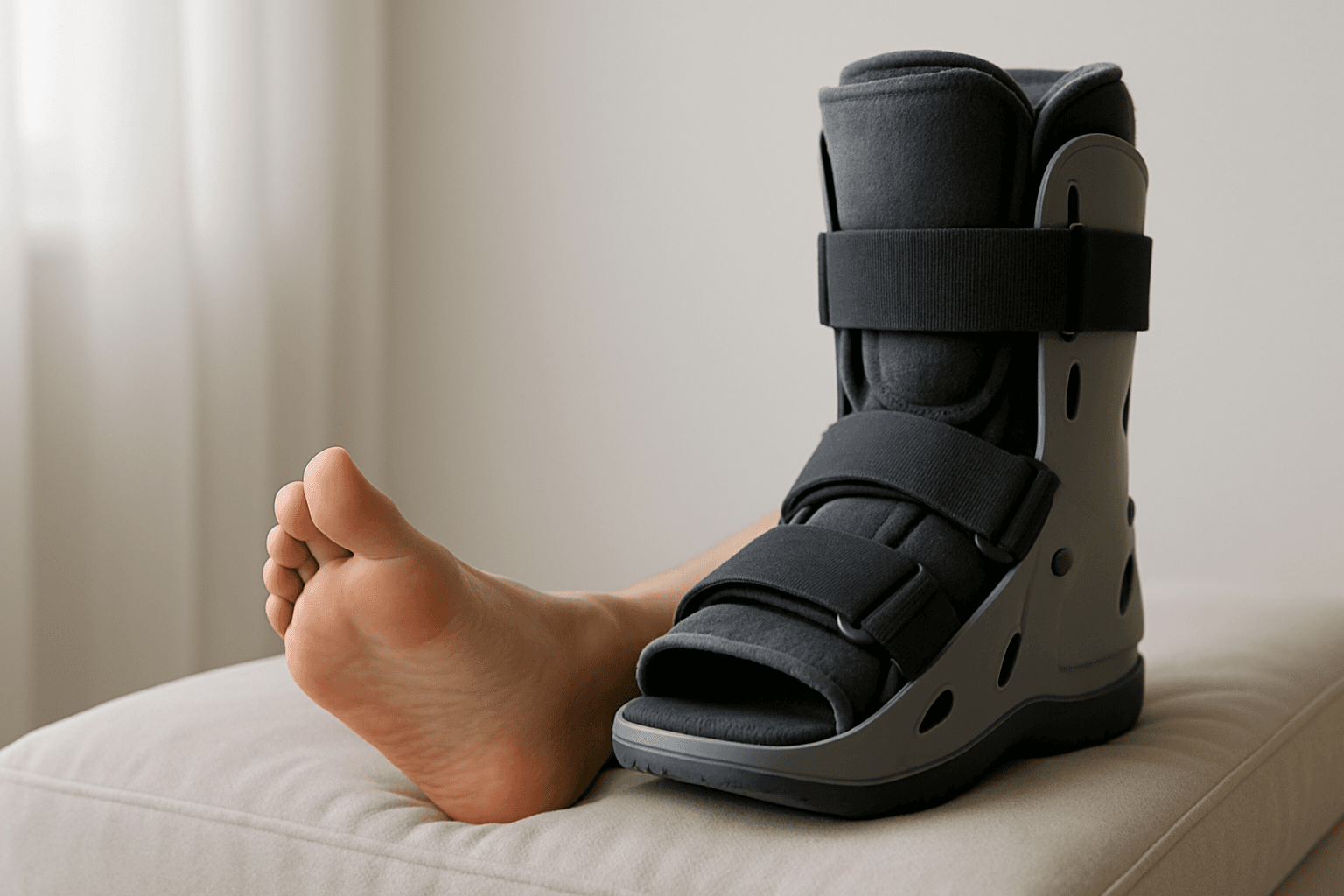
If that describes your foot, treat it as an injury, not a flare. A sudden pop with pain and swelling is a reason to be examined by a doctor or podiatrist soon, because a clinician decides whether the fascia is strained, partly torn or fully torn, and that decides the plan. Clinical sources describe most cases as managed without surgery, with ice, activity limits, and sometimes a stiff-soled shoe or walking boot while things settle, but that call is not one to make from home.
This page explains how a tear differs from plantar fasciitis, who tends to be at risk, what an exam usually involves, and what comfort measures people use once a clinician has ruled out anything more serious. It is general information, not medical advice.
Rupture versus plantar fasciitis: the pattern is the clue
Plantar fasciitis is an overload problem. The tissue near the heel bone becomes irritated over weeks or months, so the story is gradual: a new job on concrete, a jump in mileage, a stretch in thin flat shoes. Pain is worst with the first steps after rest and eases as the foot warms up. Our plantar fasciitis symptoms page walks through that pattern in detail.
A rupture tends to announce itself. People describe a sudden, sharp, tearing pain during a push-off or a hard landing, sometimes with an audible or felt pop, followed by swelling, bruising along the arch, and pain that does not ease as you walk. Walking on it may be hard right away. Bruising under the arch is a particular clue, because ordinary plantar fasciitis rarely bruises.
There is a middle ground. A partial tear or strain can feel like a sharp flare on top of a long-running heel problem, without a dramatic pop. If your usual pain suddenly changed character, became sharper, or started to swell, that is worth mentioning to a clinician rather than pushing through.
Who tends to be at risk
Clinical summaries link ruptures with long-standing plantar fasciitis, repeated stress on the fascia, and, in some cases, flat feet. Sports that involve explosive push-offs, such as sprinting, jumping and racquet sports, show up in case descriptions, as do sudden increases in training load. Corticosteroid injections near the fascia are also discussed in the medical literature as a possible contributor, which is a good question to raise with the clinician giving them. Our cortisone shot page covers what injections can and cannot do.
None of this means that having plantar fasciitis puts you on the edge of a tear. The great majority of people with fasciitis never rupture. It simply means that if you have a long history of heel or arch pain and then feel something give, take it seriously.
What an exam usually involves
A clinician will ask what you were doing, whether you felt a pop, and when swelling started. They will press along the arch and heel, check how you stand and walk, and may look at your foot posture. Ultrasound or MRI can show the tissue directly when the picture is unclear, and an X-ray may be used to rule out a broken bone, which can feel similar after a sudden injury.
Sudden heel or midfoot pain after a fall or twist can also be a stress fracture or another injury, which is why guessing at home is risky. Our calcaneal stress fracture page describes a look-alike that needs very different handling.
What care commonly looks like
Published clinical descriptions generally say that most plantar fascia ruptures are managed without surgery. Early care is about calming the foot down: resting from the activity that caused it, ice for short periods, elevating the foot, and sometimes using crutches or a protective walking boot for a stretch so the arch is not loaded with every step. Once pain settles, clinicians often allow gradual weight bearing in a stiff-soled supportive shoe, with the timeline varying by person and tear. More severe or complete tears can lead to a conversation about surgery, which a surgeon is the person to have with you.
Do not start aggressive stretching, deep massage or foam rolling on a freshly injured arch. Those are tools for plantar fasciitis, not for a fresh tear, and the right moment to resume them is a question for your clinician.
Comfort and support once a clinician has cleared you
After you have been examined and told what is going on, daily comfort measures look a lot like the ones for the rest of the heel: supportive shoes with a stiff sole, and an insole with a firm arch and a cushioned heel cup that spreads load across the foot. A trim-to-fit option like Akusoli insoles is the kind of arch-supporting insole people use for that. These are about comfort and support while you recover, and they are not a way to repair a tear.
Ease back gradually. The fascia has to cope with your body weight on every step, so walking comes before running and flat ground before hills. If a return to activity brings back sharp pain, back off and check in again.
When to see someone
See a doctor or podiatrist promptly for a pop with sudden pain, swelling or bruising in the arch, difficulty bearing weight, numbness or tingling, redness or warmth, or any heel pain after a fall. If you have diabetes or circulation problems, do not wait. Ongoing heel pain that has not eased after a few weeks of home care also deserves an exam. Our main plantar fasciitis hub covers the everyday version of heel pain.
Read our Akusoli insoles review
A trim-to-fit insole with a firm arch and deep heel cup, for everyday comfort and support once a clinician has cleared you.
Read our Akusoli insoles review →Frequently asked questions
How do I know if I tore my plantar fascia?
A sudden sharp pain in the arch or heel, sometimes with a pop, followed by swelling or bruising and trouble putting weight on the foot, points toward a tear. Only an exam, sometimes with ultrasound or MRI, can tell a tear from a strain or another injury.
Is a plantar fascia rupture the same as plantar fasciitis?
No. Plantar fasciitis is gradual irritation of the tissue, usually worst with first steps. A rupture is a tear, usually sudden, and often comes with swelling or bruising.
Does a plantar fascia rupture need surgery?
Clinical sources describe most cases as managed without surgery, but severe or complete tears can lead to a surgical discussion. A clinician makes that decision after examining you.
Can plantar fasciitis turn into a rupture?
It is uncommon, but long-standing fasciitis is listed as a risk factor in clinical summaries. Most people with plantar fasciitis never tear the fascia.
Can I stretch or massage a possible tear?
Not until a clinician has examined you. Stretching and deep massage are used for plantar fasciitis, but they are not appropriate on a freshly injured arch.
HeelCups is reader-supported. When you buy through links on our site we may earn an affiliate commission, at no extra cost to you. This article is general information about foot comfort and is not medical advice — see our medical disclaimer.