NIGHT SPLINT
Night Splints for Plantar Fasciitis: Do They Help, Which Kind to Pick, and How to Actually Sleep in One
A night splint holds the foot in a gentle upward flex overnight so the fascia is not spending eight hours in its shortened, aggravated position. Here is what the evidence says, when they earn their space in your routine, and how to pick a version you will actually wear.
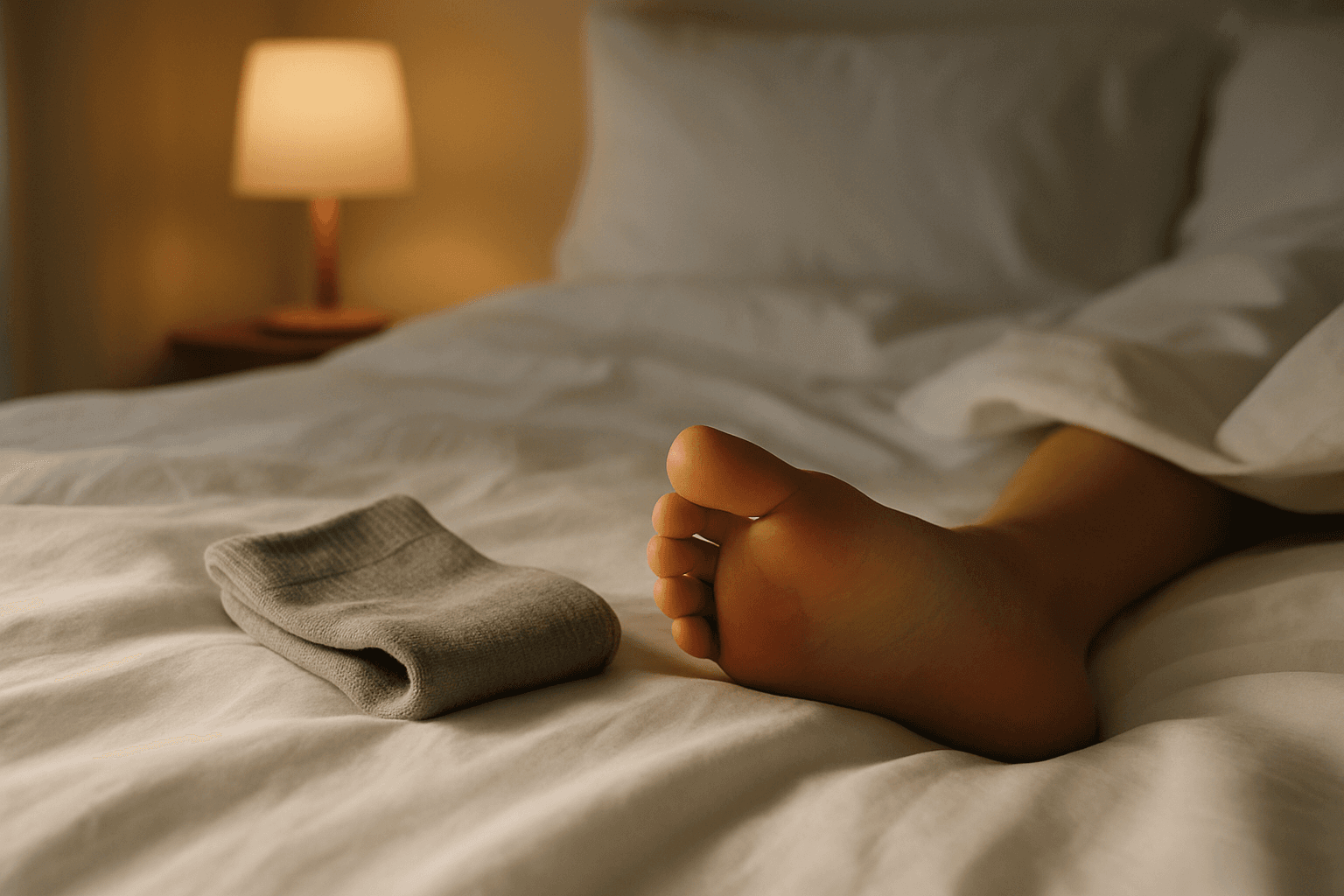
A night splint is a simple idea: keep the foot in a slight upward flex (dorsiflexion) while you sleep, so the plantar fascia and the calf muscles are not spending seven or eight hours shortening. The first steps in the morning are worst because the fascia has spent the night contracted, and body weight yanks that shortened tissue taut before you have taken a breath. A splint that holds the foot at, or just past, ninety degrees keeps the fascia at length overnight and softens that first-step spike.
That is a real mechanism, and for the readers it fits, a night splint is one of the more useful tools on the plantar fasciitis ladder. It is also not a first move. Splints ask you to sleep with something strapped to your foot, adherence is famously poor, and the pooled evidence is best for stubborn morning pain that has plateaued on the daytime routine — not for a freshly flared fascia that has not yet tried a stretch and an insole. This page covers what the evidence actually says, when to add a splint, which kind to pick, and the tricks that make readers finish the trial instead of quitting on night three.
Nothing here is medical advice. Persistent heel pain that has not eased after four to six weeks of honest home care deserves an in-person exam by a doctor or podiatrist.
What a night splint actually does
The plantar fascia connects the heel bone to the base of the toes and holds up the arch. Off your feet, the whole calf-Achilles-fascia system slowly shortens; your foot naturally points downward while you sleep. Multiply that by eight hours and by the low-grade inflammation of an irritated fascia, and the first steps of the morning land on a tissue that is short, stiff and unhappy. A night splint keeps the ankle at roughly ninety degrees (some at a few degrees past), so the fascia and calf stay at working length through the night and body weight has less catching-up to do at 6 a.m.
In practice, readers who tolerate a splint often notice the biggest change in the first ten to twenty steps of the morning. The stab-eight-out-of-ten drops toward a duller three or four, and the mid-morning warm-up that used to take a block of walking happens in a few steps. It does not shrink the fascia or reset the day's ceiling — the load-and-stretch routine still has to do that — but it removes the worst spike of the day for a lot of people.
The pooled evidence, summarized in several systematic reviews (including Cochrane-style analyses and specialty foot-and-ankle syntheses), reads as modest and specific: night splints help most for cases where morning pain is a large fraction of the total complaint and where the daytime routine has already been in place. They do not obviously help cases where morning pain is mild or where the reader has not yet tried the basic ladder. That is why we do not recommend one as a first-week purchase.
When a splint earns its space in your routine
Add a night splint when three things are true: your morning pain is your worst pain of the day, you have honestly done the daytime routine (stretching morning and evening, a supportive insole in every shoe, and a real cut in the specific activity that spiked the fascia) for at least three to four weeks, and the morning pain has plateaued rather than continuing to improve. That is the plateau case most likely to benefit.
Do not lead with a night splint when you have just started the routine and pain is still moving in the right direction. Give the daytime work a fair trial — three to four weeks is the honest window — and let the splint be the next rung if morning pain is what refuses to move. Do not stack a splint onto a case with cold, tingling, burning or numb feet at night; those symptoms belong with a clinician first, because they can signal a nerve or vascular problem that a splint will not fix and can worsen.
Cases that come up especially often for a splint trial: heavy morning pain in a reader whose day is otherwise good, a case that keeps flaring on Mondays after a low-activity weekend, and a case where the fascia has been managed for months and one specific residual ("it is only bad in the first ten minutes") will not budge.
The three main splint styles, and which one people actually wear
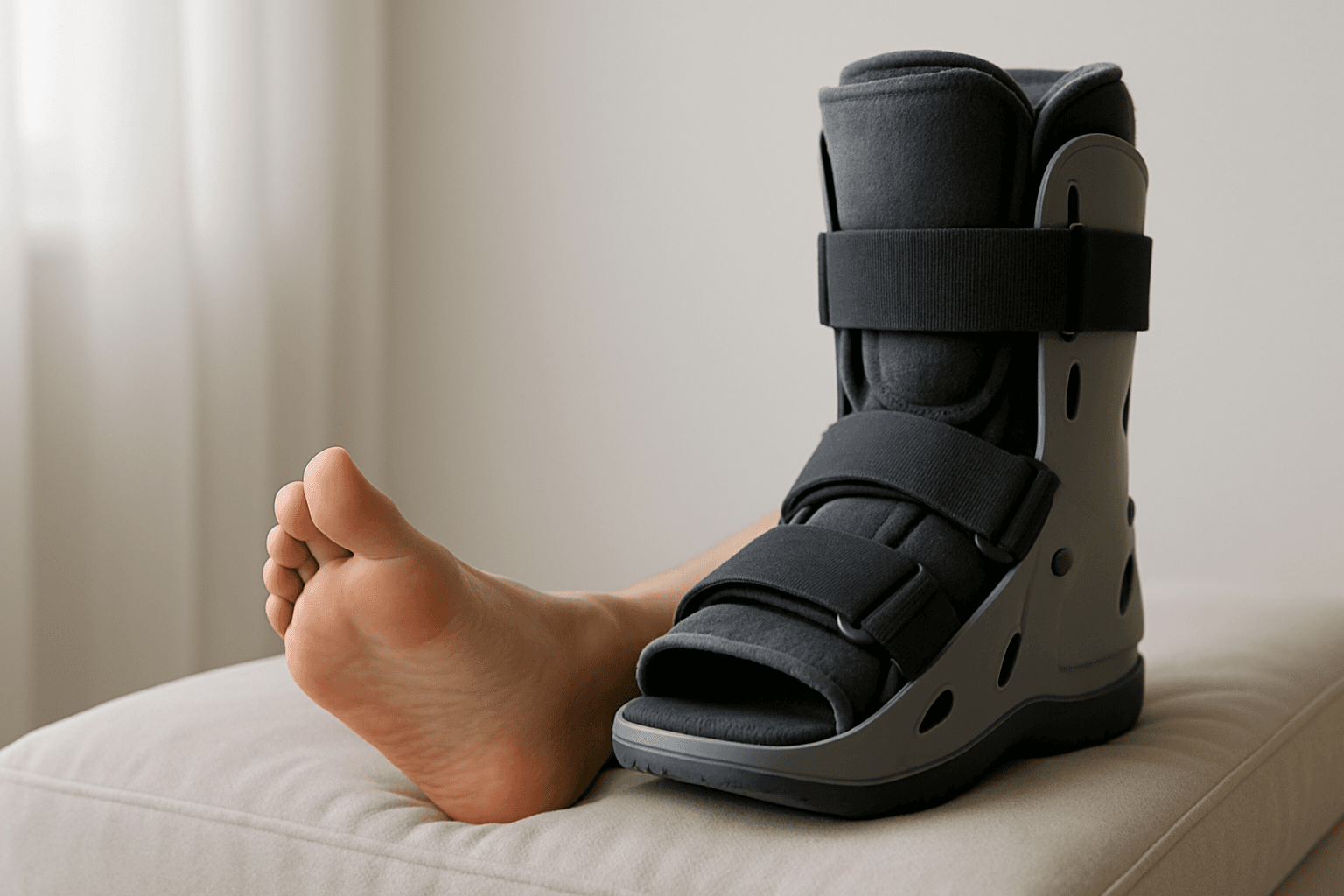
Rigid boot-style splints are the classic. They cradle the whole calf and foot in a hard plastic shell and hold the ankle at ninety degrees, sometimes at a few degrees past for a stronger stretch. They deliver the most reliable stretch and are the version most commonly used in physical therapy clinics. They are also the least sleep-friendly: bulky, hot in summer, awkward for side-sleepers, and hard to wear in a shared bed. Adherence is famously poor precisely because they work but are uncomfortable.
Sock-style splints are a soft, low-profile alternative. A stretchy sleeve with a strap that pulls the toes gently upward keeps the fascia at length without the plastic shell. The stretch is less aggressive than a rigid boot, but a splint you wear all night beats a splint you take off at 3 a.m. Several published head-to-head comparisons have found similar symptom outcomes across styles, largely because the sock version is worn more consistently. For most readers considering a first splint, this is the version to start with.
Adjustable dorsiflexion splints (dial-in styles that let you increase the stretch angle over weeks) are the middle option. They are less bulky than a rigid boot and can be tightened as the fascia and calf tolerate more, but they cost more and can be finicky to set up. Reasonable if a sock-style trial has not moved anything and you are not ready to commit to a rigid boot; not the first pair to buy.
Whatever version you pick, look for a real toe strap (or a design that lifts the forefoot rather than just the ankle) — that is the piece that puts the fascia specifically on stretch, rather than just the calf.
How to actually sleep in one
The biggest driver of whether a splint helps you is whether you keep it on. A few practical moves that carry most readers through the first two weeks. Start with an hour on the couch before bed rather than a full night on night one — get used to the sensation while you can take it off easily. Once your foot has adjusted, move to lights-out and expect the first two or three nights to be broken; you will wake, adjust, and drift back. That is normal, not a signal to stop.
Side sleepers do best with a sock-style or a lower-profile adjustable splint; a rigid boot is workable only if you already sleep more or less on your back. A thin cotton sock under the splint prevents pressure spots and hot feet. Loosen the toe strap by one notch if you wake with cramping or a compressed forefoot — a gentle stretch that you actually wear beats an aggressive stretch you take off. And schedule an honest two-week trial: two full weeks of nightly wear is the minimum window to judge whether it is helping the morning number.
Set the trial up so you can read it. Track a morning first-step pain score (0 to 10) three mornings a week starting a week before the splint, then continue for the two weeks with it. A drop of two points or more in the morning number is a real result and reason to keep going. A flat line at week two is a signal to talk to a clinician about the next rung rather than to keep grinding on the splint.
What splints will not do
A night splint will not shrink a heel spur, reverse a chronic fat pad problem, or heal an Achilles tendinopathy. Insertional Achilles pain in particular can get worse in a rigid dorsiflexion splint, because it holds the tendon on stretch at its inflamed attachment; if your pain is at the back of the heel rather than underneath, our pain in the back of the heel walk-through is the right first read and a splint is not.
A night splint is also not a substitute for the daytime work. Readers who add a splint but drop the stretch and the insole rarely see the splint pay for itself. The splint is the third or fourth rung on the ladder — see our full plantar fasciitis treatment walk-through for the ordered picture — not the whole ladder. Combine it with a supportive daytime insole (the Akusoli insoles we would install first for morning heel pain) and the daily stretch, and it earns its keep.
Finally, a splint is not a diagnostic. If you have been wearing one honestly for three to four weeks with no morning-number movement, do not push into month two on your own — that is a signal the diagnosis or the plan needs a clinician's read.
Pair the splint with the daytime support that does most of the work
A firm-arch, deep-heel-cup insole in every shoe worn all day is the piece of the routine a night splint layers on top of.
Pair the splint with the daytime support that does most of the work →Frequently asked questions
Do night splints actually work for plantar fasciitis?
For the specific case they target — stubborn morning pain that has plateaued on the daytime routine — yes, modestly and reliably. The pooled evidence from systematic reviews consistently shows meaningful morning-pain reduction over two to four weeks, with the biggest gains in cases where the morning first-step pain is the dominant complaint. For fresh cases that have not yet tried a stretch, an insole and a real cut in the trigger activity, a splint is a reasonable third rung on the ladder rather than a first move.
How long do you have to wear a night splint each night?
As close to a full night as you can manage. Splints work by keeping the fascia at length through the shortening window overnight; a splint worn for two hours and then kicked off does very little of that job. Most readers can build to a full night by day five to seven if they start with an hour on the couch before bed the first two nights, then move to lights-out. If you are still only tolerating three to four hours by the end of week two, switch to a lower-profile sock-style splint before you write off the whole tool.
How long should I try a night splint before deciding it is not working?
Two full weeks of near-nightly wear is the honest trial. Track a morning first-step pain score three times a week starting a week before you begin, then continue through the trial; a drop of two points or more is a real result. If the morning number has not moved after two weeks of consistent wear, keep the splint on the shelf and talk to a clinician about the next rung — physical therapy, shockwave, or an injection — rather than pushing the splint into month two on your own.
Should I buy a rigid boot or a sock-style night splint?
For most readers doing a first splint trial, the sock-style is the pick. It is less aggressive but far more sleep-friendly, and the head-to-head studies show comparable symptom outcomes largely because it is worn more consistently. The rigid boot delivers the strongest stretch and is the version to move to if a sock-style trial helped but you have plateaued and can tolerate more. Adjustable dorsiflexion splints sit in the middle and are a fine choice if you like the idea of dialing the stretch angle up over weeks.
Can I wear a night splint if I have Achilles tendon pain too?
Not without a clinician's read. Insertional Achilles tendinopathy (pain right where the Achilles meets the heel bone) can get worse in a rigid dorsiflexion splint, because the splint holds the tendon on stretch at exactly the inflamed spot. If your pain is at the back of the heel or a couple of inches up the tendon rather than underneath the heel, a splint is the wrong tool. See our pain in the back of the heel walk-through for the different plan Achilles pain wants.
Do night splints replace stretching and insoles?
No — a splint is an add-on to the daytime routine, not a substitute for it. The daytime work (a five-minute stretch morning and night, a supportive insole with a firm arch and deep heel cup in every shoe worn all day, and a temporary cut in the trigger activity) does most of the biological job of getting the fascia to calm down; a night splint takes the edge off the worst spike of the day (the first steps in the morning) so the routine is easier to stick with. Readers who add a splint but drop the stretch and the insole rarely see the splint pay for itself.
HeelCups is reader-supported. When you buy through links on our site we may earn an affiliate commission, at no extra cost to you. This article is general information about foot comfort and is not medical advice — see our medical disclaimer.