WALKING BOOT
Walking Boot for Plantar Fasciitis: When a CAM Boot Helps and When It Backfires
A walking boot is the big-gun temporary intervention for a plantar fasciitis flare that will not calm down — and the fastest route to a stiffer, weaker foot when used as a shortcut. Here is when a CAM boot earns its keep, when it doesn't, and how to use it so the foot comes out stronger than it went in.
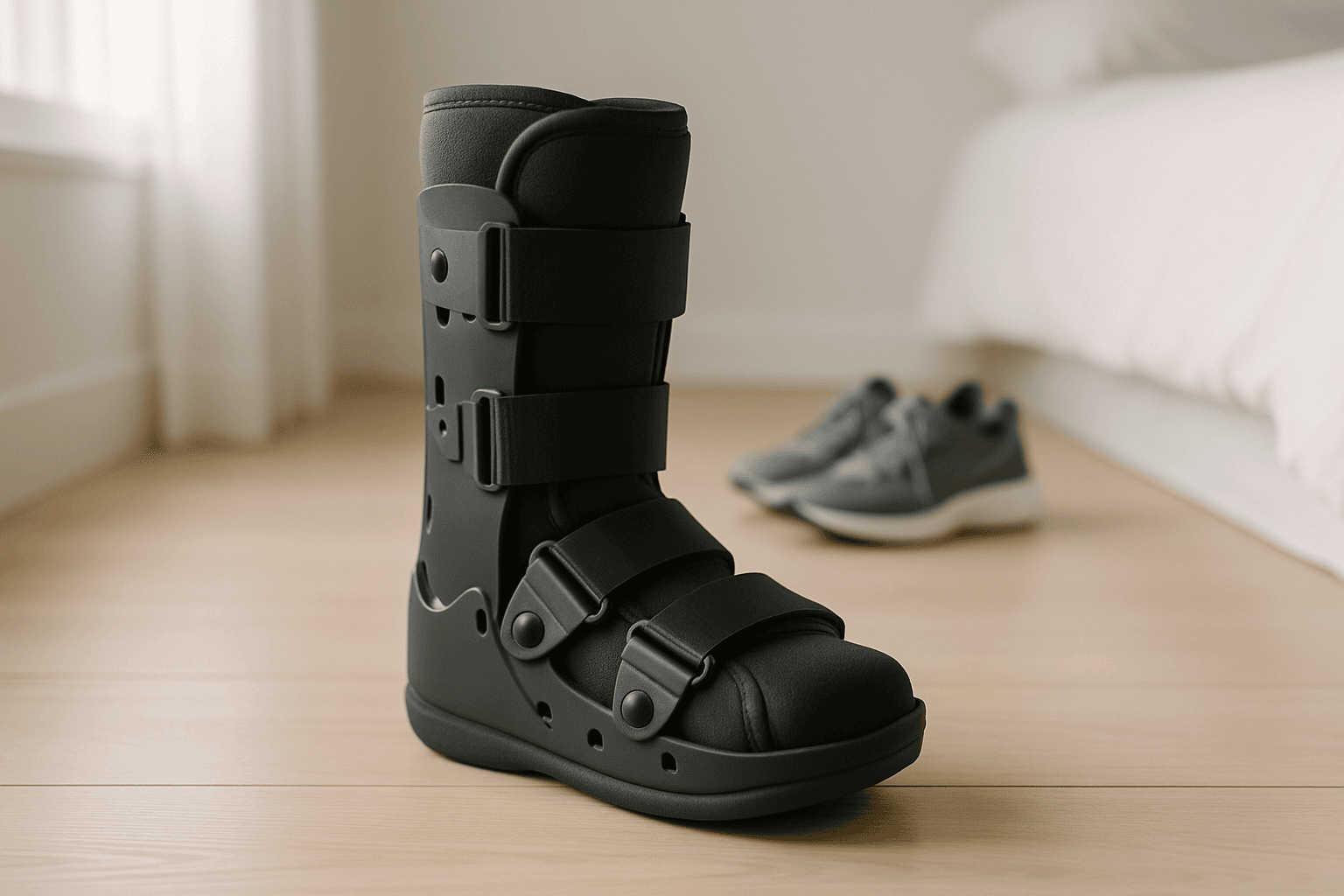
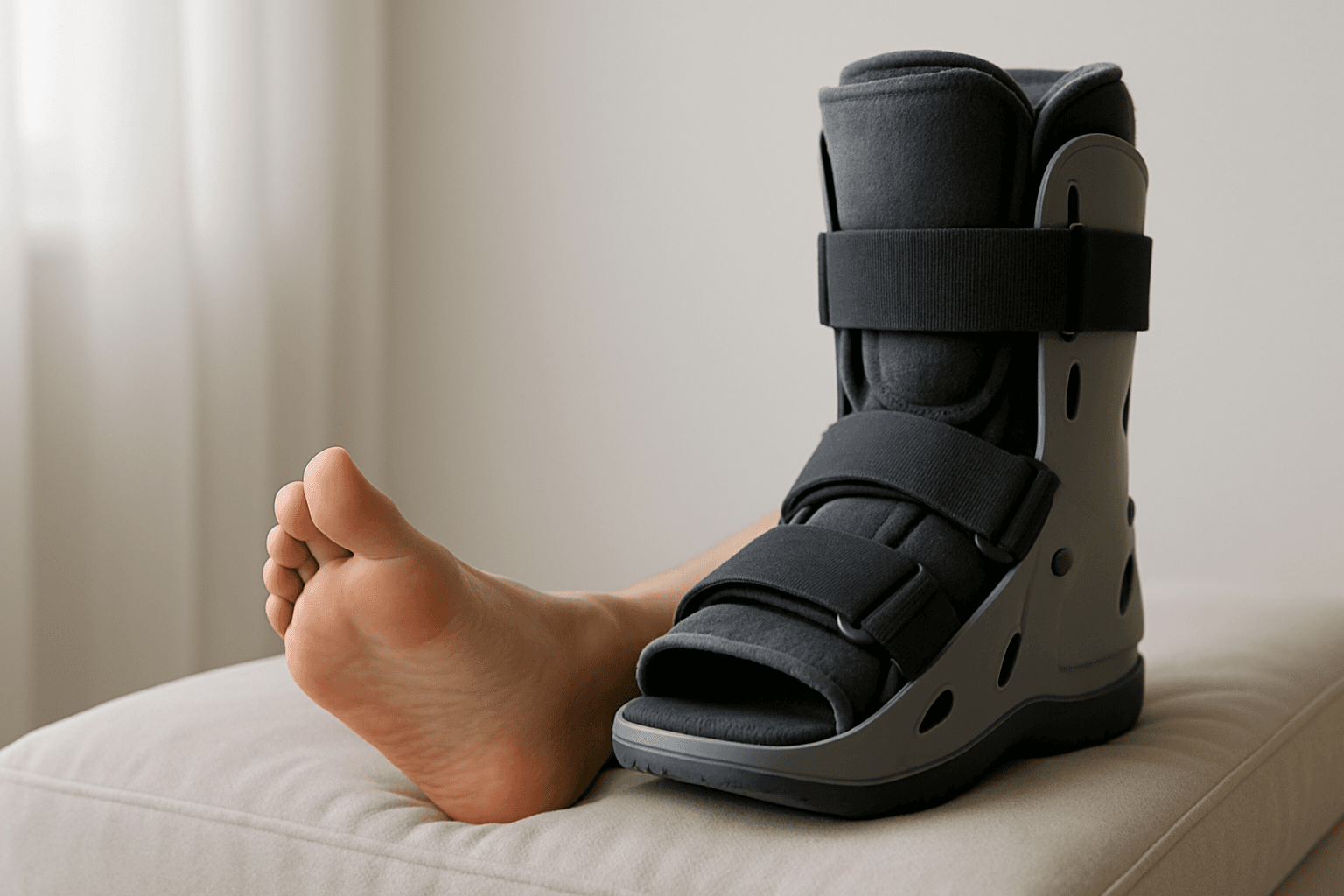
A walking boot — the knee-high boot with the rigid outer shell and the inflatable or foam liner, formally a controlled ankle motion boot or CAM boot — is the big-gun temporary intervention for plantar fasciitis that has not calmed down with the usual stretching and insoles. It immobilizes the ankle, offloads the fascia and buys the tissue two to four weeks of relative rest without surgery. The reason it is not on the first page of most plantar fasciitis advice is that it does its best work for the right readers and backfires for the wrong ones. Use it as a shortcut when you have not tried honest conservative care first and you can end up with a stiffer foot, a weaker calf, a flatter arch and a flare that is just as loud when the boot comes off three weeks later.
The honest story of the walking boot in plantar fasciitis is that it is a specific tool for a specific situation: an acute flare severe enough that walking is itself causing damage, a chronic case that has not budged after six to eight weeks of honest conservative care, or short-term use alongside a procedure like a corticosteroid injection or shockwave therapy. It is not a first-line treatment, and it is not something to buy on Amazon and strap on for a week because stretching is tedious. The right person to put a foot in a walking boot is a podiatrist, orthopedist or sports medicine physician who has examined it.
This page covers when a walking boot earns its keep, when it does more harm than good, how a clinician typically uses it, and what to do with your foot while it is in one. Nothing here replaces an in-person exam. Every recommendation on this plantar fasciitis hub is written for comfort, support and relief. If your pain began suddenly with a pop, read about plantar fascia rupture.
What a CAM boot actually does to a sore fascia
A walking boot does two mechanical things at once. First, the rigid shell runs from mid-calf to the toes, with a stiff rocker sole underneath, so the ankle cannot flex and the forefoot cannot bend through toe-off. That removes the stretch of the plantar fascia at every step — the very load pattern that keeps a flare going. Second, the inflatable or foam liner distributes body weight across the calf and shin rather than concentrating it under the heel; the heel still touches the ground, but it is doing much less of the shock-absorption work. The combination is close to the mechanical rest a cast would provide, without the inconvenience of being non-weight-bearing.
What the boot does not do is heal the fascia faster than good conservative care. It unloads the irritated tissue so inflammation can settle and small tears can repair without being re-stretched hundreds of times a day. For a reader whose daily life keeps re-loading a flare — a long shift on concrete floors, a kids-and-stairs morning, a job that cannot pause — that unloading is often the piece that lets honest conservative care finally take hold. For a reader who could pause and could lean into stretching, insoles and a load cut on their own, the boot is usually overkill.
When a walking boot is the right call
Three honest indications. The first is an acute flare so loud that normal walking is itself the problem — pain of a seven or eight out of ten with every step, a limp that is changing how the hip and the opposite knee are loading, a reader whose daily step count has to stay above six thousand for work reasons and who cannot drop it. In those cases two to four weeks in a walking boot can break the inflammatory cycle in a way that one more pair of insoles cannot.
The second is a chronic case that has not responded to six to eight weeks of honest conservative care — daily stretching, a supportive insole, a load cut, a between-walks shoe upgrade — and that is not yet at the specialist-procedure stage. A short course of CAM boot use (two to four weeks, often with ongoing physical therapy underneath) is a reasonable escalation that sometimes resolves a stubborn case that was going to end up at a cortisone injection or shockwave anyway. Our plantar fasciitis treatment ladder covers the full honest sequence of escalations.
The third is short-term protection after a procedure. A corticosteroid injection into the fascia, a platelet-rich plasma injection, extracorporeal shockwave therapy or a tenotomy all benefit from one to two weeks of reduced loading afterward; a walking boot is a cleaner way to achieve that than asking a reader to stay off their feet. Our cortisone shot walk-through covers the post-injection load cuts in more detail.
The downsides nobody warns you about
The ankle stiffens fast. Two to four weeks in a boot that locks the ankle at ninety degrees costs noticeable range of motion in the calf-and-Achilles complex, and getting it back takes a few weeks of deliberate stretching after the boot comes off. The calf shrinks visibly in anyone who was active before — not permanently, but it is a real strength loss that has to be rebuilt. The arch muscles atrophy slightly for the same reason. A reader who comes out of three weeks of booted rest and goes straight back to the pre-boot activity load almost always flares again, because the foot and leg that supported the fascia before are weaker now.
The limp a boot creates is its own problem. The boot lifts the sore side an inch to two inches higher than a normal shoe, so the pelvis tilts on every step. Hip, lower back and opposite knee complaints are common after two or three weeks in a boot without a correction. An even-up — a cushioned platform worn on the other shoe to level the hips — is a cheap, low-effort fix that most clinicians forget to mention; if you are going to wear a boot for more than a week, buy one.
The boot is also not a cure. A reader who wears a boot, stops stretching, keeps the same unsupportive between-walks shoes, and comes out of the boot into exactly the environment that lit the flare up — flat canvas sneakers on a tile kitchen floor — usually re-flares inside a week. The boot is a mechanical pause while the daily plan does its job. Without the daily plan it is just an expensive, bulky delay.
How to wear it so it actually helps
Follow your clinician's schedule, but the usual pattern looks like this. For the first week to ten days, the boot is on for all weight-bearing — including the short walk to the bathroom at night. Overnight the boot comes off; some clinicians prescribe a night splint instead to keep the fascia at length while you sleep. During the daytime, use a dedicated supportive insole or heel cup inside the boot's own liner (the stock liner is comfortable but has very little arch support). Underneath the boot, keep up any physical therapy — the calf and the opposite leg still need the work.
After the first week to ten days, most clinicians transition from constant wear to variable wear: boot for standing, walking and workdays, out of boot for seated rest, short gentle calf stretching and light ankle range of motion. The transition week is when the daily plan matters most — a supportive shoe with your insole in it for the out-of-boot time, a supportive sandal or house slipper for the first steps of the day, no barefoot time on hard floors. When the boot comes off entirely at the end of the course, the first week back is a careful ramp — half days first, then full days, with a dedicated calf stretch morning and night.
Pair the boot with the between-walks insole it is replacing. Most readers who finish a CAM boot course successfully go straight into a supportive insole in every shoe they own; our Akusoli insoles review is the trim-to-fit pair we would install first in the shoes you wear for everything other than the boot.
The alternatives that work for most readers
For most readers with early or moderate plantar fasciitis, a walking boot is simply too big a tool. The daily plan that resolves the majority of cases — a daily plantar fasciitis stretches routine, a supportive shoe for every hour feet are on the floor, a firm-arch insole in the shoes you already own, a cut to the specific activity that lit the flare up, and a short cold-roll routine at the end of long days — resolves the fascia without any of the costs of booted immobilization. The boot is what you reach for when that honest plan has had six to eight weeks and is not winning.
The in-between options are worth knowing about. A rigid rocker-soled shoe (a dedicated recovery sandal, a stability walking shoe with a stiff forefoot, or an off-the-shelf post-op shoe) gives some of the same offloading as a boot without the ankle immobilization and the hip-level problem. A night splint provides the overnight stretch piece without the full-day commitment. A short course of a stiff carbon-plated insole in a supportive shoe reduces fascia flex at toe-off meaningfully, for readers who want the mechanical benefit without the bulk; our walk-through on carbon fiber insoles covers that specific tool.
Nothing on this page replaces a clinician. Any decision to wear a walking boot deserves an in-person exam, and any plantar fasciitis case that has not responded to six to eight weeks of honest home care deserves a specialist read in any event. Persistent heel pain, pain that followed an injury, pain with swelling or warmth, or sudden sharp pain under the heel (which can signal fascia rupture, especially after a cortisone injection) needs a prompt in-person exam by a doctor or podiatrist.
The full honest ladder of plantar fasciitis treatment
Where the walking boot fits in the full escalation sequence — from home care, insoles and stretching to splints, boots, injections and the specialist procedures beyond.
The full honest ladder of plantar fasciitis treatment →Frequently asked questions
How long do you wear a walking boot for plantar fasciitis?
The usual prescription is two to four weeks, with the first week to ten days of near-constant wear during weight-bearing and a gradual transition to variable wear in the second half. Longer than four weeks is uncommon for plantar fasciitis unless there is a procedure-related reason, because the costs of extended ankle immobilization — stiffness, calf atrophy, hip and back strain — start to outweigh the benefit. The exact schedule should come from the clinician who put you in the boot.
Can I buy a walking boot online for plantar fasciitis?
You can, and we would gently discourage it. A walking boot is a legitimate tool for the right case, and it is one of the fastest ways to make the wrong case worse. A reader with mild to moderate plantar fasciitis who buys a boot without an exam and wears it for two weeks almost always comes out stiffer, weaker and no better, and often slightly worse because the daily plan was replaced by the boot rather than paired with it. The right first move is a podiatrist exam that confirms it is plantar fasciitis, rules out other causes, and prescribes a specific wear schedule and a parallel physical therapy plan.
Should I sleep in a walking boot?
Usually no. Most clinicians have patients remove the boot overnight (and often prescribe a dedicated night splint for the same hours, which keeps the fascia at length without immobilizing the leg so completely). Sleeping in a walking boot is heavy, sleep-disrupting and does not add much to the daytime offloading. If a clinician has specifically asked you to sleep in the boot for a particular reason, follow that; otherwise it comes off at night.
Will a walking boot make my calf weak?
Yes, measurably. Two to four weeks of ankle immobilization produces visible calf atrophy in anyone active, and a few percent strength loss in anyone. The rebuild is not hard — eccentric calf raises, progressive single-leg heel raises, and a gradual return to walking volume rebuild it in two to four weeks — but a reader who finishes the boot course and goes straight back to the pre-boot activity load almost always flares again. Plan the ramp.
What is the difference between a walking boot and a night splint?
A walking boot immobilizes the ankle during daytime weight-bearing to offload the fascia; a night splint holds the ankle at ninety degrees overnight to keep the fascia at length while you sleep. They solve different pieces of the problem. For many stubborn plantar fasciitis cases, a short course of a walking boot in the daytime combined with a night splint at night is the full-day unloading-and-stretching plan a clinician will prescribe. Our morning heel pain walk-through covers the night-splint half in more detail.
Do I need an even-up on the other shoe?
Yes if you will be in the boot for more than about a week. A walking boot is one to two inches taller than a normal shoe, and walking with that height difference for weeks produces hip, lower back and opposite-knee pain in most readers. An even-up (a cushioned platform worn on the non-boot shoe) levels the hips and prevents those secondary complaints. They are inexpensive, easy to add, and the single most under-prescribed accessory in the whole category.
HeelCups is reader-supported. When you buy through links on our site we may earn an affiliate commission, at no extra cost to you. This article is general information about foot comfort and is not medical advice — see our medical disclaimer.