BAREFOOT SHOES
Barefoot Shoes and Plantar Fasciitis: What the Evidence Says and How to Try Them Without Flaring Your Heel
Wide-toed, flat, flexible shoes are heavily marketed to people with heel pain. Here is what is actually known, who might try them, and a slow transition plan.
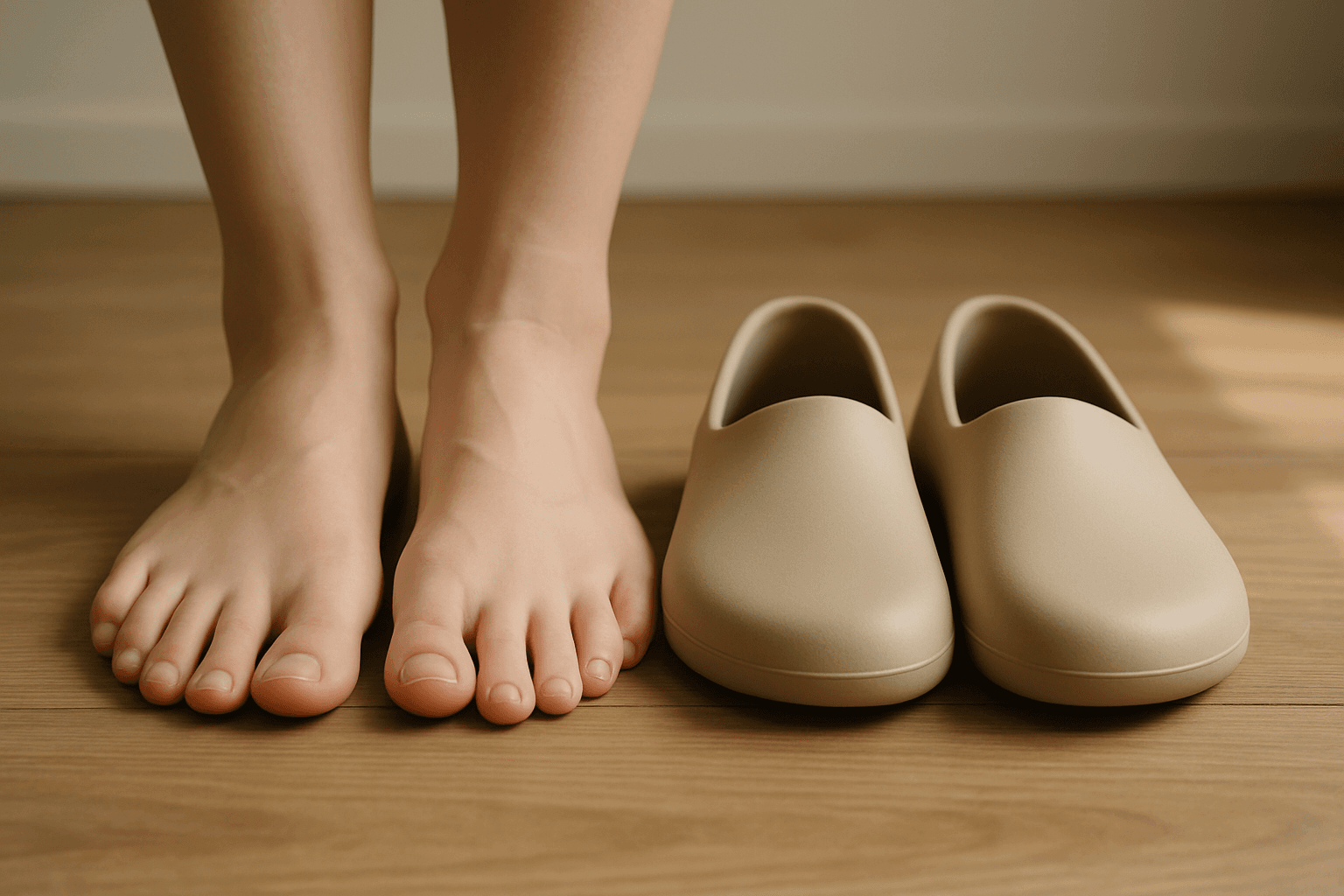
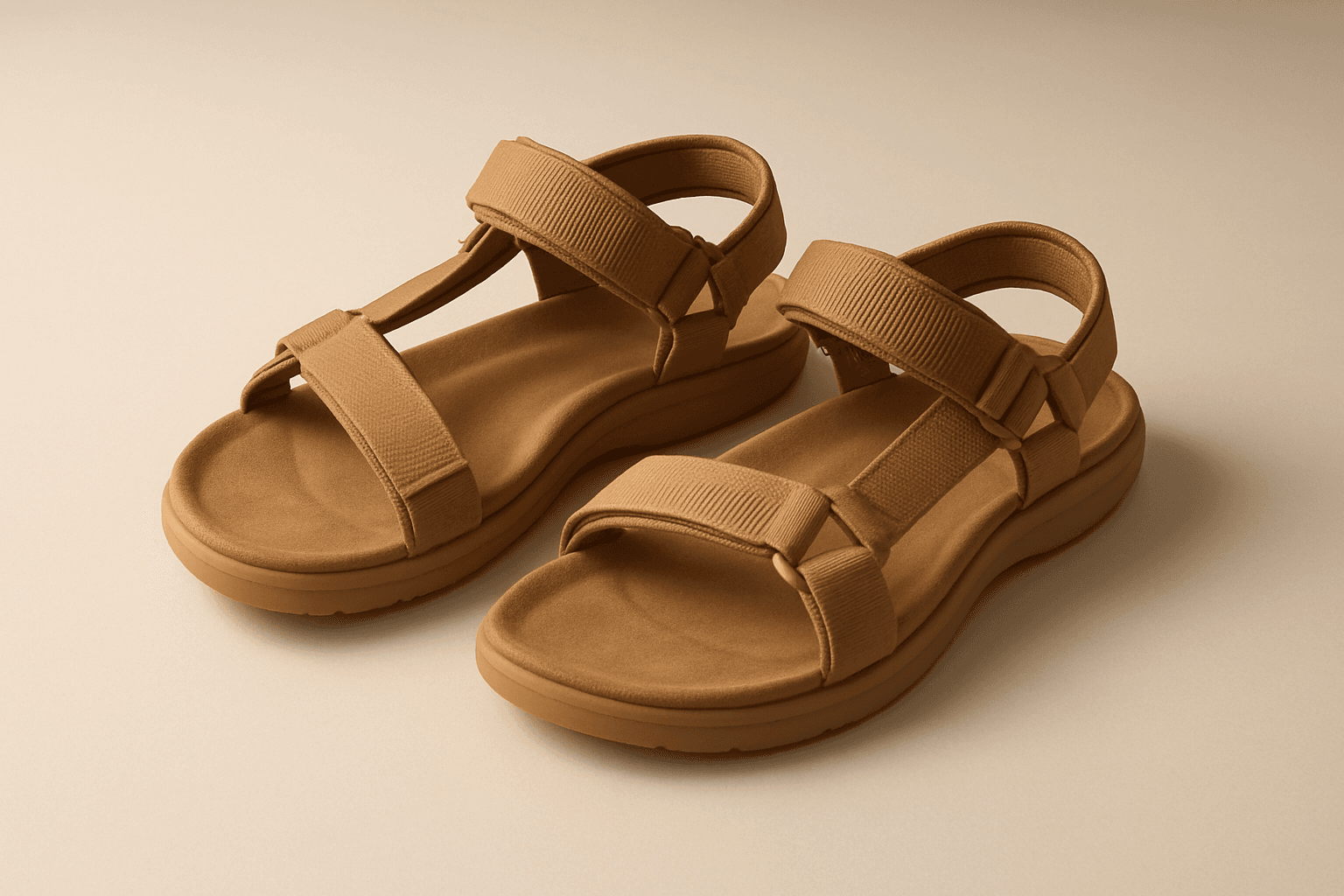
Barefoot or minimalist shoes have thin, flexible soles, no raised heel and a wide toe box. They are popular with people who have plantar fasciitis because the theory is appealing: let the small muscles of the foot do more work, and the plantar fascia may carry less of the load. The honest answer is that this is a plausible idea without strong proof. When we searched for trials in people who already have plantar fasciitis, we found a registered randomized trial (NCT05834491) comparing usual care with foot strengthening plus a gradual move into minimal footwear in adults aged 50 to 70, but we could not find published results. Vendor blog posts claiming a definitive study should be treated as unconfirmed.
That does not make barefoot shoes a bad idea, it makes them an experiment. For someone in a painful flare, going suddenly from a cushioned, supportive shoe to a flat, flexible one asks tissue that is already irritated to take on more work, and many people report a flare when they do it too fast. For someone whose heel pain has settled, or who simply wants to build foot strength, a slow transition is reasonable.
This page lays out who tends to do well with the switch, who should wait, and a step-by-step plan. It is general guidance, not a diagnosis. If heel pain is persistent, getting worse, or following an injury, see a doctor or podiatrist before changing your footwear.
Why the idea is attractive
The plantar fascia is a band of tissue supporting the arch, and the small intrinsic muscles of the foot help hold the arch up as well. Soft, highly structured shoes can do some of that work for you. The argument for minimal footwear is that over time the foot muscles get stronger and the arch becomes more self-supporting. The trial background we found cites studies of gradual transition to minimal shoes that reported increases in intrinsic foot muscle size and strength, including a 12-week transition to minimalist running shoes. We did not verify those findings ourselves, and they were in people without heel pain.
The gap is the key point. Showing that foot muscles get bigger is not the same as showing that heel pain goes away. Until the trial in people with plantar fasciitis reports, any claim that barefoot shoes will fix the problem goes beyond what is known.
Who might want to try them
People whose heel pain has mostly settled, who are looking to build resilience, are the most sensible candidates. So are people with a wide forefoot who have been squeezed into narrow shoes for years, since a roomy toe box lets the toes spread and push off normally. Those who already do regular foot strengthening, such as toe splays and towel scrunches, are in a good position to add the shoes slowly.
A flat, flexible sole also suits some people with high-mileage walking habits who find stiff, heavily built-up shoes tiring. If you try them and your pain steadily improves, that is a perfectly valid result, even if the research has not caught up.
Who should wait or check first
If you are in a flare, with sharp first-step pain, a heel that is tender to the touch or pain that is getting worse week to week, hold off. A flat shoe puts more demand on the fascia, calf and Achilles at the moment those structures are least able to cope. A tight calf makes it worse, because a zero-drop shoe lowers the heel and stretches the Achilles further with every step. Anyone with diabetes, numbness in the feet or poor circulation should speak with a clinician before changing footwear, because reduced cushioning and sensation are a poor mix.
People who stand for long hours on concrete often find barefoot shoes uncomfortable at work even if they like them at home. That is common, and it is fine to use them selectively.
A slow transition plan
Sources that recommend minimal footwear consistently stress a gradual switch rather than an overnight change. A simple pattern is to start with thirty minutes to an hour a day on forgiving surfaces such as around the house, then add a little each week while your supportive shoes cover the rest of the day. The trial we found uses an eight-week transition program, which is a reasonable benchmark for how slowly to go.
Pair the shoes with foot work: toe splays, towel scrunches and short single-leg balance holds, a few minutes a day. Keep up the calf stretching from our plantar fasciitis stretches routine, because tight calves are one of the main reasons zero-drop shoes feel punishing. Walk before you run, and give any new shoe a full week before adding distance.
Reading your body during the switch
Mild muscle tiredness in the arch and the front of the shin is normal while the foot adapts. Sharp or stabbing heel pain, pain that is worse the next morning than it was before, or a return of first-step pain are signs you have moved too fast. Drop back to the previous step, or return to a supportive shoe for a week or two, and then restart more slowly.
It is also fine to stop. Plenty of people with heel pain do better with a firm, supportive shoe and an insole with a deep heel cup, and that is what most of the guidance on plantar fasciitis still leans toward. Our Akusoli insoles review covers a trim-to-fit option for the shoes you wear on hard floors, and the plantar fasciitis hub shows the wider picture of what usually helps first.
A middle path
You do not have to choose one camp. Some people wear supportive shoes with an insole for long standing or walking days, and minimal shoes for short, easy periods. Others keep barefoot shoes for the weekend. The point is to match the load to what your heel can tolerate right now, and to change one thing at a time so you know what is helping and what is not.
See the supportive option we review
If barefoot shoes are not for you, a trim-to-fit insole with a firm arch and deep heel cup is where most people start.
See the supportive option we review →Frequently asked questions
Are barefoot shoes good for plantar fasciitis?
It is not known. The idea is plausible, but we could not find published trial results in people who already have plantar fasciitis. Some people find them comfortable and others have a flare, especially if they switch too fast.
Can I switch to barefoot shoes while my heel is sore?
Most people are better off waiting until the pain has settled. A flat, flexible shoe asks more of the fascia, calf and Achilles, which are already irritated during a flare.
How long does the transition take?
A gradual switch over about eight weeks is a sensible benchmark. Start with thirty minutes to an hour a day on soft, easy surfaces and add a little each week.
Do I need an insole in barefoot shoes?
Usually not, since the point of the shoe is to leave the foot to do the work. If you want arch support and a heel cup, wear a supportive shoe with an insole instead. Mixing the two approaches in the same shoe defeats the purpose.
Will barefoot shoes make my calves tight?
They can, because a zero-drop shoe lowers the heel relative to a typical trainer. Keep up calf stretching and build up slowly.
When should I see a doctor?
If heel pain lasts beyond a few weeks of careful home care, gets worse, follows an injury, or comes with numbness, swelling or changes in how you walk, see a doctor or podiatrist. Check first if you have diabetes or reduced sensation in your feet.
HeelCups is reader-supported. When you buy through links on our site we may earn an affiliate commission, at no extra cost to you. This article is general information about foot comfort and is not medical advice — see our medical disclaimer.