SLIPPERS
Slippers for Plantar Fasciitis: Why Barefoot at Home Hurts and What to Look For Instead
The first steps out of bed are often taken on a hard floor in thin socks. Here is what a supportive house shoe actually needs, what to skip, and how to build comfort into the part of the day you spend at home.
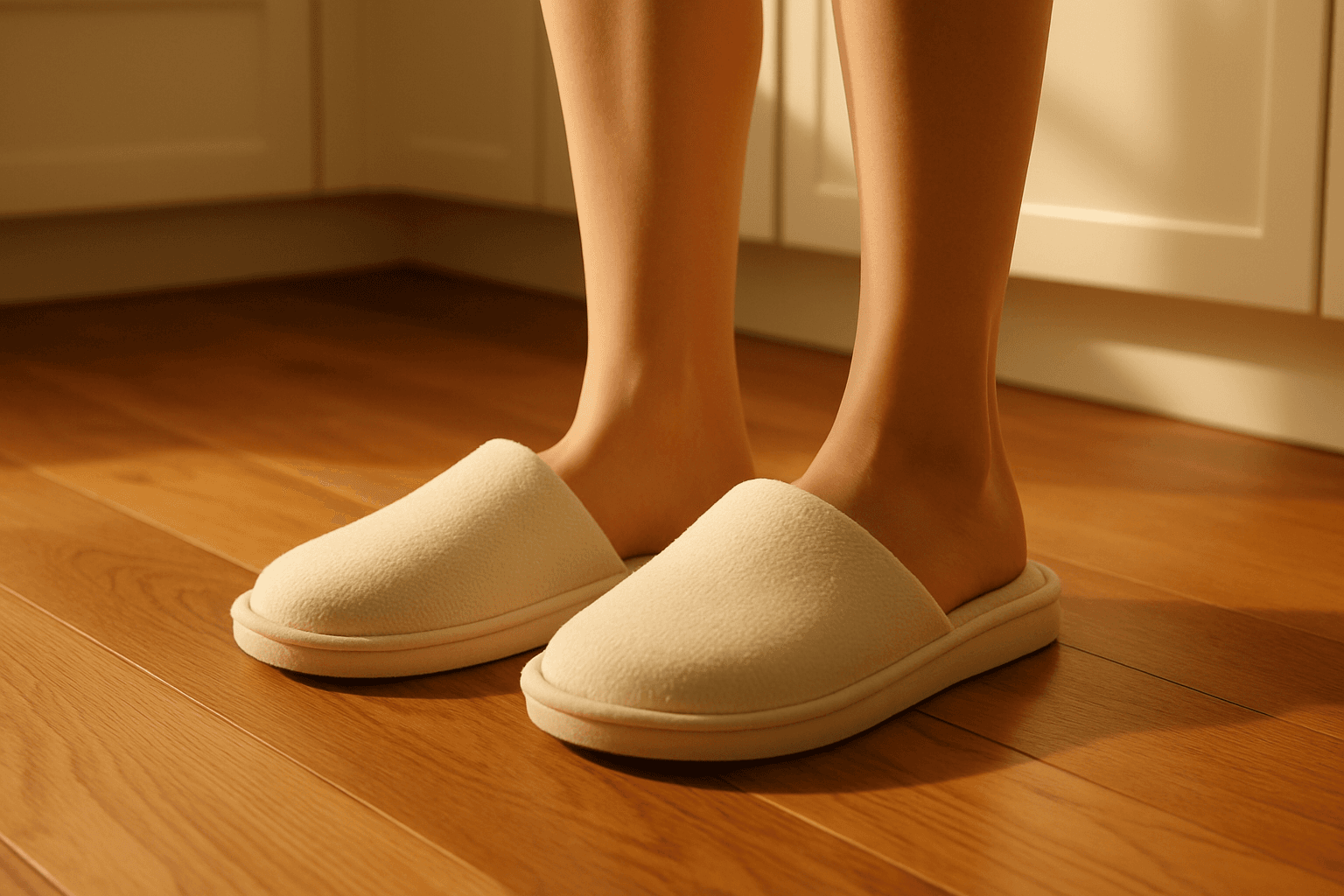
Supportive slippers are not a luxury for a sore heel. If you have plantar fasciitis, a firm arch, a deep heel seat and a sole that does not fold in half are what you want under your feet at home, because the hours you spend barefoot or in soft, flat slippers on tile, hardwood and laminate are the hours the fascia has no help at all.
That is the whole idea in a sentence: indoor footwear is part of the plan, not an afterthought. Most people put real thought into their work shoes and then step out of them into the thinnest, softest thing in the house. A plush slipper feels lovely for ten seconds and then compresses flat under body weight, which leaves the arch unsupported all over again.
This page covers what to look for in a house shoe, which styles tend to disappoint, and how to make the early-morning walk to the kitchen less of a gamble. It is general information, not medical advice, and anyone with heel pain that lingers should see a doctor or podiatrist.
Why hard floors at home are a problem
Plantar fasciitis pain is typically worst with the first steps after rest, which is exactly when most people are barefoot or in socks. Tile, hardwood and laminate do not give at all, and a bare foot on a hard surface lets the arch lengthen and the heel take the full impact of each step. Retail and clinic guidance consistently points to barefoot walking on hard floors as a common aggravator, though it is worth being honest that most of that guidance comes from footwear sellers and clinics rather than controlled trials.
What we can say is that the logic is sound and the experiment is cheap. Wear a supportive shoe from the moment your feet hit the floor for two weeks and notice whether the morning steps and the evening ache change. If they do, you have your answer; if they do not, you have lost nothing.
What a supportive slipper needs
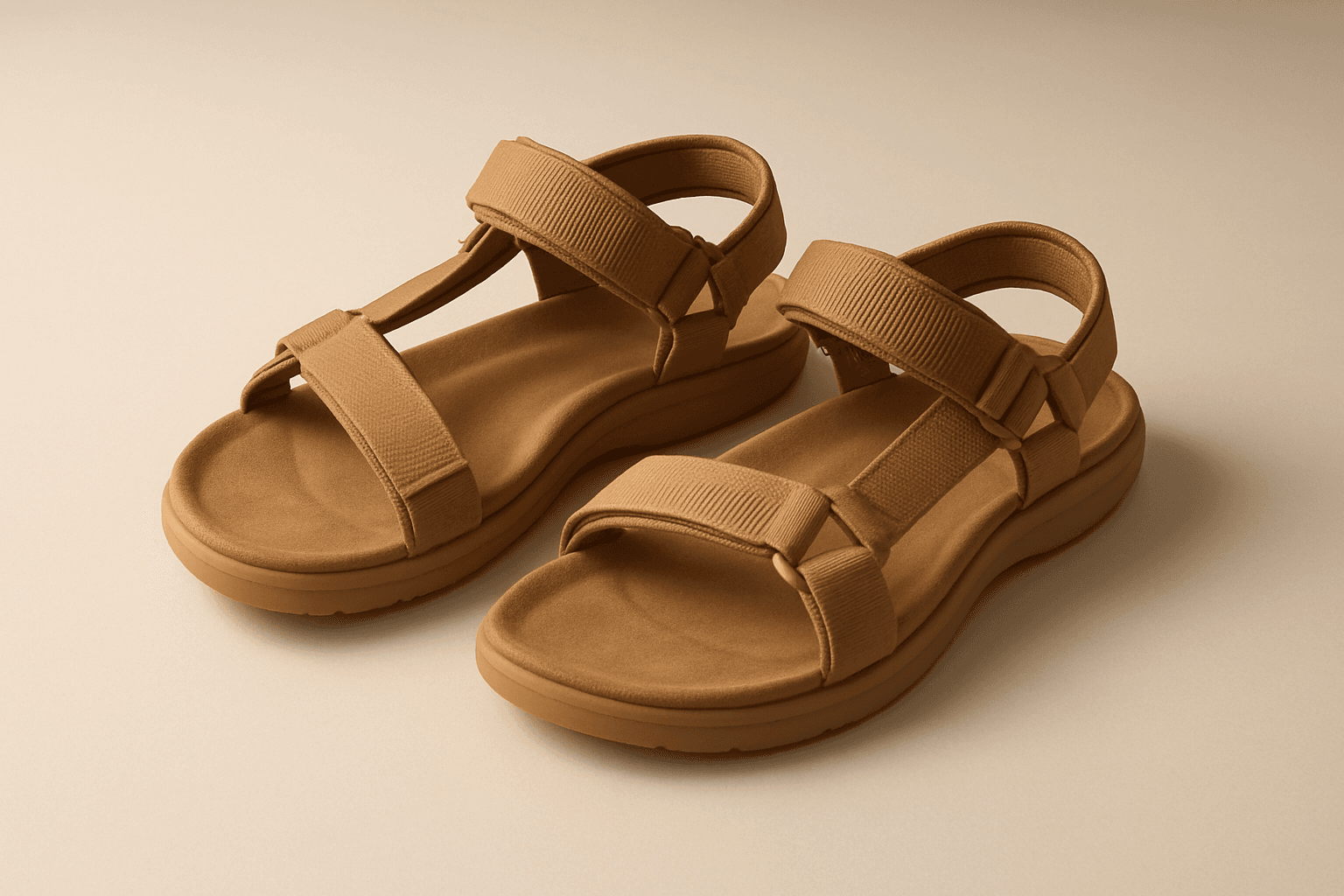
Look for four things. First, a contoured footbed with real arch support, meaning a shaped rise under the arch you can feel with your thumb rather than a flat foam pad. Second, a deep, firm heel seat or heel counter that cradles the heel rather than letting it slide around. Third, a sole that bends at the ball of the foot but resists twisting and folding in the middle: hold it by the heel and toe and try to wring it like a towel. Fourth, a closed or secure back, or at least a strap, because a foot that has to grip the slipper with its toes keeps the fascia working all day.
Cushion matters, but structure matters more. A thick, soft foam slipper can feel supportive in the shop and then flatten within a few weeks. A moderately firm midsole with a shaped footbed holds its shape longer. Good grip on the outsole is a safety point for everyone, and especially for older adults and anyone with balance problems or reduced sensation.
Styles that tend to disappoint
Flat, fluffy scuffs with no heel and no arch are the biggest offenders: they feel soft and give the fascia nothing to work with. Thin, flexible ballet-style house shoes and ultra-flexible travel slippers fold in the middle. Open-back mules can be fine if the footbed is shaped and the strap holds the foot, but a slide that your toes have to claw to keep on is not helping. Memory-foam clogs sit in the middle: some have a decent footbed, many do not, so apply the wring test rather than trusting the label.
Going back to the other extreme, going fully barefoot indoors is not inherently harmful for a healthy foot on carpet or other forgiving surfaces. The point is that when your heel already hurts, hard floors and no support are a poor combination, and there is no reward for putting up with them.
Using your own insoles and shoes at home
Plenty of people simply keep a pair of supportive trainers or walking shoes by the bed and slip them on before the first step. It is not glamorous, but it is the most reliable approach, and it means the arch support you chose for daytime also covers the early morning. If you already use an insole, a trim-to-fit option such as the one in our Akusoli insoles review can move between pairs of shoes, so a house shoe with a removable footbed can take it too.
A removable footbed is the key detail. Many slippers have a glued-in foam layer you cannot swap out, but if yours lifts out you can replace it with a supportive insole and keep the slipper's upper and grip. If the slipper's own footbed cannot be removed, check whether the arch shape feels right without extra layers, since stacking an insole on top can push the heel out of the shoe.
Fitting a routine around the slippers
Shoes are one piece of the picture. A few gentle calf and arch stretches before standing, as in our plantar fasciitis stretches routine, plus supportive footwear through the morning, tends to make the first steps easier for many people. Add the evening: take the weight off, and use a cold bottle roll or a gentle massage if it feels good, not as a promise of anything.
If you wear compression or arch-strap socks at home, they can sit under a slipper; our page on plantar fasciitis socks explains what they do and do not offer. And keep the bigger picture in mind: footwear changes help comfort and support, they do not change the underlying condition on their own.
When slippers are not enough
If heel pain has lasted more than a few weeks despite supportive footwear, stretching and sensible activity, if it wakes you at night, or if it comes with swelling, numbness, tingling or color change, stop shopping and get an exam. Pain that is not plantar fasciitis can look a lot like it, and a clinician can tell the difference. Our main plantar fasciitis page lays out the wider picture.
See the insole we would move between shoes
A trim-to-fit insole with a deep heel cup and firm arch, easy to swap into the shoes and slippers you wear most.
See the insole we would move between shoes →Frequently asked questions
Is it bad to walk barefoot at home with plantar fasciitis?
On hard floors with sore heels, most clinic and footwear guidance advises against it, because the arch has no support and the heel takes the full impact. Brief barefoot time on carpet is generally less of a concern. The practical test is whether your heel feels better in supportive indoor shoes over a couple of weeks.
Do I need special slippers, or will my regular shoes do?
Regular supportive shoes work well. Many people keep a pair of trainers by the bed. Dedicated supportive slippers are more convenient and can be just as good if they have a shaped arch, firm heel seat and a sole that resists folding.
How can I tell if a slipper has real arch support?
Press your thumb into the arch area: you should feel a contoured rise, not a flat pad. Then try to bend the slipper in half and to wring it like a towel. A supportive slipper bends at the ball of the foot and resists folding in the middle.
Can I put my own insole in my slippers?
If the slipper's footbed lifts out, yes, and that is often the best way to get consistent support. If it is glued in, adding an insole may push your heel out of the shoe, so check the fit.
Are memory-foam slippers good for heel pain?
Some are, many are not. Memory foam alone is soft but can flatten under body weight. Judge by the footbed shape and the heel seat rather than the foam label.
When should I see a doctor about heel pain?
If heel pain has lasted more than a few weeks despite home care, wakes you at night, follows an injury, or comes with swelling, numbness, tingling or color change, see a doctor or podiatrist.
HeelCups is reader-supported. When you buy through links on our site we may earn an affiliate commission, at no extra cost to you. This article is general information about foot comfort and is not medical advice — see our medical disclaimer.