PREVENTION
How to Prevent Plantar Fasciitis: The Habits That Keep the Fascia Out of the Danger Zone
Plantar fasciitis is easier to head off than to unwind. Here are the small daily choices — footwear, calf work, load ramps and floor time — that keep a healthy fascia healthy.
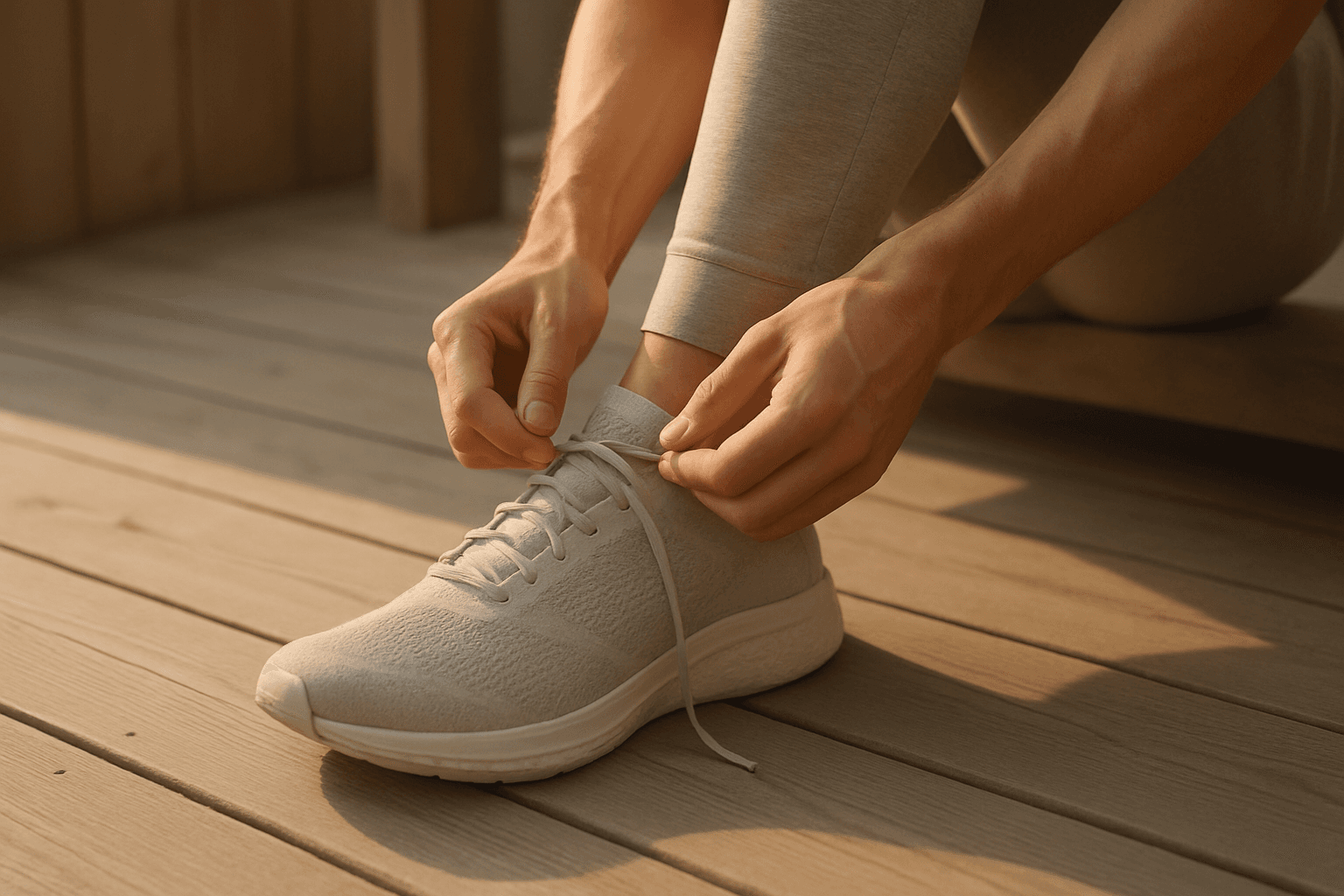
Plantar fasciitis is almost always a load-and-tissue mismatch: a fascia that was fine at last month's activity level meets a step up in miles, hours, weight or shoe changes, and by month three the morning stab has arrived. The good news is that the picture is remarkably predictable, and the everyday choices that keep the fascia out of the danger zone are cheap, boring and short. Nothing on this page is glamorous; all of it is what physical therapists tell athletic clients they wish they had done six months earlier.
This is a prevention guide, not a treatment guide. If your first steps of the morning already stab, you have moved past prevention and into the plan — start with our plantar fasciitis treatment walk-through and the plantar fasciitis stretches that most physical therapists teach on day one. What follows here is what to do while nothing hurts, aimed at the two audiences most likely to end up in this hub in six months' time: people who have had one plantar fasciitis episode and want to keep the second one from arriving, and people whose life is about to change in a way (a new job on their feet, a running goal, a pregnancy, a move to a warmer climate) that raises the odds.
Nothing here is medical advice, and prevention is a probability game rather than a guarantee. Foot shape, body weight, workplace surfaces and genetics all tilt the odds in ways no habit fully overrides. What the habits below buy you is a lower base rate — and, when a flare does start, a body that is better set up to shake it off in weeks rather than months. Every recommendation on this hub is written for comfort, support and relief.
Who actually needs to think about prevention
The people who benefit most from a prevention routine share a shortlist of risk factors. A prior episode of plantar fasciitis is the single strongest predictor of a future one — recurrence rates in follow-up studies of resolved plantar fasciitis run anywhere from twenty to fifty percent in the first two years, and readers whose first flare took months to settle are usually motivated to skip the second. A body mass index above thirty raises the mechanical load on the fascia every step, and every ten pounds gained without a matched conditioning ramp shows up in the arch. Occupations with long hours on hard floors — nursing, teaching, retail, warehouse, food service, hairdressing, and hospital housekeeping — accumulate load faster than most desk workers realize. Running, especially a fast ramp from zero to a half-marathon plan, is the classic athletic trigger. Pregnancy raises the odds through weight, hormonal ligament laxity and a lower arch, and postpartum feet do not always return to their pre-pregnancy shape.
Foot shape does part of the sorting too. Very flat feet stretch the fascia through more of its range with every step; very high arches transmit more shock into the heel because the arch does not give as much. Both shapes get plantar fasciitis at higher rates than neutral feet, for different reasons. Our supination insoles walk-through covers the high-arched shape, and our insoles for flat feet walk-through covers the flat-arched shape.
If none of the above describes you, the prevention plan is still fine to run and costs nothing, but the payoff is smaller. If two or three describe you — you are on your feet all day, you have had a previous episode, and you are about to add running — the payoff of the habits below is real and worth the twenty minutes a week.
Footwear: the single highest-leverage habit
The shoes on your feet for most of your waking hours are the biggest daily lever. Flat, thin-soled or unsupportive shoes — flip-flops, ballet flats, canvas sneakers, low-drop minimalist trainers, worn-out slippers — put the fascia under a working stretch for the entire time they are on, which for most people is eight to twelve hours a day. That is the exposure that adds up to a flare. The prevention rule is straightforward: for any shoe you spend more than an hour a day in, prioritize a real arch shape, a firm midsole that does not fold in half in your hand, and a heel-to-toe drop somewhere in the eight-to-twelve-millimeter range. Our doctor-recommended shoes for plantar fasciitis walk-through covers specific brands and models that meet those criteria.
Rotate two or three pairs. A single pair of shoes worn daily gives your fascia the same specific geometry every step; rotating two or three lets the tissue meet slightly different demands and spreads accumulated wear across more midsoles. Runners who ramp mileage while running in a single pair are overrepresented in plantar fasciitis clinics. Two moderately supportive running shoes on rotation is a better setup than one specialized shoe.
Replace shoes on the odometer, not the calendar. Running shoes are usually good for three hundred to five hundred miles before the midsole flattens; walking and standing shoes usually feel packed down after six to twelve months of daily use. When you can flex a shoe flat in your hands, the arch is no longer supporting anything and it is time to replace it. This is a big, unglamorous, budget-line habit that pays off; a warehouse worker running a floor shift in shoes bought two years ago is quietly running a fascia experiment.
For barefoot time on hard floors — many homes have hardwood or tile that reads to a foot the same way concrete does — pick a supportive slipper or house shoe rather than going bare. This matters more than most people expect. The hour or two before bed on unforgiving flooring is a common time for a stealth plantar fasciitis flare to start, and it is invisible because it happens in the evening rather than at a workout.
Insoles: the small change that reaches every shoe
If you already own supportive shoes, a good over-the-counter insole is the second-highest-leverage move. A firm medial arch and a deep heel cup, dropped into the shoe you wear most, holds the fascia at a slightly shorter working length through the day and takes some of the impact off the fat pad under the heel. That is the same mechanical unloading a physical therapist prescribes for a flare, applied preventively before there is anything to unload. Our Akusoli insoles review is the pair we would install in the shoe you wear the most hours in.
Insoles are especially worth their money in shoes that are otherwise fine but flat — a workhorse pair of walking shoes without much built-in arch, a well-cushioned but neutral running shoe, or a leather work shoe with a shallow OEM footbed. Ease the insole in over a week (a few hours the first two days, then a half day, then full days), because the feet are meeting a new geometry and need a short acclimation. Once broken in, the insole should be in the shoe more days than it is out.
Prevention insoles are a durability story too. A packed-down insole doing no work is the same as no insole. Foam over-the-counter insoles last six to twelve months of daily use before the arch loses its shape and the heel cup no longer feels distinct; write the install date on the underside with a marker and replace on schedule. The eighteen-dollar habit of one new pair a year is a smaller line in the household budget than a single physical therapy copay.
The two-minute daily stretch that keeps calves out of the picture
Tight calves are the single most consistent finding across the plantar fasciitis population. A stiff Achilles pulls the whole posterior chain tighter, hands more of the shock absorption to the fascia and shortens the range through which the fascia can lengthen without complaint. Two minutes of daily calf stretching, done on the same schedule you brush your teeth, is the highest-yield prevention habit for anyone whose calves feel tight at the end of the day. The exact stretch is not particularly important — a wall calf stretch, a stair-drop stretch with the heel hanging off the edge, or a downward-dog with alternating heel drops — as long as the tissue gets thirty seconds of hold two or three times per side, and it happens every day rather than in Sunday-night marathons.
Add a short plantar fascia stretch if you have a specific arch that likes to feel tight in the morning. Pull the toes back toward the shin with the hand for thirty seconds, before your feet touch the floor. The mechanism is the same as the calf work — keep the tissue in a healthy range of extensibility so a hard walking day does not push it past its limits. Our plantar fasciitis stretches page covers the full daily set, both prevention and treatment.
Foam-rolling the calf once or twice a week keeps the belly of the muscle mobile and complements the static stretching. It is not required, but people who have added a five-minute weekly session to their routine consistently report calves that feel less locked up at week's end. A firm ball under the arch is the same idea for the fascia itself — one minute per foot, once or twice a week, standing on it lightly rather than crushing it.
Loading: how to ramp without shocking the fascia
The other headline predictor of plantar fasciitis is a jump in load. Runners who ramp weekly mileage more than about ten percent per week over multiple weeks are the population sports-medicine physicians see. Walkers who go from a desk job to a step-count challenge that puts them at twelve thousand daily steps in the first week get the same picture. New nurses in their first eight-week rotation of twelve-hour shifts on concrete are another common group. In all three cases, the tissue is fine before the jump and irritated within a month of it because the fascia had not been conditioned for the new demand.
The rule of thumb that keeps most people out of trouble is one of two versions of the same idea. For running, cap weekly mileage growth at about ten percent, and take an every-fourth-week step-down that drops mileage by twenty percent to let the tissue consolidate. For non-running load, plan the fascia's exposure like any other tissue that needs progressive overload: add hours or miles or bodyweight-on-feet gradually across weeks rather than in one weekend or one job start. A new job that puts you on your feet all day is a load ramp on the same order as a marathon plan; ramp it that way.
Rest days for a runner are prevention. Cross-training in a swim or a bike ride offloads the fascia while keeping fitness up. For an on-feet job, real off-feet time at the end of the day — elevating the legs for fifteen minutes and staying out of unsupportive slippers — does the same job. A twelve-hour shift followed by two hours barefoot on tile is more load than the fascia signed up for.
Track weight changes. Ten pounds gained over a few months without a matched conditioning ramp is enough to tip a marginal fascia into a flare. This is not about being lean; it is about matching the tissue's capacity to the load it is being asked to carry. Prevention here looks like calf and arch work while weight is changing, and a supportive insole in every shoe.
Special windows: pregnancy, return-to-run, and cold-weather starts
Pregnancy raises the plantar fasciitis odds through three overlapping mechanisms: weight gain, hormonally softened ligaments and a lower resting arch that shows up around the second trimester. Prevention in this window is unglamorous — supportive shoes with real arch support at home and at work, no barefoot time on hardwood, a pregnancy-appropriate calf stretch two or three times a week, and permission to sit more than usual. Compression socks help with the swelling that piles onto the same picture; our compression socks for tired feet walk-through covers the fit. If a flare starts anyway, it is a legitimate reason to see a physical therapist during pregnancy rather than muscling through.
Return-to-run after any layoff — winter, injury elsewhere, a busy season — is the classic plantar fasciitis trigger. The fascia deconditions faster than most runners expect, and the first four to six weeks back are the danger window. Cap the return at half of pre-layoff mileage in week one and add ten percent per week from there. Use a supportive shoe rather than the pair you retired at the end of last season, because a compressed midsole is not going to help a deconditioned fascia catch up.
The first two weeks of the fall or winter is another quiet spike. People swap out flat summer sandals for closed shoes, add commuting miles as the days shorten, and pick up standing hours at holiday events. If you know this pattern applies to you, front-load the calf stretching and get the insole in the fall shoes a week before the first cold day rather than a month after.
Signs prevention has stopped being prevention
The line between prevention and treatment is not subtle. When first steps of the morning start to hurt, when a specific ache under the heel is present at the end of any long day, or when you notice yourself hobbling for the first two minutes after standing up from a movie, prevention has ended. Move to the treatment ladder in our plantar fasciitis treatment walk-through, and give the daily plan there three to four weeks of honest practice before deciding whether to see a clinician. Prevention habits still matter during a flare — a supportive shoe, a good insole, the daily calf stretch and the load ramp — but they get paired with active care.
The other line worth naming is symptoms that are not plantar fasciitis. Persistent heel pain in a child or teenager is far more likely to be Sever's disease than an adult-style plantar fasciitis, and the plan is different. Deep focal pain on the heel bone that hurts with every weight-bearing step, that started after a jump or a fall or a fast mileage ramp, wants imaging for a stress fracture rather than shoe changes. Pain with numbness, tingling, warmth, swelling, discoloration or pain at rest is not a prevention aisle problem — it is a clinic visit.
Nothing on this hub cures plantar fasciitis, and nothing sold on this site is a treatment. The goal is comfort, support and relief for a healthy fascia today, and knowing when to shift out of the self-care lane. Persistent heel pain that has not eased after four to six weeks of honest home care deserves an in-person exam by a doctor or podiatrist.
The supportive insole that prevention runs on
A firm medial arch and a deep heel cup in the shoe you wear most — the boring habit that keeps a healthy fascia healthy.
The supportive insole that prevention runs on →Frequently asked questions
How likely is plantar fasciitis to come back after it settles?
Recurrence rates in follow-up studies of resolved plantar fasciitis run roughly twenty to fifty percent in the first two years — a wide range because the underlying habits vary so much. Readers who keep the calf and arch stretches going, keep a supportive insole in the shoe they wear most, and avoid a fast ramp in miles or standing hours land at the low end. Readers who stop the routine as soon as the pain is gone land at the high end. Prevention is not a one-time job; it is a rotation of small habits kept up over years.
Do minimalist or barefoot shoes cause plantar fasciitis?
Not on their own, but they raise the odds meaningfully for anyone who transitions to them too quickly or who has a foot shape that already loads the fascia hard. A gradual, weeks-long ramp with calf and foot strength work alongside is what the coaching community teaches; a weekend switch from cushioned trainers to zero-drop shoes for a full daily-wear rotation is what shows up in physical therapy clinics. If you love minimalist shoes and have a history of plantar fasciitis, keep them for shorter walks and light training, and wear a more supportive shoe for the long days on your feet.
Does losing weight prevent plantar fasciitis?
It reduces one of the risk factors, which is the mechanical load on the fascia every step. Population studies do find plantar fasciitis at higher rates in people with a body mass index above thirty, and every ten pounds carried is felt at the arch. The prevention framing is not weight-loss-as-cure — plenty of lean people get plantar fasciitis, and plenty of larger people do not — but if a weight change is on your list for other health reasons, the fascia benefits. Pair it with a conditioning ramp rather than a sudden step-count increase, because a fast jump in daily steps is its own risk factor.
How much of a difference does a good insole make preventively?
A firm-arched insole with a deep heel cup in the shoe you wear most hours in is the second-highest-leverage prevention lever after the shoe itself. It cannot substitute for a supportive shoe if the shoe is a flat canvas sneaker, but paired with a moderately supportive shoe it holds the fascia at a slightly shorter working length through the day, which is exactly the mechanical unloading physical therapists prescribe during a flare. For readers with a prior episode, an insole in every closed shoe is worth the eighteen-dollar-a-year habit.
Are stretches alone enough to prevent plantar fasciitis?
For a young, lean reader with a neutral foot who is not adding load, plausibly. For everyone else — anyone on their feet a lot, anyone with a prior episode, anyone whose foot shape is at either extreme — stretches are one piece of the picture that also includes the shoe, the insole, and the load ramp. Stretching a tight calf while walking eight hours a day in flat shoes is going to lose that fight. The prevention plan is a stack, not a single tool.
Is night splinting worth doing preventively if I have no symptoms?
No. A night splint is a treatment tool for active morning heel pain; it holds the fascia in a mild stretch overnight so first-step pain is not as sharp. Wearing one preventively with no pain is uncomfortable for the sleeper, brings no clear benefit for a healthy fascia, and is not what physical therapists recommend outside of a flare. If your morning first steps are starting to hurt, the night-splint conversation belongs there — see our plantar fasciitis night splint walk-through — but for prevention, the calf stretch and the insole are enough.
HeelCups is reader-supported. When you buy through links on our site we may earn an affiliate commission, at no extra cost to you. This article is general information about foot comfort and is not medical advice — see our medical disclaimer.