HEEL PAIN CAUSES
What Causes Heel Pain? The Everyday Triggers Behind Most Sore Heels
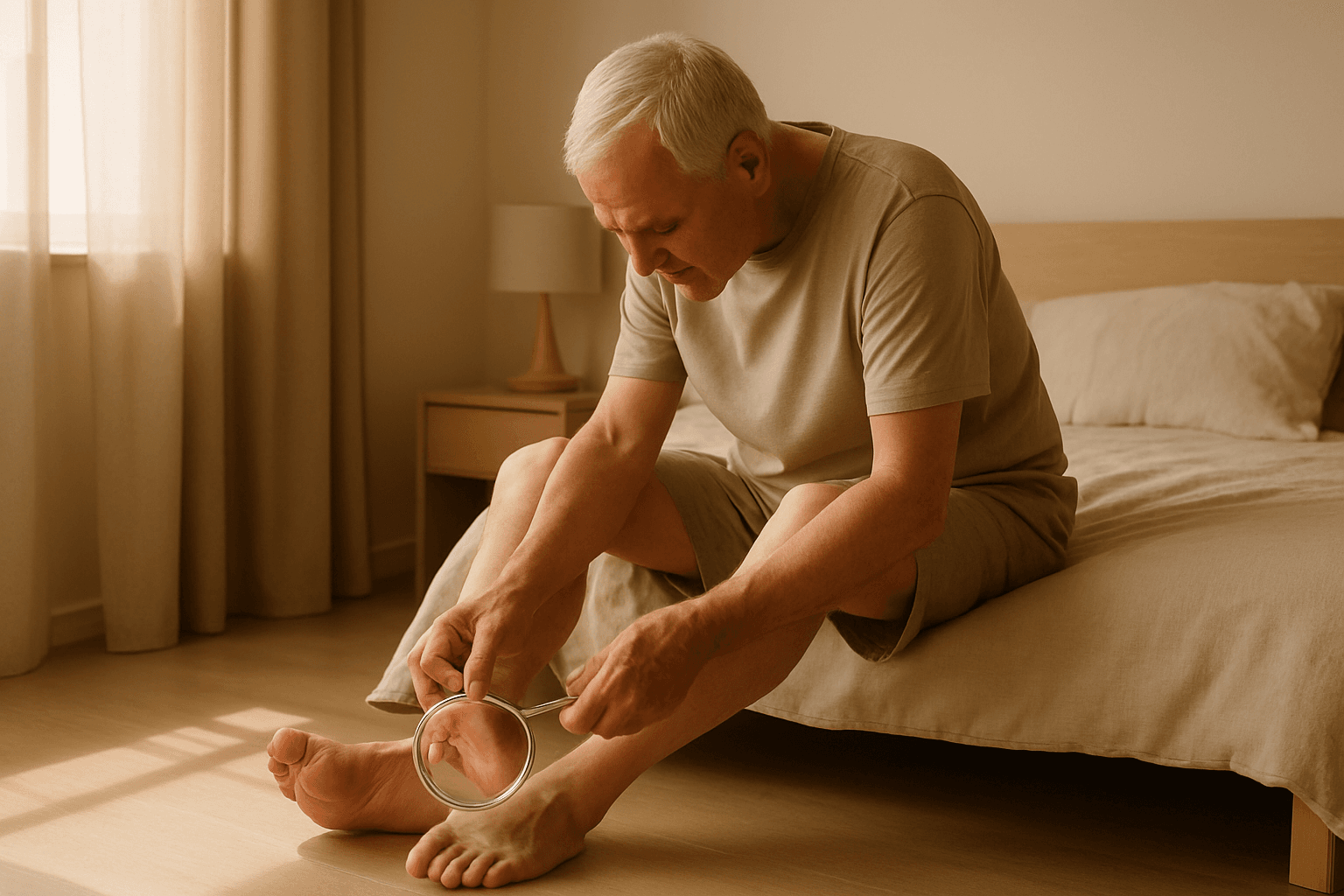
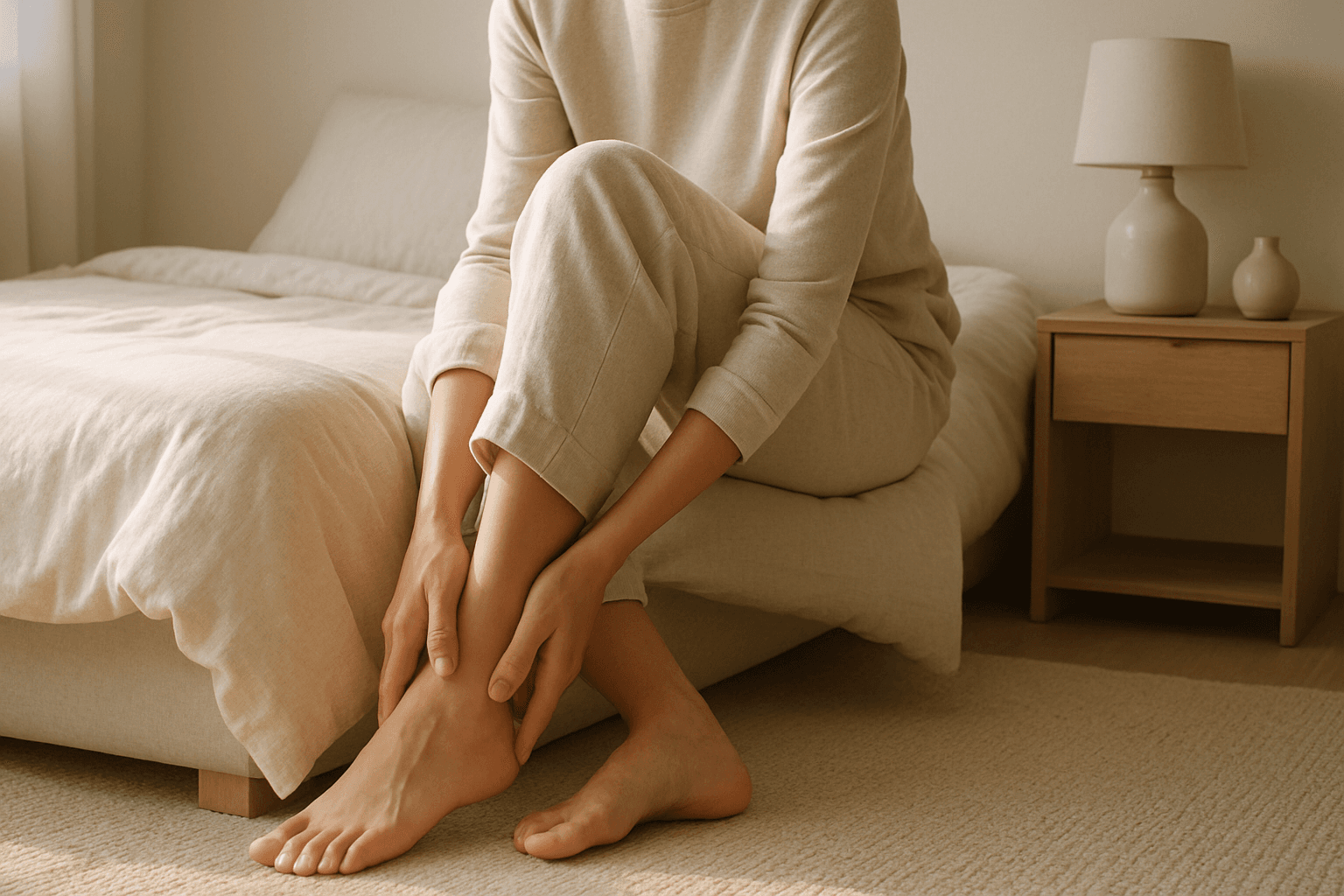
Heel pain is a symptom, not a diagnosis. Almost every case starts with an ordinary trigger — a mileage jump, a new job on hard floors, a summer of flat sandals — pushing the fascia, fat pad or Achilles past what it can absorb.
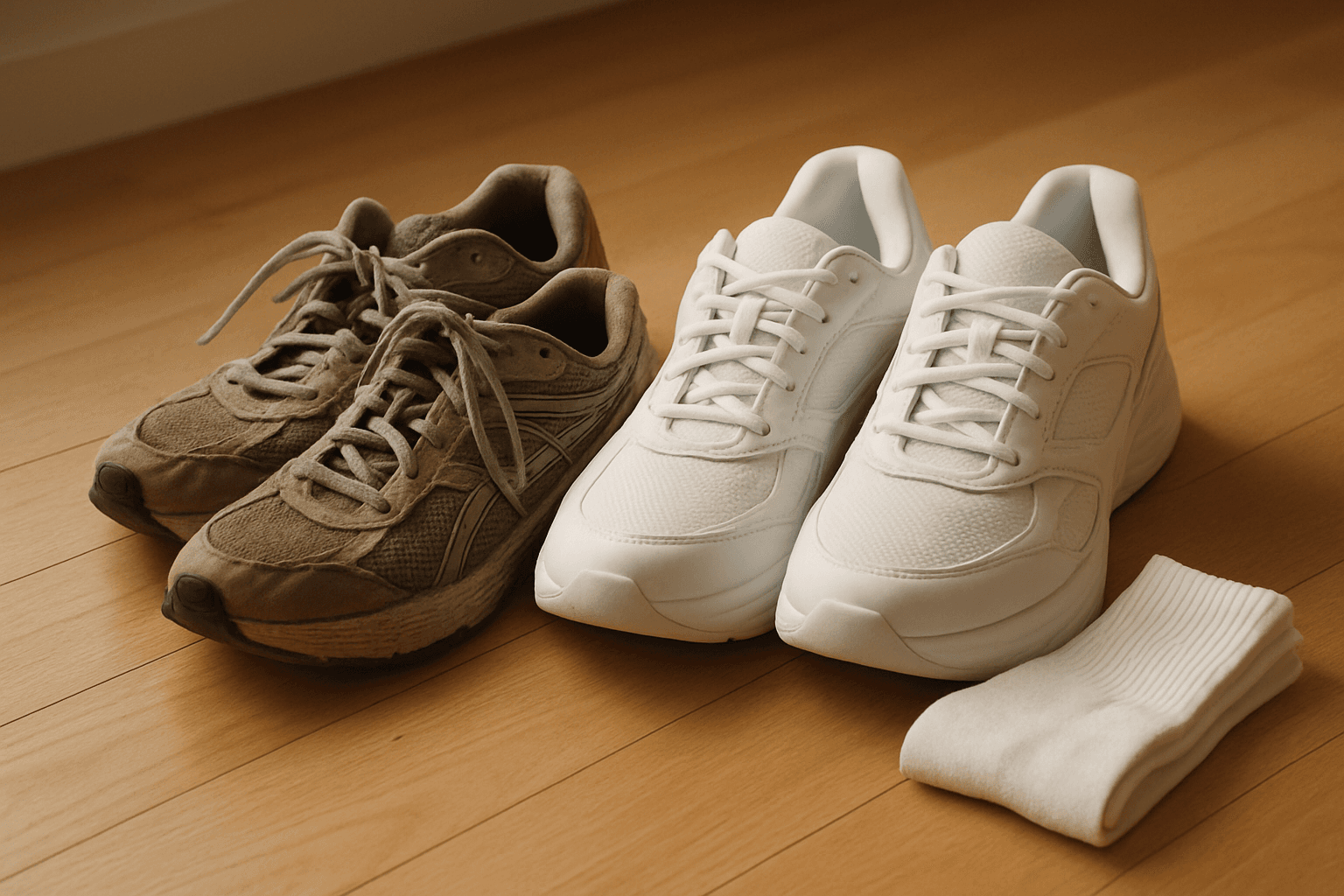
Heel pain has one thing in common regardless of where under the heel it lives: something has pushed the tissue past what it can absorb. That something is nearly always mundane — a mileage jump, a new job on hard floors, ten pounds gained over a slow year, a summer of flat sandals, the first month back after an injury — rather than one big dramatic event. Understand the trigger and the fix follows.
This page walks through the ordinary causes behind the three most common heel pain patterns (plantar fasciitis at the front of the heel, fat pad irritation across the whole pad, and Achilles-side pain at the back), the risk factors that shift the odds in each direction, and the less common causes worth ruling out when the picture does not fit. If you are still working out which pattern is yours, the why does my heel hurt map is a better first stop; this page assumes you have decided the pain lives under the heel and want to understand what put it there.
Nothing on this page is medical advice. Persistent heel pain that has not eased after four to six weeks of honest home care, or that came with an injury, swelling or numbness, deserves an in-person exam by a doctor or podiatrist. Everything here is written for comfort, support and relief.
Heel pain is almost always an overload story
The heel absorbs several times your body weight with every step. That is a load the fascia, fat pad and Achilles were built to take — but only if the daily total, the surface, and the recovery between bouts stay inside a window the tissue can handle. Push any one of those out of the window for long enough and the tissue starts to protest. Micro-damage outpaces repair, the tissue thickens and becomes reactive, and pain sensors around it become more sensitive.
This framing matters because it changes what "the cause" of your heel pain looks like. It is rarely one moment. It is a pattern — a mileage jump plus a new pair of flat shoes, a weight gain plus a job that put you on your feet, a summer of barefoot patio time plus a tight calf that never got stretched. Fix the pattern and the tissue calms down. Chase a single villain and you will spend months on a stretch that was never the missing piece.
Tight calves: the single most consistent contributor
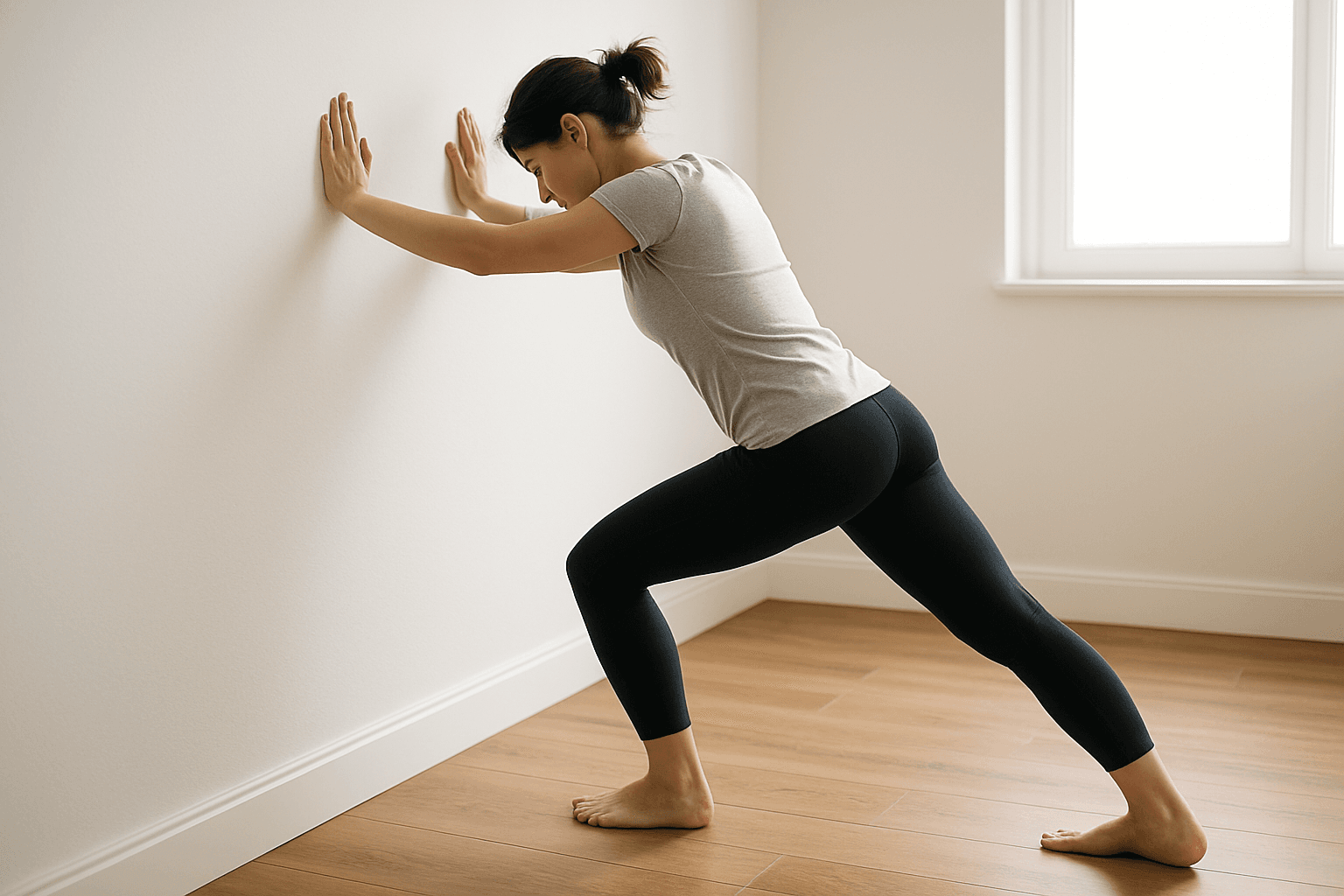
In clinic after clinic, tight calf muscles turn up on the exam of nearly everyone with heel pain. The gastrocnemius and soleus share the Achilles tendon, which anchors on the back of the heel bone; the plantar fascia anchors on the underside of that same bone. When the calves are tight, the Achilles pulls up on the heel and pretensions the fascia on the other side. Every step then puts the fascia under more strain than it should be under, and the Achilles insertion carries more load than it should.
This is why calf stretching shows up in every serious heel pain routine, why walking a lot in high-heeled shoes shortens the calves and quietly raises your risk, and why sitting all day at a desk with your knees bent and heels dropped works against you. It is also the mechanism behind why some people develop heel pain on both sides at once after a life change (a new sedentary job, a long injury layoff, a pregnancy) that reduced their overall calf mobility over months.
The everyday life events that trigger it
Ramping up mileage too quickly is the classic runner cause. A jump from twenty to forty miles a week in a month, a new interval training block, or a return to running after a layoff without dialing volume back are all common lead-ins. The ten-percent rule (do not increase weekly mileage by more than ten percent) exists for exactly this reason, and it is broken constantly.
A new job on your feet all day is the classic sedentary-to-active cause. Nurses starting twelve-hour shifts, teachers going back after a summer, retail and warehouse staff moving to a shift schedule, and anyone whose remote job just went hybrid all report heel pain in the first six to eight weeks. Concrete floors amplify it; wooden retail floors and carpeted classrooms less so.
A weight gain of even ten to fifteen pounds is enough to tip a fascia that was already at the edge of its window. Pregnancy is a specific version of this: the weight gain and the ligament laxity from hormonal changes both play a role, which is why plantar fasciitis is common in the second and third trimesters. Our heel pain during pregnancy walk-through covers the pregnancy-safe daily plan in detail. A rapid weight loss with a return to activity too fast is the flip side of the same coin.
A shoe change is a hidden trigger for a lot of people. A summer of flat canvas sandals, a switch to minimalist running shoes, a fashion swing to backless mules, or a beloved pair of supportive work shoes finally packing down (foam insoles die at six to twelve months of daily wear) all shift the mechanical picture. Sometimes the switch is deliberate and sometimes it is invisible; either way the fascia notices.
An injury elsewhere — an ankle sprain, a hip surgery, a knee tweak that changed your gait for weeks — can trigger heel pain in the seemingly-uninvolved foot as the load pattern shifts. Post-injury heel pain often shows up two to six weeks after the acute injury, when the compensations have had time to work on the tissue.
Shoes and floors: the environment that keeps the flare going
Even when the initial trigger was clear, what keeps heel pain going is usually the environment. An unsupportive shoe worn eight to twelve hours a day is loading the fascia the way you did not want to load it for most of the day; the stretching you did in the morning cannot outpace that. Barefoot time on hard floors at home is a bigger factor than most people realize; a wood or tile floor with no shoe support is closer to concrete than to grass. Backless slides and mules add a rocking pattern that loads the fascia further.
The single environment change that moves the needle for most people is putting a supportive insole in the shoes actually worn for the most hours per day — the work shoe, the daily walking sneaker, the house slipper — rather than the running shoe that only sees an hour. A firm medial arch and a deep, cushioned heel cup are the two features that matter; a soft foam pad marketed as a shock absorber does neither. Our first-pick pair is in the Akusoli insoles review.
Body-composition and foot-shape risk factors
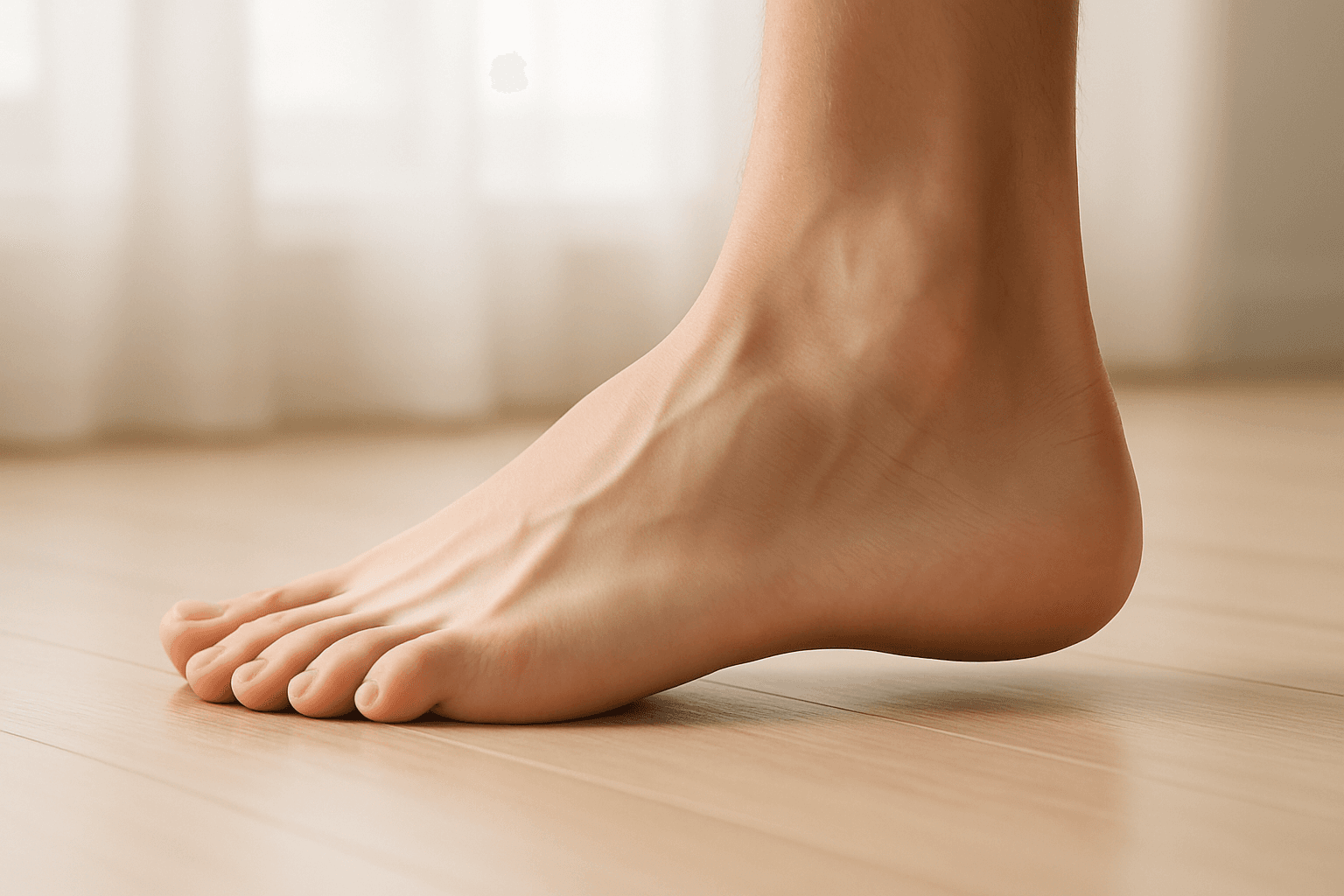
Certain body types tilt the odds toward heel pain without being causes on their own. High arches transfer more shock into the heel and forefoot with less give in the middle, which loads the fat pad and heel bone more. Flat feet or feet that over-pronate lengthen the fascia through more of its range with every step. Neither shape is destiny, and both patterns respond to the same broad routines — a firm arch under a flat foot holds the fascia's shape; a cushioned heel cup under a high arch cradles the fat pad. Shoe and insole choice matters more than shape.
Age and body composition matter too. The fat pad under the heel thins measurably from about fifty on, and takes damage from decades of hard landings. A body mass index in the higher ranges raises the load on the fascia with every step, though heel pain is common at every BMI. Both are risk factors, not causes; someone in their sixties on a supportive shoe with an insole and a stretching routine does better than someone in their thirties who has never done any of it.
Occupation is a specific version of both. Jobs that combine long standing hours on hard floors with the wrong shoes are the ones that fill the podiatry clinic's waiting rooms — nursing, warehouse work, retail, factory floor jobs, restaurant and hospitality work. If you are in one of these, the daily load is not going to change; the shoe, the insole and the recovery habits are the levers.
Less common causes worth knowing about
A calcaneal stress fracture is the most important cause to rule out when the picture does not fit. Deep, focal pain on the heel bone that hurts with any weight, that started after a jump in activity, a fall, or a sudden return to high-impact sport, and that does not follow a morning-worst pattern is the classic story. Runners who have spiked mileage, dancers, military recruits, and older adults with bone density concerns are the groups to watch. Stress fractures need imaging (sometimes MRI, since early X-rays can miss them) and a specific plan, not the plantar fasciitis routine.
Nerve entrapments hide inside heel pain more often than they get credit for. Baxter's nerve (the first branch of the lateral plantar nerve) can be compressed as it passes near the heel and produce a burning, tingling or shooting pain into the sole. Tarsal tunnel syndrome — compression of the tibial nerve behind the medial ankle — is another possibility. Both are worth asking about when the pain has a nerve-y quality (burning, tingling, radiating) rather than a mechanical one.
Inflammatory conditions can present as heel pain — reactive arthritis, ankylosing spondylitis and other spondyloarthropathies can inflame tendon attachments including the plantar fascia and Achilles insertion. Bilateral heel pain in a younger adult, morning stiffness that lasts hours rather than minutes, or heel pain alongside other joint symptoms is worth flagging to a doctor. So is heel pain with any autoimmune or inflammatory diagnosis already in your history.
Fat pad atrophy — thinning of the shock-absorbing fat pad under the heel — is a slow driver in older adults and in people who have had repeated corticosteroid injections into the heel. It presents as a bruised, diffuse feeling across the pad, worst on hard floors, without a specific tender point. It is a comfort-and-cushioning problem rather than a stretch-and-support one; see our bottom of the heel walk-through for the pattern.
When cause-hunting stops being useful
For most everyday heel pain, the specific villain matters less than the routine that unloads the tissue. A daily calf and fascia stretch, a supportive insole in every shoe worn all day, less barefoot time on hard floors, and a temporary cut in whatever activity spiked the load will address most of the ordinary triggers even if you never fully sort out which combination started your case. Give that routine three to four weeks before deciding it is not working, and change one variable at a time so you can see what is helping.
If honest home care over a month has not moved the needle, or if any red flag is present — pain with any weight, at rest, or at night; swelling, warmth, numbness, tingling, a color change; heel pain in a child or teenager; heel pain on both sides in a younger adult with morning stiffness — that is when the cause-hunting moves to a clinician's office and away from a blog post. A podiatrist or foot-and-ankle physician is the right person to sort the less common causes from the ordinary ones.
The insole that addresses the environment keeping the flare going
A trim-to-fit insole with a firm medial arch and a deep heel cup — supports the fascia and cradles the fat pad through the eight to twelve hours a day that matter most.
The insole that addresses the environment keeping the flare going →Frequently asked questions
Can heel pain be caused by walking too much?
Yes — but usually only when the amount of walking spiked recently rather than the total on any given day. A jump from a mostly sedentary week to eight hours a day on your feet, or a mileage jump from twenty to forty miles a week over a month, is the classic overload pattern. The fix is not to stop walking; it is to dial back the spike for two to four weeks, add a supportive insole, and give the tissue time to catch up.
Does being overweight cause heel pain?
It raises the daily load on the fascia and the fat pad, so it is a risk factor for both plantar fasciitis and fat pad irritation. But heel pain is common at every body weight, and thinner people with tight calves or unsupportive shoes get the same problem. Weight loss is a legitimate long-term lever, and so is a supportive insole and a daily stretching routine that anyone can adopt today regardless of body composition.
Why did my heel start hurting for no reason?
It almost never actually starts for no reason — the trigger is usually a subtle one that adds up. A shoe swap, a new job on your feet, a summer of barefoot floors, a mileage jump, ten pounds gained slowly, a return to activity after an injury. Take a mental inventory of what changed in the two to eight weeks before the pain started and something almost always shows up. Fixing that specific trigger is often the biggest lever in the first month of recovery.
Can new shoes cause heel pain?
Yes, in two directions. A new pair that is less supportive than what you were used to (a switch to minimalist runners, a summer of flat sandals, backless mules replacing supportive slippers) can trigger heel pain within weeks. So can a new pair with a totally different geometry — a much stiffer sole, a bigger heel-to-toe drop change, or a much narrower fit — even if it is objectively supportive. Give a new shoe a week or two of easing in and check whether the pain tracks the change.
Does age itself cause heel pain?
Age is a risk factor rather than a direct cause. The fat pad under the heel thins measurably from about fifty on, calf flexibility tends to decrease with a sedentary decade or two, and cumulative wear on the fascia adds up. All of these tilt the odds, but plenty of people in their sixties and seventies are pain-free with a supportive shoe and a stretching routine, and plenty of people in their thirties have plantar fasciitis. The routine matters more than the year on your driver's license.
Should I keep exercising if I have heel pain?
For most everyday cases, yes — but with two changes. Cut the specific activity that spiked the load (a mileage jump, hills and stairs, long shifts on concrete) for two to four weeks so the fascia can catch up. And swap in a lower-impact alternative during that window if you can (cycling, pool, elliptical) so you keep your fitness. Stopping entirely is usually not necessary and often makes people less consistent with the daily routine that actually settles the tissue.
HeelCups is reader-supported. When you buy through links on our site we may earn an affiliate commission, at no extra cost to you. This article is general information about foot comfort and is not medical advice — see our medical disclaimer.