HEEL PAIN AND DIABETES
Heel Pain and Diabetes: Why It Deserves Extra Attention and a Daily Foot Check
Heel pain is not automatically a diabetes problem, but diabetes changes the stakes. Here is how nerve changes can hide trouble, what a sensible daily foot check looks like, and when to call a clinician.
Most heel pain in people with diabetes is the same ordinary kind everyone else gets, usually plantar fasciitis or irritation of the heel pad. What changes is the margin for error. Diabetes can dull sensation in the feet and slow the way skin recovers from small injuries, so a blister, crack or pressure spot on the heel can go unnoticed until it is bigger than it should be.
This page is a practical starting point, not a diagnosis. If you have diabetes and new heel pain, redness, warmth, swelling, an open sore, or numbness and tingling, call your doctor or podiatrist promptly instead of waiting to see whether it settles. Comfort measures such as supportive footwear are only for ordinary aches your clinician has cleared.
The sections below cover why diabetes changes the picture, how to do a daily check, what comfort-focused footwear choices make sense, and the warning signs that should not wait.
Why diabetes changes how heel pain is handled
Two things matter most. First, peripheral neuropathy: nerve changes that can dull feeling in the feet. University hospital patient guides, and the American Diabetes Association-based professional education material we found, note that nerve damage can mask foot pain, so a person may not feel a cut, blister or sore. Second, circulation: reduced blood flow can make injuries slower to recover.
The practical result is that the usual advice for heel pain, such as pushing through a stiff morning or trying a new insole, needs a clinician in the loop. Pain that you can feel is useful information; pain that you cannot feel is a reason to look more carefully.
Neuropathy can also cause its own symptoms, including burning, tingling or sharp sensations in the foot. These can be confused with plantar fasciitis, which is why a proper exam matters. Our guide to burning feet and the page on tarsal tunnel cover nerve-flavoured look-alikes.
A daily foot check that takes two minutes
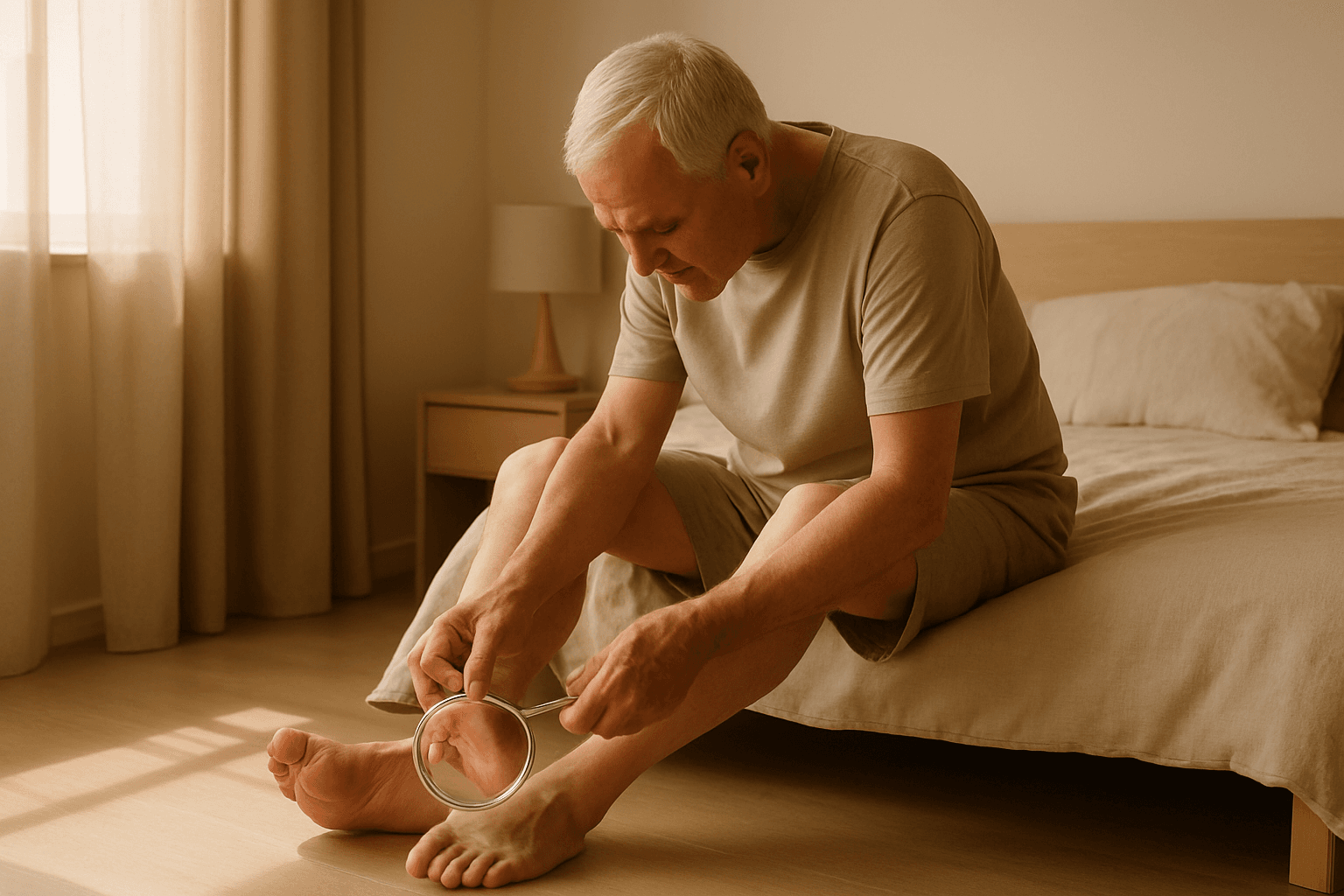
Patient guides from Duke Health and the University of Michigan, along with University Hospitals material that attributes the advice to the American Diabetes Association, describe the same routine: look at both feet every day, including tops, soles, heels and between the toes, in good light.
If you cannot see your soles, use a hand mirror on the floor or ask someone to look. You are checking for cuts, blisters, redness, swelling, cracks, dry skin, bruises, corns and calluses, and any change in colour or temperature compared with yesterday.
Do it at the same time every day, such as after washing or before bed, so it becomes automatic. Check shoes too, running a hand inside for pebbles, rough seams or worn lining that could rub on the heel. Test bath water with an elbow rather than the foot if sensation is reduced.
Comfort and footwear, with care
For ordinary heel soreness your clinician has cleared, the same comfort principles apply: a shoe with a firm heel counter, cushioning under the heel and a supportive arch. Our doctor-recommended shoes page covers what to look for.
Avoid walking barefoot, including indoors, and avoid shoes that squeeze or rub. Seamless socks that are not tight at the top are a common suggestion. Check with your clinician before adding any insole or heel cup: they change how pressure falls on the skin, and people with reduced sensation sometimes need clinician-selected footwear instead of off-the-shelf products.
Cracked heels deserve special attention because open fissures are a way in for infection. A daily moisturiser on the heels, not between the toes, is standard advice; see our cracked heels routine, and ask a clinician about any crack that bleeds or looks inflamed.
Warning signs that should not wait
Call your doctor or podiatrist the same day, or seek urgent care, for an open sore or blister that is not recovering, redness spreading from a spot, a warm or swollen heel or foot, drainage, a bad smell, fever alongside a foot problem, or sudden colour change. The University Hospitals guide lists redness, oozing or warmth and a large sore as reasons to see a doctor instead of managing at home.
New numbness, tingling or burning also warrants an appointment, because it may reflect nerve changes that should be monitored.
Do not trim calluses with blades or use medicated corn pads with acid, which are commonly advised against for people with diabetes. Let a podiatrist handle them.
Ordinary heel pain, when diabetes is in the background
If your clinician has examined you and confirmed plantar fasciitis, the usual plan still applies in a careful form: calf and fascia stretching, supportive footwear, and activity pacing. Our plantar fasciitis stretches page covers the routine, and a clinician can tell you which parts suit you.
Keep blood sugar management on track with your care team. We are not able to say how that affects a particular heel, but it is part of overall foot health.
A regular foot exam by a clinician, as recommended in diabetes care standards, is the best way to catch problems early. Bring the shoes you wear most so the clinician can check them too.
Back to the heel pain guide
See the main heel pain hub for how to tell the common patterns apart before your appointment.
Back to the heel pain guide →Frequently asked questions
Can diabetes cause heel pain?
Diabetes does not directly cause plantar fasciitis, but nerve changes can cause burning or tingling that feels like heel pain, and reduced sensation can hide injuries. A clinician should examine any new heel pain.
Is plantar fasciitis more common if you have diabetes?
We did not find a reliable source we can cite for a figure, so we will not give one. Ask your clinician how your diabetes affects your risk.
Can I use heel cups or insoles if I have diabetes?
Ask your doctor or podiatrist first. Products change where pressure lands, and people with reduced sensation may need clinician-guided footwear.
How often should I check my feet?
Daily, according to the patient guides we reviewed, including the tops, soles, heels and between the toes.
Should I walk barefoot at home?
Most diabetes foot guidance advises against it, because small injuries can go unnoticed. Ask your clinician about suitable indoor footwear.
When should I call a doctor?
Straight away for an open sore, redness, warmth, swelling or drainage, and promptly for numbness, tingling or heel pain lasting more than a few days.
HeelCups is reader-supported. When you buy through links on our site we may earn an affiliate commission, at no extra cost to you. This article is general information about foot comfort and is not medical advice — see our medical disclaimer.